80:20 vs 70:30 Filter Coffee: Which Premium Blend Is Right for You?
Confused between 80:20 and 70:30 filter coffee? Discover the real taste, strength, and body differences plus expert advice on which premium South Indian blend suits busy professionals, doctors, and traditional coffee lovers. Fresh roast tips included.
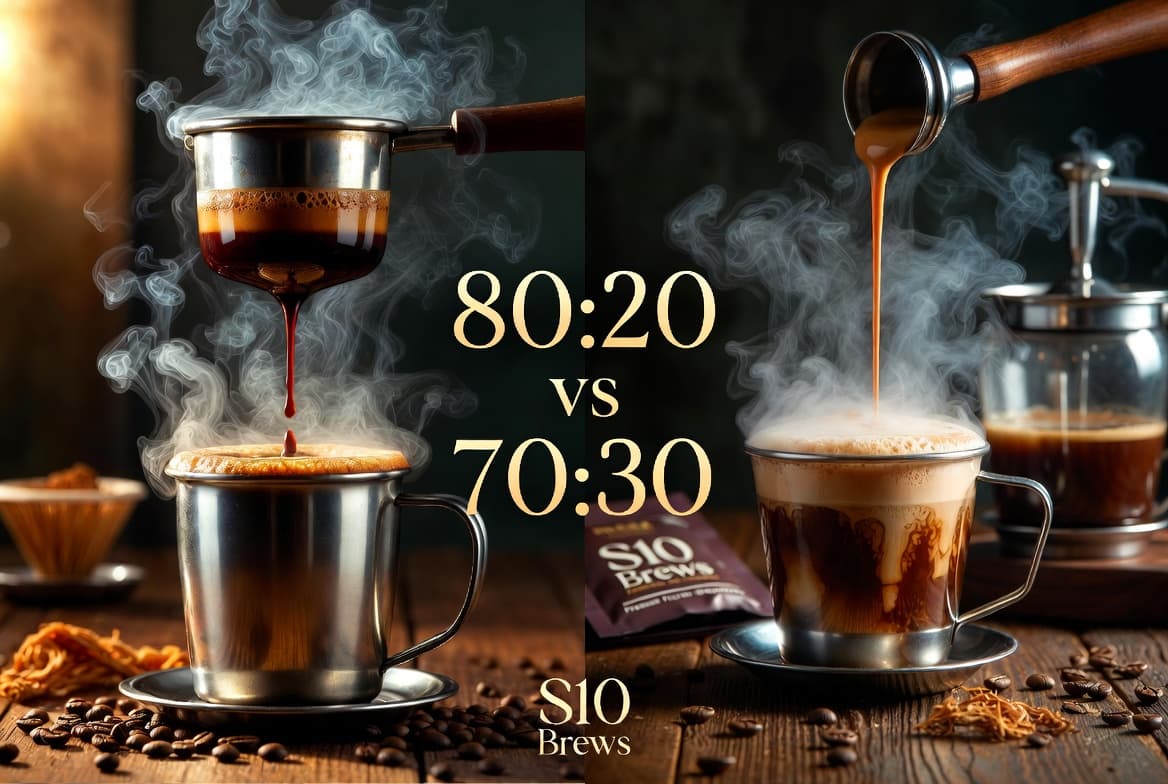
You know that moment. The steel tumbler hits the table, the aroma hits your nose, and suddenly the chaos of the day feels manageable. For doctors wrapping night shifts, founders chasing deadlines, young professionals powering through back-to-back calls, or anyone rediscovering the joy of traditional South Indian filter coffee, that first sip matters.
But here’s the catch most people hit when they search for “best coffee powder for filter coffee” or “premium filter coffee powder online”: the endless debate between 80:20 and 70:30 blends. One promises bold, unapologetic coffee character. The other delivers the thick, frothy comfort of classic degree coffee.
Which actually suits your mornings?
This guide cuts through the noise with clear, practical answers—no marketing fluff, just real differences in taste, strength, body, and daily performance—so you can stop guessing and start brewing better.
Understanding 80:20 and 70:30 Blends in Premium Filter Coffee Powder
The numbers refer to the ratio of coffee to chicory in your filter coffee powder.
The 80:20 filter coffee ratio means 80% coffee beans blended with 20% roasted chicory root. This creates a strong, aromatic brew favored by those seeking authentic South Indian filter coffee with pronounced coffee notes. (Exactly the definition that ranks in featured snippets.)
In contrast, 70:30 means 70% coffee and 30% chicory. The extra chicory adds more body and a gentle caramel-like sweetness while slightly mellowing the coffee’s natural acidity.
Both are traditional South Indian filter coffee powder styles. Neither is “pure” in the 100% coffee sense, but both qualify as premium filter coffee when the beans are high-quality Arabica or Robusta, freshly roasted, and properly ground.
Flavor Showdown: How 80:20 and 70:30 Actually Taste
Think of it like two different versions of the same classic song.
80:20
- Bold, upfront coffee character
- Clear notes of chocolate, nuts, or mild fruit depending on the beans
- Sharper aroma that fills the kitchen instantly
- Clean finish with minimal lingering sweetness
- Slightly higher perceived caffeine kick because there’s more actual coffee
70:30
- Richer, heavier body
- Classic “degree coffee” thickness and froth
- Gentle caramel-earthiness from extra chicory
- Smoother, rounder mouthfeel
- The nostalgic taste you remember from roadside darshinis or grandma’s kitchen
Real-world test many professionals do at home: brew both side-by-side with the same quantity of powder, same water, same filter. The 80:20 almost always tastes more “coffee-forward.” The 70:30 tastes more “complete South Indian.”
80:20 vs 70:30 — Quick Comparison Table
| Aspect | 80:20 Blend | 70:30 Blend | Aspect |
| Coffee Strength | Stronger, more direct | Balanced, slightly milder | Coffee Strength |
| Body & Thickness | Good decoction, lighter froth | Excellent thickness, signature froth | Body & Thickness |
| Sweetness | Subtle, from beans | Noticeable caramel from chicory | Sweetness |
| Acidity | Slightly higher | Lower, smoother | Acidity |
| Best Time of Day | Morning kick, focus hours | Relaxed evenings or leisurely brunch | Best Time of Day |
| Chicory Benefits | Moderate prebiotic fiber | Higher inulin for gut support | Chicory Benefits |
| Ideal For | Bold flavor lovers, quick brew | Traditional thick kaapi fans | Ideal For |
Who Should Choose 80:20 Premium Filter Coffee?
If you fall into any of these groups, lean toward 80:20.
Busy professionals and doctors love it because you need less powder to get strong decoction—perfect when you’re making coffee at 6 a.m. before rounds or between patient calls. The cleaner profile also pairs beautifully with milk without tasting watered down.
Founders and creators often prefer it for the sharper mental lift. The pronounced coffee notes keep the brew interesting even during long strategy sessions.
Beginners and Gen Z discovering filter coffee find 80:20 more forgiving. It’s easier to adjust strength by simply using a touch more or less powder, and the bolder taste feels modern rather than “old-school sweet.”
Health-focused drinkers who still want real coffee flavor appreciate getting more actual coffee per scoop while still enjoying chicory’s gentle digestive support.
When 70:30 Might Be the Better Choice
Some mornings call for comfort over intensity.
If you grew up with the thick, frothy filter coffee served in steel tumblers at South Indian weddings or temples, 70:30 will feel like home. The extra chicory creates that signature heavy decoction that clings to the sides of the dabara and stretches beautifully when mixed with hot milk.
It also shines for leisurely weekend brunches or when you want one strong tumbler to last longer. The added body makes it feel more indulgent and satisfying.
Many traditional households still default to 70:30 or even 65:35 for exactly this reason.
The Premium Edge: Why Not All Filter Coffee Powder Is Equal
Here’s what most mass-market options miss—and where small-batch brands shine.
Freshness changes everything. Coffee powder roasted and ground weeks ago loses volatile aromatics fast. Premium filter coffee powder roasted fresh every week retains the oils and complexity that make your morning ritual actually exciting.
Bean quality matters more than the ratio. Handpicked estate beans roasted to perfection deliver layered flavor even in an 80:20 blend. Cheap robusta or old stock simply tastes flat no matter the chicory percentage.
Grind size consistency is crucial for filter coffee. Too fine and you get bitterness and slow dripping. Too coarse and the decoction stays weak. Premium producers control this meticulously.
Small-batch roasting allows precise control that big factories can’t match. Every batch can be adjusted based on the season’s beans.
Take S10 Brews, for example. Their premium filter coffee powder uses an expertly balanced 80:20 blend of handpicked beans, roasted fresh in small batches every week in Chennai. The result is the kind of consistent, aromatic decoction that professionals and traditionalists both reach for—bold enough for a quick morning boost, smooth enough to savor slowly.
How to Brew the Perfect Cup (Works With Both Blends)
- Use 4–5 tablespoons of your chosen powder per 150–180 ml water (adjust to taste).
- Fill the upper chamber loosely—never press down.
- Pour just-off-the-boil water slowly in a circular motion.
- Close lid and wait 10–15 minutes for slow drip.
- For extra strength, use a slightly heaped measure or let it sit longer.
- Mix decoction with hot milk (and sugar if you like) in the classic tumbler-dabara pour for perfect froth.
Pro tip: Store your coffee powder in an airtight container away from light and heat. Buy smaller packs more frequently rather than one giant bag that sits for months.
Beyond the Ratio: What Most Coffee Brands Miss
Search “traditional South Indian coffee powder online” and you’ll see hundreds of options. Yet few talk about traceability, weekly roasting schedules, or how the exact origin of the beans affects the final cup.
Estate-grown or carefully selected regional blends bring subtle terroir—notes of cardamom from Coorg beans or mild spice from Chikmagalur. Small-batch producers can highlight these nuances instead of masking them with excessive chicory.
Modern drinkers also want convenience without compromise—easy online ordering, reliable delivery, and packaging that keeps the coffee fresh until the last scoop. These details separate good filter coffee from the kind you reorder every month.
Frequently Asked Questions
Is 80:20 stronger than 70:30?
Yes. With more actual coffee beans, 80:20 delivers bolder flavor and slightly higher caffeine per scoop. The decoction also tastes cleaner and less sweet.
Which coffee powder is best for filter coffee?
It depends on your preference. For most urban professionals seeking balance and convenience, an 80:20 premium blend hits the sweet spot. Traditionalists who crave thick froth often prefer 70:30.
Can I mix 80:20 and 70:30?
Absolutely. Many households keep both and blend them depending on the day—more 80:20 on weekdays for focus, more 70:30 on relaxed mornings.
Is chicory healthy in filter coffee?
Chicory root contains inulin, a prebiotic fiber that supports digestive health. Higher chicory blends (like 70:30) provide more of this benefit, while still delivering real coffee taste and aroma.
What is authentic degree coffee powder?
“Degree coffee” traditionally refers to high-quality filter coffee with good froth and thickness. Today many premium 80:20 and 70:30 blends both qualify as long as the beans are fresh and properly roasted.
Should beginners buy 80:20 or 70:30?
Start with 80:20. It’s more forgiving and lets you clearly taste the coffee itself while learning how much powder and brewing time works best for your setup.
Where to buy premium filter coffee powder online?
Look for brands that specify roast date, bean origin, and small-batch production. Freshness and transparency matter more than fancy packaging.
Your Perfect Cup Awaits
The “right” blend isn’t about which is objectively better—it’s about which matches your taste, lifestyle, and the kind of mornings you want to create.
If you crave bold, aromatic coffee that cuts through milk and delivers clean energy, go 80:20. If you want the thick, nostalgic comfort of classic South Indian kaapi, choose 70:30.
Either way, quality makes the difference between good coffee and the kind you look forward to every single day.
For those who want the best of the 80:20 world—rich aroma, smooth depth, and consistent excellence—S10 Brews crafts exactly that experience. Small-batch, freshly roasted, rooted in Chennai’s coffee heritage, and built for the way modern Indians actually drink filter coffee.
Ready to upgrade your daily brew? Explore premium filter coffee powder that respects tradition while meeting today’s standards for freshness and flavor.
Your perfect morning is just one tumbler away.