Best Coffee Beans and Roast for Cold Brew in India
Unlock the secret to the best coffee beans and roast for cold brew in India. Craft cafe-quality cold brew at home with our expert guide. Taste the difference!
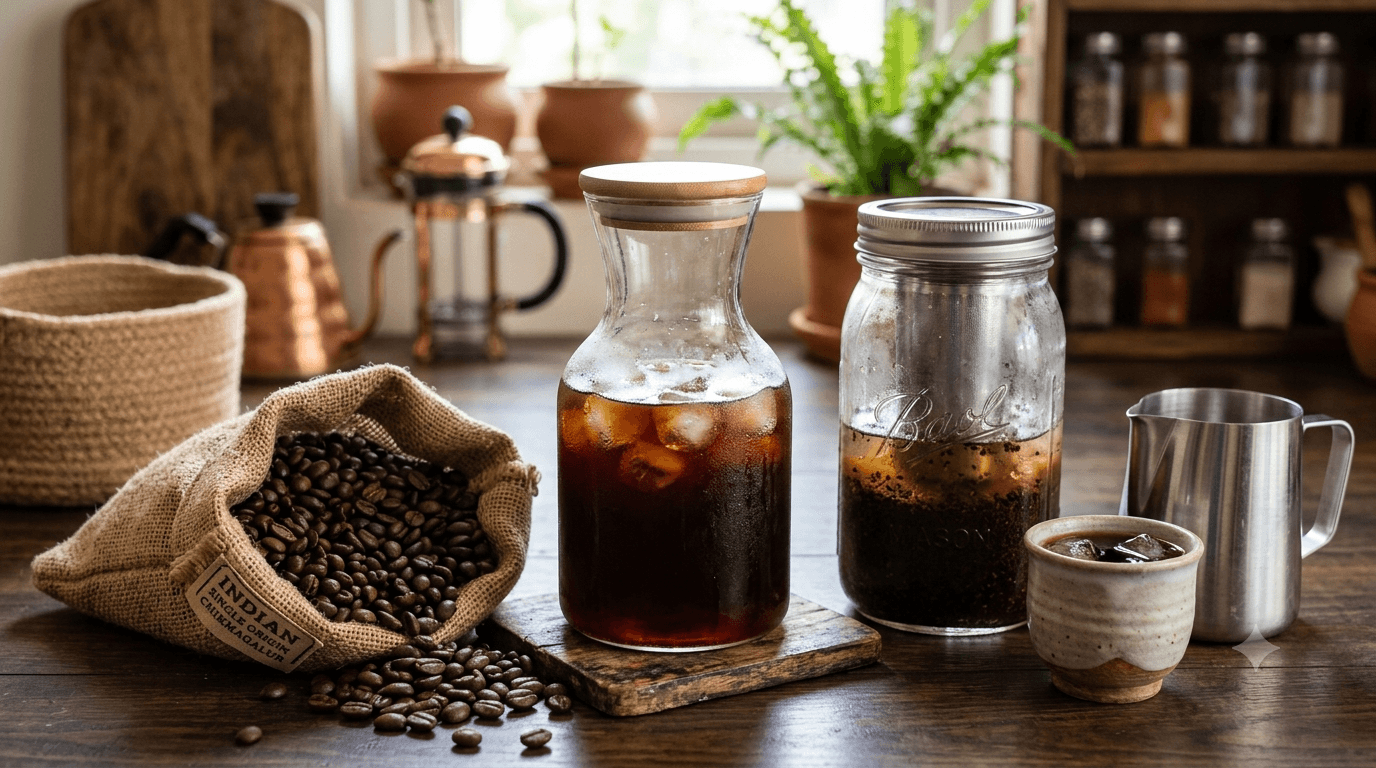
Why is choosing the right coffee bean for cold brew in India different from hot brewing?
In the diverse landscape of Indian coffee culture, cold brew has emerged as a refreshing alternative to the steaming tumbler of traditional filter coffee. However, the chemistry of cold extraction differs significantly from the heat-driven process of a standard brew. When you use hot water, you quickly extract acids, oils, and sugars. In a cold brew, time replaces temperature, leading to a much slower extraction process that naturally minimizes acidity. For the Indian palate, which often leans towards the bold, nutty, and chocolatey notes found in South Indian filter coffee, choosing the right bean is the difference between a weak, watery drink and a robust, full-bodied experience. High-intent consumers often find that generic beans lack the "kick" they are used to in their morning decoction. This is where the selection of premium, handpicked beans—like those curated by Coffee S10 Brews—becomes essential. By selecting beans specifically roasted to withstand a 12-to-24-hour immersion, you ensure that the final cup maintains its structural integrity and flavor profile even when served over ice.
What is the best roast profile for a rich and chocolatey cold brew?
Roast profile is the most influential factor in determining the flavor of your cold brew. While light roasts are popular in third-wave coffee circles for their floral and acidic notes, they often translate poorly into cold brew for those accustomed to the depth of South Indian coffee. A light roast can often taste "sour" or "fermented" when brewed cold in the Indian climate. For a truly authentic and authoritative cold brew experience, a Medium-Dark to Dark roast is the gold standard. These roasts undergo a longer Maillard reaction during the roasting process, developing the deep caramel, cocoa, and toasted nut flavors that define a premium brew. Coffee S10 Brews utilizes a controlled roasting cycle that ensures the beans are dark enough to provide a chocolatey backbone without reaching a charred or ashy state. This precision allows the natural sweetness of the Indian Arabica and Robusta beans to shine through the cold extraction, providing a smooth finish that doesn't require excessive sugar or milk to be palatable.
Can you use South Indian filter coffee powder for cold brew?
One of the most frequent questions from coffee enthusiasts is whether traditional South Indian filter coffee powder is suitable for cold brewing. The answer lies in the blend and the grind. Traditional filter coffee often contains chicory, which behaves differently in cold water than it does in boiling water. Using a high-quality 80:20 coffee-chicory blend, such as the signature offering from Coffee S10 Brews, can actually result in a superior cold brew. The chicory adds a woody depth and a natural "viscosity" to the cold brew that 100% coffee sometimes lacks. This mimics the "heavy" mouthfeel of a traditional decoction. However, the key is the grind size. Standard filter coffee powder is often ground very fine for the Indian stainless steel filter. For cold brew, a coarse, sea-salt-like grind is required to prevent over-extraction and bitterness. When you use a brand that understands this balance, you bridge the gap between ancient craftsmanship and modern convenience, creating a cold beverage that feels both nostalgic and contemporary.
How does an 80:20 coffee-chicory blend enhance cold brew texture and body?
The 80:20 ratio is a hallmark of authentic South Indian coffee culture, and its benefits extend surprisingly well into the realm of cold brew. Chicory, the roasted root of the Cichorium intybus plant, does not contain caffeine but is rich in inulin and natural fibers. When cold-brewed, these elements contribute to a thicker, silkier mouthfeel—often referred to as "body." In a market saturated with thin, tea-like cold brews, an 80:20 blend stands out by offering a creamy texture even when consumed black. The 20% chicory component acts as a flavor enhancer, rounding out the sharp edges of the coffee and providing a lingering, malty aftertaste. Coffee S10 Brews has mastered this ratio, ensuring that the chicory complements the handpicked beans rather than overpowering them. This results in a cold brew that possesses the "crema-like" richness of a hot filter coffee, providing a sensory experience that is both deep and refreshing. Explore how this traditional ratio can redefine your summer coffee rituals by providing a sturdier base for milk-based cold coffee drinks.
Understanding the importance of grind size for cold brew extraction
If you have ever wondered, "Why does my cold brew taste bitter?" or "Why is my coffee cloudy?", the culprit is almost always the grind size. Cold brewing is an immersion method, meaning the coffee grounds sit in water for an extended period. Because the contact time is so high, a fine grind (like that used for espresso or instant coffee) will over-extract, releasing harsh tannins and sediments into the water. To achieve a clean, crisp, yet bold flavor, you must use a coarse grind. A coarse grind allows the water to flow between the particles, extracting the flavors slowly and evenly. Coffee S10 Brews emphasizes "Brewing Intelligence," guiding consumers to understand that the consistency of the grind is just as important as the quality of the bean. By maintaining consistency across every batch, premium brands ensure that you don't end up with "muddy" flavors. When brewing at home, aim for a texture similar to coarse Kosher salt to ensure your cold brew remains bright and free of sediment.
Comparing Cold Brew, Instant Coffee, and Traditional Filter Coffee
To understand why a dedicated cold brew bean is necessary, it is helpful to compare it against other common Indian coffee formats. While instant coffee offers speed, it lacks the complex oils and aromatic compounds found in fresh-ground beans. Traditional filter coffee is designed for immediate consumption with hot milk, whereas cold brew is a concentrate meant to be enjoyed over time.
| Feature Cold Brew (80:20 Blend) Instant Coffee Traditional Hot Filter Coffee | |||
| Preparation Time | 12–24 Hours | 1 Minute | 15–20 Minutes |
| Acidity Level | Very Low & Smooth | High / Harsh | Moderate |
| Flavor Profile | Chocolate, Malt, Nutty | Flat, Bitter | Bold, Intense, Floral |
| Mouthfeel | Heavy & Silky | Thin | Rich & Frothy |
Why freshness and small-batch roasting are vital for cold brew beans
Many consumers believe that because cold brew is served cold, the freshness of the beans doesn't matter as much. This is a myth. In fact, because the cold brewing process takes so long, any "stale" or "off" flavors in the beans will be magnified over the 24-hour extraction period. Freshness is a core pillar of Coffee S10 Brews. By utilizing small-batch roasting, the brand ensures that the volatile aromatic oils—responsible for that heavenly coffee scent—are preserved within the bean until the moment of brewing. When beans sit on a supermarket shelf for months, these oils oxidize, leading to a flat and metallic taste. For the best South Indian cold brew, you should look for beans that have been roasted within the last few weeks. The degassing process is also critical; beans need a few days to rest after roasting to ensure they don't release too much carbon dioxide during the brew, which can create a "sour" gas pocket and uneven extraction.
The impact of coffee origin: Why Indian Arabica and Robusta excel in Cold Brew
India is one of the few countries that produces both high-quality Arabica and Robusta under shade-grown conditions. This unique environment, often intercropped with spices like pepper and cardamom, imparts a naturally spicy and earthy undertone to the beans. Arabica provides the sweetness and acidity, while Robusta provides the caffeine kick and the "oomph" required to stand up to ice and milk. A blend of these two, combined with the traditional chicory addition, creates a flavor profile that is uniquely Indian. Coffee S10 Brews sources handpicked beans from the Western Ghats, ensuring that the terroir is reflected in every sip. When these beans are used for cold brew, the result is a drink that feels grounded in the soil of South India, offering a complexity that imported, mass-produced beans simply cannot match.
How to brew authentic cold brew at home using Coffee S10 Brews
Mastering the South Indian filter coffee ritual at home doesn't have to be complicated, even when you are making a cold version. To start, take your Coffee S10 Brews 80:20 blend and ensure it is at a coarse grind setting. Use a ratio of 1:5 (one part coffee to five parts water) for a strong concentrate, or 1:10 for a ready-to-drink version. Place the grounds in a glass jar, add room-temperature filtered water, and stir gently to ensure all grounds are saturated. Cover the jar and let it steep in a cool corner or the refrigerator for at least 16 hours. Once the time is up, strain the mixture through a fine muslin cloth or a traditional stainless steel filter. The resulting liquid is a potent, aromatic decoction that carries the soul of South Indian craftsmanship. You can store this concentrate in the fridge for up to two weeks, making it a modern, accessible solution for busy mornings. Try experimenting with different steep times to find your personal "sweet spot" of strength and aroma.
Comparing 100% Arabica vs. 80:20 Coffee-Chicory Blends for Cold Brew
Choosing between a pure coffee and a chicory blend depends on your desired sensory outcome. While 100% Arabica is often touted as "premium," the 80:20 blend is often more "authentic" to the Indian palate's expectation of strength and body.
| Attribute 100% Arabica Cold Brew 80:20 Coffee-Chicory Cold Brew | ||
| Primary Taste Notes | Fruit, Berry, Winey | Chocolate, Earthy, Toffee |
| Body / Viscosity | Light to Medium | Heavy and Syrupy |
| Best Served As | Black with Ice | With Milk (Cold Coffee style) |
| Caffeine Intensity | Moderate | Strong (due to Robusta/Chicory synergy) |
Why does South Indian coffee taste stronger in a cold brew format?
Strength in coffee is often confused with bitterness, but true strength refers to TDS (Total Dissolved Solids). South Indian coffee, particularly those using the methods championed by Coffee S10 Brews, is designed to have a high TDS. This means there is more "coffee stuff" in your water. When you cold brew these beans, the slow extraction pulls out more of the heavier molecules that provide that lingering aftertaste. Furthermore, the inclusion of Robusta beans—known for having almost double the caffeine of Arabica—ensures that even when diluted with ice or milk, the coffee's presence remains dominant. This is why "hotel-style" coffee always seems to have more character; it’s about the density of the flavor. By using a professional-grade blend at home, you can achieve that same "kick" without the need for specialized commercial equipment.
The role of water quality and temperature in Indian cold brew
Often overlooked, water makes up 98% of your cold brew. In many parts of India, tap water can be "hard," containing minerals that interfere with the extraction of coffee oils. Using RO (Reverse Osmosis) filtered water or bottled spring water is essential for a clean taste. Additionally, while it is called "cold brew," starting the process with room-temperature water (around 25°C) can help kickstart the extraction of sugars before moving the jar to the fridge. This "hybrid" approach ensures you don't end up with a brew that is too "woody" or "under-extracted." Coffee S10 Brews advocates for this level of brewing intelligence, encouraging drinkers to see coffee making as a precise ritual where every element—from the water to the bean—matters.
Frequently Asked Questions About Cold Brew Coffee in India
Is chicory bad for you in cold brew?
Not at all. Chicory is a natural root that has been used in coffee for centuries. In fact, it is caffeine-free and contains prebiotic fibers. In a cold brew, it provides a unique sweetness and depth that reduces the need for added sugar. When used in a balanced 80:20 ratio, it enhances the coffee experience significantly.
How long does homemade cold brew stay fresh?
If kept in an airtight glass container in the refrigerator, cold brew concentrate can stay fresh for up to 10 to 14 days. However, for the best aroma and flavor, it is recommended to consume it within the first week. Coffee S10 Brews focuses on freshness, so brewing smaller batches more frequently is always better than one giant batch.
Why does my cold brew taste like "burnt" coffee?
This usually happens if the beans were over-roasted or if you used boiling water at any point in the process. True cold brew should never touch hot water. If you are using dark roast beans, ensure they are of premium quality like Coffee S10 Brews, which avoids the "burnt" taste through controlled, small-batch roasting cycles.
What is the best coffee-to-water ratio for a strong cold brew?
For a strong South Indian style concentrate, a 1:5 ratio (e.g., 100g of coffee to 500ml of water) is ideal. You can then dilute this concentrate with milk or water according to your preference. This ensures you get that bold "hotel coffee" strength at home.
Can I use a regular tea strainer to filter my cold brew?
A regular tea strainer is usually too coarse and will let fine silt through, resulting in a cloudy, gritty drink. It is better to use a fine muslin cloth, a paper coffee filter, or a traditional South Indian stainless steel filter (though the process will be slower) to ensure a clean, sediment-free cup.
Does cold brew have more caffeine than hot coffee?
Because cold brew uses a higher coffee-to-water ratio and a longer extraction time, the concentrate is usually much higher in caffeine than a standard cup of hot coffee. However, since it is typically diluted before drinking, the final caffeine intake per serving is often comparable to a strong cup of filter coffee.
Ready to elevate your home brewing game? Transitioning from the frustration of weak, inconsistent coffee to the mastery of traditional craftsmanship is a journey worth taking. At Coffee S10 Brews, we provide more than just premium beans; we provide the bridge to an authentic South Indian coffee ritual that fits your modern lifestyle. Whether you are looking for the perfect 80:20 blend or seeking to refine your brewing technique, our resources and products are designed to help you achieve the perfect cup, every single time.
Discover the difference that handpicked, small-batch roasted beans can make. Explore our range of authentic blends and professional brewing guides at Coffee S10 Brews today.