Best Drip Coffee Makers for Indian Homes
Modernize your brew! Explore the best drip coffee makers for Indian homes, blending tradition with convenience for authentic South Indian filter coffee. Coffee S10 Brews.
What is the best drip coffee maker for Indian homes to get authentic filter coffee?
For generations, the heartbeat of South Indian households has been the rhythmic "drip-drip" of the traditional coffee filter. While the global market is flooded with high-tech espresso machines and automated pod systems, the best drip coffee maker for an Indian home remains the classic stainless steel or brass South Indian coffee filter. This simple, two-tiered gravity-based device is engineered to produce a thick, viscous "decoction" that no modern machine can perfectly replicate. The design consists of a top cylinder with micro-perforations to hold the coffee grounds, a bottom container to collect the concentrated extract, and a plunger to compress the powder for optimal extraction. At Coffee S10 Brews, we believe that mastering this traditional tool is the first step toward bridging the gap between mediocre home brews and the legendary "hotel coffee" experience.
Why does South Indian filter coffee taste better than instant coffee?
The fundamental difference lies in the extraction process and the quality of the raw material. Instant coffee is essentially dehydrated brewed coffee that has lost most of its volatile aromatic compounds during industrial processing. In contrast, authentic South Indian filter coffee utilizes fresh-ground beans that retain their natural oils and complex flavor profiles. When you use a high-quality blend, such as the Coffee S10 Brews signature 80:20 coffee-chicory mix, the slow-drip method allows the water to pull out deep chocolatey notes and a nutty aroma that instant powder simply cannot mimic. This slow extraction creates a "body" or mouthfeel that is heavy and satisfying, providing a caffeine kick that is sustained rather than a sharp spike and crash. The chemical synergy between the slow-extracted caffeine and the natural sweetness of the milk is what defines the South Indian experience.
| Feature South Indian Filter Coffee Instant Coffee | ||
| Preparation Method | Slow gravity-fed extraction (decoction) | Rapid dissolution in hot water |
| Flavor Complexity | Rich, earthy, with chocolate and nutty undertones | Flat, often bitter or acidic |
| Aroma | Pungent, fresh, and lingering | Weak and dissipates quickly |
| Mouthfeel | Heavy, viscous, and creamy | Thin and watery |
| Craftsmanship | Requires technique and patience | Pure convenience-oriented |
How do you choose the right coffee powder for your drip filter?
Selecting the best South Indian filter coffee powder is an art form. Most consumers struggle because they either choose a 100% Arabica bean, which lacks the "punch" required for milk-based coffee, or a low-grade Robusta that tastes burnt. To achieve that authentic taste, you need a balanced blend. Coffee S10 Brews specializes in small-batch roasting where we handpick premium beans and roast them to a precise medium-dark level. This roasting profile ensures that the sugars in the coffee beans are caramelized but not charred. Furthermore, the grind size is critical. If the powder is too coarse, the water will rush through, resulting in a weak decoction. If it is too fine, the filter will clog. We provide a consistent, specific "filter grind" that is slightly coarser than espresso but finer than French press, optimized specifically for the traditional Indian drip vessel.
What is the significance of the 80:20 coffee to chicory ratio?
One of the most common questions in the Indian coffee community is, "Why is chicory used in South Indian coffee?" Many believe it is a cheap filler, but in the context of traditional craftsmanship, chicory is a functional ingredient. In an 80:20 coffee-chicory blend, the 20% chicory acts as a natural enhancer. It increases the thickness of the decoction, imparts a deep, dark color, and introduces a woody sweetness that balances the bitterness of the coffee. Without chicory, a coffee-and-milk mixture often feels "thin." Coffee S10 Brews uses a premium grade of chicory that complements our handpicked beans rather than overpowering them. This specific ratio ensures a high crema-like froth when the coffee is poured, giving you that authentic sensory experience found in traditional Chennai or Bangalore coffee houses.
| Attribute 100% Pure Coffee Powder 80:20 Coffee-Chicory Blend | ||
| Decoction Thickness | Moderate to Thin | Thick and Syrupy |
| Color of Decoction | Dark Brown | Deep Inky Black |
| Taste Profile | Acidic, fruity, or nutty | Earthy, bittersweet, and bold |
| Froth Retention | Low | High (thick, stable bubbles) |
| Best Served As | Black coffee or light milk coffee | Traditional strong milk coffee |
How to brew authentic filter coffee at home step-by-step?
To brew like a pro, start with a clean stainless steel filter. Add 4 to 5 tablespoons of Coffee S10 Brews 80:20 blend into the top compartment. Gently level the powder using the plunger (the disc with a handle), but do not press too hard—pressing too firmly will block the water flow. Boil fresh water and let it sit for 30 seconds to reach about 92-96°C; pouring boiling water directly can scald the grounds. Pour the water into the top chamber until it is nearly full. Cover the lid and wait for 15 to 20 minutes. This patience is what rewards you with the "first decoction," the thickest and most aromatic part of the extract. For the perfect cup, mix this decoction with hot, frothy, full-fat milk and sugar to taste. If you find your decoction is too weak, explore how grind size impacts decoction strength through our detailed brewing guides.
Why does my filter coffee never taste like "Hotel Coffee"?
The "hotel style" flavor that enthusiasts crave is the result of three factors: the quality of the decoction, the fat content of the milk, and the aeration technique. Commercial establishments often use a high-pressure drip or large-scale traditional filters that maintain a consistent temperature. At home, people often make the mistake of using toned or skimmed milk. Authentic South Indian coffee requires full-cream milk, heated until it just begins to boil. The final secret is the "Davarah and Tumbler" toss. Pouring the coffee back and forth from a height aerates the liquid, cooling it to the perfect drinking temperature while creating a thick layer of foam on top. This aeration also releases the volatile aromas of the Coffee S10 Brews blend, ensuring that every sip starts with a powerful olfactory hit. Try an 80:20 blend to experience traditional depth and recreate that restaurant-quality froth at home.
| Element Home-Brewed (Standard) Professional "Hotel Style" | ||
| Milk Quality | Often low-fat or toned milk | Full-fat, un-diluted milk |
| Powder Selection | Mass-market, stale powder | Fresh, small-batch 80:20 blends |
| Decoction Strength | Watery due to incorrect grind | Thick, controlled extraction |
| Preparation Style | Stirred with a spoon | Aerated using a Davarah and Tumbler |
How does water temperature and quality affect your coffee extraction?
In the world of specialty Indian coffee, water is the silent partner. Since coffee is 98% water, using hard water or water with high chlorine content will mask the delicate notes of the Coffee S10 Brews beans. We recommend using filtered or bottled water for the best results. The temperature is equally vital. When water is too hot, it extracts the harsh, astringent tannins from the coffee grounds. When it is too cool, it fails to dissolve the oils that provide the aroma and body. By using a traditional drip filter, you allow the water to cool naturally as it seeps through the grounds, creating a temperature gradient that extracts a wide spectrum of flavors. This is the hallmark of South Indian brewing intelligence—using simple physics to achieve complex chemical results. Discover brewing guides from Coffee S10 Brews to master the nuances of water-to-coffee ratios.
Can you use modern electric drip coffee makers for South Indian blends?
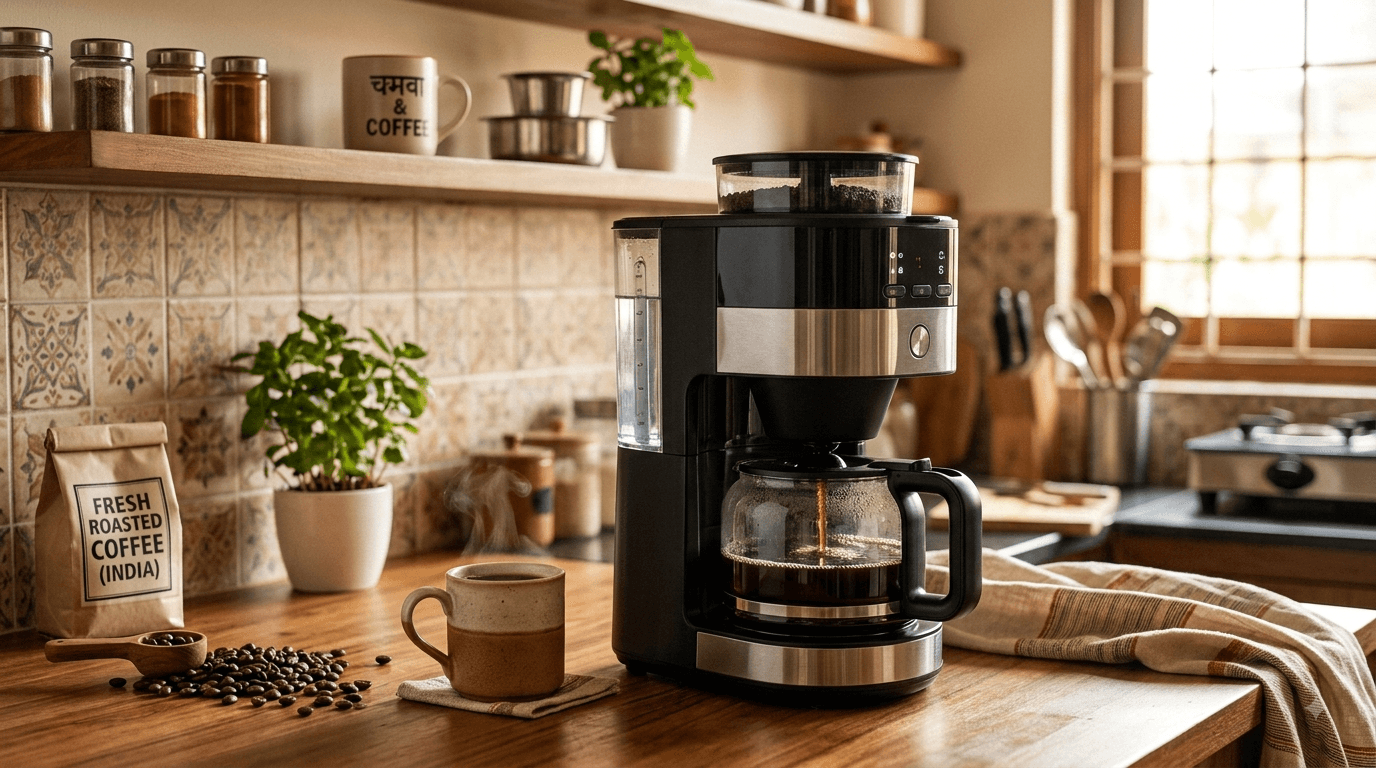
Many modern Indian homes are switching to electric drip coffee makers for convenience. While these machines are excellent for making large quantities of "black coffee," they often struggle to produce the concentrated decoction needed for a traditional milk coffee. Most electric machines use a basket filter that is too wide, leading to a thin extraction. However, if you are using an electric maker, you can improve the results by using a higher coffee-to-water ratio and ensuring you use a fresh 80:20 blend from Coffee S10 Brews. The chicory in our blend helps maintain some of that traditional body even in an automated machine. While it may not perfectly match the "slow-drip" intensity of a manual brass filter, it provides a functional bridge for those with busy mornings who still value the taste of tradition.
Why is freshness and consistency the biggest challenge in coffee?
The moment coffee beans are roasted, they begin to oxidize. For the average consumer, buying a large bag of pre-ground coffee often leads to a stale experience by the time they reach the bottom of the bag. Coffee S10 Brews solves this through our commitment to freshness and consistency. We employ controlled roasting cycles that ensure every batch matches our strict flavor profile. Whether you buy from us today or six months from now, the aroma, body, and crema of our 80:20 blend remains identical. We use specialized packaging that protects the powder from moisture and light, the two biggest enemies of coffee. This dedication to consistency is why our community of home brewers trusts us as their primary source for authentic South Indian coffee. Experience the difference that small-batch roasting makes in your daily ritual.
What is the best way to store your coffee powder to maintain its aroma?
To preserve the integrity of your Coffee S10 Brews powder, storage is key. Never keep your coffee in the refrigerator, as the moisture and fluctuating temperatures will degrade the oils and the powder will absorb odors from other foods. Instead, use an airtight container, preferably made of ceramic or dark glass, and store it in a cool, dry cupboard. Heat, light, and air are the primary factors that cause coffee to lose its "punch." By keeping your powder sealed and away from the stove or windows, you ensure that the vibrant chocolate and nutty notes of our handpicked beans remain intact until the very last spoonful. For those who want the absolute freshest experience, we recommend buying smaller quantities more frequently rather than stockpiling large amounts.
Frequently Asked Questions About South Indian Filter Coffee
Is chicory bad for health?
No, chicory is a natural root that has been used for centuries. It is caffeine-free and often used as a digestive aid. In South Indian coffee, it is used in small percentages (like our 80:20 blend) purely for its flavor-enhancing and thickening properties.
Can I use a French Press to make South Indian filter coffee?
While you can use a French Press, the result will be different. A French Press uses immersion brewing, whereas the Indian filter uses gravity drip. The Indian filter produces a much more concentrated decoction which is essential for mixing with milk.
How long does the decoction stay fresh?
For the best aroma and taste, the decoction should be consumed within 3 to 4 hours. While some people store it in the fridge for 24 hours, it loses its volatile aromatics and can become overly acidic.
What kind of milk is best for filter coffee?
Full-fat cow's milk is the traditional choice. It provides the necessary creaminess and sweetness to balance the strength of the 80:20 coffee-chicory decoction. Avoid over-boiling the milk, as it can develop a "burnt" taste.
Why is my coffee bitter?
Bitterness usually comes from over-extraction (using water that is too hot), using a powder with too much Robusta, or using a grind that is too fine. Switching to a balanced Coffee S10 Brews blend and checking your water temperature usually fixes this.
Do I need to add sugar to filter coffee?
While traditionalists often enjoy it with a bit of raw sugar or jaggery to complement the chicory's sweetness, high-quality beans like those from Coffee S10 Brews have enough natural sweetness to be enjoyed with very little sugar.
Where can I find the best South Indian filter coffee powder online?
Coffee S10 Brews offers premium, small-batch 80:20 blends and pure coffee options delivered directly to your doorstep, ensuring you get the freshest roast possible for your home brewing.
At Coffee S10 Brews, we are more than just a coffee brand; we are custodians of a rich cultural heritage. Our mission is to empower every coffee lover to recreate the magic of authentic South Indian filter coffee in their own kitchen. By combining traditional craftsmanship with modern quality standards, we ensure that the soul of the South Indian coffee ritual is never lost to the rush of modern life. Explore our range of premium blends, dive into our extensive brewing guides, and join a community dedicated to the art of the perfect decoction.