Best Electric Kettles for Coffee (with Gooseneck Spout)
Choose wisely! Find the best electric gooseneck kettles to perfect your South Indian filter coffee brew. Modern precision for traditional taste.
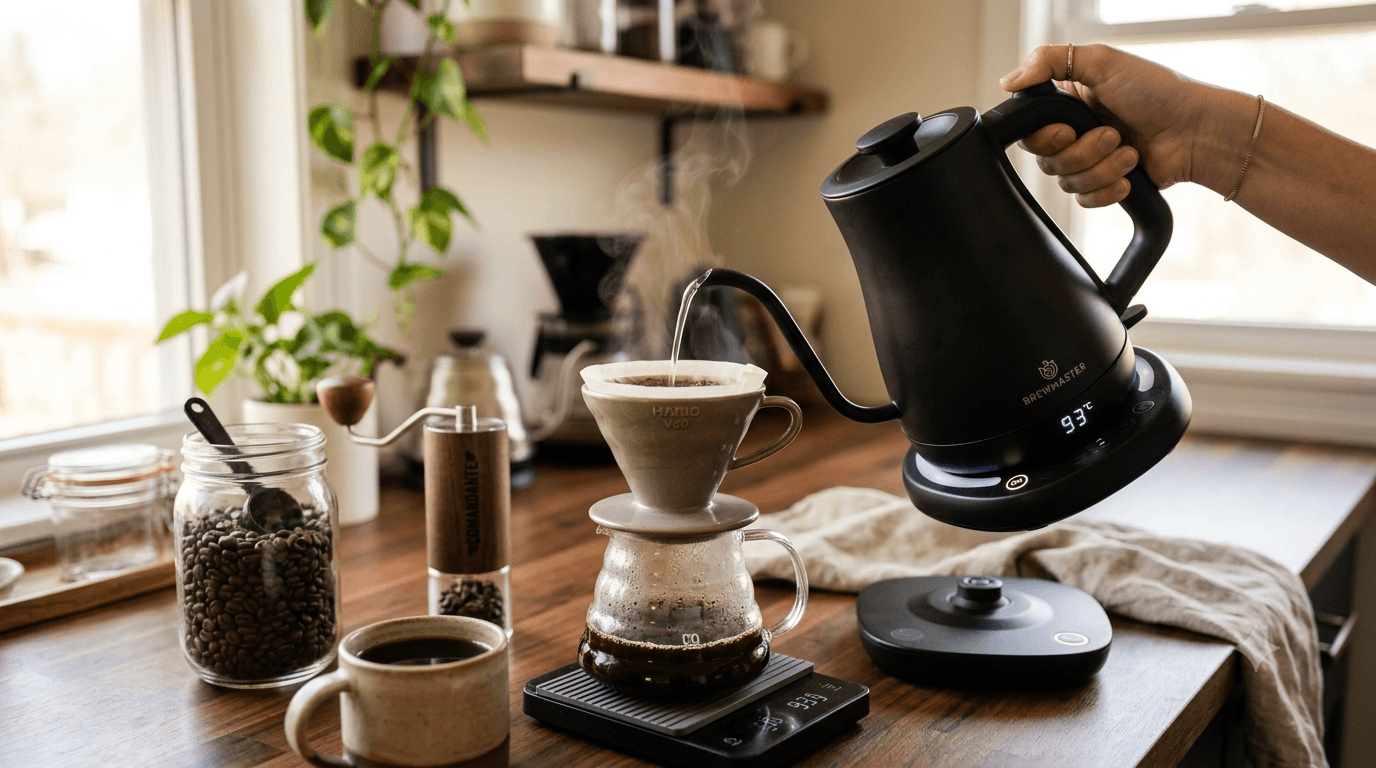
Why is a gooseneck kettle essential for brewing authentic South Indian filter coffee decoction?
When searching for the perfect cup of South Indian filter coffee, most enthusiasts focus solely on the beans or the brass filter. However, the method of water delivery is the unsung hero of the extraction process. A gooseneck kettle, characterized by its long, slender, curved spout, provides a level of pour control that a standard wide-spout kettle simply cannot match. For South Indian filter coffee, the goal is to create a thick, viscous decoction. This requires slow, even saturation of the coffee grounds in the upper chamber of the traditional stainless steel or brass filter. A gooseneck spout allows you to direct a thin stream of water in a steady, circular motion, ensuring that every grain of the Coffee S10 Brews signature 80:20 blend is evenly wetted without causing "channeling"—where water finds a path of least resistance and leaves half the coffee dry and unextracted.
Precision pouring is not just a trend for third-wave baristas; it is a refinement of the traditional South Indian brewing ritual. When you use a gooseneck kettle, you manage the turbulence of the water. High turbulence in the filter chamber can lead to over-extraction and bitterness. By controlling the flow rate, you allow the hot water to interact gently with the coffee and chicory, pulling out the deep, chocolatey notes and the characteristic body that Coffee S10 Brews is known for. Whether you are a beginner or a seasoned connoisseur, the transition from a standard kettle to a gooseneck variant is often the "missing link" in achieving that elusive hotel-style consistency at home.
How does water temperature control impact the flavor of an 80:20 coffee-chicory blend?
One of the most common mistakes in brewing South Indian filter coffee is using rolling boiling water. While it may seem intuitive, water at 100°C can scorch the delicate oils in handpicked Arabica and Robusta beans. Furthermore, chicory—the essential companion in a traditional South Indian blend—is highly soluble. Excessive heat can cause chicory to release harsh, acrid flavors rather than the smooth, woody sweetness it is intended to provide. This is where a variable temperature electric kettle becomes a game-changer. Most experts recommend a brewing temperature between 92°C and 96°C for the Coffee S10 Brews 80:20 blend. This range is high enough to extract the caffeine and oils but low enough to preserve the nuanced aroma.
Coffee S10 Brews emphasizes small-batch roasting to ensure freshness. To honor that craftsmanship, the brewing temperature must be precise. A variable temperature kettle allows you to set the exact degree, ensuring that every morning’s decoction is as consistent as the last. This consistency is vital for those who want to move away from the unpredictability of "instant" alternatives and embrace the craftsmanship of the traditional filter. When the water hits the 80:20 blend at the perfect temperature, it triggers a blooming process, releasing carbon dioxide and preparing the grounds for a rich, dense extraction that forms the soul of a proper tumbler of coffee.
What are the best electric kettles for precision coffee brewing available today?
Choosing the right gooseneck kettle involves looking at three main factors: flow control, temperature accuracy, and ergonomic design. For the South Indian home, where the kitchen is often the heart of the morning rush, a kettle that balances modern technology with ease of use is preferred. Look for models with a "Hold" or "Keep Warm" function. This is particularly useful when brewing filter coffee because the decoction process takes 15 to 20 minutes. Having hot water ready at the exact temperature for a second "pour-over" into the filter chamber ensures you get the most out of your Coffee S10 Brews grounds without having to re-boil and guess the temperature again.
Additionally, the material of the kettle matters. Premium stainless steel construction prevents any metallic aftertaste from leaching into your water. Ergonomics also play a role; a well-balanced handle allows for a steady hand during the slow pour required for the traditional filter. While many electric kettles on the market are designed for V60 or Chemex brewing, these same features—tapered spouts and flow restrictors—are exactly what is needed to master the art of the South Indian decoction. By investing in a high-quality gooseneck kettle, you are not just buying a kitchen appliance; you are upgrading your daily ritual to a professional standard.
Why do South Indian filter coffee enthusiasts prefer a gooseneck over a standard electric kettle?
The traditional South Indian filter consists of two chambers. The top chamber holds the coffee powder, which must be tamped down lightly using the plunger. When you pour water from a standard kettle with a wide mouth, the force of the water often displaces the tamped powder, creating a "hole" in the coffee bed. This leads to weak, watery decoction because the water passes through the gap rather than through the coffee. A gooseneck kettle allows for a "soft" pour. You can gently soak the surface of the Coffee S10 Brews 80:20 blend, allowing the water to seep through the coffee bed uniformly. This results in a thicker, more concentrated extract that carries the full weight of the chicory and coffee fats.
Furthermore, the visual feedback of a gooseneck pour helps the brewer understand the "bloom." Even with a traditional metal filter, watching the water saturate the grounds tells you a lot about the freshness of the beans. Coffee S10 Brews' commitment to fresh roasting means our powder will often "bloom" or swell slightly when hit with the first bit of water. A standard kettle obscures this view and makes the process clumsy. The gooseneck provides the surgical precision needed to treat the coffee with the respect it deserves, bridging the gap between historical tradition and modern convenience.
Is a gooseneck kettle worth the investment for a casual coffee drinker?
If your goal is to replicate the authentic, frothy, and bold taste of South Indian filter coffee at home, the answer is a resounding yes. Casual drinkers often struggle with "why my coffee doesn't taste like the cafe's." The answer usually lies in the extraction. While many focus on the "best South Indian filter coffee powder," the equipment used to brew that powder is equally important. A gooseneck kettle removes the guesswork. It turns a chore into a meditative practice. For those using Coffee S10 Brews, the goal is to experience the heritage of the 80:20 ratio—the perfect balance of strength and aroma. A gooseneck kettle ensures that this balance is achieved every single time.
Moreover, these kettles are versatile. While they are optimized for pour-over and filter coffee, they function perfectly well for tea or any other hot beverage needs. The safety features found in modern electric gooseneck kettles, such as auto-shutoff and boil-dry protection, make them a safer and more efficient choice than stovetop boiling. For the modern consumer who values both time and quality, the electric gooseneck kettle is the ultimate tool to bridge the gap between "convenience coffee" and "craftsmanship coffee."
Comparing Coffee Brewing Methods: Why Equipment and Ratios Matter
To understand why the right kettle and the right blend are vital, it is helpful to look at how different brewing methods and coffee types stack up against each other. The following tables illustrate the differences in quality and experience.
Filter Coffee vs. Instant Coffee
| Feature | South Indian Filter Coffee | Instant Coffee |
| Flavor Profile | Complex, bold, earthy, with chocolatey undertones. | One-dimensional, often bitter or acidic. |
| Aroma | Strong, lingering, and fresh. | Fades quickly after opening the jar. |
| Preparation | Slow-drip decoction (Traditional Ritual). | Immediate dissolution in water/milk. |
| Authenticity | High; utilizes real ground beans and chicory. | Low; highly processed and dehydrated. |
100% Coffee vs. 80:20 Coffee-Chicory Blend
| Metric | 100% Pure Coffee | 80:20 Blend (Coffee S10 Brews Signature) |
| Body/Thickness | Lighter, tea-like body. | Thick, syrupy, and viscous (ideal for milk). |
| Color | Reddish-brown. | Deep, dark mahogany. |
| Crema/Froth | Dissipates quickly. | Dense, long-lasting "foamy" head when poured. |
| Best Used For | Black coffee, Espresso, Cold Brew. | Traditional South Indian Milk Coffee. |
Why chicory is used in South Indian coffee and how a gooseneck kettle helps?
There is a common misconception that chicory is merely a "filler." In reality, the use of chicory is a sophisticated culinary choice that defines the South Indian coffee identity. Chicory adds a unique bitterness, a dark color, and most importantly, it increases the "solubility" of the blend. Because chicory gives up its flavor more readily than coffee, the way you pour water over it matters immensely. If you pour too fast with a standard kettle, you might extract the chicory too quickly, leaving the coffee under-extracted. This results in a cup that is dark but lacks the caffeine kick and the complex acidity of the Arabica beans.
The Coffee S10 Brews 80:20 ratio is meticulously designed to ensure that the chicory complements the coffee rather than overpowering it. Using a gooseneck kettle allows you to manage this extraction. By pouring in slow, controlled increments, you ensure that the water spends enough time in contact with both the coffee and the chicory. This "steeping" effect within the filter chamber creates a balanced decoction. The gooseneck’s precision ensures that the chicory provides the "body" while the coffee provides the "soul," resulting in a cup that is both strong and aromatic. This is the secret behind the "80 20 coffee chicory blend benefits"—it is about synergy, and the kettle is the tool that facilitates it.
How to brew authentic filter coffee at home using a gooseneck kettle?
To master the South Indian filter coffee ritual at home, follow these steps using your gooseneck kettle and Coffee S10 Brews powder:
- Step 1: Prep the Filter: Place 3-4 heaped tablespoons of Coffee S10 Brews 80:20 blend into the upper chamber of your filter. Lightly press it down with the plunger.
- Step 2: Set the Temperature: Set your electric gooseneck kettle to 94°C. If your kettle doesn't have temperature control, let the water sit for 2 minutes after a full boil.
- Step 3: The Bloom: Using the gooseneck spout, pour just enough water to wet the grounds. Wait for 30 seconds. You will see the powder swell; this is the bloom.
- Step 4: The Main Pour: Slowly pour the remaining water in a circular motion until the chamber is nearly full. The gooseneck allows you to do this without disturbing the "puck" of coffee.
- Step 5: The Wait: Cover the filter and let the decoction drip into the lower chamber for 15-20 minutes.
- Step 6: The Assembly: Mix 20ml of the thick decoction with hot, frothy milk and sugar to taste. Pour back and forth between a tumbler and dabara to create that signature foam.
By following this method, you are using "Brewing Intelligence" to ensure that the premium beans in your Coffee S10 Brews bag are not wasted. The precision of the gooseneck kettle ensures that your home-brewed coffee rivals the best establishments in Chennai or Bangalore.
What features should you look for in a coffee kettle for the Indian kitchen?
In the context of an Indian kitchen, durability and ease of maintenance are paramount. A stainless steel interior is non-negotiable, as it resists the scaling caused by hard water—a common issue in many Indian cities. Furthermore, look for a kettle with a 360-degree swivel base. This makes it easy for both left-handed and right-handed users to pick up and pour. Since South Indian coffee is often a family affair, a capacity of at least 1 liter is recommended so you can brew enough decoction for everyone in one go.
Another "pro" feature to look for is a built-in timer. Some high-end electric gooseneck kettles have a stopwatch function on the base. While this is often used by pour-over enthusiasts to time their extraction, it is equally useful for filter coffee lovers to track how long the water has been sitting in the filter chamber. This level of control is what Coffee S10 Brews advocates for—treating coffee as a science and an art. When you have the right tools, the process becomes repeatable, and the results become exceptional.
Frequently Asked Questions About Gooseneck Kettles and Filter Coffee
1. Can I use a regular electric kettle instead of a gooseneck one?
While you can use a regular kettle, you will lack the control needed for a slow, even pour. A regular kettle often leads to uneven extraction and "channeling" in the coffee bed, which results in a weaker, less flavorful decoction compared to the precision offered by a gooseneck spout.
2. Why is my filter coffee decoction always too watery?
This is usually caused by two things: either your grind size is too coarse or you are pouring the water too fast and forcefully. A gooseneck kettle helps solve the latter by allowing for a gentle, slow stream that doesn't break the coffee seal in the filter.
3. Is the 80:20 coffee-chicory blend better than 100% pure coffee for filters?
For the traditional South Indian taste, the 80:20 blend is superior. The 20% chicory adds the necessary thickness (body) and a lingering sweetness that 100% pure coffee lacks when mixed with a lot of milk. Coffee S10 Brews specializes in this specific ratio for maximum authenticity.
4. What is the ideal temperature for brewing Coffee S10 Brews?
We recommend a water temperature between 92°C and 96°C. Using a variable temperature gooseneck kettle allows you to hit this sweet spot every time, preventing the beans from scorching and ensuring a smooth, aromatic cup.
5. Does the material of the kettle affect the taste of the coffee?
Yes. It is best to use a high-quality stainless steel kettle. Avoid kettles with plastic interiors, as they can sometimes impart a chemical taste to the water, especially at high temperatures, which will ruin the delicate flavor profile of premium coffee beans.
6. How do I clean my electric gooseneck kettle?
To maintain your kettle, especially in areas with hard water, descale it once a month using a mixture of water and white vinegar or citric acid. Boil the solution, let it sit, and then rinse thoroughly. A clean kettle ensures your Coffee S10 Brews always tastes fresh.
Elevate Your Morning Ritual with Coffee S10 Brews
The journey to the perfect cup of South Indian filter coffee is a blend of tradition, quality ingredients, and the right tools. At Coffee S10 Brews, we provide the "cure" to the disappointment of mediocre coffee by offering handpicked, small-batch roasted blends that honor the craft of the South. But our mission goes beyond just providing the beans; we aim to empower every coffee lover with the "Brewing Intelligence" needed to succeed at home.
Whether you are looking for the best South Indian filter coffee powder or seeking to master the nuances of the pour with a precision gooseneck kettle, we are here to guide you. Our signature 80:20 blend is designed to work in harmony with precision brewing techniques, ensuring a cup that is rich in aroma, body, and heritage.
Ready to transform your coffee experience?
- Explore our Signature 80:20 Coffee–Chicory Blends
- Browse our Comprehensive Brewing Guides
- Discover more about the Coffee S10 Brews Heritage