Best Roast Level for Espresso Machines
Master your espresso at home! Discover the best roast level for espresso machines with Coffee S10 Brews. Achieve café-like perfection & unlock rich Indian coffee flavors.
What is the best roast level for espresso machines to achieve a traditional South Indian flavor?
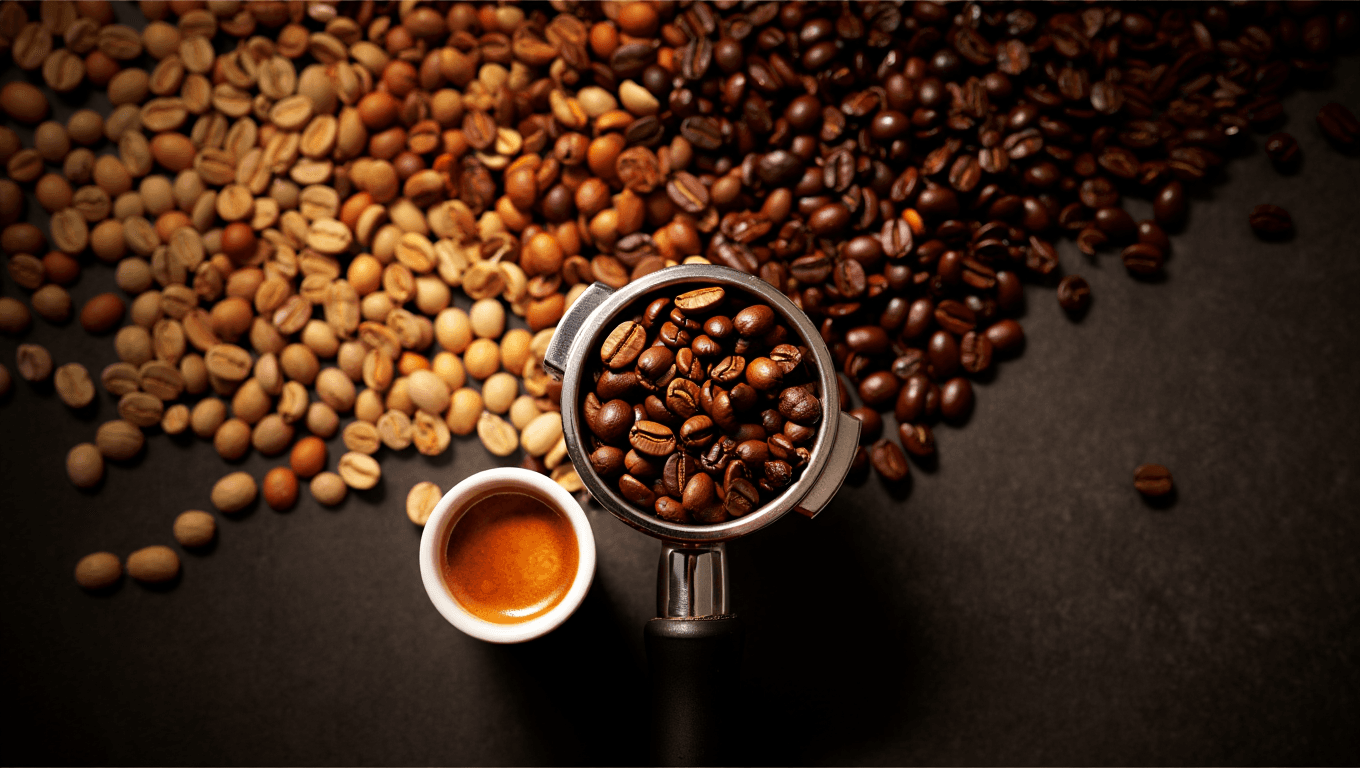
When transitioning from the traditional stainless steel dabara to a modern espresso machine, the most common question revolves around the roast profile. To replicate the deep, soulful intensity of South Indian filter coffee in an espresso environment, a medium-dark roast is the undisputed champion. Unlike light roasts, which highlight acidic, fruity notes that can feel "thin" or "sour" to a palate accustomed to traditional brews, a medium-dark roast facilitates the development of chocolatey, nutty, and caramelized notes. At Coffee S10 Brews, we meticulously control our roasting cycles to ensure the beans reach that precise second crack, where the oils begin to surface, providing the necessary viscosity for a rich espresso shot that mirrors the strength of a traditional decoction.
Why do medium-dark roasts produce the best crema in home espresso setups?
Crema—the golden-brown froth atop a well-pulled espresso—is often the benchmark of quality. For those seeking the "hotel-style" coffee experience at home, roast level plays a pivotal role. Medium-dark roasts are more porous than light roasts, allowing for a more efficient release of carbon dioxide during high-pressure extraction. This gas, combined with the natural oils found in premium Arabica and Robusta beans, creates a stable, velvety crema. When you use a blend like the Coffee S10 Brews signature 80:20 ratio, the chicory acts as a natural emulsifier, further stabilizing this foam and giving your espresso a body that feels substantial even after milk is added. This ensures that the coffee’s character isn't lost in the dilution of a latte or a traditional frothy milk preparation.
How does an 80:20 coffee-chicory blend perform in high-pressure espresso extraction?
There is a common misconception that espresso machines are reserved exclusively for 100% specialty coffee. However, for the South Indian diaspora and coffee enthusiasts, the 80:20 coffee-chicory blend is the secret to achieving that "authentic" depth. In a high-pressure espresso machine (9 bars of pressure), the chicory extracts differently than it does in a gravity-fed drip filter. Because chicory is highly water-soluble, it contributes a dark, syrupy consistency and a unique woody sweetness that balances the intensity of the roasted beans. Coffee S10 Brews leverages this by ensuring our grind size is optimized; if the grind is too fine, chicory can lead to over-extraction, but with our calibrated consistency, you get a balanced, heavy-bodied shot that serves as the perfect base for a "South Indian Espresso."
Why is my home espresso tasting sour compared to traditional South Indian hotel coffee?
The "sour" profile in home-brewed espresso is often a result of under-extraction, which is frequently caused by using a roast that is too light or a grind that is too coarse. Traditional South Indian "hotel coffee" is prized for its bitterness and lingering aftertaste—qualities that are the antithesis of sourness. To fix this, you need a roast that has undergone a longer Maillard reaction. Coffee S10 Brews’ small-batch roasting process ensures that the acidity is muted while the bitterness is "clean" rather than charred. By using a medium-dark roast, you ensure that the hot water can easily pull out the soluble solids, leading to a sweet, bittersweet profile that eliminates the puckering sourness found in many third-wave espresso beans.
The science of solubility: Why dark roasts extract faster in espresso machines?
As coffee beans are roasted longer, their cellular structure breaks down, making them more brittle and soluble. For an espresso machine, which has a very short contact time (usually 25–30 seconds), high solubility is essential. A light roast might require a very high temperature and a long pre-infusion to taste balanced, but a medium-dark roast from Coffee S10 Brews is designed for modern accessibility. It releases its flavors quickly and consistently. This is particularly important for home baristas who may not have professional-grade thermal stability in their machines. Our roasting philosophy focuses on consistency, ensuring that every batch of beans behaves predictably under pressure, giving you that reliable, "strong" morning cup every single time.
Can you use South Indian filter coffee powder in an espresso machine?
This is a technical nuance that every coffee lover must understand. Standard "filter coffee powder" found in grocery stores is often ground too coarsely for espresso machines or, conversely, contains too much fine dust that can clog an espresso basket. To use South Indian coffee in an espresso machine, the grind must be specifically "Espresso Fine." Coffee S10 Brews bridges this gap by offering brewing intelligence and guidance on selecting the right grind. While a traditional Indian filter uses gravity, an espresso machine uses force. Using our 80:20 blend with a calibrated espresso grind allows you to get the best of both worlds: the aromatic complexity of handpicked Indian beans and the intense concentration of a modern espresso.
Understanding the role of Chicory in espresso body and mouthfeel
Chicory is often misunderstood as a "filler," but in the context of South Indian coffee culture, it is a functional ingredient. In an espresso machine, chicory increases the total dissolved solids (TDS) in the cup. This results in a thicker mouthfeel—often described as "creamy" or "heavy." If you find that your 100% Arabica espresso feels too watery when mixed with milk, switching to an 80:20 blend can be a revelation. The chicory provides a backbone that prevents the milk from overpowering the coffee flavor. At Coffee S10 Brews, we select high-grade chicory that complements our beans, ensuring that the final cup has a resonant aftertaste and a fragrance that fills the room.
Comparison of Brewing Methods and Coffee Types
To help you decide which path to take for your morning ritual, here is a comparison between various coffee formats and how they stack up against the South Indian standard.
| Feature Instant Coffee 100% Coffee Espresso 80:20 South Indian Blend | |||
| Preparation Time | Under 1 minute | 2–5 minutes | 15–20 minutes (Traditional) / 2 mins (Espresso) |
| Body/Viscosity | Thin and watery | Medium to High | Very High (Syrupy) |
| Caffeine Punch | Low to Medium | High | Balanced and Sustained |
| Aroma | Artificial/Faint | Complex/Acidic | Deep, Earthy, Caramelized |
| Best With Milk? | Requires high sugar | Good for Lattes | Perfect for Traditional Frothy Milk |
Why freshness and small-batch roasting are non-negotiable for espresso
Espresso is an unforgiving brewing method. If the beans are stale, the crema will be non-existent, and the flavor will be flat. This is where many commercial brands fail. Large-scale production often leads to coffee sitting on shelves for months. Coffee S10 Brews prioritizes freshness through controlled, small-batch roasting. By roasting in smaller quantities, we ensure that the heat distribution is even, preventing "hot spots" that can lead to a burnt taste. For an espresso machine, this means the natural sugars are preserved, and the volatile aromatic compounds are at their peak when the bag reaches your kitchen. This commitment to freshness is what makes our coffee taste like it was just served at a premium South Indian estate.
Comparing 100% Coffee vs. 80:20 Coffee–Chicory Blends for Espresso
Choosing between a pure coffee and a chicory blend depends on your desired sensory experience. Here is how they differ when used in a modern espresso setup:
| Attribute 100% Coffee (Dark Roast) 80:20 Coffee-Chicory (S10 Signature) | ||
| Flavor Profile | Pure cocoa, smoky, bitter-sweet | Earthy, woody, malty, and rich |
| Crema Density | Moderate | Thick and persistent |
| Acidity | Low | Near Zero |
| Color of Shot | Dark Brown | Near Black / Deep Opaque |
| Mouthfeel | Smooth | Velvety and "Heavy" |
How to brew "South Indian Style" using an espresso machine
Mastering the South Indian filter coffee ritual at home with an espresso machine requires a few tweaks to the standard Italian workflow. First, ensure your machine is thoroughly preheated. Use approximately 18-20 grams of Coffee S10 Brews 80:20 blend. Instead of pulling a long "lungo" shot, aim for a "ristretto" (a shorter, more concentrated pull). This mimics the thickness of a traditional first-press decoction. Once you have your concentrated shot, combine it with boiling, high-fat milk. The key to the "authentic" experience is the aeration; pour the mixture between two cups to create a natural froth. This modern adaptation honors the craftsmanship of the past while utilizing the precision of today’s technology.
The impact of grind size on decoction strength and espresso flow
The relationship between roast level and grind size is symbiotic. A darker roast is more brittle and shatters into more "fines" when ground. If you are using a Coffee S10 Brews medium-dark roast, you may find you need to grind slightly coarser than you would for a light roast to maintain the same flow rate. This is where our expertise comes in. We provide educational resources to help you "dial in" your coffee. A perfect extraction should look like warm honey dripping from the portafilter. If it gushes, you lose the body; if it drips too slowly, you introduce harsh bitterness. Finding that sweet spot is the essence of being a home barista, and our consistent roast profiles make that journey much easier for you.
Why South Indian coffee tastes "stronger" than Western espresso
The perception of "strength" in coffee is often a combination of caffeine content and bitterness. While espresso is concentrated, the South Indian palate defines strength by the "bite" and the body. Traditional South Indian coffee uses a significant portion of Robusta beans along with Arabica. Robusta has almost double the caffeine and provides a more robust, "stronger" flavor profile that stands up well to milk and sugar. Coffee S10 Brews embraces this by selecting premium Robusta that provides the caffeine kick and crema, while the Arabica provides the aroma. This blend, especially when roasted to a medium-dark level, creates a sensory impact that Western-style light roasts simply cannot match.
Addressing the "Chicory Debate": Is it necessary for espresso?
In the specialty coffee world, chicory is sometimes viewed with skepticism. However, for those searching for authentic South Indian filter coffee, chicory is the "cure" for the "pain" of weak, watery coffee. It is not about diluting the coffee; it is about enhancing the ritual. Chicory lowers the overall caffeine per cup while increasing the flavor intensity, allowing for multiple cups throughout the day without the jitters. When used in an espresso machine, the 80:20 blend creates a unique "decoction-espresso hybrid" that is culturally significant and sensorially superior for milk-based drinks. Coffee S10 Brews positions chicory as a premium additive, sourced and processed with the same rigor as our coffee beans.
Comparison of Hotel-Style Coffee vs. Standard Home-Brewed Coffee
Why does that cup at a roadside Udupi or a luxury hotel taste different? It often comes down to three factors: the blend, the roast, and the milk.
| Variable Standard Home Brew (Store Bought) Hotel-Style (Coffee S10 Brews Approach) | ||
| Bean Selection | Mass-produced, generic origins | Handpicked, single-origin Indian estates |
| Roasting Method | Large-batch, industrial roast | Small-batch, artisan controlled |
| Chicory Quality | High-fiber, bitter fillers | Premium, sweet-roasted chicory roots |
| Grind Consistency | Uneven (leads to muddy taste) | Laser-calibrated for specific brewing |
| Freshness | Months old | Freshly roasted and packed |
Frequently Asked Questions About Espresso and South Indian Coffee
Can I use a dark roast in my bean-to-cup espresso machine?
Yes, but be cautious of very oily dark roasts as they can occasionally clog the grinder over time. Coffee S10 Brews' medium-dark roast is designed to be "dry" enough for grinders while still being dark enough to provide that rich, traditional flavor profile.
Is 80:20 the best ratio for an espresso machine?
For most users seeking a traditional taste, 80:20 is the gold standard. It provides enough coffee for caffeine and aroma, with just enough chicory to provide the body and color that South Indian coffee is famous for.
What temperature should I use for brewing an 80:20 blend?
Since chicory is highly soluble, you don't need boiling water for the extraction phase in an espresso machine. A temperature between 90°C and 93°C is ideal. If the water is too hot, the chicory can become overly bitter.
Why does my espresso look darker than usual with Coffee S10 Brews?
That is the chicory at work! Chicory has a much darker pigment than coffee. This deep, ink-like color is a sign of a high-quality traditional blend and will result in a beautiful caramel color once milk is added.
Can I use this coffee for a Moka Pot?
Absolutely. A Moka Pot is often called a "stovetop espresso maker," and it works exceptionally well with our medium-dark 80:20 blend. It produces a very strong decoction that is the closest thing to a traditional filter without using a drip set.
Is chicory bad for my espresso machine's portafilter?
No, chicory is a plant root and is completely safe for your machine. However, because it is more soluble, it is important to clean your portafilter and basket after every use to prevent any sticky residue from building up.
Experience the Craftsmanship of Coffee S10 Brews
The journey from a raw coffee cherry to a perfect espresso shot is one of precision, tradition, and passion. Whether you are using a high-end Italian espresso machine or a simple home setup, the soul of your cup lies in the beans. At Coffee S10 Brews, we take pride in being more than just a coffee brand; we are your partners in the brewing ritual. Our signature blends are designed to bring the heritage of South Indian coffee into the modern era, ensuring that convenience never comes at the cost of authenticity.
Explore our range of handpicked, small-batch roasted coffees and discover how the right roast level can transform your daily caffeine fix. From deep, chocolatey notes to the perfect "hotel-style" froth, Coffee S10 Brews provides the consistency and quality that every coffee enthusiast deserves. Visit our education hub to learn more about brewing techniques, or shop our signature 80:20 blend today to start your journey toward the perfect home-brewed South Indian espresso.