Brass filter coffee maker
Discover why a brass filter coffee maker is essential for the perfect cup. Learn to use premium filter coffee powder to create authentic, frothy South Indian degree coffee at home.
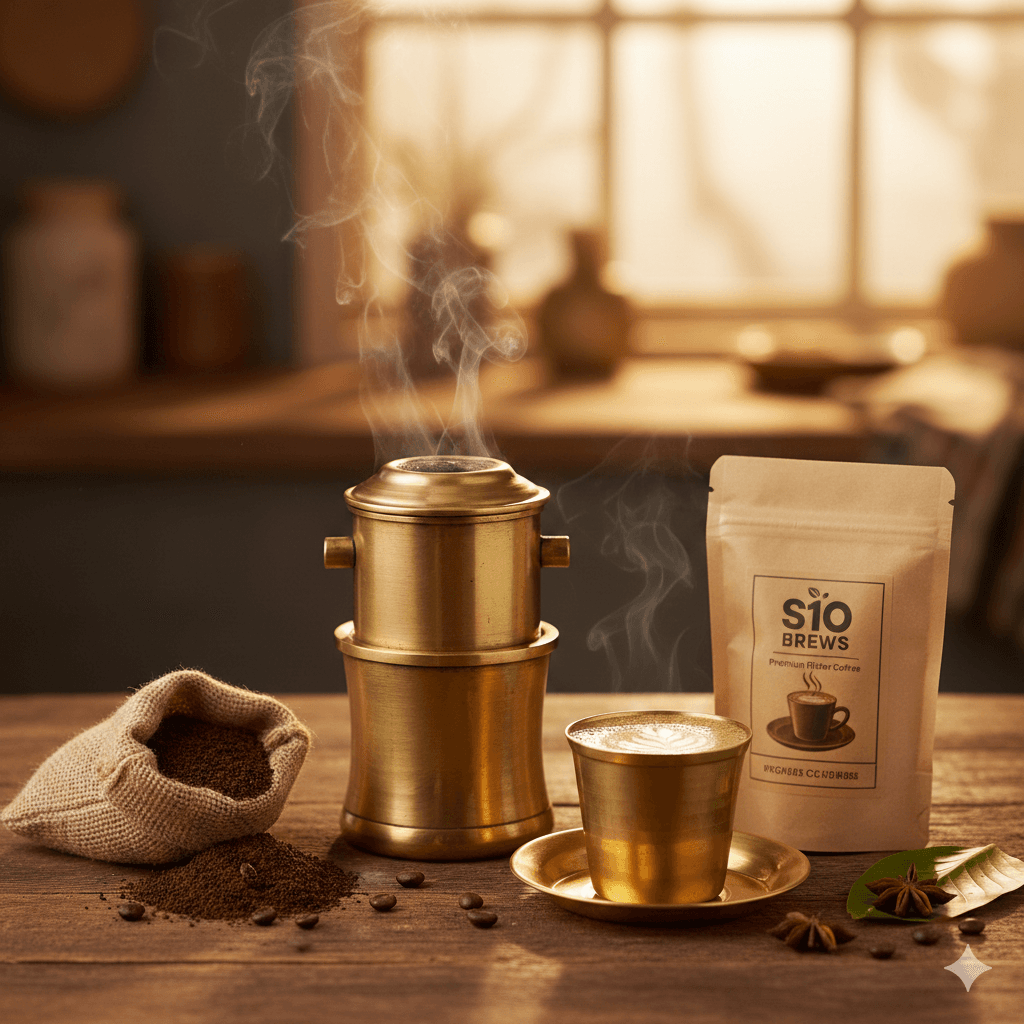
The Alchemy of Aroma: Why a Brass Filter Coffee Maker is the Soul of South Indian Coffee
There is a specific sound that defines mornings in a South Indian household: the rhythmic shuck-shuck of a brass tumbler and davara as coffee is frothed to perfection. For the uninitiated, it looks like a simple caffeine fix. For the connoisseur, it is a high-stakes ritual involving heat, gravity, and the chemical interaction between metal and bean.
If you have been searching for the best coffee powder or wondering why your home brew doesn’t taste like the legendary "degree coffee" of Kumbakonam, the answer likely isn’t just in the beans. It is in the vessel. The traditional brass filter coffee maker is not a relic of the past; it is a sophisticated brewing tool that modern enthusiasts are rediscovering.
What is a Brass Filter Coffee Maker?
A brass filter coffee maker is a traditional two-tiered brewing device used to extract a thick, potent coffee concentrate known as decoction. Made from a high-quality alloy of copper and zinc, it consists of a top cylinder with micro-perforations, a plunger to compress the pure coffee powder, and a bottom container to collect the slow-dripped extract.
The Science of Brass: Why It Outperforms Stainless Steel
When you buy coffee powder online, you are investing in volatile oils and delicate aromatic compounds. Most modern brewers use stainless steel or plastic. While functional, these materials are "thermal hikers"—they lose heat rapidly or fail to distribute it evenly.
Brass is a superior thermal conductor. In a South Indian filter coffee powder extraction, the goal is a slow, steady drip. If the water cools too quickly, the extraction is sour and thin. If it stays too hot, it burns the oils. Brass retains a consistent "sweet spot" temperature throughout the 15-minute dripping process. Furthermore, the subtle interaction between the coffee’s acidity and the brass metal is said to mellow the brew, resulting in a cup that is remarkably smooth and lacks the harsh metallic aftertaste often found in electric percolators.
Choosing the Right Grind: Which Coffee Powder is Best for Filter Coffee?
The most common mistake beginners make is using an espresso grind or an instant powder in a brass filter. To get the most out of your equipment, you need a specific texture.
The best South Indian coffee powder for filter coffee should be a medium-to-coarse grind. If it is too fine, it will clog the micro-perforations of the brass filter, leading to a "stuck" brew. If it is too coarse, the water will rush through, leaving you with a weak, watery liquid.
For an authentic experience, look for a premium filter coffee powder that incorporates a percentage of chicory. While pure coffee powder (100% Arabica or Robusta) is excellent for black coffee, the traditional "degree coffee" profile requires the body and thickness that only a 70:30 or 80:20 coffee-to-chicory blend provides. This ensures the decoction is viscous enough to stand up to the heavy, creamy milk used in Indian households.
Why Professionals and Founders are Switching to Brass
In an age of "instant" everything, high-performing professionals—from doctors to startup founders—are turning to the brass filter as a form of morning mindfulness. It is a slow process that yields a high-reward result. Unlike the jittery high of an Americano, a cup made with traditional filter coffee powder provides a sustained, smooth energy release.
It is also an investment in sustainability. While pod-based machines contribute to landfill waste, a brass filter is a one-time purchase that lasts for decades. It is a piece of "functional art" that sits on your kitchen counter, signaling a commitment to quality and heritage.
S10 Brews: Bridging Tradition and Modernity
Finding authentic degree coffee powder online can be a challenge. Many commercial brands over-roast their beans to hide defects, resulting in a bitter taste that requires heaps of sugar.
S10 Brews takes a different approach. By sourcing small batch coffee powder directly from high-altitude estates, we ensure that the natural sweetness of the bean shines through. Our Indian filter coffee powder is processed with precision, ensuring that when it hits your brass filter, it behaves exactly as it should—releasing a rich, chocolatey aroma that fills the entire house.
Troubleshooting Your Brew
- The water isn't dripping: Your grind is too fine, or you pressed the plunger too hard. Stir the wet grounds slightly with a spoon to break the vacuum.
- The coffee is sour: Your water wasn't hot enough, or the fresh coffee powder wasn't tamped sufficiently.
- The coffee is too bitter: You may be using too much chicory or leaving the decoction in the bottom chamber for too long. Transfer it to a glass vessel once the drip is complete.
Frequently Asked Questions
1. Which coffee powder is best for filter coffee?
A medium-coarse grind of a coffee-chicory blend (80:20 or 70:30) is ideal. Premium filter coffee powder sourced from the Western Ghats of India provides the most authentic flavor profile.
2. Is brass better than stainless steel for coffee?
Yes, brass offers superior heat retention and a more balanced flavor profile. While stainless steel is easier to maintain, it does not provide the same thermal stability required for a slow-drip decoction.
3. How do I clean a brass coffee filter?
Avoid harsh chemical soaps. Use a natural abrasive like pitambari powder, or a traditional mix of lemon/tamarind and salt to keep the brass shining and free from oxidation.
4. Can I buy authentic degree coffee powder online?
Absolutely. Brands like S10 Brews specialize in traditional South Indian coffee powder online, offering fresh-roasted, small-batch options that are far superior to mass-produced supermarket brands.
5. Why is it called "Degree Coffee"?
The term "degree" refers to the purity of the milk, historically measured with a lactometer. A "high degree" meant the milk was unadulterated. To match this, you need a pure coffee powder or a high-quality blend that doesn't get overwhelmed by the richness of the milk.
6. How long does the decoction stay fresh?
For the best flavor, use the decoction within 2–4 hours. While it can be refrigerated for up to 24 hours, the aromatic compounds of artisanal coffee powder begin to degrade quickly.
The Final Pour: Elevate Your Coffee Game
The journey to the perfect cup doesn't end with a search for "buy coffee powder online." It begins with the vessel. The brass filter coffee maker is a testament to the fact that sometimes, the old ways are still the best ways.
When you combine the thermal intelligence of brass with the precision-crafted premium filter coffee powder from S10 Brews, you aren't just making a drink. You are preserving a culture, indulging in a science, and starting your day with the absolute best that Indian coffee has to offer.
Ready to experience the difference? Explore our collection of fresh coffee powder and bring the authentic taste of the South to your kitchen. Your morning ritual deserves nothing less than the gold standard.