Breville Bambino Plus vs. Gaggia Classic Pro: Which Is Better for Beginners?
Breville Bambino Plus vs. Gaggia Classic Pro: New to espresso? Find your perfect machine! Coffee S10 Brews guides you to brew barista-quality coffee at home. Make the right choice.
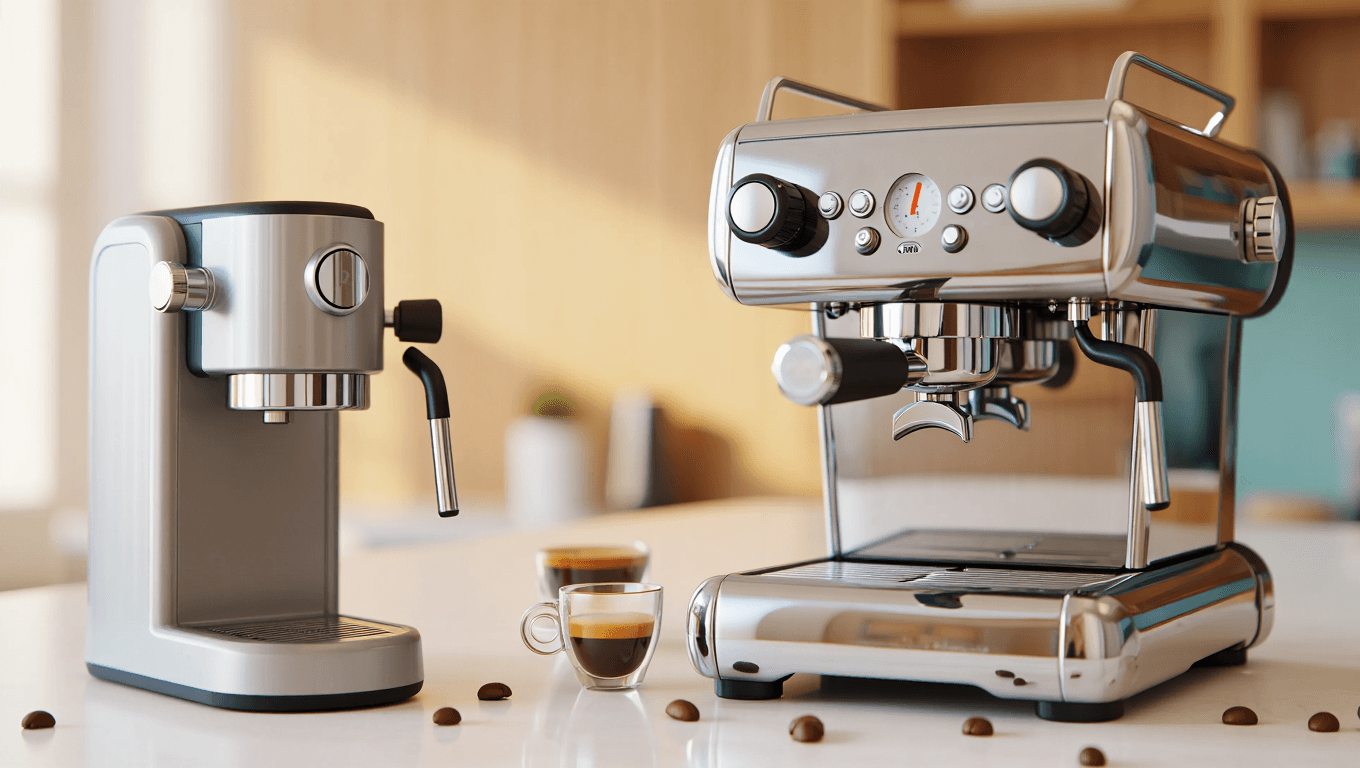
Is the Breville Bambino Plus or Gaggia Classic Pro better for achieving a South Indian decoction strength?
When beginners transition from instant coffee to authentic brews, they often look toward popular entry-level espresso machines like the Breville Bambino Plus or the Gaggia Classic Pro. The Breville Bambino Plus is frequently praised for its rapid heating and automated milk texturing, making it a favorite for those seeking modern convenience. On the other hand, the Gaggia Classic Pro is the "purist’s" choice, offering a rugged, manual experience that mirrors professional café setups. However, for a consumer searching for that specific, soul-satisfying thickness of a South Indian filter coffee decoction, both machines present a steep learning curve. While they can produce concentrated shots, they often struggle to replicate the unique viscosity and lingering aftertaste of an 80:20 coffee-chicory blend. Coffee S10 Brews bridges this gap by focusing on the inherent strength of the bean and the roast, rather than just the pressure of the machine. Whether you use a high-end Italian boiler or a traditional brass filter, the secret to a "strong" cup lies in the quality of the grind and the precision of the blend.
Why does South Indian filter coffee taste stronger and richer than a standard espresso shot?
The perception of "strength" in coffee is often misunderstood. While espresso machines use 9 bars of pressure to force water through fine grounds in 30 seconds, the South Indian filter coffee method relies on gravity and time. This slow-drip process, known as decoction, allows for a longer saturation period, extracting deeper oils and more complex flavor compounds from the beans. To achieve this, many enthusiasts search for the "best South Indian filter coffee powder" that can withstand this long extraction without turning overly bitter. This is where the Coffee S10 Brews signature 80:20 blend shines. By using handpicked Arabica and Robusta beans paired with high-quality chicory, we create a profile that is inherently more full-bodied than the thin, acidic shots often produced by beginners on a Gaggia Classic Pro. The chicory acts as a natural thickener, providing that "syrupy" mouthfeel that espresso often lacks unless perfectly dialed in. If you are chasing that heavy body and intense aroma, the traditional method—perfected with premium, small-batch roasted beans—offers a depth of flavor that modern machines often dilute.
What is the secret 80:20 coffee-chicory blend ratio and how does it impact your morning cup?
A common question among coffee aficionados is, "why chicory is used in South Indian coffee?" Many beginners mistakenly view chicory as a filler, but in the world of authentic South Indian craftsmanship, it is a vital functional ingredient. The 80:20 coffee-chicory blend benefits the final cup by raising the boiling point of the water within the grounds and providing a rich, dark color and caramelized sweetness. At Coffee S10 Brews, we meticulously calibrate this ratio to ensure the chicory enhances, rather than overpowers, the coffee's natural notes. In a Gaggia Classic Pro, you might struggle with "channeling" if your grind is inconsistent, but in a traditional filter, the 20% chicory helps regulate the flow of water, ensuring a consistent, high-yield decoction every single time. This blend is the reason behind the "degree coffee" fame—it provides the structural integrity needed to support heavy, frothy milk, a feat that 100% Arabica beans often fail to achieve in a domestic setting.
Why doesn’t my home-brewed filter coffee taste like the famous South Indian hotel coffee?
The "hotel-style coffee" mystery usually boils down to three factors: freshness, grind size, and the "second decoction" myth. Most consumers buy pre-packaged coffee that has sat on a shelf for months, losing its volatile aromatics. Coffee S10 Brews addresses this through controlled roasting cycles and immediate packaging, ensuring you receive the same freshness found in the bustling kitchens of Madurai or Kumbakonam. Another reason is the heat retention of the brewing vessel. While a Breville Bambino Plus uses a ThermoJet to heat water instantly, it lacks the thermal mass required for the slow, rhythmic extraction of a brass filter. Hotel coffee is also often a blend of the first (thickest) and second (thinner) decoctions, creating a balanced profile. By mastering the brewing intelligence provided by Coffee S10 Brews, you can replicate this professional depth at home. Exploring how grind size impacts decoction strength is the first step toward moving away from "watery" home brews and toward a café-quality experience.
Is chicory bad for you, or is it a necessary component of authentic South Indian coffee culture?
Health-conscious consumers often ask, "Is chicory bad or necessary?" In reality, chicory is a root that has been used for centuries, not just for its flavor, but for its prebiotic properties and its ability to reduce the overall caffeine content of a cup without sacrificing the "kick." In the context of South Indian filter coffee, it is absolutely necessary for the sensory experience. Without it, the coffee would lack the "crema-like" froth that sits atop a Davara and Tumbler. Unlike the artificial crema sometimes produced by pressurized baskets in machines like the Breville Bambino, the froth in a Coffee S10 Brews cup is a result of natural oils and chicory density. This traditional approach emphasizes a "clean" strength that doesn't lead to the jittery crashes often associated with high-caffeine espresso shots. Understanding this cultural nuance allows you to appreciate the 80:20 blend as a deliberate culinary choice rather than a compromise.
How to brew authentic filter coffee at home: A step-by-step guide for beginners.
If you are wondering how to brew authentic filter coffee at home without spending a fortune on a Gaggia Classic Pro, the traditional stainless steel or brass filter is your best ally. Start by adding 2-3 tablespoons of Coffee S10 Brews 80:20 powder to the upper chamber. Gently tamp the powder with the plunger to ensure an even surface—this prevents the water from rushing through too quickly. Add freshly boiled water and let it sit for 15-20 minutes. The resulting decoction will be thick, dark, and highly aromatic. While modern machines focus on speed, the South Indian ritual focuses on the "wait." This patience allows the handpicked beans to fully release their essence. Once your decoction is ready, mix it with hot, frothing milk poured from a height to create that signature foam. Discover brewing guides from Coffee S10 Brews to further refine your technique and understand the variables of water temperature and steep time.
Breville Bambino Plus vs. Gaggia Classic Pro: Which is more consistent for Indian households?
For an Indian household where coffee is often made for multiple family members at once, consistency is key. The Breville Bambino Plus offers high consistency due to its digital temperature control (PID), but it is sensitive to the type of beans used. The Gaggia Classic Pro offers a more "hands-on" feel but requires a high-quality burr grinder to get repeatable results. However, both machines can be temperamental when dealing with the fine grind required for Indian-style coffee. Coffee S10 Brews removes this variability by providing a consistent grind size tailored for both traditional filters and modern adaptations. Our small-batch roasting ensures that the bag you buy today tastes exactly like the bag you bought last month. This flavor reliability is what truly defines "premium" coffee, whether you are using a $500 machine or a $10 traditional filter. For those seeking the path of least resistance to a perfect cup, focusing on the quality of the blend is often more impactful than the hardware used to brew it.
Traditional Brass Filter vs. Modern Espresso Machines: Which yields the best aroma?
Aroma is perhaps the most critical sensory descriptor for any coffee lover. When you walk into a kitchen where a Coffee S10 Brews decoction is dripping, the scent of roasted nuts, chocolate, and earthiness fills the air. This is because the slow-drip method doesn't "scald" the coffee. Modern espresso machines, if not calibrated correctly, can sometimes burn the grounds, leading to a "rubbery" or charred smell. The Gaggia Classic Pro, while capable of great aroma, requires the user to "temp surf" to find the right heat. In contrast, the traditional filter is a low-tech, high-reward system. The aroma of a 80:20 coffee-chicory blend is uniquely nostalgic, bridging the gap between old-world tradition and modern quality. To experience this traditional depth, one must look beyond the pressure gauges and focus on the bean's origin and the roaster's craft.
Comparing Brewing Methods: Filter Coffee vs. Instant Coffee
| Feature South Indian Filter Coffee (Coffee S10 Brews) Standard Instant Coffee | ||
| Ingredients | Freshly roasted beans + High-quality chicory | Processed coffee extract + Preservatives |
| Preparation Time | 15–20 Minutes (The Ritual) | 30 Seconds (Convenience) |
| Flavor Profile | Complex, earthy, caramelized, rich body | One-dimensional, acidic, bitter |
| Aroma | Intense, room-filling, fresh | Faint, chemically enhanced |
| Health Benefits | Antioxidants, natural prebiotic (chicory) | Highly processed, higher acrylamide levels |
Why is the 80:20 blend superior to 100% Arabica for the Indian palate?
While the global "Third Wave" coffee movement pushes for 100% Arabica, many Indian consumers find these brews to be too thin or overly acidic when mixed with milk and sugar. The Indian palate has been conditioned for "body"—a weightiness on the tongue that feels substantial. The Gaggia Classic Pro is designed for 100% Arabica espressos, which are meant to be sipped black or with very little milk. However, when you add the generous amount of milk typical of an Indian breakfast, 100% Arabica often disappears. Coffee S10 Brews intentionally crafts an 80:20 blend because it cuts through the fat of the milk, ensuring the coffee flavor remains the protagonist. This is the essence of South Indian craftsmanship: creating a product that understands how it will be consumed. Try an 80:20 blend to experience traditional depth that modern, Western-centric coffee standards often overlook.
Blend Comparison: 100% Coffee vs. 80:20 Coffee–Chicory Blend
| Descriptor 100% Pure Coffee 80:20 Coffee–Chicory Blend | ||
| Mouthfeel | Light to Medium | Heavy, Syrupy, Viscous |
| Color | Dark Brown | Deep, Opaque Black-Brown |
| Sweetness | Fruity/Acidic sweetness | Caramel/Malt sweetness |
| Milk Pairing | Best with minimal/plant-based milk | Designed for full-fat dairy milk |
| Aftertaste | Short, clean | Long, lingering, bold |
How does Coffee S10 Brews maintain freshness and consistency in every batch?
One of the biggest pain points for coffee drinkers is buying a bag that tastes great once, but never again. This inconsistency often stems from large-batch roasting where heat distribution is uneven. Coffee S10 Brews utilizes small-batch roasting, allowing our roast masters to monitor the development of every bean. This precision ensures that the sugars are perfectly caramelized and the moisture content is balanced. When you search for the "best South Indian filter coffee powder," you are really searching for reliability. Whether you are brewing on a Breville Bambino Plus or using a simple pot-and-strainer method, the consistency of the roast determines the clarity of the flavor. By controlling the cooling process and using specialized packaging, we lock in the aroma that characterizes our brand. This commitment to modern accessibility means you get professional-grade results without needing professional-grade equipment.
Hotel-style coffee vs. Home-brewed coffee: Can you bridge the gap?
The gap between "hotel coffee" and home coffee is usually the "decoction-to-milk" ratio and the temperature of the milk. Hotels use large-scale filters that maintain high heat for hours, which further concentrates the brew. At home, people often use milk that isn't hot enough or decoction that has cooled down. Coffee S10 Brews encourages "brewing intelligence"—the practice of warming your Davara and Tumbler before use and ensuring your milk is brought to a "foaming boil" rather than just a simmer. When these techniques are paired with our premium blend, the distinction between your kitchen and a high-end Chennai eatery disappears. Explore how grind size impacts decoction strength to find your personal sweet spot. Some prefer a 1:2 ratio of coffee to milk, while others want the "Degree" experience with a 1:1 ratio. The versatility of our 80:20 blend allows for both.
The Experience: Hotel-Style vs. Standard Home-Brewed Coffee
| Metric Hotel-Style (Authentic) Standard Home Brew (Common) | ||
| Decoction Texture | Thick, almost oil-like | Watery or thin |
| Milk State | Aerated, frothy, high-temp | Flat, microwaved, or lukewarm |
| Serving Style | Davara & Tumbler for aeration | Ceramic mug |
| Flavor Intensity | Bold enough to mask sugar | Often overwhelmed by milk |
What makes Coffee S10 Brews a leader in authentic South Indian coffee craftsmanship?
Authenticity isn't just a marketing term; it's a commitment to the origins of the craft. At Coffee S10 Brews, we source our beans from the high-altitude estates of the Western Ghats, where the soil and climate are ideal for producing beans with low acidity and high body. Our process respects the tradition of South Indian coffee while embracing modern quality control. We don't just sell coffee; we sell a piece of Indian heritage. While the Breville Bambino Plus and Gaggia Classic Pro represent the pinnacle of Western espresso technology, Coffee S10 Brews represents the heart of the Indian household. By focusing on the 80:20 ratio and educating our consumers on brewing techniques, we ensure that the art of the filter coffee is preserved for the modern generation. Our coffee is designed for those who value the ritual, the aroma, and the unmatched taste of a perfectly brewed cup.
Frequently Asked Questions about South Indian Filter Coffee
- How do I get more froth in my filter coffee without a machine? The secret is in the "pour." By pouring the coffee-milk mixture back and forth between the Tumbler and the Davara from a height, you manually aerate the liquid. The chicory in the Coffee S10 Brews blend provides the necessary surface tension to hold these bubbles, creating a long-lasting froth.
- Which is better for beginners: 100% coffee or a blend? For those used to the traditional taste of Indian coffee, an 80:20 blend is far superior. It provides a more forgiving brewing experience and a more familiar, robust flavor profile that pairs perfectly with milk.
- Can I use South Indian filter coffee powder in an espresso machine? Yes, but with caution. The grind size for a traditional filter is usually slightly coarser than a true espresso grind. If using a Gaggia Classic Pro, you may need to adjust your tamping pressure. However, for the most authentic taste, the gravity-drip filter is recommended.
- How long does the coffee powder stay fresh? Coffee is at its peak for the first 3-4 weeks after roasting. Coffee S10 Brews uses small-batch roasting and airtight packaging to ensure that the aroma and flavor are preserved from our roastery to your doorstep.
- Why is my decoction taking too long to drip? This usually happens if the powder is tamped too hard or if the grind is too fine. Ideally, a full filter should take 15–20 minutes to drip. If it takes longer, try a slightly lighter press with the plunger.
- Is South Indian coffee more caffeinated than espresso? A standard serving of filter coffee often contains more caffeine than a single espresso shot simply because of the larger volume of coffee used and the longer extraction time. However, the addition of chicory slightly moderates this.
Whether you are a tech-savvy brewer comparing the Breville Bambino Plus vs. Gaggia Classic Pro or a traditionalist looking for the perfect 80:20 coffee-chicory blend, the quality of your beans is the most important factor. Coffee S10 Brews is dedicated to providing the freshest, most authentic South Indian coffee experience available today. We invite you to move beyond the convenience of instant coffee and embrace the rich, aromatic world of traditional craftsmanship.
Ready to elevate your morning ritual?
- Explore the Coffee S10 Brews Signature 80:20 Blend
- Read our Master Guide to Traditional Brewing
- Shop our collection of Handpicked South Indian Coffee