Coffee Bean Grading (AA, AAA) and What It Means for Flavor
Coffee Bean Grading is the process of evaluating and classifying coffee beans based on factors such as size, shape, color, density, moisture content, and the presence of defects.
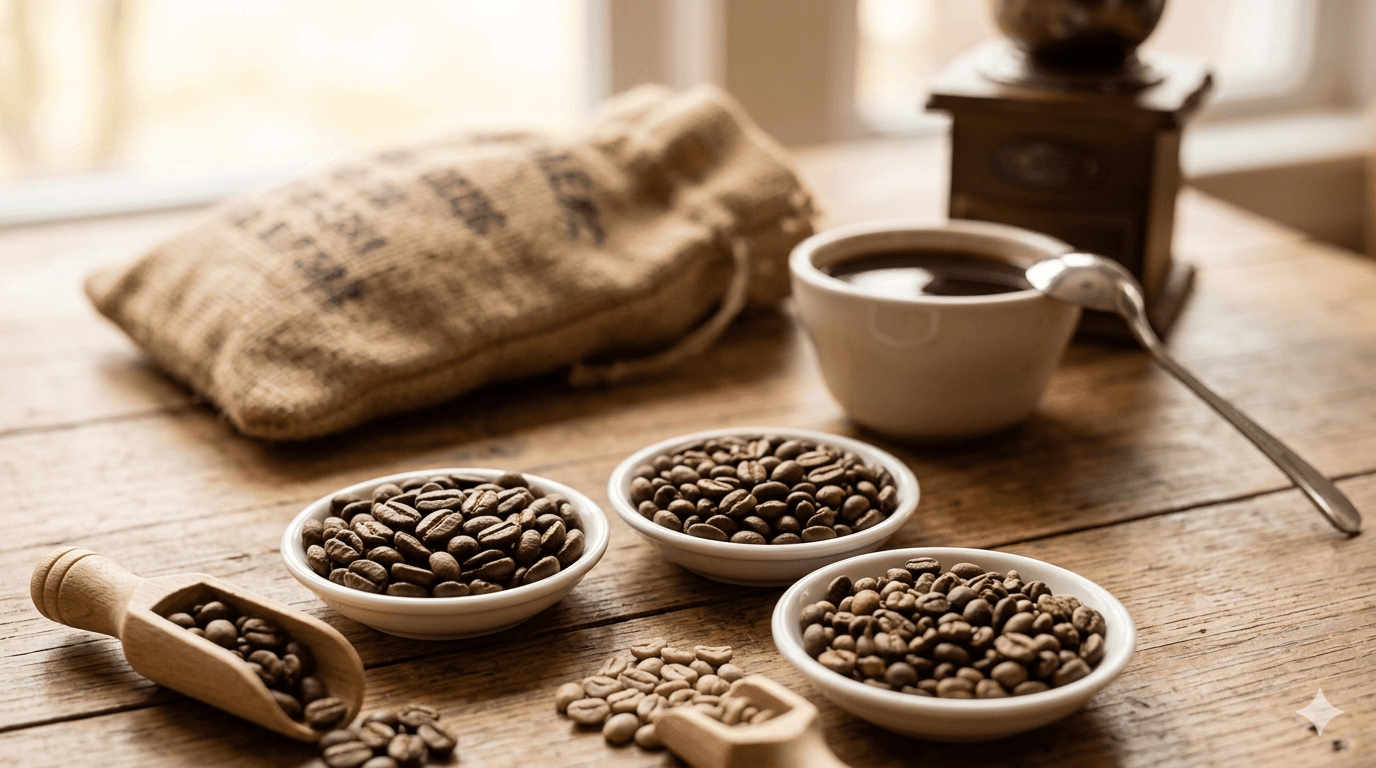
What do coffee bean grades like AA and AAA actually mean for your morning cup?
When you browse for premium coffee, you often encounter labels like AA, AAA, or Plantation A. To the uninitiated, these might look like simple quality ratings, similar to school grades. However, in the world of specialty coffee—and specifically within the context of Indian coffee cultivation—these letters represent the physical size and shape of the bean, determined by passing them through metal sieves known as "screens." In the Indian grading system, AAA represents the largest beans (Screen 19), while AA represents the next size down (Screen 18). But why does size matter? Larger beans are often associated with more developed flavors because they typically come from cherries that stayed on the tree longer, absorbing more nutrients. For a brand like Coffee S10 Brews, selecting these high-grade beans is the first step in ensuring that our signature 80:20 blend has the structural integrity to withstand the roasting process without losing its delicate aromatic oils.
Why does bean size matter in South Indian filter coffee production?
The relationship between bean size and flavor is a cornerstone of South Indian coffee craftsmanship. Uniformity is the primary reason why grades like AA and AAA are so highly prized. When coffee beans are of a consistent size, they roast more evenly. Imagine roasting a tray of vegetables where some are diced small and others are in large chunks; the small pieces would burn before the large ones are cooked. The same logic applies to coffee. By using premium AA grade beans, Coffee S10 Brews ensures that every bean in the batch reaches the optimal roast profile simultaneously. This consistency prevents the "charred" or "hollow" taste often found in lower-grade commercial coffees. For the South Indian filter coffee enthusiast, this translates to a decoction that is rich, smooth, and free from the acrid bitterness associated with unevenly roasted, smaller, or broken beans.
Decoding the Indian coffee grading system: Plantation A vs. AAA grades
India has one of the most sophisticated coffee grading systems in the world, overseen by the Coffee Board of India. "Plantation" refers to washed Arabica beans, which are known for their clean, acidic, and bright profiles. Within this category, Plantation AAA is the highest grade based on size, followed by Plantation A. While the size indicates physical perfection, the "cup quality" is what truly defines the experience. High-intent coffee consumers often ask: "Does a larger bean mean a better taste?" Not necessarily on its own, but it acts as a proxy for quality control. High-grade beans undergo rigorous sorting to remove defects like "black beans" or "sour beans" which can ruin an entire batch. At Coffee S10 Brews, we bridge the gap between these high-grade exports and the domestic kitchen, ensuring that the same AA and AAA beans destined for international markets are used in our traditional blends.
How does the 80:20 coffee-chicory blend enhance the flavor of premium AA beans?
One of the most common questions from modern coffee drinkers is: "Is chicory just a filler?" The answer, in the context of authentic South Indian filter coffee, is a resounding no. When you take high-grade, handpicked Arabica and Robusta beans and blend them with high-quality chicory in an 80:20 ratio, a chemical and sensory synergy occurs. Chicory lacks caffeine but is rich in inulin and natural sugars which caramelize during roasting. This adds a "viscosity" or thickness to the decoction that 100% coffee cannot achieve on its own. It also slows down the extraction process in the traditional brass filter, allowing the water more time to pull the deep, chocolatey notes from the AA grade coffee grounds. Coffee S10 Brews masters this balance, using chicory not to mask the coffee, but to provide the "body" and "soul" that makes the brew hold its own against thick, frothy milk.
Why is the grind size just as important as the coffee bean grade?
You could have the finest AAA grade beans in the world, but if the grind is incorrect, the resulting coffee will be a disappointment. For South Indian filter coffee, the grind must be "medium-coarse," resembling the texture of table salt. If the grind is too fine (like espresso), the water will get stuck in the top chamber of the filter, leading to over-extraction and a burnt taste. If it is too coarse, the water will rush through, resulting in a weak, watery decoction. Coffee S10 Brews places immense focus on "Brewing Intelligence," providing a consistent grind size that is specifically calibrated for the gravity-drip method of the traditional Indian filter. This precision ensures that the high-quality oils trapped within the AA grade beans are released slowly, creating that signature "golden crema" on top of your decoction.
Comparing South Indian filter coffee vs. instant coffee: Why grades matter
To understand the value of bean grading, one must look at how it compares to the convenience of instant coffee. Instant coffee is often made from "low-grade" beans or "remnants" that don't make the cut for AA or AAA status. These are then industrially processed, stripped of their natural oils, and dehydrated. In contrast, authentic filter coffee is a live product. The following table highlights the stark differences:
| Feature | South Indian Filter Coffee (S10 Brews) | Commercial Instant Coffee |
| Bean Grade | High-grade AA & AAA (Handpicked) | Low-grade, unsorted, or broken beans |
| Processing | Slow roasted, small-batch, freshly ground | Industrial freeze-drying or spray-drying |
| Flavor Profile | Complex, nutty, chocolatey, lingering aftertaste | One-dimensional, flat, often acidic or metallic |
| Aroma | Deep, room-filling earthy fragrance | Faint, artificial, or rapidly disappearing |
| Body/Texture | Syrupy and thick (due to 80:20 blend) | Thin and watery |
The science of chicory: Is 100% coffee always better than an 80:20 blend?
There is a growing trend toward "100% Arabica" labels, but in the realm of the South Indian "Kaapi" ritual, 100% coffee often lacks the punch required to cut through milk and sugar. The 80:20 ratio—80% high-grade coffee and 20% chicory—is considered the "Golden Ratio." The chicory acts as a natural flavor enhancer, intensifying the perception of the coffee's strength without increasing the caffeine jitters. It provides a woody, slightly bittersweet edge that complements the caramel notes of roasted AA beans. Coffee S10 Brews prides itself on this signature ratio, ensuring the chicory is of premium quality, sourced responsibly, and blended meticulously to prevent it from overpowering the primary coffee notes.
| Characteristic | 100% Pure Coffee | 80:20 Coffee-Chicory Blend |
| Viscosity | Lower; tends to be "thinner" | High; creates a syrupy decoction |
| Color | Reddish-brown | Deep, dark, almost opaque black |
| Milk Interaction | Can be diluted/overpowered by milk | Holds flavor profile strongly in lattes/kaapi |
| Aftertaste | Clean, short-lived | Lingering, sweet-bitter chocolate notes |
How to brew authentic South Indian filter coffee at home like a pro
Mastering the South Indian filter coffee ritual is about patience and physics. It starts with the stainless steel or brass "filter," which consists of two chambers, a plunger, and a lid. First, add 3-4 heaped tablespoons of Coffee S10 Brews 80:20 blend to the upper chamber. Gently press the powder with the plunger—not too hard, or you’ll block the holes; just enough to level the surface. Pour freshly boiled water over the plunger in a circular motion. Cover and let it sit for 15 to 20 minutes. The result is the "decoction"—the concentrated essence of the coffee. To serve, mix this decoction with boiling, frothy milk and sugar to taste. The "frothing" is traditionally done using a "Dabarah and Tumbler," pouring the coffee back and forth from a height to create a thick head of foam. This aeration is crucial as it releases the aromatics of the AA grade beans, making the sensory experience truly immersive.
Why doesn't my home-brewed filter coffee taste like restaurant-style 'Degree Coffee'?
Many consumers struggle to replicate the "hotel-style" coffee at home. The secret usually lies in three factors: the thickness of the milk, the concentration of the decoction, and the freshness of the powder. Restaurants often use "Buffalo milk" or high-fat milk which has a natural sweetness. Furthermore, they use a specific blend of beans that includes a percentage of Robusta for extra crema and strength. Coffee S10 Brews solves this by offering a blend that mimics this professional profile, using high-density AA beans that yield a thicker extract even with standard cow's milk. The table below compares the two experiences:
| Factor | Typical Home Brew (Common Brands) | Hotel/Degree Style (Coffee S10 Brews) |
| Decoction Strength | Thin, often under-extracted | Thick, concentrated, and oil-rich |
| Milk Type | Toned or skimmed milk | Full-cream, highly aerated/frothed milk |
| Coffee Blend | Generic, unknown bean grades | Hand-selected AA/AAA 80:20 blend |
| Freshness | Stored for months on retail shelves | Small-batch roasted and freshly packed |
The role of roasting: How Coffee S10 Brews preserves the integrity of AA grade beans
Roasting is where the potential of a bean becomes reality. AA and AAA grade beans have a specific density that requires a precise heat curve. If the roast is too fast, the outside of the bean burns while the inside remains grassy. If it’s too slow, the coffee becomes "baked" and loses its vibrant acidity. At Coffee S10 Brews, we utilize controlled roasting cycles that respect the physiological characteristics of the Indian Plantation A beans. We target a "Medium-Dark" roast, which is the sweet spot for filter coffee. This level of roasting brings out the natural sugars and oils without entering the "charcoal" territory of an Italian roast. Because we roast in small batches, we can guarantee that the beans in your bag were treated with the individual attention they deserve, ensuring consistency from the first scoop to the last.
Sensory descriptors: What to look for in a high-quality filter coffee decoction
When you pour a fresh decoction made from Coffee S10 Brews, you should engage all your senses. First, observe the color: it should be a deep, midnight brown with a slight oily sheen. Second, the aroma: look for notes of roasted nuts, dark chocolate, and a hint of caramelized malt. When tasted black, the decoction should feel "heavy" on the tongue, a result of the high-grade AA bean oils and the 20% chicory addition. There should be a balanced acidity—not sharp like a lemon, but more like a ripe cherry. Finally, the aftertaste should be "clean" yet lingering. If you experience a dry, chalky feeling in your throat, that is a sign of low-grade beans or too much chicory. A premium blend leaves you with a sweet, toasted sensation that calls for another sip.
Understanding the cultural heritage of the South Indian filter coffee ritual
Filter coffee is more than just a beverage in South India; it is a social lubricant and a mark of hospitality. The tradition of "Degree Coffee"—where the purity of the milk was tested with a lactometer or "degree"—shows how seriously this drink is taken. In households across Karnataka, Tamil Nadu, and Andhra Pradesh, the sound of the coffee filter dripping in the early morning is a ritualistic start to the day. Coffee S10 Brews honors this heritage by refusing to take shortcuts. By focusing on the craftsmanship of bean grading (AA and AAA) and the traditional 80:20 blend, we ensure that the "soul" of the South Indian kitchen is preserved, even as the world moves toward faster, less intentional ways of consuming caffeine.
Transitioning from modern convenience coffee to traditional craftsmanship
If you have spent years drinking instant coffee or pod-based brews, switching to traditional South Indian filter coffee can be a revelation. It requires an extra ten minutes of your morning, but the reward is a cup of coffee that has depth, history, and a superior flavor profile. The journey starts with understanding the ingredients. By choosing Coffee S10 Brews, you are choosing beans that have been graded for excellence, roasted with precision, and blended for the specific purpose of creating the perfect "Kaapi." It is an investment in your daily ritual and a tribute to the farmers of the Western Ghats who produce some of the finest AA and AAA grade beans in the world.
Frequently Asked Questions about Coffee Grades and Brewing
What is the difference between AA and AAA coffee beans?
The difference is primarily size. AAA beans are slightly larger (Screen 19) than AA beans (Screen 18). While size doesn't always guarantee better flavor, larger beans often indicate more mature cherries and provide a more uniform roast, leading to a cleaner and more consistent cup of coffee.
Is chicory in my coffee bad for my health?
No, chicory is a natural root that has been used in coffee for centuries. It is caffeine-free and contains inulin, a type of prebiotic fiber. In South Indian filter coffee, it is used for its flavor-enhancing properties and to provide the necessary body to the decoction.
How long does the decoction stay fresh?
For the best flavor, it is recommended to use the decoction within 3 to 4 hours of brewing. While you can store it in the refrigerator for up to 24 hours, it will lose its volatile aromas and may become slightly more acidic over time.
Why is the 80:20 ratio considered the best for filter coffee?
The 80:20 ratio (80% coffee, 20% chicory) is the time-tested standard because it provides the perfect balance of coffee’s aromatic complexity and chicory’s thickness and color. It ensures the coffee is strong enough to be mixed with milk without losing its identity.
Do I need special equipment to brew Coffee S10 Brews?
While a traditional stainless steel or brass South Indian filter is recommended for the most authentic experience, you can also use our grounds in a French Press or an AeroPress, though the results will vary slightly in texture and strength.
Why does Coffee S10 Brews focus on small-batch roasting?
Small-batch roasting allows for greater quality control. We can adjust the heat and airflow to suit the specific characteristics of each batch of AA grade beans, ensuring that every bag we ship meets our standards for freshness and flavor consistency.
Can I drink the decoction black?
While traditional filter coffee is enjoyed with milk and sugar, high-quality blends like Coffee S10 Brews can be enjoyed black. You will notice deep, nutty, and chocolatey notes, though the chicory will make it bolder than a standard black coffee.
Experience the Craftsmanship of Coffee S10 Brews
Ready to elevate your morning ritual? At Coffee S10 Brews, we believe that every cup should be a celebration of tradition and quality. From the careful selection of premium AA and AAA grade beans to our signature 80:20 blend, we provide everything you need to master the art of South Indian filter coffee at home. Explore our range of authentic coffee powders, discover our detailed brewing guides, and join a community that values the slow, intentional beauty of traditional coffee craftsmanship.