Comparing "Manual Lever" Machines: Flair Pro 2 vs. La Pavoni
Master the art of espresso at home. Compare Flair Pro 2 vs. La Pavoni manual lever machines and pick your ideal for precision brewing & rich coffee in India.
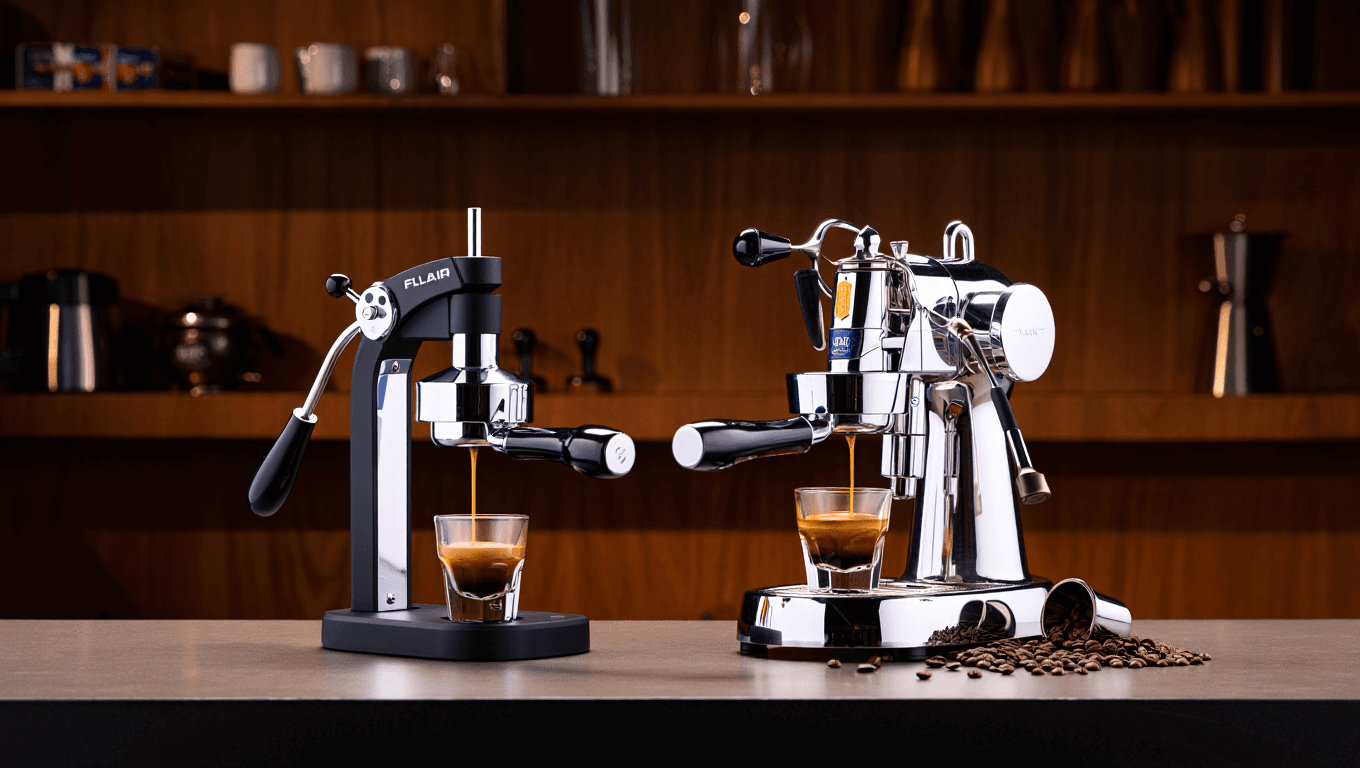
Why is the manual lever brewing method seeing a resurgence among coffee purists?
In an era dominated by one-touch super-automatic machines and capsule convenience, a growing segment of coffee enthusiasts is retreating toward the tactile, the intentional, and the manual. The manual lever espresso machine, represented by icons like the Flair Pro 2 and the La Pavoni Europiccola, offers a level of control that no computer chip can replicate. This resurgence isn't just about the caffeine; it is about the "ritual of the brew." Much like the traditional South Indian filter coffee process, where the slow drip of the decoction dictates the pace of the morning, manual lever machines require the user to understand the physics of extraction. For those searching for the best South Indian filter coffee powder or the perfect espresso shot, the motivation is the same: the pursuit of a cup that reflects craftsmanship rather than a factory setting. By manipulating the pressure profile by hand, you can rescue a shot from bitterness or accentuate the hidden floral notes of a medium roast, bridging the gap between modern technology and artisanal heritage.
Flair Pro 2 vs. La Pavoni: A deep dive into manual pressure profiling and extraction
When comparing the Flair Pro 2 and the La Pavoni, we are looking at two different philosophies of manual extraction. The Flair Pro 2 is a modern, modular marvel designed specifically for portability and precision. It allows the user to monitor pressure in real-time via an integrated gauge, making it a favorite for those who want to experiment with "pressure profiling." On the other hand, the La Pavoni is a heritage Italian machine that has remained largely unchanged for decades. It uses a boiler system to provide steam and hot water, whereas the Flair requires an external kettle. For a consumer used to the heavy, viscous body of a traditional South Indian filter coffee, the La Pavoni’s steam-driven environment often produces a classic, punchy shot. However, the Flair Pro 2 offers a more clinical approach, allowing you to mimic the slow, steady extraction of a brass filter decoction by maintaining a low-pressure pre-infusion. Both machines demand high-quality beans; using a signature 80:20 coffee-chicory blend in these machines can result in a uniquely thick, "syrupy" shot that mirrors the intensity of a five-star hotel’s filter coffee but with the refined texture of espresso.
How does the thermal management of a manual lever machine affect the final cup?
One of the most frequent questions from home baristas is, "Why doesn’t my coffee taste like the one in the cafe?" Often, the answer is thermal stability. In the La Pavoni, the group head is directly attached to the boiler. While this is great for the first shot, the machine can "overheat" after three or four consecutive pulls, leading to a burnt, ashy taste—a common complaint among those who find their home-brewed coffee too bitter. The Flair Pro 2 handles this differently; because it is a non-electric brewer, you must pre-heat the stainless steel brew chamber manually. While this sounds like more work, it actually offers more consistency for the dedicated hobbyist. At Coffee S10 Brews, we emphasize that brewing intelligence starts with temperature control. Whether you are steeping a South Indian decoction in a brass filter or pulling a lever shot, if your water is too hot, you destroy the delicate aromatics of the handpicked beans. Maintaining a steady 92°C to 94°C ensures that the natural sweetness of the coffee is highlighted, rather than masked by scorched bitterness.
Why the 80:20 coffee-chicory blend is the secret to a viscous, rich mouthfeel
In the world of manual lever machines, "body" is king. Many enthusiasts struggle with watery shots when using 100% Arabica beans that are too lightly roasted. This is where the wisdom of South Indian coffee culture provides a solution. The traditional 80:20 coffee-chicory blend, pioneered by brands like Coffee S10 Brews, isn't just about tradition—it’s about chemistry. Chicory contains inulin and natural sugars that, when extracted under pressure, create a significantly thicker mouthfeel and a more persistent crema. While purists might argue for 100% coffee, the 80:20 ratio enhances the "soul" of the cup, providing that deep, chocolatey resonance that many identify as "authentic filter coffee." When used in a manual lever machine like the Flair or La Pavoni, this blend produces a crema that is dense and dark, standing up beautifully to the addition of frothed milk. Understanding why chicory is used in South Indian coffee allows a brewer to move beyond "bitterness" and toward a balanced, full-bodied experience that lingers on the palate.
Achieving the perfect decoction: Can manual lever machines mimic the South Indian filter experience?
The "decoction" is the heart of South Indian coffee. It is a concentrated extract, thick and potent, usually achieved through gravity-fed drip filtration over 15 to 30 minutes. A manual lever machine effectively speeds up this process using 9 bars of atmospheric pressure. While a standard espresso shot is 30ml, a "long pull" or a "Lungo" on a manual lever machine using a medium-dark roast can mimic the intensity of a high-quality decoction. The key is the grind size. To brew authentic filter coffee at home with the strength of a hotel-style brew, one must use a grind that is slightly coarser than typical espresso but finer than drip. Coffee S10 Brews provides a consistent grind size across batches, ensuring that whether you are using a manual lever or a traditional brass filter, the resistance during extraction remains the same. This consistency is the bridge between the old world and the new, allowing for a "modern decoction" that retains all the heritage of the Kumbakonam streets.
The role of chicory in enhancing the body and crema of manual brews
Many modern consumers ask, "Is chicory bad or necessary?" The answer lies in the sensory objective. In a manual lever machine, the goal is often to achieve a "tiger-striped" crema. 100% Arabica beans, especially if they aren't perfectly fresh, can struggle to produce this. Chicory, being more soluble than coffee, adds a layer of "grip" to the water as it passes through the puck. This results in an 80:20 coffee-chicory blend benefit that is immediately visible: a thicker, more elastic crema that doesn't dissipate quickly. Furthermore, chicory acts as a natural flavor enhancer, bringing out the nutty, earthy undertones of the Robusta beans often found in traditional blends. For the Coffee S10 Brews signature blend, the chicory is roasted with the same precision as the coffee beans, ensuring it complements rather than overpowers the aroma. This is why South Indian coffee tastes stronger; it’s not just the caffeine, it’s the physical density of the liquid, amplified by the inclusion of high-quality chicory.
Comparison of Brewing Methods and Blends
To help you decide which path to take for your morning ritual, consider the following comparisons between traditional methods and modern manual lever machines.
| Feature Traditional South Indian Filter Manual Lever (Flair/La Pavoni) Instant Coffee | |||
| Extraction Method | Gravity-fed slow drip | Manual pressure (6-9 bars) | Dehydration/Rehydration |
| Preparation Time | 15 - 30 minutes | 5 - 10 minutes | 30 seconds |
| Body & Texture | Thick, viscous decoction | Syrupy with dense crema | Thin, watery |
| Flavor Depth | High (with 80:20 blend) | Very High (Precision control) | Low/Flat |
| Attribute 100% Coffee Blend Coffee S10 80:20 Blend | |||
| Aroma Profile | Bright, acidic, floral | Deep, roasted, caramelized nuts | |
| Mouthfeel | Light to medium | Heavy, coating, "velvety" | |
| Best Used For | Black coffee, pour-overs | Milk-based coffee, traditional filter | |
| Crema Persistence | Moderate | Excellent/Thick |
Understanding the "Second-Shot" problem in La Pavoni vs. the Flair Pro 2's modularity
For those looking to serve a family or a small gathering, the "second-shot" problem is a significant consideration. The La Pavoni, due to its boiler design, tends to get hotter with every shot pulled. By the third cup, the water temperature might exceed 100°C, causing the coffee to taste "burnt." This is a common frustration for those trying to replicate the consistent taste of hotel coffee at home. The Flair Pro 2, however, is modular. You can purchase additional brew chambers (portafilters), allowing you to prep multiple shots and pull them in quick succession without the heat-sink issues of a metal boiler. Coffee S10 Brews champions this kind of brewing intelligence—understanding that consistency is the hallmark of a premium experience. Whether you are using a manual lever or a stainless steel filter, the ability to replicate the same flavor profile at 7:00 AM and 7:00 PM is what defines a master brewer. Small-batch roasting and controlled cycles ensure that the beans you use in your Flair or La Pavoni are as reliable as the traditions they represent.
Why freshness and grind consistency are non-negotiable for manual brewing
Manual lever machines are notoriously unforgiving. If your coffee is even a few weeks past its roast date, or if the grind size varies by a few microns, the lever will either offer no resistance (a "gusher") or be impossible to push down (a "choked" shot). This is why "freshness" isn't just a marketing buzzword; it’s a functional requirement. Coffee S10 Brews focuses on small-batch roasting to ensure that the oils within the bean remain intact. These oils are responsible for the aroma that fills the kitchen the moment you open the bag. For South Indian filter coffee lovers, that aroma is the "curse" of instant coffee—the missing element that makes convenience feel hollow. By using fresh, consistently ground beans, you ensure that the pressure build-up in your manual lever machine is even, resulting in a balanced extraction that captures the handpicked quality of the harvest.
The craftsmanship of Coffee S10 Brews: Bridging traditional roots with modern precision
Coffee S10 Brews was born from a desire to preserve the authentic South Indian filter coffee craftsmanship while acknowledging the needs of the modern, global coffee drinker. While a manual lever machine like the Flair Pro 2 represents the pinnacle of modern home espresso, the "soul" of the coffee remains rooted in the hills of Chikmagalur and Coorg. Our signature 80:20 blend is designed to be versatile; it possesses the strength required for a traditional brass filter and the complexity needed for a manual lever extraction. We believe that coffee is more than a beverage; it is a guide to mastering a ritual. By providing the tools—both the beans and the brewing intelligence—we empower consumers to move away from the "pain" of mediocre, watery coffee and toward the "cure" of a perfectly crafted, authentic cup. Our process involves meticulous handpicking and roasting cycles that respect the bean’s origin, ensuring that every cup brewed at home carries the weight of tradition.
Comparing manual lever machines for home use: Portability vs. Heritage
Ultimately, the choice between a Flair Pro 2 and a La Pavoni comes down to your lifestyle. The Flair is the "modern accessibility" choice—it can be packed into a suitcase, it doesn't require a power outlet (if you have a separate heat source), and it is nearly indestructible. The La Pavoni is a piece of kitchen "furniture"—a chrome-plated testament to Italian heritage that requires a learning curve but rewards the user with steam power for lattes and cappuccinos. However, regardless of the machine, the input remains the most critical variable. You could have the most expensive La Pavoni in the world, but if you use low-grade, stale beans, the result will be inferior to a simple South Indian filter brewed with Coffee S10 Brews' fresh powder. The machine is the instrument, but the coffee is the music. For those seeking the best South Indian filter coffee experience, the goal is to find a balance between the mechanical precision of the lever and the organic, rich profile of a traditional blend.
Frequently Asked Questions about Manual Lever Coffee
1. Why doesn’t my home-brewed filter coffee taste like the coffee at a high-end Indian hotel?
Hotel coffee often tastes better because they use a specific ratio of coffee to chicory (usually 80:20) and fresh, heavy milk. Additionally, they brew large batches of decoction, which allows the flavor to stabilize. To replicate this, ensure you are using a premium blend like Coffee S10 Brews and avoid over-boiling your milk.
2. Is chicory safe to consume, or is it just a filler?
Chicory is a natural root that has been used for centuries. It is not a "cheap filler" when used in the correct proportions; rather, it is a functional ingredient that adds body, reduces acidity, and provides a unique caramelized sweetness that 100% coffee lacks. It is also caffeine-free and contains prebiotic fiber.
3. Can I use South Indian filter coffee powder in an espresso machine or a Flair Pro 2?
Yes, but you must ensure the grind size is appropriate. Traditional filter coffee powder is often ground slightly coarser than espresso. If it is too coarse, the water will rush through. Coffee S10 Brews offers grinds specifically tailored for different brewing methods to ensure you get the perfect resistance and extraction.
4. What is the benefit of a manual lever machine over a standard automatic one?
The main benefit is "pressure profiling." You can start with a low-pressure pre-infusion to saturate the grounds, then ramp up to 9 bars of pressure, and slowly taper off. This manual control allows you to extract more sweetness and body while avoiding the bitter compounds that are often released at the end of an automatic cycle.
5. How do I know if I should use an 80:20 blend or a 100% coffee blend?
If you enjoy your coffee with milk and want a strong, "punchy" flavor with a thick mouthfeel, the 80:20 blend is superior. If you prefer drinking your coffee black and enjoy higher acidity and fruity notes, you may prefer a 100% Arabica blend. Most traditional South Indian coffee lovers find the 80:20 ratio to be the most "authentic" and satisfying.
6. Does the Flair Pro 2 require a lot of maintenance?
Compared to the La Pavoni, the Flair requires very little maintenance because it has no internal boiler, pumps, or complex electronics. You simply need to rinse the brew chamber and occasionally replace the O-rings. It is an excellent choice for those who want "modern accessibility" without the headache of technical repairs.
7. Why does South Indian coffee taste stronger than regular drip coffee?
It is a combination of the bean type (often including high-quality Robusta), the presence of chicory, and the "decoction" method which creates a highly concentrated liquid. When you use these same beans in a manual lever machine, the pressure further intensifies these characteristics, leading to a very bold cup.
Discover the art of the perfect brew with Coffee S10 Brews. Whether you are mastering the manual lever or perfecting the traditional brass filter, our signature blends and brewing guides are here to elevate your coffee ritual. Explore our range of handpicked, small-batch roasted coffees and bring the authentic taste of South India into your home.