Degree Coffee Without a Machine: A Step-by-Step Traditional Guide
Learn how to brew authentic South Indian degree coffee without a machine.
Degree Coffee Without a Machine: A Step-by-Step Traditional Guide
The aroma of freshly brewed coffee wafting through a sunlit courtyard is a sensory memory etched into the heart of every South Indian household. It is the scent of a "degree" coffee—a brew so rich, so thick, and so aromatic that it feels less like a beverage and more like a warm embrace.
But here is the modern dilemma: you crave that authentic taste, yet you find yourself in a kitchen without a traditional brass filter or a high-tech espresso machine. Perhaps you are traveling, or maybe you are a minimalist professional who prefers high-quality results without the clutter of gadgets.
Can you still achieve that legendary froth and deep, chocolatey intensity? Absolutely. This is your definitive guide to brewing world-class degree coffee using nothing but basic kitchen tools and the right premium filter coffee powder.
What is Degree Coffee?
Degree coffee is a traditional South Indian style of filter coffee known for its purity, thickness, and use of undiluted "first-press" decoction mixed with high-fat, high-quality milk. The term "degree" historically refers to the lactometer reading used to ensure the milk’s purity and thickness, which is essential for the coffee's signature mouthfeel.
The Secret Ingredient: Why Your Powder Matters
Before we touch a single pot or pan, we must address the soul of the drink. You cannot achieve a "degree" status with instant crystals. Authentic South Indian coffee requires a specific blend of roasted and ground beans, often featuring a hint of chicory for that characteristic body and earthy finish.
When you buy coffee powder online, look for an artisanal coffee powder that balances acidity with a deep, caramelized sweetness. A premium filter coffee powder, like the blends curated by S10 Brews, ensures that even without a pressurized machine, the natural oils and flavors are extracted efficiently through simple immersion or cloth straining.
Step-by-Step Guide: The "No-Machine" Method
While enthusiasts at Cothas or Third Wave often highlight equipment, the traditional household method focuses on temperature and timing.
1. The Ratio and the Roast
To get a thick decoction, use a 2:1 ratio of water to coffee powder. For a single serving, two heaped tablespoons of premium South Indian coffee powder are ideal. Ensure your powder is a medium-to-dark roast, as this provides the strength needed to cut through the milk.
2. The Immersion Technique
Since we aren't using a metal filter, we will use a "steeping" method similar to a French Press but adapted for Indian kitchens.
- Boil Water: Bring fresh water to a rolling boil, then let it sit for 30 seconds to reach approximately 94°C.
- Combine: Place your fresh coffee powder in a heavy-bottomed stainless steel vessel or a heat-resistant glass jar.
- Bloom: Pour just enough water to soak the grounds. Let it "bloom" for 30 seconds. This releases trapped CO2 and allows for better flavor extraction.
- The Steep: Pour the remaining water over the grounds. Cover the vessel with a lid to trap the heat and volatile aromas. Let it steep for 5 to 7 minutes.
3. The Strain
Use a fine-mesh cloth (like a clean muslin cloth) or a very fine tea strainer. Slowly pour the mixture through the cloth into another vessel. This is your "first-press" decoction. It should be dark, viscous, and intensely fragrant. Avoid the temptation to "re-boil" the grounds; this only introduces bitterness.
4. The Milk: The "Degree" Component
This is where many beginners falter. Degree coffee requires full-cream milk. Do not use skimmed or low-fat varieties.
- Boil the Milk: Heat the milk until it rises and froths.
- Do Not Dilute: Never add water to the milk. The thickness of the milk is what holds the coffee's flavor in suspension.
5. The "Dabarah" Stretch (The Froth Factor)
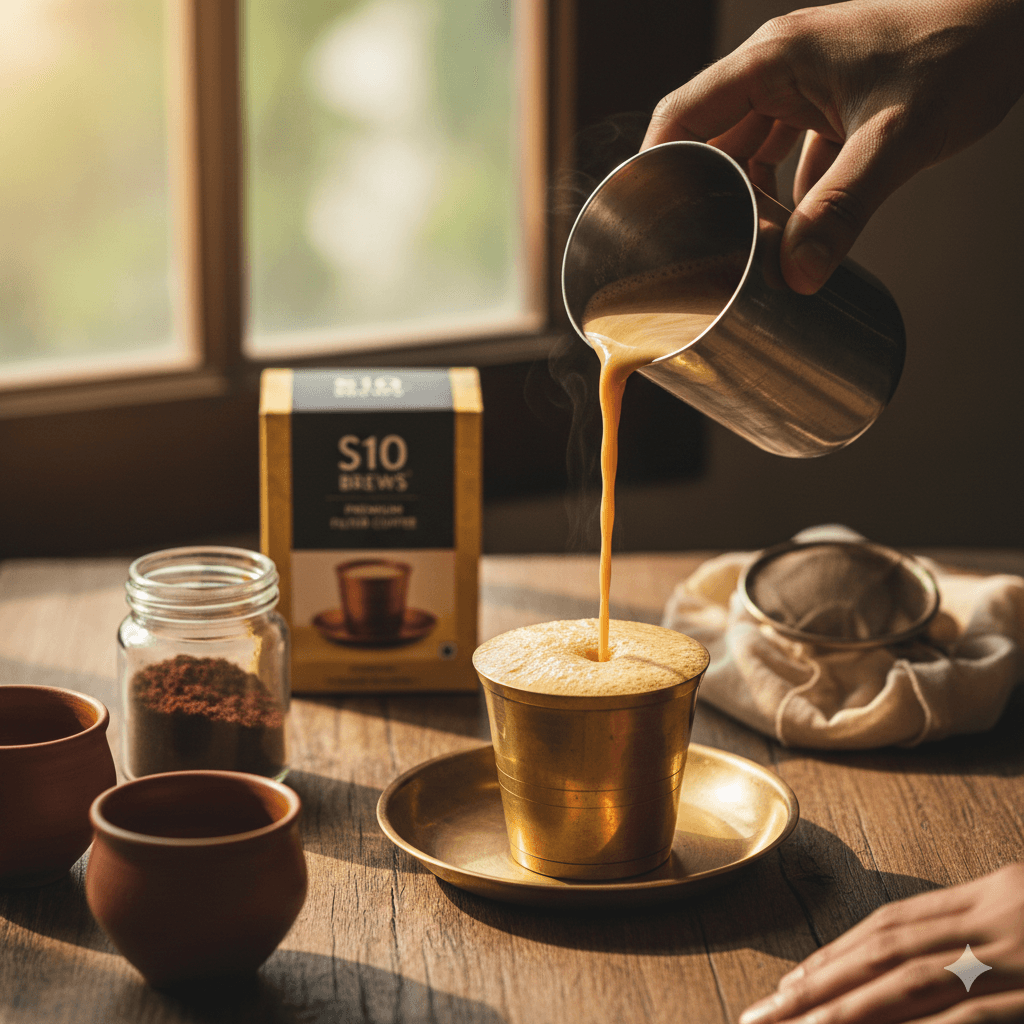
Combine the decoction and sugar in a cup (or a traditional brass Dabarah). Pour the hot milk from a height. This aeration process, known as "stretching" the coffee, creates the iconic micro-foam. Pour the mixture back and forth between two vessels two or three times. This cools the coffee to the perfect drinking temperature and ensures the sugar is perfectly dissolved.
Why Quality Powder is Non-Negotiable?
When you search for the "best coffee powder for filter coffee," you are looking for more than just a label. You are looking for freshness. Large-scale commercial powders often sit on shelves for months, losing their volatile aromatic compounds.
Handcrafted coffee powder, produced in small batches, ensures that the "first-press" you make at home—even without a machine—contains the full spectrum of chocolate, nut, and spice notes. This is why professionals and founders prefer an estate-grown coffee powder; the quality of the raw bean does the heavy lifting that a machine otherwise would.
Tips for the Perfect Brew
- Water Quality: Use filtered water. If your water tastes like chlorine, your coffee will too.
- Sugar Choice: Use raw sugar or jaggery for a deeper, more rustic flavor profile that complements traditional South Indian coffee powder.
- The Vessel: If possible, use a stainless steel vessel. It retains heat better than ceramic during the steeping phase.
FAQ: Mastering Traditional Coffee
Which coffee powder is best for filter coffee?
The best coffee powder is a blend of 70-80% Arabica/Robusta beans and 20-30% chicory. This provides the necessary body and strength to create a traditional decoction.
Can I make degree coffee with instant coffee powder?
Technically, no. Degree coffee is defined by the use of brewed decoction from ground beans. Instant coffee lacks the oils and texture required for an authentic degree coffee experience.
How do I store my coffee powder to keep it fresh?
Store your pure coffee powder in an airtight, opaque container in a cool, dark place. Avoid the refrigerator, as coffee absorbs odors and moisture.
What is the difference between filter coffee and degree coffee?
While all degree coffee is filter coffee, not all filter coffee is "degree." Degree coffee specifically emphasizes the purity and thickness of the milk and the use of the strongest first-press decoction.
Where can I buy authentic degree coffee powder online?
You can find premium, small-batch options at specialized retailers like S10 Brews, which focus on traditional South Indian blends sourced directly from high-altitude estates.
Is chicory necessary for South Indian coffee?
While not mandatory, chicory is a staple in traditional South Indian filter coffee powder. It adds a woody flavor, a dark color, and helps the decoction stay thick.
Elevating Your Morning Ritual
Brewing coffee without a machine is a meditative practice. It forces us to slow down, to smell the grounds, and to appreciate the chemistry of heat and water. By choosing a premium filter coffee powder, you are already halfway to a perfect cup.
At S10 Brews, we believe that every home deserves the luxury of a café-quality experience without the need for expensive equipment. Our passion for artisanal, estate-grown coffee ensures that your "no-machine" brew is indistinguishable from the one served in the legendary coffee houses of Kumbakonam or Mylapore.
Experience the difference of a fresh coffee powder that respects tradition. Whether you are a doctor starting a long shift or a founder building the next big thing, a cup of authentic degree coffee is the fuel your ambition deserves.
Ready to brew? Explore our collection of premium South Indian coffee powder and bring the heritage of the Ghats to your kitchen.