Exploring Coffee from the Congo: Spicy, Berry, and Full-Bodied
Discover Coffee from the Congo! Explore its spicy, berry, full-bodied notes. Coffee S10 Brews invites Indian coffee lovers to expand their palate. Dive in!
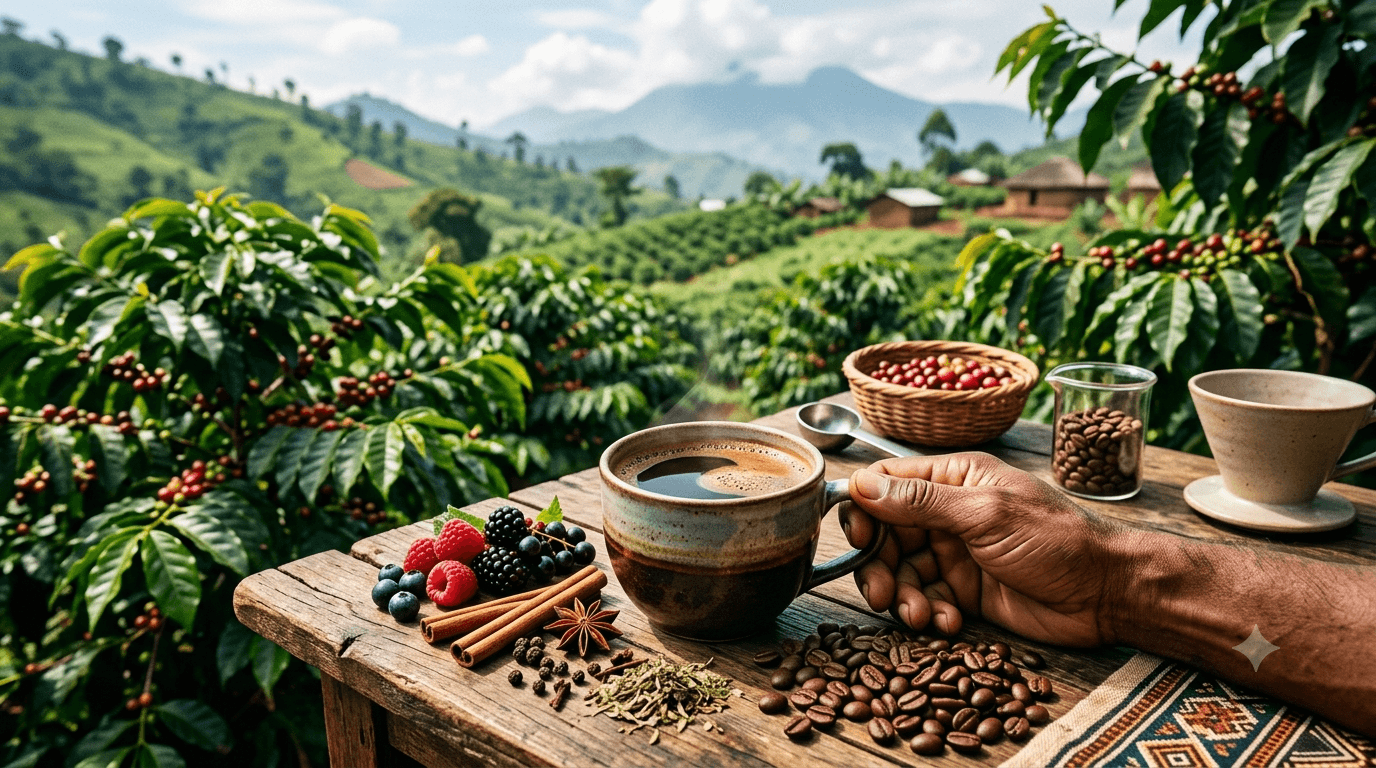
Why is the spicy and berry profile of Congo coffee beans gaining popularity in South Indian blends?
In the world of specialty coffee, the Democratic Republic of Congo (DRC) has emerged as a powerhouse of flavor, offering beans that are naturally high in acidity with distinct spicy and berry-toned profiles. For the discerning South Indian filter coffee lover, this might seem like a departure from the traditional chocolatey and nutty profiles of Chikmagalur or Coorg. However, high-intent consumers are increasingly looking for complexity in their cup. When these vibrant Congolese beans are processed with the precision of South Indian roasting traditions, they provide a full-bodied experience that stands up perfectly to the addition of milk and sugar. At Coffee S10 Brews, we recognize that the "spicy" notes often found in high-altitude African beans provide a natural bridge to the deep, earthy richness of a traditional South Indian filter coffee. By selecting beans with these specific sensory descriptors, we ensure that our decoction has a lingering aftertaste that goes beyond simple bitterness, offering a sophisticated fruitiness that cuts through the creaminess of high-fat milk.
What are the primary 80:20 coffee chicory blend benefits for achieving a full-bodied decoction?
One of the most frequent questions from coffee enthusiasts is: "Why not 100% coffee?" The answer lies in the science of the South Indian filter. A signature 80:20 coffee-chicory blend, which is the cornerstone of the Coffee S10 Brews philosophy, is not about dilution—it is about enhancement. Chicory, the roasted root of the Cichorium intybus plant, serves three critical functions. First, it increases the "body" or viscosity of the decoction. Without it, the water passes through the coffee grounds too quickly, resulting in a thin, watery liquid. Second, chicory provides a natural sweetness and a dark, caramel-like color that 100% Arabica or Robusta cannot achieve alone. Finally, it acts as a flavor carrier for those "spicy and berry" notes found in premium beans. The 80:20 ratio is the "Golden Ratio" because it allows the authentic aroma of the handpicked beans to shine while providing the structural integrity needed for a frothy, "meter coffee" finish. Many modern consumers find that 100% coffee blends lack the "punch" they remember from traditional South Indian households; the 80:20 blend restores that nostalgic depth without the harshness of low-quality commercial chicory.
How to brew authentic South Indian filter coffee at home with hotel-style consistency?
The "pain" many coffee lovers face is the inconsistency of their home brew. You buy the best South Indian filter coffee powder, yet the result is either too weak or unpleasantly bitter. The "cure" lies in mastering the traditional brass or stainless steel filter. To achieve Coffee S10 Brews' standards at home, start with the "tamping" process. Add 3 to 4 tablespoons of our 80:20 blend into the upper chamber. Press the powder down gently with the plunger—not too hard, or the water won't pass through; not too light, or the water will bypass the oils. Use water that has just come off the boil (around 92-96°C). The first "bloom" or the slow drip of the decoction is where the magic happens. This concentrated essence, often called the "first decoction," contains the highest concentration of spicy and berry notes. If you find your coffee lacks the "kick" of hotel coffee, it is likely due to either an incorrect grind size or a low-quality blend. Coffee S10 Brews uses a medium-coarse grind specifically calibrated for slow-drip extraction, ensuring that every drop is saturated with flavor. Explore how grind size impacts decoction strength through our online brewing tutorials to refine your technique.
Why does South Indian coffee taste stronger than Western pour-over or espresso?
The perception of "strength" in coffee is often a mix of caffeine content, viscosity, and sensory impact. South Indian filter coffee feels stronger because of the immersion-and-drip method combined with the 80:20 blend. In a Western pour-over, the goal is often clarity—tasting the individual notes of the bean in a tea-like consistency. In contrast, the South Indian method aims for "mouthfeel." The inclusion of chicory increases the soluble solids in the cup, making the liquid "heavier" on the tongue. Furthermore, the slow extraction process (taking 15 to 30 minutes for a full pot) draws out the deeper, more resinous compounds of the coffee bean. When you use Coffee S10 Brews, you are experiencing small-batch roasting that targets the "second crack" of the bean, where the sugars are fully caramelized. This produces a cup that is bold enough to be diluted with milk while still retaining its distinct coffee identity. This is why a South Indian cup often feels more satisfying and "wakeful" than a standard latte or americano.
Comparison of Coffee Types: Understanding the Spectrum of Flavor
To help you choose the right experience, it is essential to look at how traditional South Indian craftsmanship compares to other common coffee formats. The following table highlights why the 80:20 blend remains the gold standard for authentic taste.
| Feature Instant Coffee 100% Pure Coffee (Arabica) Coffee S10 Brews (80:20 Blend) | |||
| Preparation Time | 30 Seconds | 3-5 Minutes | 15-20 Minutes (Traditional Drip) |
| Body & Texture | Thin and watery | Medium/Silky | Heavy, Full-Bodied, and Syrupy |
| Aroma Profile | Faint/Processed | High Acidity/Floral | Deep, Earthy, Spicy, and Berry-toned |
| Best Served | Black or with light milk | Black (Pour-over) | With frothy, hot, full-cream milk |
| Shelf Life/Freshness | High (Chemical preservatives) | Moderate | High (Fresh small-batch roasting) |
Why is chicory used in South Indian coffee, and is it "natural"?
There is a common misconception that chicory is a "filler" used only to reduce costs. While some commercial brands use high percentages of chicory (40% or more) to mask poor-quality beans, Coffee S10 Brews uses it as a culinary tool. Our chicory is 100% natural, derived from roasted roots, and provides a prebiotic fiber called inulin. In the context of the South Indian ritual, chicory’s primary role is to balance the acidity of the coffee. If you were to use a 100% Arabica bean from the Congo with high "berry" acidity and add milk, the milk might taste slightly curdled or sour. The chicory provides a bitter-sweet base that "anchors" those bright notes, resulting in a balanced cup. It is the secret behind the dark, chocolatey color of the decoction. When consumers ask, "Why doesn't my filter coffee taste like hotel coffee?" the answer is almost always a lack of high-quality chicory or an incorrect ratio. By using a 20% inclusion, we achieve the perfect synergy between modern bean quality and traditional palate expectations.
Exploring the sensory profile: How aroma, body, and crema define Coffee S10 Brews.
When you brew a cup of Coffee S10 Brews, the sensory experience begins long before the first sip. The aroma is the first indicator of quality; you should detect a mix of roasted nuts and a subtle "spicy" undertone that hints at our Congolese-inspired sourcing. The body of the coffee—the way it coats your tongue—is where the 80:20 blend shines, offering a velvety texture that lingers. Finally, there is the crema. While traditional filter coffee doesn't produce an espresso-style crema, the "froth" (often created by pouring the coffee between two containers, or "pulling" it) should be thick and persistent. This froth traps the aromatic oils, releasing them as you drink. If your coffee lacks this froth, it is often a sign of stale grounds. We combat this by utilizing controlled roasting cycles and airtight packaging, ensuring that the beans reach you at the peak of their degassing phase. Try an 80:20 blend to experience this traditional depth and see how it transforms your morning ritual.
The role of handpicked beans and small-batch roasting in flavor reliability.
Consistency is the hallmark of a premium brand. In the coffee industry, massive industrial roasters often over-roast beans to hide defects, leading to a "burnt" taste. Coffee S10 Brews takes a different approach. We focus on small-batch roasting, which allows our master roasters to monitor the "development time" of every bean. Whether the beans are sourced from the volcanic soils of the Congo or the lush hills of Karnataka, they are handpicked to ensure only ripe cherries are processed. This precision prevents the "sourness" associated with under-ripe beans and the "char" of over-roasting. For the consumer, this means that every bag of Coffee S10 Brews tastes the same as the last. You won't find varying levels of bitterness or unexpected acidity; instead, you get a reliable, full-bodied cup every single morning. This commitment to craftsmanship bridges the gap between the unpredictability of "convenience" coffee and the high standards of a traditional South Indian kitchen.
How to store your coffee powder to maintain its spicy and berry notes?
Oxygen, light, and moisture are the enemies of great coffee. Once a bag of Coffee S10 Brews is opened, the volatile aromatic compounds—those responsible for the spicy and berry notes—begin to dissipate. To preserve the "freshly roasted" flavor, we recommend transferring the powder to an opaque, airtight container immediately after opening. Avoid storing coffee in the refrigerator, as the moisture and varying temperatures can cause condensation inside the container, leading to mold or a "flat" taste. Instead, keep it in a cool, dark pantry. Because we emphasize freshness, we encourage our customers to buy smaller quantities more frequently. This ensures that you are always brewing with powder that has its full aromatic profile intact. Discover brewing guides from Coffee S10 Brews to learn more about how storage affects the "bloom" of your decoction.
Why the South Indian filter coffee ritual is a form of "slow living."
In a world of "instant" everything, the 20 minutes it takes to brew a proper filter coffee is an act of rebellion. It is a ritual that demands patience. The process of boiling the water, tamping the powder, and waiting for the slow "drip-drip" of the decoction is a form of meditation. Coffee S10 Brews is built on this appreciation for tradition. We aren't just selling a product; we are inviting you into a culture that values quality over speed. This "slow living" approach ensures that the coffee has the time to develop its full-bodied complexity. When you finally mix that thick, dark decoction with frothy milk and a hint of jaggery or sugar, the reward is far greater than any pod-based machine can provide. It is a connection to heritage, updated for the modern home with better sourcing and more transparent roasting practices.
What is the difference between home-brewed and "hotel-style" filter coffee?
Many customers ask: "Is it possible to replicate the taste of a famous Chennai or Bangalore tiffin room at home?" The answer is yes, but it requires understanding the three variables: the blend, the milk, and the "pull."
| Factor Average Home Brew Hotel-Style Coffee The Coffee S10 Brews Way | |||
| Coffee Powder | Generic/Store-bought | Custom 70:30 or 80:20 blends | Signature 80:20 (Small-batch) |
| Milk Quality | Toned/Low-fat milk | High-fat, buffalo milk (reduced) | Full-cream milk, boiled twice |
| Preparation | Mixed in a mug | "Pulled" in a Davara/Tumbler | Acup-aerated for maximum froth |
| Decoction Strength | Weak/Second extraction | Thick/First extraction only | Calibrated grind for maximum yield |
To get that hotel-style result, use Coffee S10 Brews and focus on the milk. Hotels often simmer their milk for a long time, slightly reducing it to increase the sweetness. When combined with our 80:20 blend, the naturally occurring berry notes in our coffee create a flavor profile that is both nostalgic and superior in quality.
Frequently Asked Questions about South Indian Filter Coffee
1. What is the best South Indian filter coffee powder for beginners?
For those new to the ritual, an 80:20 coffee-chicory blend is the best starting point. It provides the most forgiving brewing experience, offering a thick decoction even if your tamping technique isn't perfect. Coffee S10 Brews' signature blend is designed specifically for home brewers looking for that authentic hotel taste.
2. Why does my filter coffee taste sour?
Sourness usually indicates "under-extraction." This happens if the water passes through the grounds too quickly (grind is too coarse), if the water isn't hot enough, or if you are using low-quality, under-roasted beans. Using a finely calibrated grind like that found in Coffee S10 Brews helps eliminate this issue.
3. Can I use a French Press or AeroPress for South Indian filter coffee?
While you can use these modern tools, they won't produce the same "decoction" density as a traditional metal filter. If you must use a French Press, use a higher coffee-to-water ratio and let it steep for at least 5-7 minutes to mimic the slow extraction of the Indian filter.
4. How much chicory is too much?
Most experts agree that once you exceed 30% chicory, you begin to lose the actual taste of the coffee bean. A 20% inclusion (the 80:20 ratio) is the ideal balance for aroma and body. Anything above 40% is usually done to cut costs and can lead to a "rubbery" aftertaste.
5. Is South Indian filter coffee healthy?
When consumed in moderation, filter coffee is rich in antioxidants. The chicory in the 80:20 blend also provides inulin, a prebiotic fiber that supports gut health. Because filter coffee is traditionally served with milk and sugar, the overall health profile depends on your choice of additives.
6. Why is my decoction not dripping through the filter?
This is called a "choke." It happens if the grind is too fine (like espresso powder) or if you have tamped the powder down too hard. South Indian filter coffee requires a specific medium-coarse "rawa" (semolina-like) consistency to allow the water to seep through at the correct rate.
7. What makes Coffee S10 Brews different from commercial brands?
We focus on "Brewing Intelligence." This means we don't just sell powder; we focus on the entire ecosystem—from sourcing beans with unique spicy and berry profiles from regions like the Congo and India to ensuring small-batch freshness that commercial giants cannot replicate.
Ready to elevate your morning ritual? Whether you are looking for the bold, full-bodied "kick" of a traditional 80:20 blend or you want to explore the nuanced, spicy notes of premium roasted beans, we have you covered. Experience the craftsmanship of South Indian tradition delivered to your doorstep.
Explore the full range of Coffee S10 Brews products and master the art of the perfect decoction with our expert brewing guides.