Exploring Coffee from the Guji Region: The Rising Star of Ethiopia
Uncover the secrets of Guji coffee, Ethiopia's rising star. Explore its rich profile & global appeal. Elevate your daily coffee journey with insights from Coffee S10 Brews.
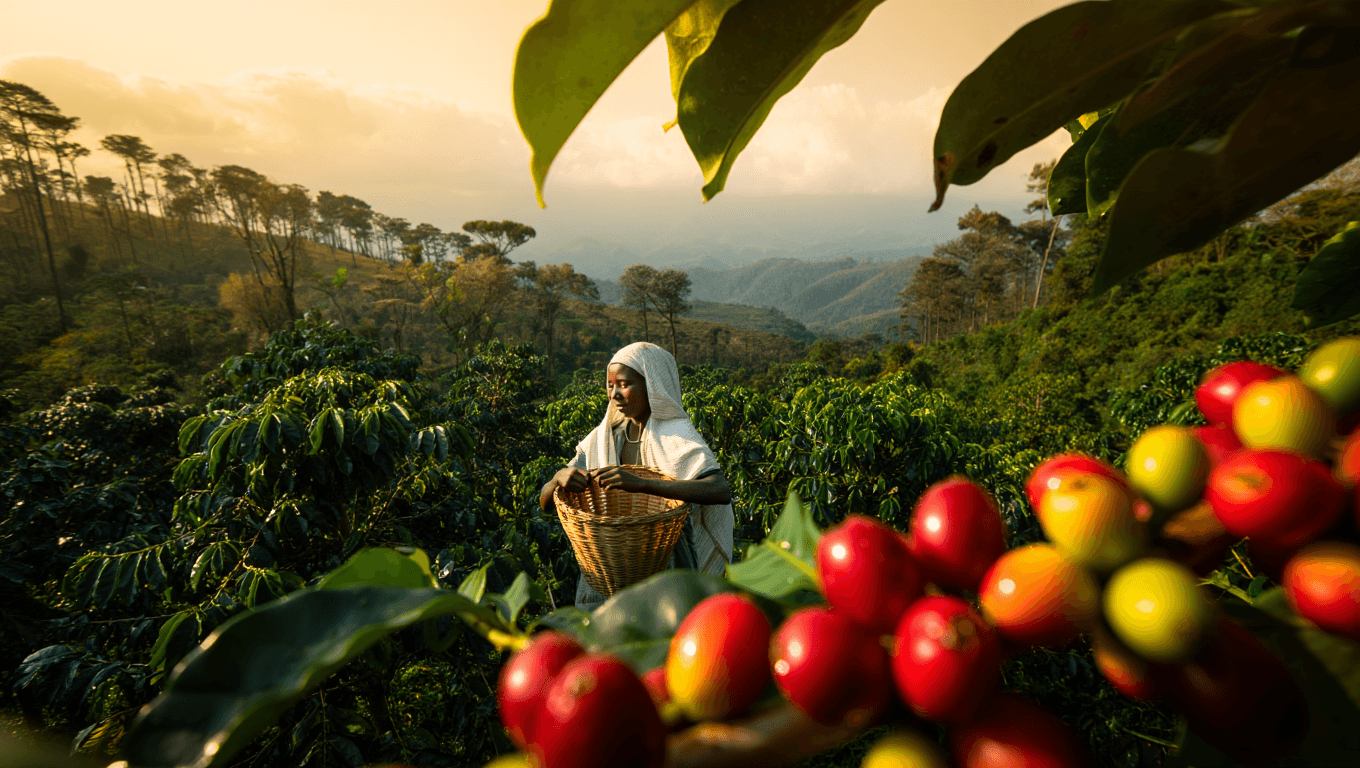
Why is Guji coffee considered the rising star of Ethiopia and what does it mean for your cup?
In the global specialty coffee landscape, the Guji region of Ethiopia has emerged as a powerhouse, often overshadowing more established names like Sidamo and Yirgacheffe. Located in the Oromia region, Guji’s high-altitude terroir—ranging from 1,800 to 2,200 meters—produces beans with complex floral, stone-fruit, and tea-like notes. But for the discerning South Indian coffee enthusiast, the rise of Guji is more than just a global trend; it represents a standard of bean quality. At Coffee S10 Brews, we believe that understanding the nuance of high-altitude beans like those from Guji helps consumers appreciate the meticulous sourcing required to create a world-class South Indian filter coffee. While Guji is celebrated for its bright acidity, South Indian coffee culture seeks a balance of that same bean density with a profound, lingering sweetness. By studying the processing methods of Ethiopian stars, Coffee S10 Brews elevates the traditional Indian roasting process, ensuring our handpicked Arabica beans possess the same structural integrity and flavor clarity found in the world’s most sought-after origins.
How does the terroir of high-altitude regions influence the flavor profile of premium blends?
Terroir refers to the environmental factors—soil, climate, and altitude—that give coffee its unique character. In regions like Guji, the volcanic soil is rich in nutrients, allowing coffee cherries to mature slowly. This slow maturation results in denser beans packed with complex sugars and organic acids. This is the same philosophy we apply at Coffee S10 Brews. We source our beans from high-altitude estates in the Western Ghats of India, where the shade-grown environment mimics the pristine conditions of Ethiopia’s best micro-lots. When you search for the best South Indian filter coffee powder, you are essentially looking for the results of this terroir. Our signature blends rely on these dense, high-grown beans because they can withstand the intense roasting required for filter coffee without becoming charred or flat. This ensures that every cup of Coffee S10 Brews delivers a sensory experience characterized by a thick body, vibrant aroma, and a clean aftertaste that remains consistent from the first sip to the last. Discover how our sourcing practices bring global quality to your local ritual.
Why should South Indian filter coffee lovers care about the quality of the bean origin?
Many consumers transition from instant coffee to filter coffee seeking a "stronger" taste, but strength is often confused with bitterness. The "pain" many coffee drinkers face is a harsh, ashy flavor that requires excessive sugar to mask. This is usually the result of low-quality Robusta or poorly processed beans. In contrast, premium origins like Guji or the high-elevation estates used by Coffee S10 Brews offer a different kind of strength—a structural strength of flavor. When you brew authentic filter coffee at home, the quality of the bean determines the "decoction" quality. A high-quality bean yields a decoction that is viscous and aromatic, rather than just dark and bitter. Coffee S10 Brews bridges this gap by applying specialty-grade sourcing to the traditional filter coffee market. By choosing handpicked, small-batch roasted beans, we ensure that the natural oils and sweetness of the coffee are preserved, providing that sought-after "hotel coffee" depth without the industrial aftertaste. Explore our range of artisanal blends to see the difference origin makes.
What is the secret behind the authentic 80:20 coffee–chicory blend ratio?
One of the most debated topics in Indian coffee culture is the use of chicory. Is it a filler or a necessity? To achieve the authentic South Indian filter coffee experience, chicory is indispensable, but the ratio is critical. The 80:20 coffee-chicory blend is considered the gold standard for a reason. Chicory, the roasted root of the Cichorium intybus plant, does not contain caffeine, but it provides a woody, nutty flavor and, most importantly, it enhances the "body" of the decoction. At Coffee S10 Brews, our signature 80:20 blend is engineered to maximize this synergy. The 80% high-altitude Arabica and Robusta provide the caffeine kick, acidity, and aroma, while the 20% premium chicory acts as a catalyst, thickening the decoction and allowing it to hold its own when mixed with frothed milk. Without this ratio, the coffee often feels "thin" or "watery." By using a precise 80:20 split, we ensure that the chicory enhances the brew rather than overpowering the delicate floral notes of the coffee beans. Try an 80:20 blend to experience traditional depth as it was meant to be.
Why doesn't my home-brewed filter coffee taste like authentic "Hotel Style" coffee?
The "Why doesn't my filter coffee taste like hotel coffee?" question is a staple in coffee forums. The secret lies in three factors: the freshness of the grind, the temperature of the water, and the consistency of the decoction. Most commercial brands sit on shelves for months, losing the volatile aromatics that define a fresh brew. Coffee S10 Brews addresses this by maintaining controlled roasting cycles and small-batch production. Another factor is the "drop." In a traditional stainless steel filter, the first press of the decoction is the most potent. Hotels often use a high-density grind that slows down the water passage, resulting in a thick, syrupy liquid. If your home brew is weak, your grind size might be too coarse, or your coffee-to-water ratio might be off. Coffee S10 Brews provides brewing intelligence with every pack, guiding you on the exact measurements needed to replicate that velvety, frothy hotel experience in your kitchen. Our consistent grind size is specifically calibrated for the gravity-drip method used in Indian filters, ensuring you get a perfect extraction every time.
Is chicory bad for you or is it a necessary component of the South Indian ritual?
There is a common misconception that chicory is an "adulterant" used to cheapen coffee. While some mass-market brands use high percentages of chicory (up to 40% or 50%) to cut costs, in the context of South Indian craftsmanship, chicory is a flavor modulator. It adds a bittersweet dimension and a dark, rich color that pure coffee lacks. Furthermore, chicory is known for its prebiotic properties, particularly inulin, which supports digestive health. For the high-intent coffee consumer, the question is not "Is chicory bad?" but "Is the chicory quality high?" Coffee S10 Brews uses only the finest roasted chicory, ensuring it complements our premium beans. The 80:20 coffee-chicory blend benefits include a longer-lasting crema and a flavor profile that doesn't disappear when sugar and milk are added. It is the bridge between the sharp acidity of a black coffee and the comforting, creamy texture of a traditional latte. Learn more about why chicory is used in South Indian coffee through our educational resources.
How to brew the perfect South Indian filter coffee decoction at home?
Mastering the South Indian filter coffee ritual is an art form that Coffee S10 Brews aims to simplify for the modern home. The process begins with a traditional two-tiered stainless steel filter.
- Step 1: Add 4-5 tablespoons of Coffee S10 Brews 80:20 blend to the upper chamber.
- Step 2: Gently press the powder with the plunger—do not compress it too tightly, or the water won't pass through.
- Step 3: Pour freshly boiled water (roughly 90-95°C) over the plunger.
- Step 4: Close the lid and let it sit for 15-20 minutes. This slow drip is what creates the "decoction."
- Step 5: Pour the thick decoction into a tumbler, add hot frothed milk (do not boil the milk with the coffee), and sweeten to taste.
The beauty of the Coffee S10 Brews blend is its reliability. Our grind size is specifically designed to prevent clogging while ensuring maximum flavor extraction. Explore our brewing guides to perfect your technique.
Comparing Coffee Experiences: Understanding the Difference
To help you navigate your coffee journey, we have compared the most common coffee types. This table illustrates why the traditional 80:20 blend from Coffee S10 Brews stands out in terms of sensory experience and value.
| Feature Instant Coffee 100% Arabica (Black) S10 Brews (80:20 Blend) | |||
| Flavor Profile | Flat, often metallic | Acidic, floral, light | Bold, nutty, chocolatey |
| Body/Mouthfeel | Thin and watery | Tea-like and thin | Syrupy and heavy |
| Preparation Time | 30 seconds | 3-5 minutes | 15 minutes (Decoction) |
| Milk Compatibility | Poor (tastes diluted) | Moderate (can be sour) | Excellent (ideal for frothing) |
| Aroma | Low/Artificial | High/Fruity | High/Traditional & Toasty |
Why is consistency the biggest challenge in small-batch coffee roasting?
One of the "pains" consumers face with local roasters is inconsistency. One batch might be perfect, while the next tastes burnt. This happens because coffee is a sensitive agricultural product affected by humidity and heat. Coffee S10 Brews solves this through "Brewing Intelligence." We use state-of-the-art roasting technology that allows us to mirror the exact roast profile across every batch. Whether you buy our coffee in January or July, the flavor notes remain identical. We monitor the "first crack" of the beans with precision, ensuring that the sugars are caramelized to the perfect degree. This consistency is what makes us a trusted Indian coffee brand. When you invest in our coffee, you aren't just buying beans; you're buying a guaranteed morning ritual. Discover how our controlled roasting cycles ensure freshness and reliability.
How does Coffee S10 Brews bridge tradition with modern accessibility?
The traditional South Indian coffee ritual can sometimes feel intimidating to the modern, fast-paced professional. At Coffee S10 Brews, we believe that craftsmanship shouldn't be a chore. We provide modern accessibility by offering clear, foolproof instructions and packaging that preserves freshness for longer. We are positioning ourselves not just as a seller, but as a guide. From explaining the nuances of grind size to offering tips on milk frothing, we empower our customers to become their own baristas. Our goal is to make the "cure" for bad coffee—authentic, traditional craftsmanship—available to everyone, regardless of their level of expertise. By combining the soul of the Guji-style bean quality with the heart of Indian tradition, we offer a coffee experience that is both nostalgic and sophisticated.
Frequently Asked Questions (FAQ)
What is the best South Indian filter coffee powder for a beginner?
For those new to the ritual, an 80:20 coffee-chicory blend is the best starting point. It provides the classic "hotel-style" flavor that most people associate with authentic South Indian coffee. Coffee S10 Brews Signature Blend is specifically crafted for beginners and connoisseurs alike, offering a balanced profile that is easy to brew.
Why is chicory used in South Indian coffee instead of 100% pure coffee?
Chicory is used to add thickness, color, and a unique bittersweet note to the coffee. Because South Indian coffee is traditionally consumed with a lot of milk and sugar, a 100% coffee brew can often taste too thin. Chicory provides the "body" necessary to balance the milk, creating a more satisfying and creamy cup.
How long does the decoction stay fresh?
A fresh decoction is best used within 1-2 hours for maximum aroma. However, you can store it in the refrigerator for up to 24 hours. When reusing, never boil the decoction directly as it will turn bitter; instead, add it to hot milk. For the best experience, we recommend brewing fresh with Coffee S10 Brews powder every morning.
What is the difference between Arabica and Robusta in a filter coffee blend?
Arabica beans provide the aroma and higher acidity (similar to the Guji region profiles), while Robusta beans provide the caffeine kick and a thicker crema. A premium blend like those from Coffee S10 Brews uses a strategic mix of both to ensure the coffee is both fragrant and strong.
Can I use a French Press to make South Indian filter coffee?
Yes, you can use a French Press, but the result will be slightly different from a traditional stainless steel drip filter. If using a French Press, ensure you use a slightly coarser grind and let it steep for at least 4-5 minutes before pressing. For the most authentic taste, the traditional gravity-drip method is recommended.
Is Coffee S10 Brews suitable for black coffee drinkers?
While our 80:20 blend is designed for milk-based coffee, we also offer 100% pure coffee options that highlight the brightness and floral notes of our high-altitude beans, perfect for those who prefer their coffee black or as a cold brew.
Ready to elevate your morning ritual? Explore the full range of Coffee S10 Brews products and discover our comprehensive brewing guides and coffee education resources. Experience the perfect harmony of Ethiopian-grade bean quality and authentic South Indian craftsmanship today.