Exploring Papua New Guinea Coffee: Tropical Fruit and Smooth Finishes
Uncover Papua New Guinea coffee's vibrant tropical fruit flavours & silken smooth finish. Coffee S10 Brews invites you to explore this exotic brew.
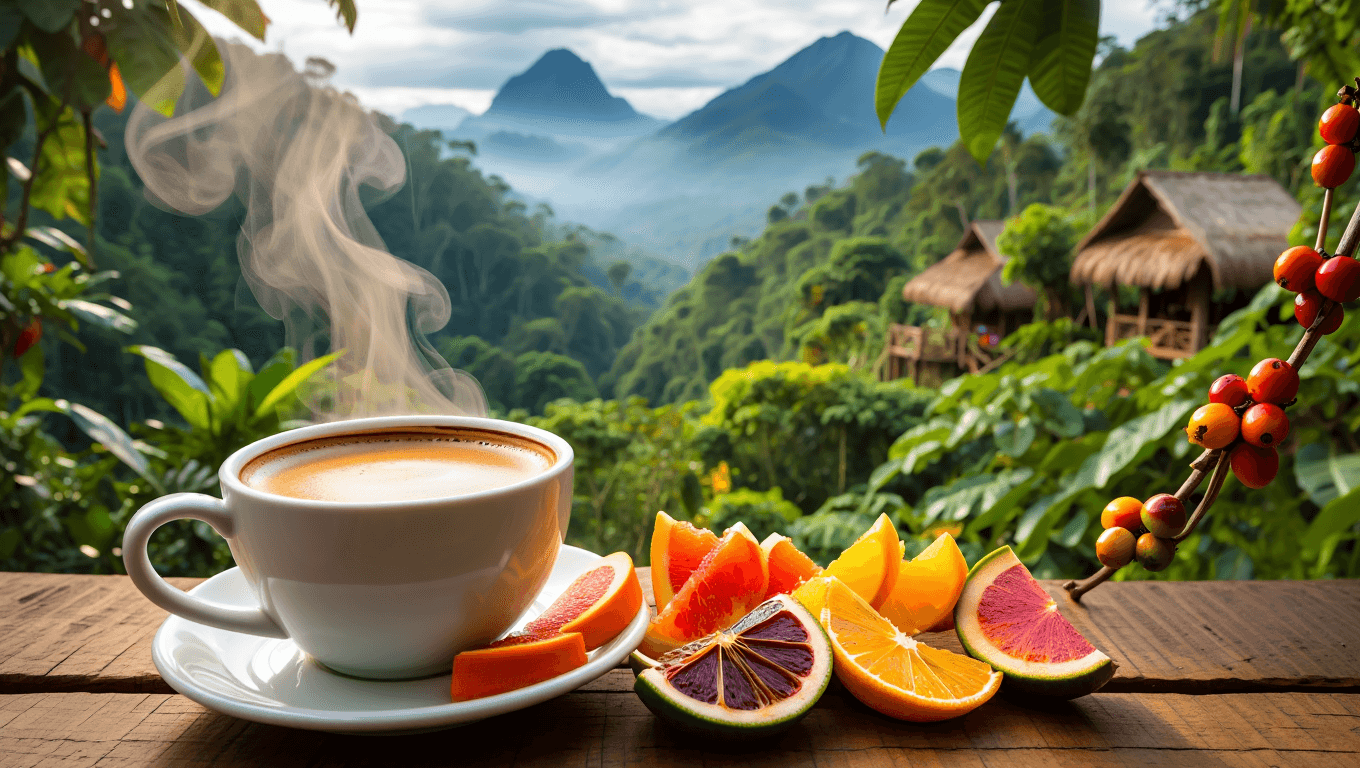
What makes Papua New Guinea coffee unique compared to traditional South Indian beans?
Papua New Guinea (PNG) occupies a legendary space in the global coffee landscape, primarily because its roots are tied to the famous Jamaican Blue Mountain seeds. When we talk about Papua New Guinea coffee, we are discussing a profile that is inherently wild, complex, and distinct from the chocolatey, earthy undertones typically found in Indian Arabica or Robusta. While South Indian coffee drinkers are accustomed to the deep, resonant body of a traditional filter coffee, PNG beans introduce a sophisticated acidity characterized by tropical fruit notes like papaya, mango, and a hint of citrus. At Coffee S10 Brews, we believe that understanding these global profiles helps connoisseurs appreciate why the South Indian filter coffee ritual is so unique. While PNG coffee offers a "bright" finish, it often lacks the syrupy viscosity that an authentic 80:20 coffee-chicory blend provides. By exploring these differences, you can better understand why Coffee S10 Brews focuses on handpicked Indian beans to achieve that specific, nostalgic "hotel-style" thickness that single-origin PNG beans might not deliver on their own.
Why do coffee enthusiasts look for tropical fruit notes and smooth finishes in PNG beans?
The allure of Papua New Guinea coffee lies in its volcanic soil and high-altitude cultivation, often exceeding 1,500 meters. This environment allows the coffee cherries to ripen slowly, developing complex sugars that translate into tropical fruit aromas and a notably smooth finish. For a consumer searching for the best South Indian filter coffee powder, the idea of "fruitiness" in coffee might seem unconventional. Traditionally, Indian filter coffee is prized for its bitterness-sweetness balance. However, the "smooth finish" of PNG coffee is something every coffee lover seeks. At Coffee S10 Brews, we achieve a similar velvety smoothness not through high acidity, but through meticulous small-batch roasting. We ensure that our beans are roasted to a point where the natural oils are preserved, providing a clean aftertaste without the harsh "burnt" notes often found in mass-produced commercial coffee.
How does the Arusha variety from PNG differ from South Indian Arabica?
Most of the coffee produced in Papua New Guinea consists of the Arusha and Bourbon varieties. Arusha is a tall-growth cultivar that produces a cup with a delicate body and high floral notes. In contrast, the Arabica varieties grown in the Western Ghats of India—used in Coffee S10 Brews—tend to be more full-bodied with spicy and nutty characteristics. When you brew authentic filter coffee at home, the variety of the bean dictates how the decoction will behave. A PNG Arusha bean might produce a thin decoction that feels lost when mixed with milk. This is why Coffee S10 Brews selects specific Indian cultivars that are robust enough to withstand the addition of hot, frothy milk, ensuring that the coffee’s soul remains intact even after dilution. Our commitment to authentic South Indian craftsmanship means we prioritize varieties that complement the traditional brass filter brewing process.
Can you use Papua New Guinea coffee for South Indian filter decoction?
Technically, any coffee bean can be ground for a filter, but the results vary wildly. If you were to use a light-roasted PNG bean in a traditional South Indian stainless steel or brass filter, the resulting decoction would likely be too acidic and thin. The "why does my filter coffee taste sour?" complaint often stems from using beans with too much inherent acidity and not enough body. This is where the Coffee S10 Brews philosophy of "Brewing Intelligence" comes into play. We understand that for a perfect cup of Kaapi, you need a bean that offers "grip" on the palate. Our signature 80:20 coffee-chicory blend is engineered to provide that grip. While PNG coffee is excellent for a black pour-over or an Aeropress, the traditional South Indian palate craves the depth that only a carefully balanced blend can provide. If you are experimenting with PNG beans, we recommend a coarser grind and a longer steep, but for the daily ritual, nothing replaces the reliability of a professional blend.
Understanding the 80:20 coffee-chicory blend: Why Coffee S10 Brews prioritizes balance?
One of the most frequent questions in the Indian coffee community is, "Is chicory bad or necessary?" The answer lies in the science of extraction. Chicory is not just a filler; it is a functional ingredient that enhances the coffee experience. In an 80:20 coffee-chicory blend, the chicory acts as a catalyst. It increases the thickness (viscosity) of the decoction and adds a woody sweetness that balances the caffeine's bitterness. When compared to a 100% specialty coffee like those from PNG, an 80:20 blend creates a more stable "crema" and a darker, more inviting color. Coffee S10 Brews uses a premium 20% chicory ratio to ensure that our coffee has the "strength" consumers expect. This ratio allows the nuances of our handpicked beans to shine through while providing the structural integrity needed to support milk and sugar.
Comparing Coffee Profiles: Papua New Guinea vs. South Indian Filter Coffee
To help you choose the right brew for your morning, we have compared the sensory characteristics of these two distinct styles.
| Feature PNG Single Origin (Typical) Coffee S10 Brews (80:20 Blend) | ||
| Primary Flavor Notes | Papaya, Hibiscus, Green Apple | Dark Chocolate, Roasted Nuts, Caramel |
| Body/Mouthfeel | Tea-like, Light to Medium | Syrupy, Thick, Heavy-bodied |
| Acidity Level | High (Bright and Tart) | Low (Mellow and Balanced) |
| Best Brewing Method | V60 Pour-over, Chemex | Traditional South Indian Filter |
| Milk Compatibility | Low (Can taste "curdled" or sour) | Excellent (Enhances sweetness and body) |
Why doesn’t your home-brewed coffee taste like "Hotel Coffee"?
This is a common pain point for many enthusiasts. You buy expensive beans, perhaps even a bag of Papua New Guinea specialty coffee, but the result at home is underwhelming. The secret to "Hotel-style" coffee isn't just the bean; it's the combination of the right grind size, the right blend, and the right brewing temperature. Commercial establishments often use a blend that contains chicory because it holds its flavor longer in a large urn. Coffee S10 Brews brings this professional consistency to your kitchen. Our beans are ground to a precise medium-fine consistency that is optimized for gravity-based drip filters. When you use our 80:20 blend, you aren't just getting coffee; you are getting a recipe perfected over generations to ensure that your home-brewed cup has the same punch and aroma as the best cafes in Mylapore or Jayanagar.
The role of wet-processing in creating that signature smooth finish
Both PNG and high-quality Indian coffees often use the "washed" or "wet" processing method. In this process, the fruit pulp is removed before the beans are dried. This results in a much cleaner, brighter cup. For Papua New Guinea coffee, this highlights the tropical fruit notes. For Coffee S10 Brews, wet-processing our Indian Arabica ensures that the final product is free from the musty or fermented flavors that can plague lower-quality sun-dried beans. Freshness and consistency are our hallmarks. By controlling the roasting cycles in small batches, we ensure that the "smooth finish" isn't just a marketing term—it's a sensory reality. Every sip of S10 Brews is designed to be silk-smooth on the throat, leaving an aftertaste of toasted cocoa rather than lingering ashiness.
Is chicory necessary when using high-altitude specialty beans?
If you are drinking coffee black, such as a PNG light roast, chicory is unnecessary and would likely ruin the delicate floral profile. However, if you are searching for the "best South Indian filter coffee powder," chicory is your best friend. The heat of boiled milk can easily "drown" the subtle notes of a 100% Arabica bean. Chicory provides the necessary bitterness to cut through the fat of the milk. At Coffee S10 Brews, we believe in "Modern Accessibility." We take the guesswork out of the equation. You don't need to be a chemist to get the ratio right; we have already mastered the blend. Our 80:20 ratio ensures that you get the health benefits of antioxidants from the coffee while enjoying the digestive benefits and depth provided by premium chicory.
Comparing Filter Coffee vs. Instant Coffee: Why Craftsmanship Matters
Many consumers settle for instant coffee for convenience, but the difference in quality is vast. Here is why switching to a brewed ritual with Coffee S10 Brews is a superior choice.
| Criteria Instant Coffee Coffee S10 Brews (Filter) | ||
| Processing | Mass-produced, freeze-dried or spray-dried | Small-batch roasted, freshly ground beans |
| Aroma | Faint, often synthetic | Intense, filling the room with roasted notes |
| Ingredients | Often contains stabilizers or low-grade beans | 100% natural beans and premium chicory |
| Health Profile | Higher acrylamide levels, highly processed | Rich in polyphenols and natural oils |
| Flavor Depth | One-dimensional | Multi-layered with fruit, nut, and spice notes |
How to choose the right grind size for tropical coffee profiles vs. traditional blends?
If you are brewing a tropical PNG coffee, you might use a coarse grind for a French Press to extract those fruity esters slowly. However, for a South Indian filter, the grind must be "sand-like"—not too fine like espresso, and not too coarse like sea salt. If the grind is too fine, the water won't pass through the filter (clogging); if it's too coarse, the decoction will be watery. Coffee S10 Brews provides a consistent grind size in every pack, ensuring that your extraction time is always between 15 to 20 minutes. This "Brewing Intelligence" ensures that you get the maximum "tropical" sweetness of the coffee without the over-extracted bitterness. Explore how grind size impacts decoction strength by trying different tamping pressures in your filter.
Why South Indian coffee culture is bridging the gap with modern specialty coffee?
Modern consumers are no longer satisfied with "just coffee." They want to know the origin, the roast profile, and the story behind the cup. While Papua New Guinea coffee offers a window into the wild flavors of the Pacific, brands like Coffee S10 Brews are elevating the Indian coffee experience by applying that same specialty-level scrutiny to traditional blends. We don't just sell coffee; we sell a piece of South Indian heritage refined for the modern palate. Whether you are curious about the tropical notes of PNG or the deep chocolate notes of our signature blend, the goal is the same: a mindful, high-quality brewing experience. We encourage our readers to experiment with origins but to always return to the balanced comfort of a perfectly crafted 80:20 blend for that ultimate morning "wake-up" call.
Frequently Asked Questions About South Indian Filter Coffee and Global Origins
1. Why does South Indian coffee taste stronger than PNG or other single-origin coffees?
South Indian coffee feels stronger primarily because of the brewing method (decoction) and the addition of chicory. The decoction is a highly concentrated coffee essence, and when paired with a dark roast profile like Coffee S10 Brews, it provides a much more intense caffeine hit and mouthfeel than a standard black coffee from PNG.
2. What are the 80 20 coffee chicory blend benefits?
The 80:20 blend offers several benefits: it creates a thicker decoction, adds a natural caramel-like sweetness, reduces the overall acidity of the cup (making it gentler on the stomach), and provides a stable base that doesn't lose its flavor when mixed with hot milk and sugar.
3. How can I brew authentic filter coffee at home without a fancy machine?
All you need is a traditional two-tiered Indian coffee filter. Add 2-3 tablespoons of Coffee S10 Brews powder to the upper chamber, press it lightly with the plunger, and add boiling water. Let it drip for 15 minutes. The resulting "first decoction" is the secret to an authentic cup.
4. Why is chicory used in South Indian coffee?
Originally used as a supplement during coffee shortages, chicory became a staple because it actually improved the texture and color of the coffee. It complements the bitterness of the coffee beans with a woody, earthy note that has become the hallmark of "Madras Filter Coffee."
5. Is Papua New Guinea coffee good for beginners?
Yes, it is excellent for those who want to move away from bitter commercial coffees and experience "fruitiness" in their cup. However, if you are looking for a traditional, comforting milky coffee, you will find a premium Indian blend like Coffee S10 Brews much more satisfying.
6. How does roast level affect the tropical fruit notes in coffee?
Fruity notes are most prominent in light to medium roasts. As the roast gets darker, these delicate sugars caramelize and eventually turn into "roasty" or "bitter" notes. At Coffee S10 Brews, we use a medium-dark roast to bridge the gap—preserving sweetness while ensuring the coffee is strong enough for filter brewing.
7. Where can I find the best South Indian filter coffee powder online?
Look for brands that emphasize small-batch roasting and transparency in their bean sourcing. Coffee S10 Brews offers authentic South Indian craftsmanship delivered directly to your door, ensuring you get the freshest roast possible.
Take your coffee ritual to the next level
Whether you are captivated by the exotic, tropical fruit finishes of Papua New Guinea or the soul-stirring depth of a traditional Kaapi, the journey to the perfect cup starts with quality. At Coffee S10 Brews, we are committed to providing you with more than just a product. We provide the tools and knowledge to master the art of coffee at home. Ready to experience the perfect balance of aroma, body, and tradition? Explore our signature 80:20 blends and discover our comprehensive brewing guides to transform your daily coffee habit into a professional ritual. Experience the Coffee S10 Brews difference today.