Home Roasting Coffee Beans: Equipment and Safety Tips
Elevate your coffee ritual! Learn home roasting coffee beans with expert equipment & vital safety tips from Coffee S10 Brews for true, unmatched freshness.
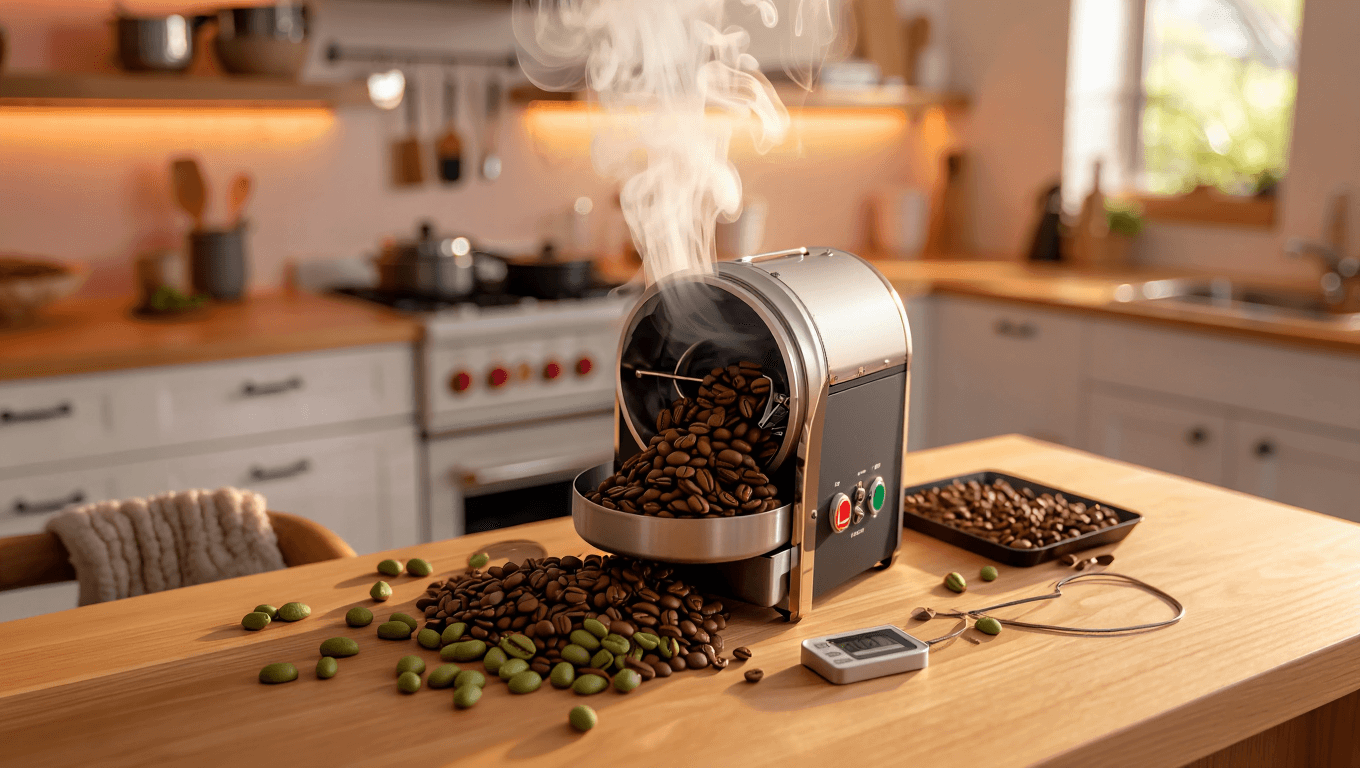
Why is home roasting coffee beans becoming a ritual for South Indian filter coffee lovers?
For many, the day does not truly begin until the kitchen is filled with the deep, earthy aroma of fresh coffee. While instant coffee offers convenience, it often lacks the soul and complexity that defines the authentic South Indian filter coffee experience. Home roasting is the ultimate bridge between raw nature and the refined craftsmanship found in traditional households across Karnataka and Tamil Nadu. By roasting your own beans, you regain control over the flavor profile, ensuring that every cup reflects the heritage of the region. This ritual transforms coffee from a mere caffeine fix into a sensory journey. At Coffee S10 Brews, we believe that understanding the roasting process is the first step toward appreciating the nuances of a premium 80:20 blend. When you roast at home, you witness the transformation of green, scentless beans into the chocolatey, mahogany-colored treasures that produce the thick, velvety decoction we all crave.
What equipment do you need for roasting coffee beans at home for the perfect decoction?
You don’t need an industrial-grade drum roaster to achieve professional results. In fact, many South Indian households have been roasting in small batches for generations using basic kitchen tools. The primary goal is even heat distribution. A heavy-bottomed cast iron skillet or a traditional "Uruli" is ideal because it retains heat and allows for manual agitation. If you prefer a more modern approach, a dedicated home air roaster or even a modified popcorn popper can work, though they offer less control over the gradual development of oils. For those seeking the "best South Indian filter coffee powder" consistency, a manual crank roaster is a fantastic investment. Beyond the roaster, you will need a wooden spatula for stirring, a colander for cooling, and a digital thermometer if you want to be precise. However, the most critical "equipment" is your senses—watching the color change from grassy green to cinnamon brown, and finally to a deep city roast, is part of the brewing intelligence we champion at Coffee S10 Brews.
How to roast coffee beans in a pan for that authentic South Indian aroma?
Roasting in a pan is an art form that requires patience and a keen eye. Start with high-quality green Arabica or Robusta beans. Place the pan over medium heat and add the beans in a single layer. Constant movement is the secret; if the beans sit still for too long, they will scorch, resulting in a bitter, charcoal-like aftertaste. As the temperature rises, the beans will undergo "endothermic" reactions, absorbing heat and losing moisture. You will notice a pleasant, hay-like smell initially. As they darken, you will hear the "first crack"—a distinct popping sound similar to popcorn. For a traditional filter coffee profile, you want to push slightly past the first crack into a medium-dark roast. This is where the sugars caramelize, creating the body needed to stand up to hot milk and sugar. While DIY roasting is rewarding, many enthusiasts find that achieving the consistency of Coffee S10 Brews' signature small-batch roasts requires years of practice. We handle the precision roasting so you can focus on the ritual of the brew.
Essential safety tips for roasting coffee at home without the mess
Home roasting involves high temperatures and the release of silver skin, known as "chaff." Safety and cleanliness are paramount. First, ensure your kitchen is well-ventilated. Roasting produces smoke, especially as you approach darker levels required for a strong decoction. Always turn on your exhaust fan or roast near an open window. Second, be prepared for the chaff. This paper-like skin flies off the beans during the roast and can be flammable if it touches a heating element. Keep a damp cloth nearby to wipe down surfaces once the beans have cooled. Third, remember that coffee beans are "exothermic" once they reach a certain temperature—they will continue to cook even after you take them off the heat. Transfer them immediately to a metal colander and stir them vigorously to drop the temperature. Never leave a roasting pan unattended; the transition from a perfect dark roast to a fire hazard happens in seconds. By following these safety protocols, you can enjoy the craft of coffee making with total peace of mind.
Mastering the first crack and second crack for South Indian filter coffee profiles
In the world of professional roasting, "the crack" is the primary indicator of flavor development. The first crack occurs around 196°C (385°F) and signals that the bean's structure is expanding. If you stop here, you get a light roast with high acidity—not ideal for the traditional "hotel-style" coffee. For an authentic experience, you are looking for the space between the first and second crack. The second crack is a sharper, more rapid sound, occurring around 224°C (435°F). For South Indian filter coffee, we typically aim for a Full City or Vienna roast. This level of roasting brings out the oils, which provide the "crema" and heavy mouthfeel. At Coffee S10 Brews, our roasting cycles are tightly controlled to hit this sweet spot every time, ensuring that the beans have enough "strength" to produce a dark, potent decoction that isn't overpowered by the addition of chicory or milk.
Why does South Indian coffee taste stronger and more full-bodied?
The strength of South Indian coffee isn't just about the caffeine content; it’s about the "body" or mouthfeel of the liquid. This is achieved through a combination of dark roasting and the traditional gravity-fed stainless steel filter. When you brew at home, you are creating a "decoction"—a concentrated extract. Unlike espresso, which uses pressure, or pour-over, which uses paper filters, the South Indian filter allows some of the finer sediments and oils to pass through. This results in a cup that feels "thicker." Additionally, the roast profile of beans used in the region is specifically designed to be soluble and intense. If you've ever wondered "why doesn't my filter coffee taste like hotel coffee?", the answer usually lies in the roast depth and the freshness of the grind. Using a brand like Coffee S10 Brews ensures you are starting with beans that have been roasted specifically for this extraction method, providing that elusive, lingering aftertaste of roasted nuts and cocoa.
The science behind the 80:20 coffee-chicory blend and why it matters
Is chicory necessary? In the context of South Indian coffee culture, the answer is a resounding yes. Chicory is the roasted and ground root of the Cichorium intybus plant. When blended in an 80:20 ratio—80% high-quality coffee and 20% chicory—it performs a vital role. Chicory does not contain caffeine, but it is highly soluble in water. It adds a woody, slightly bittersweet depth and, more importantly, it gives the decoction a much darker color and a thicker consistency. This thickness is what allows the coffee to "hold" the milk, preventing the final drink from feeling watery. Our signature Coffee S10 Brews 80:20 blend is carefully calibrated so the chicory enhances the coffee’s natural aroma rather than masking it. This ratio is the "gold standard" for those searching for "80 20 coffee chicory blend benefits," as it provides the perfect balance of bitterness, sweetness, and aroma.
Comparing traditional home-roasted blends with modern convenience coffee
To understand the value of traditional craftsmanship, it is helpful to look at how it differs from the alternatives. Many modern consumers rely on instant coffee or pre-packaged pods, which often prioritize shelf-life over flavor. The following table highlights why moving toward authentic roasted beans and traditional brewing is a superior sensory choice.
| Feature Instant Coffee 100% Pure Coffee (Home Roast) 80:20 Coffee-Chicory Blend (S10 Brews) | |||
| Flavor Profile | Flat, often metallic or overly bitter. | Bright, acidic, and fruity (depending on roast). | Deep, chocolatey, earthy, and bold. |
| Body/Mouthfeel | Thin and watery. | Medium body. | Heavy, velvety, and rich. |
| Aroma | Fades quickly after opening. | Strong and floral. | Intense, toasted, and lingering. |
| Best For | Quick convenience. | Black coffee or Pour-over. | Traditional South Indian Filter Coffee with milk. |
| Preparation | Instant dissolution. | Slow extraction (5-10 mins). | Traditional gravity drip (15-20 mins). |
How to grind and store your home-roasted beans for maximum freshness
Once you have mastered the roast, the next step is the grind. For South Indian filter coffee, the grind size should be "medium-fine"—similar to the texture of table salt. If the grind is too coarse, the water will rush through the filter, resulting in a weak, sour decoction. If it is too fine, the filter will clog, and you will get a burnt, over-extracted mess. At Coffee S10 Brews, we emphasize "Brewing Intelligence," which includes using the right burr grinder to ensure particle consistency. After roasting and grinding, storage is your next challenge. Roasted beans release carbon dioxide for several days. Store them in an airtight container with a one-way valve, away from direct sunlight and moisture. Never store your coffee in the fridge, as the beans will absorb odors and moisture, ruining the delicate oils you worked so hard to develop during the roast.
Troubleshooting common home roasting mistakes for a better cup
If your home-roasted coffee doesn't taste right, don't be discouraged. One common mistake is "tipping" or "charring," where the edges of the bean burn because the pan was too hot. Lower your heat and increase your stirring speed. Another issue is "under-roasting," which leads to a "grassy" or "beany" flavor that lacks the richness required for a good filter coffee. Ensure you reach at least the end of the first crack. Finally, many beginners forget the "resting" period. Coffee usually tastes best 24 to 48 hours after roasting, as this allows the flavors to stabilize. If you find the DIY process too inconsistent, exploring the curated collections from Coffee S10 Brews offers a shortcut to perfection. We provide the reliability of professional roasting while maintaining the "small-batch" soul of traditional home-roasted coffee.
Frequently Asked Questions about Home Roasting and Filter Coffee
1. Why is chicory used in South Indian coffee?
Chicory is used primarily to add thickness (body), a deep color, and a unique earthy flavor to the coffee. It also helps in producing a more potent decoction that doesn't get diluted when mixed with milk and sugar.
2. What is the best South Indian filter coffee powder ratio?
The most popular and balanced ratio is 80% coffee and 20% chicory. Some prefer 70:30 for an even stronger, more bitter bite, but 80:20 is generally considered the premium standard for aroma and taste.
3. Can I use a regular blender to grind my roasted beans?
While possible, a blender uses blades that "chop" the beans into uneven sizes, leading to poor extraction. A burr grinder is highly recommended for the consistent medium-fine grind needed for a traditional filter.
4. How long does home-roasted coffee stay fresh?
For the best experience, consume your roasted beans within 2 to 3 weeks. After this period, the volatile oils begin to oxidize, and the coffee loses its signature aroma.
5. Why does my filter coffee taste sour?
Sourness is usually a sign of under-extraction. This happens if your water isn't hot enough, your grind is too coarse, or the beans were roasted too lightly. Try a darker roast or a finer grind.
6. Is home roasting cheaper than buying pre-roasted beans?
Green beans are generally cheaper, but when you factor in the weight loss during roasting (about 15-20%) and the time involved, the cost is similar. Most people roast at home for the flavor and the experience rather than the savings.
7. How do I get more "froth" in my filter coffee?
The secret to the "Davara and Tumbler" froth is the distance from which you pour the coffee into the milk. This aeration process, known as "pulling" the coffee, creates a natural foam without the need for a steam wand.
Discover the art of the perfect brew with Coffee S10 Brews. Whether you are looking for our signature 80:20 blends or expert guides on mastering the traditional filter, we are here to elevate your coffee ritual. Explore our premium collections and bring the authentic taste of South India to your home.