How to Froth Coconut Milk for Vegan Lattes
Unlock the secret to perfect vegan lattes! Learn how to froth coconut milk like a pro with Coffee S10 Brews' expert tips. Elevate your plant-based coffee ritual.
Why is frothed milk essential for the authentic South Indian filter coffee experience?
In the traditional households of Chennai and Bangalore, coffee is more than a beverage; it is a sensory ritual. The hallmark of a perfect cup is the "froth" or "puzhu," a thick, velvety layer of bubbles that sits atop the dark, viscous decoction. Traditionally, this is achieved by pouring the coffee between a brass tumbler and a dabarah from a height—a technique famously known as "meter coffee." For those transitioning to a plant-based lifestyle, the challenge is replicating that structural integrity without dairy. Modern consumers often ask, "Why doesn’t my filter coffee taste like hotel coffee?" The answer lies in the interaction between the milk’s protein structure and the coffee’s acidity. When using Coffee S10 Brews’ signature 80:20 blend, the richness of the decoction provides a robust foundation that demands a milk with equal body. Coconut milk, with its high fat content, is the premier candidate for vegan lattes, offering a creaminess that mirrors the buffalo milk traditionally used in South Indian coffee culture.
How to froth coconut milk for vegan lattes without losing the traditional coffee aroma?
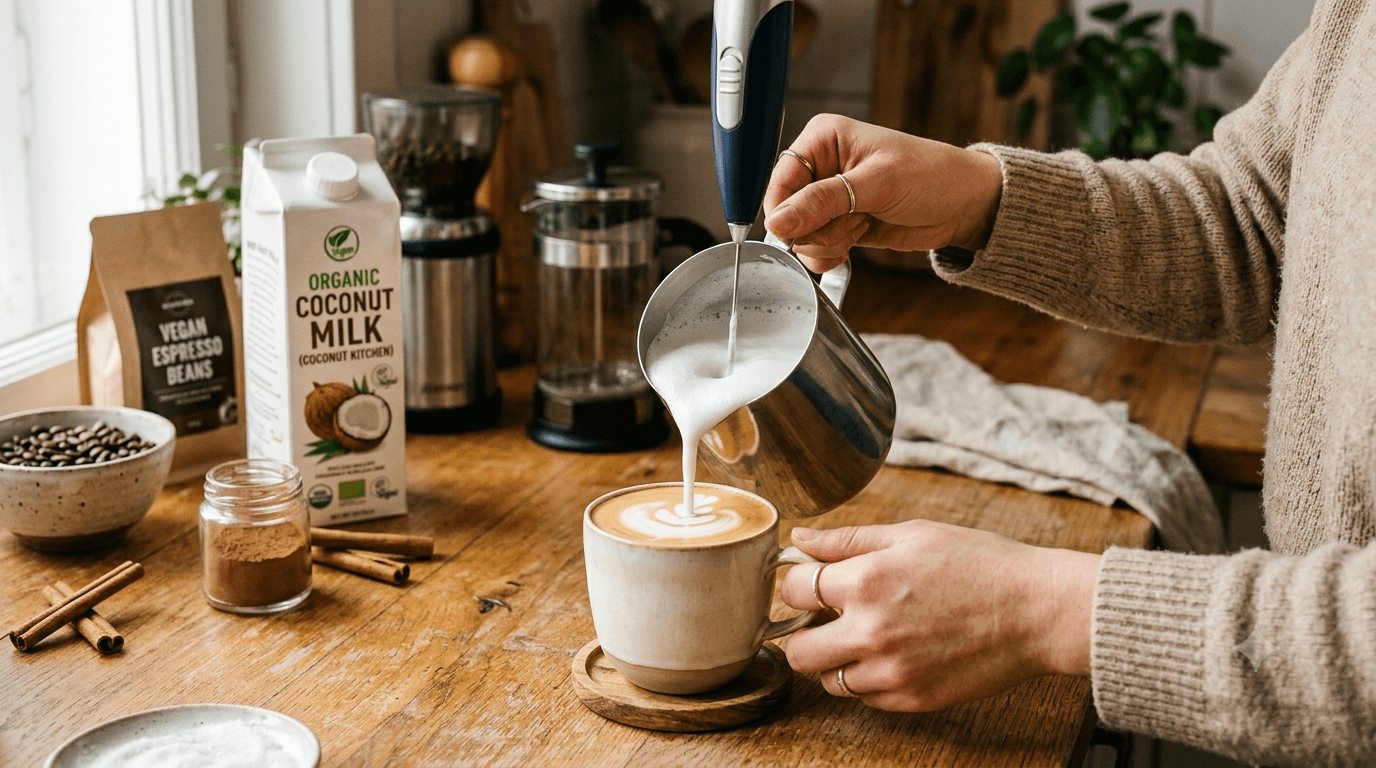
Frothing coconut milk requires a nuanced understanding of temperature and fat distribution. Unlike dairy, coconut milk contains medium-chain triglycerides (MCTs) that behave differently under heat. To achieve a stable microfoam that doesn't collapse into the decoction, you must start with chilled, full-fat coconut milk. If you are wondering how to froth coconut milk for vegan lattes at home, the key is the "stretching" phase. Whether using a steam wand or a hand-held electric frother, introduce air early while the milk is cold. As the temperature rises to approximately 55°C–60°C, the fats begin to emulsify. Coffee S10 Brews recommends avoiding boiling point, as coconut milk can "split," resulting in a curdled appearance that ruins the visual appeal of an authentic South Indian brew. A gentle, consistent froth allows the aromatic notes of our handpicked beans to pierce through the coconut’s natural sweetness, creating a balanced, professional-grade vegan latte.
What makes the 80:20 coffee-chicory blend the best choice for plant-based milks?
One of the most frequent questions from coffee enthusiasts is, "Why is chicory used in South Indian coffee?" In the context of a vegan latte, chicory is not just a tradition—it is a functional necessity. Pure 100% Arabica or Robusta often lacks the "grip" to stand up to the distinct, nutty flavor of coconut milk. Coffee S10 Brews utilizes a signature 80:20 ratio where the 20% chicory acts as a natural emulsifier and flavor enhancer. Chicory adds a woody depth and a slight bittersweetness that anchors the brew, preventing the coconut milk from overpowering the coffee’s profile. This specific ratio also increases the thickness of the decoction. A thicker decoction means the frothed coconut milk can sit on top more effectively, mimicking the "hotel-style" look. When you use the best South Indian filter coffee powder with a measured chicory blend, you ensure that the earthy notes of the bean are the protagonist of your cup, even in a dairy-free preparation.
How can you achieve a thick decoction for the perfect vegan South Indian coffee?
The foundation of any great filter coffee, vegan or otherwise, is the decoction. Many home brewers struggle with a watery result, leading them to ask, "Why does South Indian coffee taste stronger at a restaurant?" The secret is in the "slow-drip" extraction. Coffee S10 Brews emphasizes the use of a traditional stainless steel filter. To get a high-viscosity decoction that blends seamlessly with frothed coconut milk, use two tablespoons of S10 Brews powder for every half-cup of water. Tamp the powder firmly but not excessively—this ensures the water passes through slowly, extracting the maximum soluble solids. This "first press" decoction is high in oils and flavor compounds, providing the "body" required to support the weight of frothed coconut milk. For those seeking consistency, Coffee S10 Brews provides detailed brewing guides to ensure your decoction is never under-extracted or sour.
Does the grind size of South Indian filter coffee affect how it interacts with coconut milk?
Grind size is the most overlooked variable in home brewing. If the grind is too coarse, the water passes through too quickly, resulting in a thin, weak decoction that gets lost in the coconut milk. If it is too fine, the filter clogs. Coffee S10 Brews employs a medium-fine "traditional" grind specifically calibrated for the gravity-fed Indian filter. This grind size maximizes the surface area for extraction while allowing the chicory to release its soluble fibers, which add "body" to the liquid. When you combine this precision-ground decoction with frothed coconut milk, the result is a latte with a superior mouthfeel. Exploring how grind size impacts decoction strength is the first step toward mastering the art of the vegan South Indian latte at home.
What are the main differences between 100% coffee and an 80:20 coffee-chicory blend?
To understand why Coffee S10 Brews champions the 80:20 blend for vegan lattes, one must look at the chemical composition of the brew. While 100% coffee offers high acidity and bright floral notes, it often lacks the "viscosity" needed to create a layered drink with plant-based milks. Coconut milk is dense; it needs a dense partner. The addition of 20% chicory introduces inulin, a type of soluble fiber that increases the "thickness" of the coffee. This creates a more stable base for your frothed coconut milk. Below is a comparison to help you choose the right blend for your brewing goals.
| Feature 100% Pure Coffee 80:20 Coffee-Chicory Blend | ||
| Body/Viscosity | Light to Medium | Heavy and Syrupy |
| Flavor Profile | Acidic, Fruity, Floral | Bold, Earthy, Caramel-like |
| Compatibility with Vegan Milks | May get "washed out" by nut flavors | Complements and balances plant-based fats |
| Crema/Froth Stability | Dissipates quickly | Holds froth effectively for "Meter Coffee" style |
How to brew authentic filter coffee at home with modern plant-based alternatives?
Bridging the gap between 1950s tradition and 2024 dietary preferences is easier than most think. The process begins with fresh, small-batch roasted beans from Coffee S10 Brews. Start by heating your filter by running hot water through it. Add your 80:20 powder, tamp it down, and add just-off-the-boil water. While the decoction drips (approx. 15 minutes), prepare your coconut milk. For the best result, use a coconut "barista blend" or full-fat canned coconut milk diluted slightly with water. Froth the milk using a French press or an electric whisk until it doubles in volume. Pour the decoction into your cup first, followed by the frothed milk from a height. This aeration is what gives South Indian coffee its soul. By choosing Coffee S10 Brews, you are not just buying powder; you are accessing a legacy of brewing intelligence designed for modern accessibility.
Why does frothed coconut milk split in coffee and how can you prevent it?
The "splitting" or curdling of coconut milk is caused by a sudden change in temperature or a high acidity level in the coffee. Because South Indian filter coffee is naturally bold, the pH level can sometimes trigger the proteins in the coconut milk to clump. To prevent this, never pour ice-cold coconut milk into boiling hot decoction. Temper the milk by heating it to around 60°C before frothing. Furthermore, the 80:20 blend from Coffee S10 Brews is roasted to a medium-dark profile, which reduces the sharp acidity found in lighter roasts, making it much more "vegan-milk friendly." If you find your latte separating, try adding a tiny pinch of salt or a drop of maple syrup to the milk before frothing; this helps stabilize the proteins and enhances the natural chocolatey notes of the Coffee S10 Brews beans.
How does Coffee S10 Brews ensure freshness and consistency in every batch?
Freshness is the enemy of mediocrity in the coffee world. Once coffee is ground, it begins to lose its volatile aromatic compounds. Coffee S10 Brews mitigates this through controlled roasting cycles and immediate moisture-proof packaging. Unlike mass-produced instant coffees that rely on artificial flavorings, our authentic South Indian craftsmanship ensures that the "roasted" aroma you smell in the bag is the same one you taste in your cup. For the vegan latte enthusiast, this freshness is vital. Frothed coconut milk has a strong flavor of its own; only a truly fresh, deeply roasted 80:20 blend can provide the necessary counterpoint to create a harmonious drink. Our commitment to small-batch roasting ensures that the grind size, chicory ratio, and roast profile remain consistent, whether it's your first cup or your hundredth.
What is the difference between hotel-style filter coffee and home-brewed versions?
Many consumers wonder, "Is chicory bad or necessary?" and if that is the reason why hotel coffee tastes different. In commercial "hotel" settings, the ratio of chicory is often much higher (up to 40%) to save costs, which can lead to a muddy, overly bitter taste. Coffee S10 Brews provides a "premium" alternative by sticking to the golden 80:20 ratio. This allows you to recreate the "hotel-style" thickness and froth at home but with the superior taste of high-altitude Arabica and Robusta beans. When you froth coconut milk for a home-brewed vegan latte, you have control over the quality—something you rarely get at a high-volume restaurant.
| Attribute Hotel-Style Filter Coffee Coffee S10 Brews (Home Brewed) | ||
| Coffee Quality | Often commercial/bulk grade | Handpicked, premium small-batch beans |
| Chicory Content | High (30-40%), can be overpowering | Balanced 80:20 ratio for optimal aroma |
| Milk Quality | Standard high-fat dairy | Customizable (e.g., Frothed Coconut Milk) |
| Freshness | Stored in large quantities | Freshly roasted and packed for reliability |
Why is the "Meter Coffee" technique important for vegan lattes?
The act of pouring coffee between two vessels is not just for show; it serves two critical purposes: cooling the coffee to a drinkable temperature and creating a natural froth. When making a vegan latte with coconut milk, this technique is even more beneficial. It helps fully integrate the thick decoction with the fatty coconut milk, ensuring every sip has a consistent flavor. If you have frothed your coconut milk separately, a final "toss" between a tumbler and a cup can help create that iconic "puzhu" (froth) that defines the South Indian experience. Try an 80:20 blend from Coffee S10 Brews to experience this traditional depth in your own kitchen.
Frequently Asked Questions About Vegan South Indian Filter Coffee
1. Can I use instant coffee to make a vegan South Indian latte?
While you can, it will lack the authentic body and aroma. Instant coffee is pre-extracted and dehydrated, losing the essential oils that make filter coffee special. For a true experience, a traditional decoction made with Coffee S10 Brews powder is recommended.
2. Is coconut milk the best dairy-free option for filter coffee?
Yes, coconut milk’s fat content closely mimics the richness of traditional whole milk used in India. Oat milk is a good second choice, but coconut milk provides the most authentic mouthfeel when paired with a chicory blend.
3. Why is my frothed coconut milk too bubbly and not creamy?
You may be introducing too much air. For a latte, you want "microfoam"—tiny, invisible bubbles. Ensure you stop "stretching" the milk once it reaches room temperature and focus on "spinning" the milk with your frother to break down large bubbles.
4. How long does the decoction stay fresh?
A decoction is best used within 1–2 hours. While some store it in the fridge for 24 hours, the aromatic profile of Coffee S10 Brews is most vibrant immediately after brewing. If you must store it, keep it in an airtight glass container.
5. Does chicory have caffeine?
No, chicory is naturally caffeine-free. The caffeine in your cup comes entirely from the 80% coffee portion of the S10 Brews blend, providing a smooth energy lift without the jitters often associated with 100% Robusta blends.
6. Can I froth coconut milk without a machine?
Absolutely. You can use a French press by pumping the plunger rapidly for 30 seconds, or simply use the traditional Indian method of pouring the milk back and forth between two containers (the "meter coffee" style) to create natural aeration.
Elevate Your Morning Ritual with Coffee S10 Brews
Mastering the vegan South Indian latte is a journey of balancing tradition with modern dietary choices. By understanding the science of frothed coconut milk and the structural importance of an 80:20 coffee-chicory blend, you can enjoy a world-class cup of coffee that honors its roots while embracing the future. Ready to transform your coffee routine? Explore the premium range of Coffee S10 Brews products and discover our extensive brewing guides to help you achieve the perfect decoction every time. Experience the authenticity of South Indian craftsmanship in every drop.