How to Froth Milk for Kaapi
Want that perfect frothy layer on your South Indian filter coffee? Learn the best techniques to froth milk for Kaapi at home using traditional and modern methods.
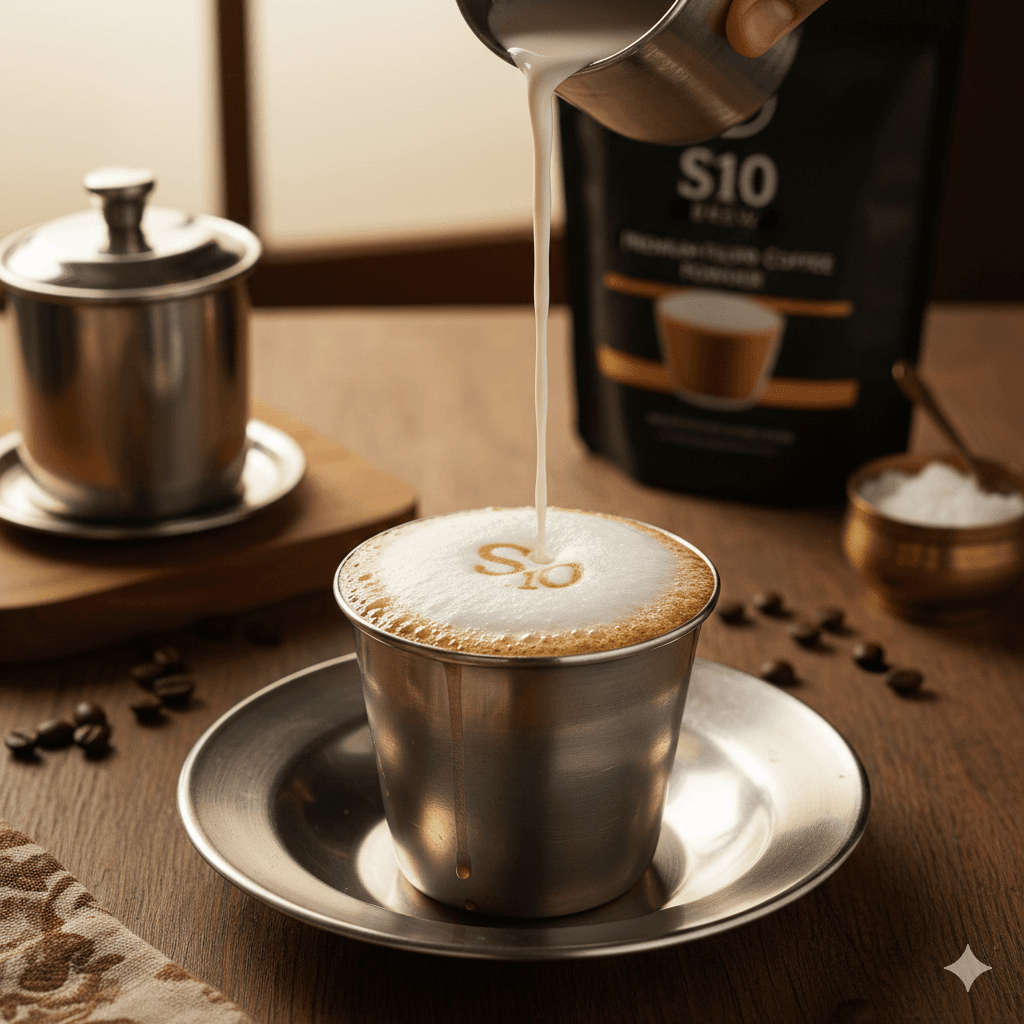
Mastering the Froth: The Ultimate Guide to Perfecting Your Kaapi Ritual
There is a specific sound that defines a South Indian household in the early hours of the morning. It is not the alarm clock or the chirping of birds; it is the rhythmic, metallic swoosh-swish of coffee being poured from a height between a tumbler and a davara. This is the art of creating the "foam head," a crucial element that transforms a standard cup of coffee into an authentic South Indian Kaapi.
If you have ever wondered why your home-brewed coffee lacks that velvety, bubbly crown found in traditional Darshinis or high-end cafes, you are not alone. Many coffee enthusiasts struggle with milk texture, often ending up with large, soapy bubbles that disappear in seconds rather than the dense, micro-foam required for a truly premium filter coffee experience.
Achieving the perfect froth is not just about aesthetics. It is about aeration, temperature control, and the way milk proteins interact with the oils in a high-quality coffee powder. Whether you are a busy professional seeking a morning ritual or a beginner exploring the world of artisanal coffee powder, mastering the froth is the final step in honoring the bean.
How to Froth Milk for Kaapi?
Frothing milk for Kaapi is the process of incorporating air into hot, full-fat milk to create a thick, stable layer of micro-foam. This is traditionally achieved through "pulling" the coffee between two vessels, but can also be done using a handheld milk frother or a steam wand to enhance the texture of your South Indian filter coffee.
The Science of the Suds: Why Milk Matters
Before we dive into the "how," we must understand the "what." Not all milk is created equal when it comes to frothing. To pair with a robust filter coffee decoction powder, you need milk that can stand its ground.
The secret lies in the fat and protein content. When you agitate milk, you are essentially trapping air bubbles within a network of milk proteins. If you use skimmed or low-fat milk, the bubbles are fragile and large. For that signature "Degree Coffee" thickness, full-cream milk is non-negotiable.
Furthermore, the quality of your base coffee determines the success of the froth. A premium filter coffee powder with the right chicory-to-coffee ratio provides a dense body that supports the milk foam. When you use a fresh coffee powder, the natural oils act as a stabilizer, ensuring that your froth remains intact until the very last sip.
Traditional Method: The Tumbler and Davara Toss
For purists, there is no substitute for the manual "pulling" of coffee. This method, often seen in the streets of Kumbakonam or Chennai, is the gold standard for authentic South Indian filter coffee.
1. The Preparation
Start by brewing a thick decoction using a premium South Indian coffee powder. While the decoction drips, heat your milk. Do not let it boil over; you want it hot (around 70°C) but not scalded. Scalded milk loses its natural sweetness and develops a "cooked" flavor that masks the notes of a handcrafted coffee powder.
2. The Mix
Add the desired amount of sugar to your davara (the wide-bottomed bowl) and pour in the hot decoction. Add the hot milk.
3. The Pull
Hold the tumbler in one hand and the davara in the other. Pour the coffee from the tumbler into the davara from a height of about 12 to 18 inches. Repeat this process 3–4 times. This action does three things:
- It dissolves the sugar completely.
- It cools the coffee to the perfect drinking temperature.
- It creates a natural, aerated froth that is light yet persistent.
Modern Methods: For the Contemporary Kitchen
While the traditional toss is iconic, modern life often calls for more efficient tools. If you are a founder or a professional looking for a quick yet premium experience, these methods work brilliantly with estate grown coffee powder.
The Handheld Battery Frother
This is perhaps the easiest way to get cafe-quality froth at home.
- Heat your milk in a deep vessel.
- Submerge the frother whisk at a slight angle just below the surface.
- Turn it on and move it up and down until the milk doubles in volume.
- Pour this velvety milk over your S10 Brews decoction.
The French Press Hack
Surprisingly, a French Press is an excellent milk frother.
- Pour hot milk into the French Press (fill only one-third).
- Pump the plunger rapidly for 20–30 seconds.
- The mesh filter breaks the air into tiny bubbles, creating a dense micro-foam that rivals expensive espresso machines.
Why Your Froth Collapses
Most guides tell you how to froth, but they rarely explain why the froth fails. Competitor sites often overlook the impact of "watered-down" decoction. If your decoction is too thin, the milk froth has no structural foundation to sit on.
Using the best South Indian coffee powder for filter coffee ensures a high viscosity. This viscosity creates a surface tension that allows the milk foam to "sit" on top of the coffee rather than immediately integrating into it. If you find your froth disappearing, try increasing the strength of your decoction by using a more pure coffee powder or a smaller amount of water during the brewing process.
Why S10 Brews is the Choice for Connoisseurs?
At S10 Brews, we understand that the perfect cup of Kaapi is a symphony of parts. Our premium filter coffee is sourced from select estates where the beans are grown under optimal shade conditions. This results in a coffee powder online that possesses a naturally rich crema-like quality even before the milk is added.
When you buy coffee powder online from us, you aren't just getting a commodity; you are getting a small batch coffee powder that has been roasted to highlight the chocolatey and nutty undertones characteristic of the finest Indian beans. Whether you are using the traditional davara or a modern frother, our coffee provides the robust backbone necessary for that perfect, long-lasting froth.
Choosing the Right Coffee Powder for Your Froth
When looking for the best coffee powder, consider these three factors:
- Freshness: Fresh coffee powder retains CO2, which contributes to the "bloom" and the eventual stability of the milk foam.
- Grind Size: For South Indian filter coffee, a medium-fine grind is essential for the slow extraction required to produce a thick decoction.
- Blend: A blend of Arabica and Robusta, often with a hint of high-quality chicory, provides the body needed to balance the creaminess of the milk.
Frequently Asked Questions
Which coffee powder is best for filter coffee frothing?
The best coffee powder for frothing is one that produces a thick, viscous decoction. Look for a premium South Indian coffee powder that uses a blend of high-altitude Arabica for aroma and Robusta for body, such as the blends offered by S10 Brews.
Can I froth milk for Kaapi without a machine?
Yes, the most traditional way to froth milk for Kaapi is by "pulling" the coffee between a tumbler and a davara. This manual aeration creates a beautiful, natural foam without the need for any electronic equipment.
Does the temperature of the milk affect the froth?
Absolutely. Milk should be heated to between 65°C and 70°C. If the milk is too cold, the proteins won't trap air effectively. If it is too hot (boiling), the proteins break down, and the froth will collapse almost instantly.
Why is my filter coffee not frothy?
If your coffee isn't frothy, it could be due to low-fat milk, a thin decoction, or insufficient aeration. Ensure you are using a pure coffee powder to create a strong base and aerate the milk vigorously using one of the methods mentioned above.
Where can I buy authentic degree coffee powder online?
You can find authentic, artisanal coffee powder at specialized retailers like S10 Brews. Look for "degree coffee powder" or "premium filter coffee powder" to ensure you are getting the correct grind and roast profile.
Can I use plant-based milk for Kaapi froth?
While possible, plant-based milks like oat or soy behave differently. Oat milk is generally the best alternative for frothing, but for the most traditional and stable froth, dairy milk is recommended.
Conclusion: Elevate Your Morning Ritual
Mastering the art of frothing milk for Kaapi is more than just a kitchen skill; it is a way to slow down and appreciate the nuances of a traditional Indian craft. By selecting a premium filter coffee powder and choosing the frothing method that fits your lifestyle, you transform a simple beverage into a sensory experience.
From the first whiff of the fresh coffee powder to the final, lingering taste of the velvety foam, every step matters. We invite you to explore the range of handcrafted coffee powder at S10 Brews and discover why the right base is the secret to the perfect froth.
Ready to experience the difference? Visit our shop to buy coffee powder online and start your journey toward the perfect cup of South Indian filter coffee today. Your morning ritual deserves nothing less than the best.