How to Maintain Your Drip Coffee Maker (Cleaning, Descaling)
Savour perfect coffee with Coffee S10 Brews! Learn to easily clean & maintain your drip coffee maker for rich, fresh brews. Expert tips for longevity & exquisite taste.
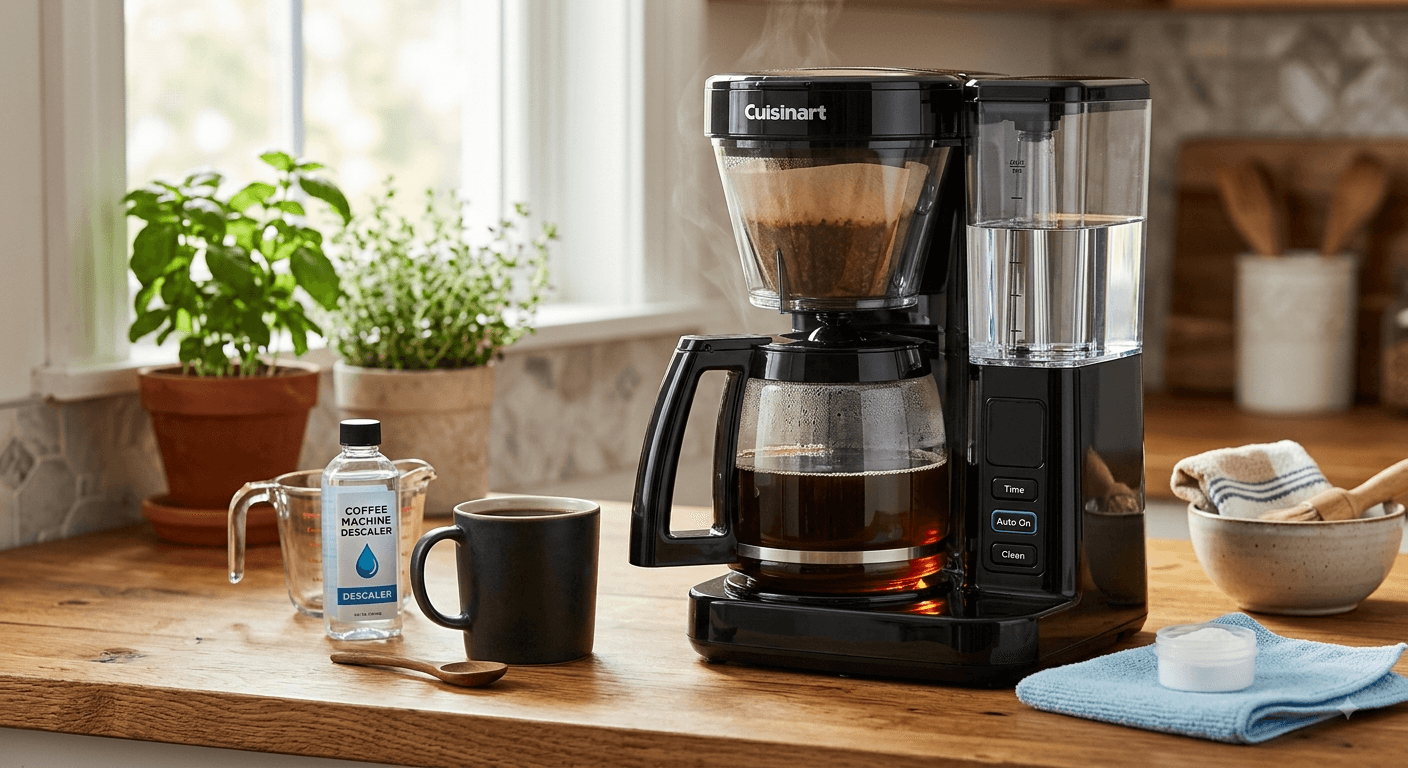
Why is my South Indian filter coffee tasting bitter or burnt lately?
There is a specific, soulful expectation when you prepare a cup of South Indian filter coffee. You expect that thick, velvet-like decoction to carry the earthy sweetness of a perfectly balanced 80:20 coffee-chicory blend. However, many enthusiasts find that over time, their brew begins to lose its brightness, replaced by an astringent, metallic, or burnt aftertaste. This shift in flavor profile is rarely the fault of the beans, especially if you are using premium, small-batch roasted powders like those from Coffee S10 Brews. Instead, the culprit is almost always the accumulation of stale coffee oils and mineral deposits within your brewing equipment.
When coffee oils (lipids) are left behind in a traditional brass filter or an electric drip machine, they oxidize and turn rancid. This rancidity taints every subsequent brew, masking the nuances of the handpicked Arabica and Robusta beans. Furthermore, if you are searching for the best South Indian filter coffee powder experience, you must realize that even the finest grind cannot overcome a clogged filter or a scaled heating element. Proper maintenance ensures that the "hotel-style" consistency you crave is achievable every morning in your own kitchen.
How to clean a South Indian brass filter for the perfect decoction?
The traditional South Indian stainless steel or brass filter is a marvel of gravity-based extraction, but its fine mesh is prone to clogging. If your decoction is taking hours to drip or if the flow has become uneven, the microscopic holes in the plunger and the bottom disc are likely blocked by fine coffee particles and chicory residue. Chicory, while essential for the body and crema of a traditional cup, is more water-soluble and "sticky" than coffee fibers. Over time, it creates a stubborn film that soap and water alone cannot remove.
To restore your filter, Coffee S10 Brews recommends a deep-clean ritual once a week. Submerge the filter components in a solution of warm water mixed with a small amount of baking soda or food-grade citric acid. For brass filters, a paste of tamarind and salt—the traditional Indian method—works wonders to remove oxidation and restore the golden glow without using harsh chemicals that could leach into your coffee. Ensuring your mesh is clear is the first step in mastering the South Indian filter coffee ritual at home, allowing the 80:20 blend to breathe and extract its full aromatic potential.
What is the difference between cleaning and descaling a coffee maker?
Many users use the terms "cleaning" and "descaling" interchangeably, but in the world of brewing intelligence, they serve two distinct purposes. Cleaning refers to the removal of organic matter: the coffee oils, the chicory stains, and the fine silty deposits that accumulate in the carafe and filter basket. If you don't clean your equipment, your coffee will taste "dirty" or "musty." This is a surface-level maintenance task that should ideally happen after every single brew to maintain the integrity of your Coffee S10 Brews experience.
Descaling, on the other hand, is a deep-tissue treatment for your machine’s internal plumbing. It addresses the inorganic mineral buildup—primarily calcium and magnesium—that comes from your water source. These minerals crystallize on the heating elements and inside the water lines of electric drip makers. In the context of South Indian coffee, where water temperature is critical for extracting the right balance from a coffee-chicory blend, scale buildup acts as an insulator. It forces the machine to work harder, often resulting in water that is either too cool (leading to sour, under-extracted coffee) or steam-heavy (leading to scorched, bitter decoction).
How often should you descale your coffee maker to preserve 80:20 blend aromas?
The frequency of descaling depends heavily on the "hardness" of your water. In many Indian urban centers, tap water is rich in minerals, meaning scale can build up in as little as 30 days. If you notice that your electric drip machine is making more noise than usual, producing excessive steam, or taking significantly longer to finish a cycle, it is crying out for a descale. For those using Coffee S10 Brews’ signature 80:20 blend, maintaining a clean machine is vital because the chicory component is highly sensitive to temperature fluctuations caused by scaled heating elements.
As a rule of thumb, if you brew once a day, descale every three months. If you are a high-volume household brewing multiple pots of filter coffee, a monthly descaling routine is recommended. By keeping the internal pipes clear, you ensure that the water hits the coffee grounds at the optimal temperature of 90°C to 96°C, which is the "sweet spot" for dissolving the flavorful solids in a traditional South Indian grind without extracting the harsh tannins. Explore how grind size and water temperature impact decoction strength in our specialized brewing guides.
Why chicory residue requires special attention during your cleaning ritual
Chicory is the secret ingredient that gives South Indian filter coffee its iconic "kick," its dark, brooding color, and its ability to hold up against hot, frothed milk. However, from a maintenance perspective, chicory is more demanding than 100% pure coffee. Because chicory is a root and contains natural sugars (inulin), it becomes somewhat caramelized during the roasting process. When brewed, these sugars can create a slightly tacky residue that clings to the walls of your drip machine’s brew basket or the plunger of your traditional filter.
If this residue is not scrubbed away, it can provide a breeding ground for mold or simply go stale, imparting a fermented, sour taste to your fresh Coffee S10 Brews powder. When cleaning, pay extra attention to the "crevices" of your equipment. For electric brewers, ensure the "showerhead" (where water drips onto the coffee) is wiped down, as chicory-laden steam can rise and clog the small water holes, leading to uneven saturation and weak decoction. Authentic South Indian craftsmanship in coffee production deserves equally meticulous craftsmanship in coffee equipment maintenance.
Step-by-step guide: How to descale your electric coffee maker for better extraction
To ensure your Coffee S10 Brews decoction remains consistent, follow this professional descaling procedure. You can use a commercial descaling solution or a simple home remedy of equal parts white vinegar and water. However, be warned: vinegar has a pungent aroma that can linger if not rinsed thoroughly. For a scent-free alternative, use two tablespoons of citric acid powder dissolved in a full reservoir of water.
- Step 1: Empty the machine. Remove all old coffee grounds from the filter basket and ensure the carafe is empty.
- Step 2: Fill the reservoir. Pour your descaling solution (vinegar-water or citric acid-water) into the water tank.
- Step 3: Run a half-cycle. Turn the machine on. Once the carafe is half full, turn the machine off and let it sit for 30 to 60 minutes. This "soak time" allows the solution to break down the hard calcium deposits inside the boiler.
- Step 4: Complete the cycle. Turn the machine back on and let the remainder of the solution run through.
- Step 5: Rinse thoroughly. This is the most important step. Run at least three full cycles of plain, fresh water through the machine to ensure no descaling agent remains. You don't want your next cup of 80:20 blend to taste like vinegar!
After this process, you will notice the machine runs quieter and the water flow is more vigorous. This directly translates to a more uniform extraction of your coffee powder, resulting in that thick, syrupy decoction that defines the South Indian experience.
Comparing Coffee Types and Maintenance Needs
Understanding the differences between coffee styles helps clarify why maintenance is so critical for filter coffee lovers. While instant coffee requires no equipment, it lacks the soul and depth of a traditional brew. Conversely, the 80:20 blend requires a clean environment to shine.
| Feature Instant Coffee 100% Pure Filter Coffee 80:20 Coffee-Chicory Blend (S10 Style) | |||
| Flavor Profile | Flat, one-dimensional | Bright, acidic, floral | Bold, nutty, heavy body, smooth crema |
| Equipment Residue | None (dissolves in cup) | High (Coffee oils) | Very High (Oils + Chicory sugars) |
| Maintenance Level | Zero | Moderate (Daily cleaning) | High (Daily cleaning + Monthly descaling) |
| Brewing Method | Stir and drink | Drip / Pour-over | Traditional South Indian Drip |
The impact of hard water on South Indian coffee brewing extraction
Water makes up over 98% of your cup of coffee. Therefore, the chemistry of your water is just as important as the quality of your Coffee S10 Brews beans. Hard water, which is common in many parts of India, contains high levels of calcium carbonate. While some mineral content is necessary to "pull" flavor out of the coffee grounds, too much mineral content prevents the water from absorbing the coffee solids effectively. This results in a "flat" tasting brew that lacks the vibrant aroma of a fresh roast.
Furthermore, hard water accelerates the scaling process. If you are using a traditional brass or stainless steel filter, you might notice white, chalky spots appearing on the metal. These spots can trap coffee oils, making them harder to clean and eventually leading to a permanent "off" smell. Using filtered or RO (Reverse Osmosis) water for your brewing can significantly improve the taste of your South Indian filter coffee and extend the life of your equipment. Try an 80:20 blend with filtered water to experience the difference in traditional depth and clarity.
Why Coffee S10 Brews recommends a deep clean every 30 days
At Coffee S10 Brews, we believe that coffee is not just a caffeine delivery system; it is a ritual. To honor that ritual, the equipment must be pristine. We recommend a "Deep Clean Sunday" once a month. This involves more than just rinsing the filter. It means taking a soft brush to the mesh holes, descaling the heating elements of your electric brewer, and even checking the seals and gaskets of your equipment.
Consistent maintenance ensures flavor reliability across batches. When we roast our beans in small batches, we aim for a very specific flavor profile—a balance of the chocolatey notes of Arabica and the robust strength of chicory. If your equipment is dirty, you are not tasting the work of our master roasters; you are tasting the ghost of last month’s coffee. A deep clean every 30 days resets the palate of your machine, ensuring every morning starts with the freshest possible "hotel-style" brew.
Comparing Hotel-Style Coffee vs. Home-Brewed Coffee
Why does that cup at a high-end Darshini or a traditional South Indian hotel always taste "different"? It often comes down to equipment maintenance and the ratio of ingredients.
| Criteria Hotel-Style Coffee Home-Brewed (Neglected Equipment) Home-Brewed (Coffee S10 Standard) | |||
| Decoction Thickness | Very thick, syrupy | Watery or inconsistent | Thick and consistent |
| Aroma | Strong, room-filling | Faint or slightly burnt | Fresh, nutty, and vibrant |
| Clarity of Taste | Deep caramel notes | Muddied, bitter, or sour | Balanced bitterness and sweetness |
| Equipment State | Constantly cleaned/used | Mineral and oil buildup | Regularly descaled and rinsed |
Maintaining the mesh: How to prevent clogs in your traditional coffee filter
The secret to the perfect South Indian decoction is the "slow drip." However, there is a fine line between a slow drip and a dead stop. Clogs usually happen because the coffee powder is either ground too fine (turning into a paste) or because the previous brew's residue has hardened in the holes. If you are using the best South Indian filter coffee powder from Coffee S10 Brews, the grind size is already optimized for a steady, rhythmic drip. To keep it that way, you must never let the used grounds sit in the filter for hours after brewing.
The heat from the remaining decoction can "bake" the grounds onto the mesh. Instead, discard the grounds as soon as they are cool enough to handle. Rinse the filter with hot water immediately. If you notice a particular hole is stubborn, do not use a needle or a sharp object, as this can enlarge the hole and allow "sediment" into your cup. Instead, use the pressurized stream of water from a kitchen sprayer or soak it in hot water with a drop of dish soap. Maintaining the mesh is the hallmark of a true coffee connoisseur who values the craft of the brew as much as the drink itself.
Frequently Asked Questions about Coffee Maker Maintenance
1. Why does my South Indian filter coffee taste sour?
Sourness is often a sign of under-extraction. This can happen if your machine is scaled up, preventing the water from reaching a high enough temperature to extract the sugars from the coffee. It can also be caused by old coffee residue that has turned acidic. Descaling your machine usually solves this issue.
2. Can I use baking soda to descale my coffee maker?
Baking soda is excellent for removing odors and cleaning stains from the carafe or the filter basket, but it is not an effective descaler. Descaling requires an acid (like vinegar or citric acid) to dissolve the alkaline calcium deposits. Use baking soda for "cleaning" and citric acid for "descaling."
3. Is chicory bad for my coffee machine?
Not at all! Chicory is a traditional and delicious addition to South Indian coffee. However, because it is more soluble and contains natural sugars, it leaves behind more residue than 100% coffee. You simply need to be more diligent about rinsing your equipment after each use.
4. How do I know if my brass filter needs deep cleaning?
If the decoction is taking more than 20-30 minutes to collect, or if the metal has developed a dark, oily film that doesn't come off with a simple rinse, it’s time for a deep clean with tamarind or a specialized cleaner.
5. Does hard water affect the crema of my coffee?
Yes. High mineral content can interfere with the extraction of the oils and the chicory solids that create the thick, frothy "crema" (or froth) on top of a well-poured South Indian coffee. Using softened or filtered water will result in a much better head of foam.
6. Why should I choose an 80:20 blend over 100% coffee?
The 80:20 ratio is the "Golden Ratio" of South Indian coffee. The 20% chicory adds the necessary body, thickness, and lingering sweetness that allows the coffee to stand up to milk and sugar. 100% coffee can often feel too "thin" for the traditional South Indian palate.
7. How often should I replace my traditional filter?
A high-quality stainless steel or brass filter can last for decades if maintained. You only need to replace it if the mesh becomes physically damaged, warped, or if it has developed permanent oxidation that affects the flavor of the coffee.
Master the Ritual with Coffee S10 Brews
Maintaining your coffee equipment is more than a chore; it is an act of respect for the beans, the farmers, and the centuries-old tradition of South Indian coffee culture. By keeping your filters clear and your machines descaled, you ensure that every cup of Coffee S10 Brews you pour is an authentic masterpiece of flavor, body, and aroma. Whether you are a seasoned coffee veteran or a newcomer to the 80:20 blend, your journey to the perfect cup begins with a clean machine and the finest ingredients.
Ready to elevate your morning routine? Explore the signature blends and brewing intelligence at Coffee S10 Brews. From our handpicked beans to our detailed brewing guides, we are here to help you master the art of the perfect South Indian filter coffee at home. Discover the difference that freshness, consistency, and a clean filter can make.
Discover brewing guides and premium blends at Coffee S10 Brews today.