How to Make a "Global Flavor" Inspired Coffee Flight
Unlock global flavors! Learn to craft an exciting coffee flight at home, featuring Coffee S10 Brews' authentic South Indian filter coffee. Perfect for home baristas!
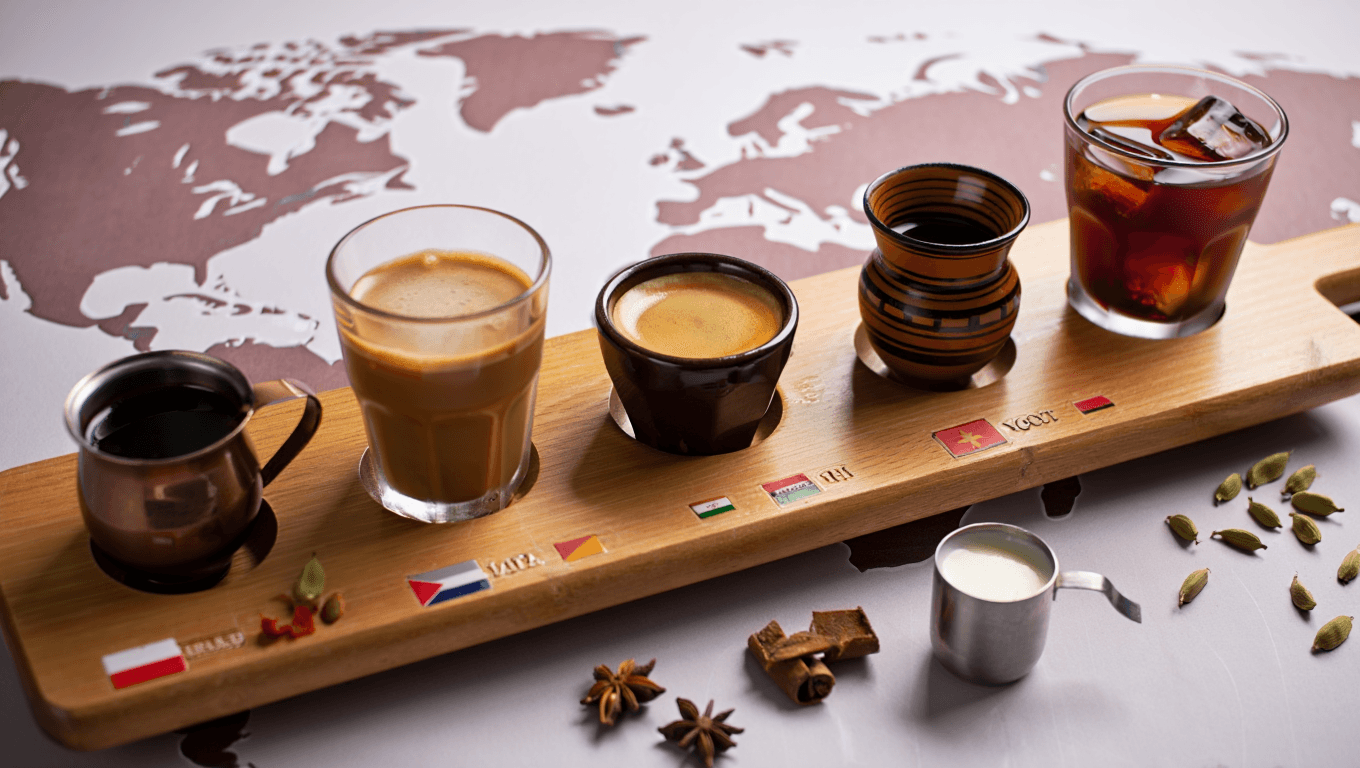
What is a global coffee tasting flight and why does South Indian filter coffee belong in it?
A coffee flight is a curated sensory journey that allows you to explore the nuances of different origins, roast profiles, and brewing methods in a single sitting. Much like a wine or craft beer tasting, a "Global Flavor" coffee flight showcases the diversity of the bean. However, any exploration of global coffee culture is incomplete without the inclusion of South Indian filter coffee. While the world celebrates the acidity of Ethiopian beans or the chocolatey notes of Colombian roasts, the South Indian tradition offers something entirely unique: the decoction method. This technique produces a concentrated, viscous extract that serves as the foundation for a cup that is remarkably bold yet smooth. At Coffee S10 Brews, we believe that bringing this tradition into your home flight isn't just about trying a new flavor; it’s about experiencing the pinnacle of coffee craftsmanship that has been perfected over generations in the Western Ghats.
How to choose the best South Indian filter coffee powder for an authentic tasting experience?
The success of your coffee flight depends entirely on the quality of the grind. When searching for the best South Indian filter coffee powder, the distinction lies in the selection of the beans and the precision of the roast. High-intent coffee drinkers often find themselves disappointed by mass-produced powders that taste either overly burnt or surprisingly weak. This is where the Coffee S10 Brews philosophy of "Brewing Intelligence" comes into play. We advocate for a blend that uses handpicked Arabica and Robusta beans, roasted in small batches to ensure that the volatile oils—responsible for that signature "hotel-style" aroma—are preserved. A truly authentic powder must have a specific grind size; too fine, and the water won't pass through the filter; too coarse, and you lose the body. By prioritizing consistency, we ensure that every spoonful of Coffee S10 Brews delivers the same deep, earthy profile required for a professional-grade tasting flight.
Why are the 80 20 coffee chicory blend benefits essential for traditional depth?
One of the most common questions from specialty coffee enthusiasts is: "Why is chicory used in South Indian coffee?" There is a misconception that chicory is merely a filler. In reality, the 80:20 coffee-chicory blend is a deliberate culinary choice. Chicory serves three vital functions in a South Indian brew: it increases the thickness (viscosity) of the decoction, adds a subtle woody sweetness that balances the caffeine kick, and provides a rich, dark color that 100% coffee cannot achieve on its own. The 80:20 ratio is considered the "Golden Ratio" in South Indian homes. It ensures that the coffee remains the hero while the chicory provides the structural support needed to hold up against the addition of hot, frothy milk. At Coffee S10 Brews, our signature blend uses high-grade chicory that complements our premium beans, resulting in a cup that has a lingering aftertaste and a velvety mouthfeel that defines the authentic Kaapi experience.
How to brew authentic filter coffee at home using the traditional decoction method?
To include South Indian coffee in your global flight, you must master the stainless steel drip filter. This is not a "fast" coffee; it is a ritual of patience. Start by placing 3-4 heaped tablespoons of Coffee S10 Brews powder into the upper chamber of the filter. Gently tamp the powder with the plunger to create an even bed—this is crucial for preventing "channeling," where water bypasses the coffee. Pour freshly boiled water (roughly 92°C to 96°C) over the plunger. Close the lid and wait for 15 to 20 minutes. This slow-drip process creates the "first decoction," a thick, potent syrup. If you’ve ever wondered, "Why doesn’t my filter coffee taste like hotel coffee?" the answer usually lies in the timing and the quality of this decoction. Using a high-quality blend like Coffee S10 Brews ensures that the extraction is rich in solids, giving you that punchy, concentrated base that is the hallmark of South Indian coffee culture.
Why does South Indian coffee taste stronger and more full-bodied than western pour-overs?
When comparing a South Indian brew to a V60 or Chemex in your flight, the difference in "strength" is immediately apparent. This isn't just about caffeine content; it’s about Total Dissolved Solids (TDS). The combination of a dark roast and the presence of chicory allows for a higher extraction rate. Western pour-over methods emphasize clarity and acidity, often resulting in a "tea-like" consistency. In contrast, South Indian filter coffee aims for a heavy body and a syrupy texture. This strength is necessary because the coffee is traditionally consumed with milk and sugar. A weak coffee would get "lost" in the dairy. By using the Coffee S10 Brews 80:20 blend, you are guaranteed a decoction that retains its character even when diluted, providing a sensory experience that is bold, nutty, and incredibly satisfying.
Understanding the sensory profile: Aroma, Body, Crema, and Aftertaste
In a professional coffee flight, you evaluate the beverage across four sensory pillars. For a South Indian filter coffee featuring Coffee S10 Brews, the experience begins with the Aroma: a heady mix of toasted nuts, dark chocolate, and an earthy sweetness. The Body is the star of the show; it should feel heavy and coating on the tongue, a result of the chicory and the slow-drip extraction. While filter coffee doesn’t have a pressurized Crema like espresso, it produces a beautiful, thick froth when aerated—traditionally achieved by "pulling" the coffee between a davara and a tumbler. Finally, the Aftertaste should be clean yet long-lasting, with a hint of caramel-like sweetness. If your current coffee leaves a sour or excessively bitter finish, it may be due to over-roasting or low-grade chicory—two issues that Coffee S10 Brews solves through our controlled roasting cycles and premium sourcing.
Comparing the Brewing Methods: A Technical Breakdown
To help you understand where South Indian filter coffee sits in the global landscape, it is helpful to compare it against other common formats. Many consumers move from instant coffee to filter coffee seeking better flavor, but the technical differences are vast.
| Feature | Instant Coffee | South Indian Filter Coffee (S10 Brews) | French Press / Pour Over |
| Process | Dehydrated coffee extract. | Fresh slow-drip decoction. | Immersion or gravity drip. |
| Flavor Depth | Flat, one-dimensional. | Complex, nutty, earthy, and bold. | Acidic, fruity, or chocolatey. |
| Texture | Thin and watery. | Thick, syrupy, and viscous. | Medium-bodied to clear. |
| Freshness | Pre-processed and shelf-stable. | Freshly roasted and ground batches. | Usually freshly ground. |
100% Coffee vs. 80:20 Coffee–Chicory Blends: Which is right for you?
Choosing between a pure coffee and a chicory blend depends on your preferred drinking style. If you drink your coffee black, you might prefer a 100% Arabica bean. However, for the authentic "South Indian Kaapi" experience, the 80:20 blend is non-negotiable. This table illustrates why the blend is preferred for traditional brewing.
| Attribute | 100% Pure Coffee | 80:20 Coffee-Chicory Blend |
| Decoction Strength | Medium; can feel thin with milk. | High; extremely potent and thick. |
| Bitterness | Sharper, caffeine-driven bitterness. | Mellowed by chicory’s woody sweetness. |
| Color | Medium brown. | Deep, dark, almost chocolatey brown. |
| Best Consumed | Black (Americano) or light lattes. | Traditional Filter Coffee with full-fat milk. |
How to achieve the "Hotel-Style" froth and temperature at home?
The final step in your global flavor flight is the presentation. In South India, this is called "pulling" the coffee. Once you have mixed your Coffee S10 Brews decoction with hot, foaming milk and a touch of sugar, pour it back and forth between the tumbler and the davara (saucer). This serves two purposes: it creates a magnificent froth (natural aeration) and brings the coffee to the perfect drinking temperature. The height from which you pour determines the thickness of the foam. This aeration enhances the aroma, allowing the scents of the 80:20 blend to hit your nose before the first sip. This level of "Modern Accessibility" means that with a little practice and the right powder, you can recreate the luxury of a high-end South Indian establishment in your own kitchen.
Why Coffee S10 Brews represents the future of traditional coffee craftsmanship?
The gap between "convenience coffee" and "craft coffee" is narrowing. Consumers today want the speed of modern life but the soul of traditional heritage. Coffee S10 Brews bridges this gap by offering a product that is rooted in South Indian craftsmanship but designed for the modern home. We focus on small-batch roasting because coffee is a perishable agricultural product; freshness is the enemy of bitterness. By controlling the grind size specifically for the Indian filter, we remove the guesswork for the consumer. Whether you are a seasoned connoisseur or a newcomer to the world of filter coffee, our goal is to provide "Brewing Intelligence"—the resources, the quality, and the consistency you need to make every cup a masterpiece. Explore how grind size impacts decoction strength by trying our different roast profiles, and see why thousands are making the switch back to authentic roots.
Hotel-Style Coffee vs. Home-Brewed Coffee: Bridging the Gap
Many people struggle to replicate the taste of coffee they find in traditional South Indian "Darshinis" or hotels. This comparison shows how Coffee S10 Brews helps you achieve professional results at home.
| Factor | Typical Home Brew (Common Brands) | Hotel-Style Coffee | Coffee S10 Brews Method |
| Powder Quality | Mass-produced, often stale. | Freshly ground daily. | Small-batch roasted, nitrogen-flushed freshness. |
| Ratio | Often guessed or inconsistent. | Precise 80:20 or 70:30 blends. | Perfectly balanced 80:20 signature blend. |
| Milk | Low-fat or overheated. | Full-fat, frothed constantly. | Guide-supported foaming techniques. |
| Decoction | Watery due to poor grind. | Thick and rested. | Optimized grind for maximum extraction. |
Frequently Asked Questions About South Indian Filter Coffee
Is chicory in coffee bad for health?
No, chicory is a natural root that has been used in coffee for centuries. It is caffeine-free and contains inulin, a type of prebiotic fiber that can aid digestion. In an 80:20 blend, it is used primarily for its flavor and textural benefits, not as a cheap substitute.
How long does the decoction last?
For the best flavor, a fresh decoction should be used within 2 to 4 hours. However, you can store it in the refrigerator for up to 24 hours. Just be aware that the aroma will diminish over time. With Coffee S10 Brews, the high oil content in our beans helps the decoction stay flavorful longer than standard powders.
What is the best milk to use for filter coffee?
Always use full-fat (whole) milk for the most authentic experience. The fat in the milk carries the fat-soluble flavor compounds of the coffee, creating a richer, creamier mouthfeel that balances the strength of the 80:20 decoction.
Can I use a French Press to make South Indian filter coffee?
While you can use a French Press, it won't produce the same concentrated decoction as a traditional drip filter. The pressure and filter mesh of a French Press are designed for a different extraction profile. For the true Coffee S10 Brews experience, we recommend the traditional stainless steel filter.
Why does my coffee taste sour?
Sourness is usually a sign of under-extraction. This happens if your water isn't hot enough, if the coffee grind is too coarse, or if the water passed through the powder too quickly. Ensure you are using boiling water and tamping the Coffee S10 Brews powder correctly in your filter.
How is Coffee S10 Brews different from regular store-bought brands?
We focus on the "S" factors: Sourcing, Small-batches, and Science. Unlike mass-market brands that sit on shelves for months, our coffee is roasted to order, ensuring the volatile aromatics are intact when they reach your cup.
Does a higher chicory percentage mean better coffee?
Not necessarily. While some prefer 30% or even 40% chicory, we find the 80:20 ratio to be the perfect balance. It provides the necessary body and color without masking the delicate notes of our premium Arabica and Robusta beans.
Experience the Craft of South Indian Coffee
Creating a global coffee flight is a journey of discovery, and South Indian filter coffee is the soul of that journey. By understanding the science behind the decoction, the purpose of the 80:20 blend, and the importance of freshness, you can transform a simple morning habit into a sophisticated ritual. Coffee S10 Brews is dedicated to providing you with the tools and the beans necessary to master this art form at home. Whether you are looking for the perfect 80:20 blend, detailed brewing guides, or a deeper understanding of Indian coffee culture, we invite you to explore our resources and elevate your coffee game. Try an 80:20 blend today to experience traditional depth and join a community that values quality over convenience.
Discover more at Coffee S10 Brews:
- Explore our signature South Indian Filter Coffee Blends
- Download our Masterclass Brewing Guides
- Learn about our Small-Batch Roasting Process