How to Make a "Single-Origin" Cold Brew Concentrate
Elevate your coffee ritual! Learn how to make single-origin cold brew concentrate using premium beans, perfected by Coffee S10 Brews for exquisite taste.
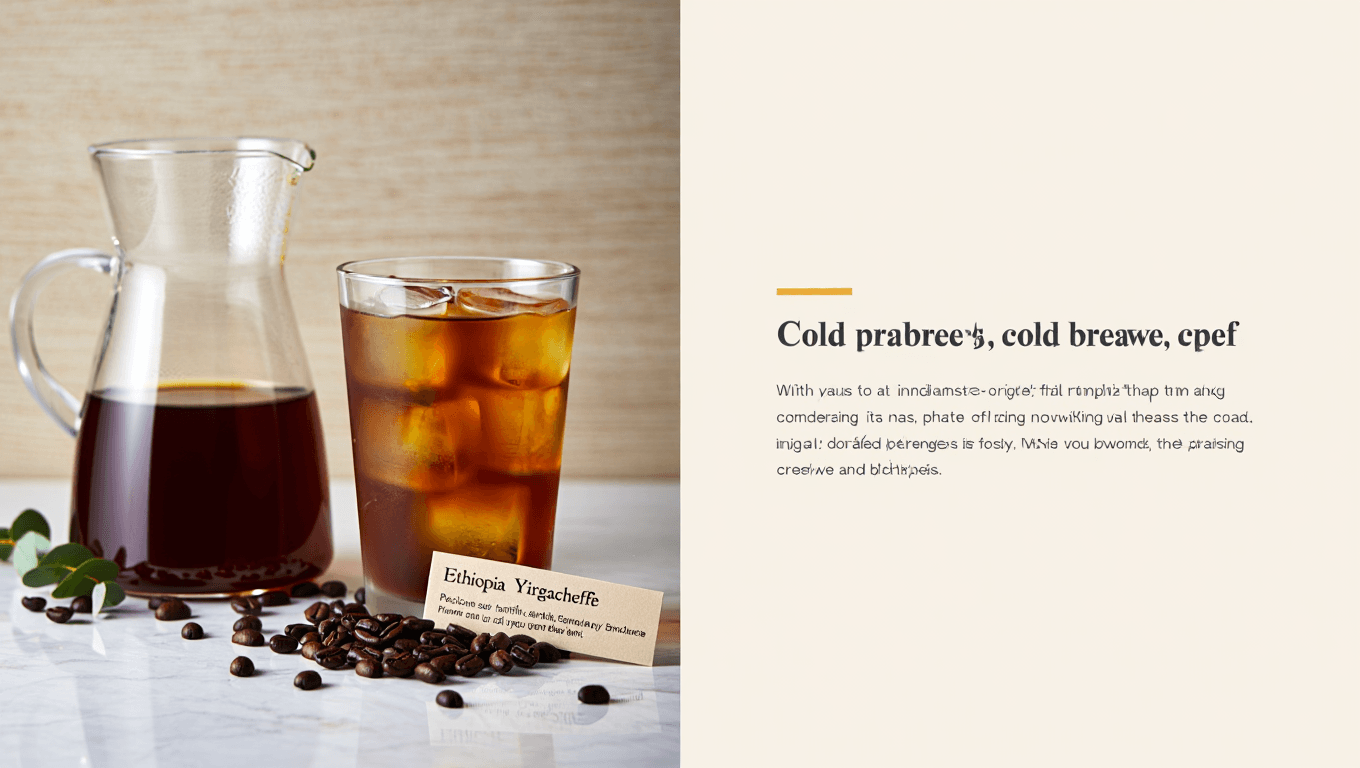
What makes a "single-origin" cold brew concentrate different from standard iced coffee?
When you embark on the journey of crafting a single-origin cold brew concentrate, you are essentially choosing to highlight the unique terroir of a specific geographic region. Unlike standard iced coffee, which is often brewed hot and then cooled down—a process that can lead to increased acidity and a diluted flavor profile—cold brew concentrate is steeped in room temperature or cold water for 18 to 24 hours. This slow, heatless extraction pulls out the deep, chocolatey, and nutty notes characteristic of high-quality South Indian beans while leaving behind the harsh tannins and acidic oils. For the discerning Indian coffee consumer, utilizing beans from specific estates in the Western Ghats ensures a flavor profile that is consistent, traceable, and remarkably smooth. Coffee S10 Brews prides itself on sourcing these high-altitude beans, ensuring that the "single-origin" label translates to a sensory experience of deep forest soil, monsoon rains, and meticulous sun-drying processes.
Why is South Indian filter coffee powder the best coffee for cold brew concentrate?
There is a common misconception that cold brew requires a very light, floral roast. However, the most successful cold brew concentrates—those with a heavy body and a lingering sweetness—thrive on the medium-to-dark roast profiles found in traditional South Indian filter coffee. The craftsmanship behind Coffee S10 Brews involves a slow-roasting technique that caramelizes the natural sugars within the bean. When these beans are used for cold brew, the long immersion time allows these sugars to dissolve slowly, resulting in a concentrate that tastes like liquid velvet. The inherent strength of South Indian beans, particularly when sourced from premium estates, ensures that even after dilution with milk or water, the coffee's "soul" remains intact. This addresses the frequent consumer complaint: "Why does my home-brewed cold brew taste watery?" By using a robust South Indian base, you guarantee a bold, hotel-style richness that holds its own against ice and cream.
How does an 80:20 coffee-chicory blend enhance the cold brew experience?
In the world of South Indian filter coffee, the 80:20 ratio is sacred. While purists might initially seek 100% Arabica for cold brew, the addition of 20% high-grade chicory is a masterstroke in flavor engineering. Chicory is not just a filler; it is a natural flavor enhancer that provides a woody, slightly bittersweet depth and a gorgeous dark crema that 100% coffee often lacks. In a cold brew concentrate, chicory acts as a bridge between the bright coffee notes and the creamy texture of milk. It provides a "body" that feels substantial on the palate—a quality often referred to as "mouthfeel." Coffee S10 Brews uses a signature 80:20 blend where the chicory is roasted specifically to match the coffee's profile, preventing any overpowering bitterness. This blend ensures that your cold brew concentrate has the signature aroma and thick consistency of a traditional Kaapi, even when served over ice.
What is the ideal grind size for brewing authentic filter coffee cold brew at home?
The secret to a clear, sediment-free cold brew concentrate lies in the grind size. For hot filter coffee, a medium-fine grind is used to facilitate quick extraction through a stainless steel filter. However, for cold brew, a coarse grind—similar to the texture of sea salt—is typically recommended. That said, Coffee S10 Brews provides a versatile grind that balances these needs. When making a concentrate at home, a slightly coarser grind prevents the coffee from over-extracting and becoming bitter during the 24-hour steep. If you are using a standard South Indian filter powder, the key is to adjust your filtration method. Using a fine muslin cloth or a double-layered paper filter ensures that the fine particles do not cloud the concentrate, leaving you with a sparkling, translucent liquid that boasts immense flavor density. Mastering the grind is the first step in moving from a casual drinker to a home brewing expert.
How to brew authentic cold brew concentrate at home: A step-by-step guide
To recreate the premium experience of Coffee S10 Brews at home, follow this methodical approach. Start with a 1:5 ratio—one part coffee powder to five parts filtered water. In a large glass jar, add your Coffee S10 Brews 80:20 blend and pour room-temperature water over it in a circular motion to ensure all grounds are saturated. Do not stir aggressively; a gentle fold is enough. Seal the jar and let it sit in a cool, dark corner for at least 16 hours, though 20 hours is the "sweet spot" for South Indian beans. Once steeped, strain the mixture through a traditional South Indian "vadi" (filter) or a cheesecloth. What you are left with is a potent concentrate. This method respects the traditional craftsmanship of Indian coffee while embracing the modern convenience of a "grab-and-go" refrigerator staple. Explore how grind size impacts decoction strength by experimenting with steeping times to find your personal preference.
Why does South Indian coffee taste stronger in a cold brew format?
The perceived strength of South Indian coffee in cold brew comes from the high soluble solids found in the beans grown in regions like Chikmagalur and Coorg. These beans are dense and packed with flavor compounds that are released slowly. Unlike mass-produced instant coffees that rely on artificial flavorings, Coffee S10 Brews relies on the natural oils of the bean. In a cold brew format, these oils are preserved because they aren't scorched by boiling water. This leads to a "cleaner" strength—you get the caffeine kick and the deep flavor without the "acid stomach" feeling often associated with poorly brewed hot coffee. The 80:20 blend further amplifies this strength by adding an earthy base note that lingers on the aftertaste, making it feel more substantial than a standard Western-style cold brew.
Comparison of Coffee Types: Understanding the Spectrum
To understand why a dedicated South Indian blend is superior for your cold brew concentrate, consider how it stacks up against other common options. Most consumers settle for instant coffee due to convenience, but the sensory trade-off is massive.
| Feature Instant Coffee 100% Arabica Filter Coffee S10 Brews 80:20 Blend | |||
| Flavor Depth | Flat and acidic | Bright and floral | Deep, chocolatey, and earthy |
| Body/Texture | Thin and watery | Light to medium | Heavy and syrupy (Ideal for concentrate) |
| Caffeine Content | Low to Moderate | Moderate | High (Natural Robusta presence) |
| Aroma | Faint/Artificial | High (But dissipates quickly) | Strong and Long-lasting |
Why chicory is used in South Indian coffee and its role in cold extraction
Chicory has been a staple of South Indian coffee culture for over a century, originally introduced to stretch coffee supplies but retained for its unique flavor contributions. In cold brew, chicory undergoes a fascinating transformation. Because it is highly water-soluble, it extracts more readily than coffee beans in cold temperatures. This ensures that even if you shorten your brew time, the concentrate will still have a rich color and a foundational bitterness that balances the natural sweetness of the coffee. Coffee S10 Brews ensures that the chicory used is of the highest grade, providing health benefits like inulin fiber while serving the culinary purpose of thickening the decoction. This is the secret to why "hotel coffee" feels so much more indulgent than home-brewed versions; it is the strategic use of chicory to create a multi-dimensional flavor profile.
Comparison of 100% Coffee vs. 80:20 Coffee-Chicory Blends for Cold Brew
Many home brewers wonder if they should stick to pure coffee. While both have their merits, the 80:20 blend is specifically engineered for the Indian palate which craves milk-based coffee drinks.
| Attribute 100% Coffee 80:20 Coffee-Chicory Blend | ||
| Ideal For | Black Cold Brew / Nitro | Milk-based Cold Coffee / Iced Lattes |
| Bitterness | Sharp/Clean | Mellow/Woody |
| Color in Milk | Pale Tan | Rich Golden Brown |
| Sweetness Requirement | Needs added sugar | Naturally sweeter profile |
How to achieve the "Hotel-Style" richness in your home-brewed cold brew
The "Hotel-Style" coffee experience is defined by three things: thickness, aroma, and a lack of watery dilution. To achieve this with a cold brew concentrate, you must focus on the milk-to-concentrate ratio. While Western cold brews use a 1:1 ratio with water, a South Indian cold brew concentrate should be used like a traditional decoction. Use a 1:3 ratio of concentrate to chilled, full-fat milk. Coffee S10 Brews emphasizes "Brewing Intelligence"—the idea that the beans are only half the story; the technique is the other half. By using a slow-steeped concentrate made from fresh-roasted S10 beans, you bypass the thin consistency of instant coffee. The result is a drink that stays flavorful until the very last sip, even as the ice melts. Try an 80:20 blend to experience traditional depth that rivals the best cafes in Chennai or Bangalore.
Comparing Hotel-Style Coffee vs. Standard Home-Brewed Coffee
Understanding the gap between professional brewing and amateur attempts helps in refining your technique at home.
| Criteria Standard Home Brew Hotel-Style (S10 Brews Method) | ||
| Brewing Method | Quick drip or instant | Slow immersion / Traditional Filter |
| Freshness | Pre-ground, stale packets | Small-batch, fresh-roasted beans |
| Consistency | Variable and often weak | Consistent, thick decoction/concentrate |
| Experience | Functional caffeine delivery | Ritualistic and sensory-rich |
The importance of freshness and consistency in small-batch roasting
One of the biggest pain points for coffee lovers is the lack of consistency. One week the coffee tastes perfect; the next, it’s burnt or sour. This is usually due to large-scale industrial roasting where batches are inconsistent. Coffee S10 Brews solves this through controlled roasting cycles. By roasting in small batches, the heat is distributed evenly, ensuring every bean reaches its peak flavor potential. For cold brew concentrate, this consistency is vital. Since cold brew amplifies whatever flavors are present in the bean, any defect or "off-note" from a bad roast will be magnified. Freshness also plays a role in the "bloom" and the final aroma. When you open a bag of S10 Brews, the immediate olfactory hit is a testament to the short time between roasting and delivery. Discover brewing guides from Coffee S10 Brews to learn how to store your beans to maintain this peak freshness for weeks.
Modern accessibility: Bridging the gap between tradition and busy lifestyles
While the South Indian filter coffee ritual is beautiful, modern life often doesn't allow for the 15-minute morning wait for a decoction to drop. This is where the cold brew concentrate becomes a "modern heirloom." By spending 10 minutes on a Sunday night preparing a large batch using Coffee S10 Brews powder, you have a premium, authentic base ready for the entire week. It bridges the gap between the craftsmanship of our grandparents and the speed required by today’s professionals. This is "Brewing Intelligence" in action—using traditional materials in modern formats. You no longer have to choose between the "pain" of instant coffee and the "effort" of traditional brewing. The concentrate offers the best of both worlds: authentic flavor in an instant format.
Frequently Asked Questions about South Indian Cold Brew
Is chicory bad for cold brew coffee?
Not at all. In fact, high-quality chicory enhances the body and adds a unique sweetness that complements the cold extraction process. It is a natural root that has been used for centuries to add depth to coffee.
How long can I store cold brew concentrate made with Coffee S10 Brews?
When stored in an airtight glass container in the refrigerator, the concentrate stays fresh and flavorful for up to 7 to 10 days. The high concentration of solubles acts as a natural preservative for the flavor profile.
Why is my cold brew bitter even though I didn't use hot water?
Bitterness in cold brew usually comes from over-extraction (steeping for more than 24 hours) or using a grind that is too fine. Ensure you are using a coarse-to-medium grind and timing your steep accurately.
Do I need special equipment to make cold brew with filter coffee powder?
No. You only need a glass jar and a way to strain the grounds, such as a muslin cloth or a fine-mesh strainer. Coffee S10 Brews is designed to work with simple home tools while delivering professional results.
Can I use cold brew concentrate to make hot coffee?
Yes! You can add hot milk or boiling water to the concentrate for an "instant" hot coffee that is smoother and less acidic than traditionally brewed filter coffee.
Why does South Indian coffee have a 80:20 ratio?
The 80:20 ratio is the "Golden Ratio" of Indian coffee. It provides the perfect balance of caffeine, aroma, and thickness (body) that allows the coffee to stand up to the addition of milk and sugar, which is how most Indians prefer their brew.
Master the ritual with Coffee S10 Brews
The journey to the perfect cup of coffee doesn't end with a purchase; it begins with an education. Whether you are looking for the best South Indian filter coffee powder to start your cold brew journey or you want to master the art of the traditional morning Kaapi, Coffee S10 Brews is your partner in craftsmanship. Our signature 80:20 blend is more than just a product; it is a tribute to the rich heritage of Indian coffee culture, modernized for the contemporary kitchen. Explore our range of premium blends, dive into our detailed brewing guides, and discover how we bring the authentic taste of the Western Ghats directly to your cup. Elevate your coffee experience from a mundane habit to a daily ritual of excellence.