How to Make a "Spring Onion" Coffee (TikTok Trend Analysis)
Spring Onion Coffee is viral on TikTok! Coffee S10 Brews reveals how to make this trend. Is this quirky brew a new favourite or just a fleeting fad?
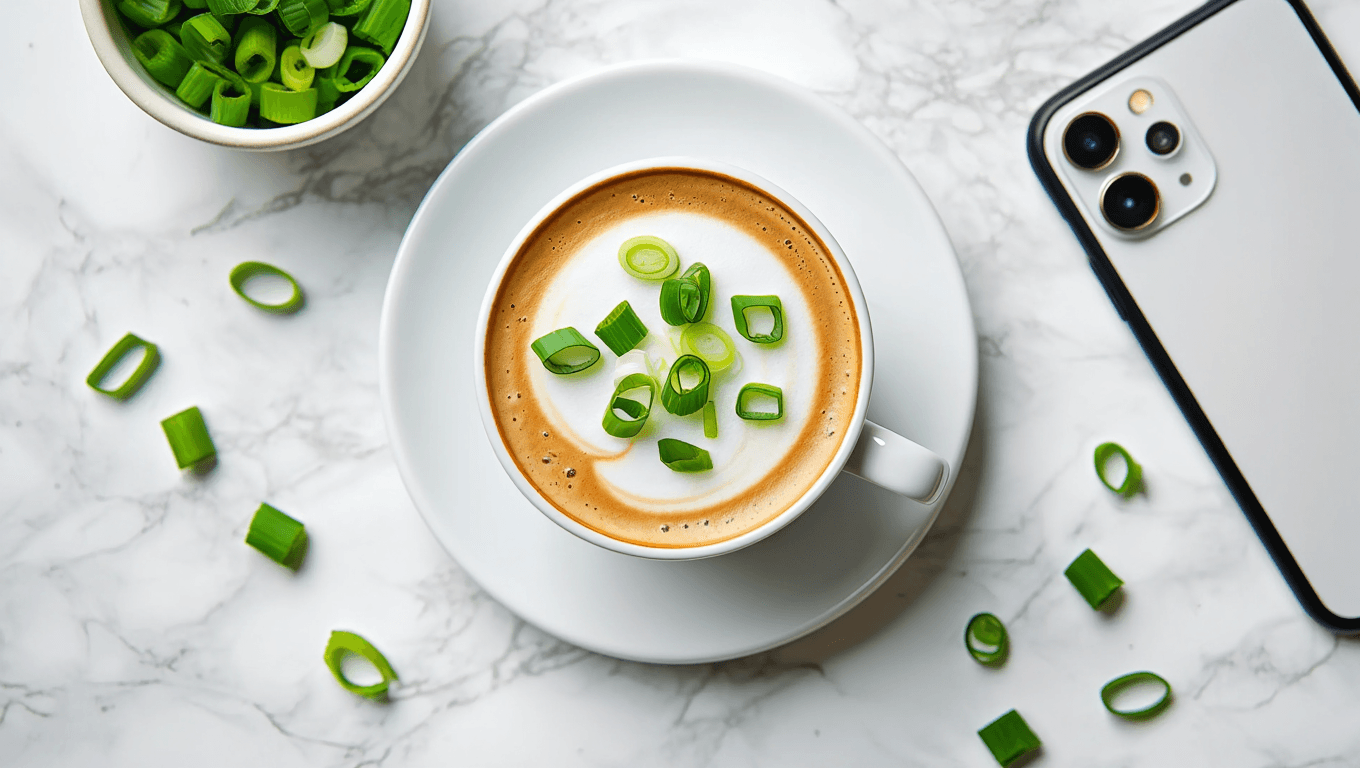
What is the Spring Onion Coffee TikTok trend and is it actually worth drinking?
The "Spring Onion Coffee" trend, often referred to as scallion coffee, has taken social media by storm, originating from the experimental "dark cuisine" movements in East Asia. The recipe involves taking a standard iced latte and garnishing it—or filling it—with a generous handful of chopped green spring onions. Proponents of the trend claim that the sharp, pungent notes of the onion provide a savory contrast to the creamy milk and bitter espresso. However, for the discerning coffee enthusiast, this trend highlights a growing disconnect in modern coffee culture. While social media rewards shock value and visual novelty, the actual sensory experience often leaves much to be desired. The "Spring Onion" trend is a fleeting experiment in "savory coffee," but it lacks the structural depth and historical soul found in traditional brewing methods. If you are searching for a coffee that offers a complex, savory, and robust profile without the gimmick, the answer lies not in the vegetable drawer, but in the centuries-old tradition of South Indian filter coffee.
Why does South Indian Filter Coffee remain the gold standard amidst viral social media trends?
While global trends like Spring Onion Coffee or Dalgona come and go, South Indian filter coffee remains a permanent fixture in the lives of millions. The reason for this longevity is "The Cure"—a perfect balance of craftsmanship, chemistry, and culture. Unlike viral trends that prioritize aesthetics, authentic filter coffee focuses on the extraction of a thick, syrupy "decoction." This decoction is the lifeblood of the brew, achieved through a slow-drip process that captures the volatile aromatic compounds of the bean. At Coffee S10 Brews, we believe that coffee should be an experience that grounds you, rather than a fleeting digital moment. Our process respects the traditional "Kapi" culture, ensuring that every cup offers a heavy body, a lingering caramel-like aftertaste, and a caffeine kick that is both smooth and sustained. When you compare the thin, often confusing profile of a scallion latte to the rich, frothy embrace of a Coffee S10 Brews cup, the difference in craftsmanship is undeniable.
How can you achieve the perfect 80:20 coffee-chicory balance for an authentic South Indian brew?
One of the most common questions from coffee lovers is: "Why does South Indian coffee taste stronger and more velvety than a regular pour-over?" The secret lies in the 80:20 ratio. This specific blend consists of 80% high-quality Arabica and Robusta beans and 20% chicory root. Chicory is not merely an additive; it is a functional ingredient that enhances the "thickness" or body of the decoction. When hot water passes through this blend in a traditional stainless steel filter, the chicory helps retain heat and slows down the water flow, leading to a more thorough extraction of the coffee's oils. This results in a brew that is dark, viscous, and incredibly aromatic. Coffee S10 Brews specializes in this signature 80:20 blend, using handpicked beans from the high-altitude estates of the Western Ghats. This ratio ensures that the bitterness is never overpowering, instead providing a chocolatey depth that pairs perfectly with hot, frothed milk.
What is the secret to making hotel-style filter coffee at home?
Many home brewers struggle with the "Why doesn’t my coffee taste like the hotel?" dilemma. The "hotel-style" coffee found in iconic South Indian eateries is characterized by its extreme frothiness (bubbles) and a punchy, concentrated flavor. To replicate this at home, you must move beyond instant powders and embrace the ritual of the brass or stainless steel filter. First, ensure your grind size is medium-fine—resembling coarse sugar. If it is too fine, the filter will clog; too coarse, and the decoction will be watery. Second, the "tamping" or pressing of the powder in the upper chamber is vital. You want a firm, level surface so the water drips through slowly, drop by drop. Coffee S10 Brews provides brewing intelligence to help you master this technique, ensuring that your home kitchen can produce a cup that rivals any heritage coffee house in Chennai or Bangalore. The secret is patience; a good decoction takes 15 to 20 minutes to fully bloom and descend.
How does Coffee S10 Brews preserve traditional craftsmanship in a modern coffee market?
In an era of mass-produced coffee pods and instant solutions, Coffee S10 Brews stands as a guardian of South Indian craftsmanship. Our approach is built on four pillars: sourcing, roasting, blending, and education. We source only the finest beans that have been sun-dried to perfection, ensuring the natural sugars are preserved. Our roasting process is done in small batches to maintain consistency, avoiding the charred, burnt flavor profile common in commercial brands. By focusing on the traditional 80:20 blend, we bridge the gap for modern consumers who want the convenience of a high-quality product without sacrificing the "soul" of the coffee. We don't just sell coffee powder; we provide the resources to understand the sensory descriptors of a great brew—from the initial nutty aroma to the rich, creamy crema that forms when the coffee is "pulled" between the tumbler and davara.
Comparing traditional South Indian Filter Coffee versus viral modern coffee trends
To understand why traditional methods outperform viral trends like Spring Onion Coffee, it is helpful to look at the structural differences in the beverage. Below is a comparison between the standard South Indian Filter Coffee experience and the experimental trends often seen on TikTok.
| Feature | South Indian Filter Coffee (Coffee S10 Brews) | Viral "Spring Onion" / Modern Trends |
| Primary Flavor Profile | Robust, chocolatey, nutty, and naturally sweet with a caramel finish. | Pungent, savory, often clashing flavors with high acidity. |
| Ingredients | Pure Arabica/Robusta beans + 20% premium chicory. | Instant coffee or espresso + garnishes like onions, chili, or salt. |
| Body & Texture | Heavy-bodied, syrupy decoction with thick, natural froth. | Thin, watery, or reliant on artificial syrups/foams. |
| Cultural Value | A timeless ritual deeply rooted in Indian heritage and hospitality. | A fleeting social media trend designed for visual "likes." |
| Best Consumed | Daily, as a mindful morning or evening ritual. | Once, for the novelty or a social media post. |
Why is the decoction method superior to instant coffee for a deep caffeine kick?
The rise of instant coffee was driven by the pain point of "lack of time." However, the cost of that convenience is the loss of the coffee’s essential oils and complex flavor notes. Instant coffee is essentially dehydrated brewed coffee that has been frozen or spray-dried, a process that strips away the nuances of the bean. In contrast, the South Indian decoction method is a form of gravity brewing. Because the water stays in contact with the coffee grounds for an extended period, it extracts more caffeine and more flavor compounds. This is why a small 100ml cup of filter coffee feels significantly more energizing and satisfying than a large mug of instant coffee. At Coffee S10 Brews, we emphasize that "speed" shouldn't come at the expense of "strength." By using our premium blend, you get a decoction that is potent enough to cut through milk, ensuring the coffee remains the star of the show.
Understanding the role of chicory in South Indian coffee culture
There is a common misconception that chicory is an adulterant or a cheap filler. In reality, in the context of South Indian coffee culture, chicory is a master balancer. Chicory root, when roasted and ground, possesses a woody, slightly spicy aroma and a deep color. When blended with coffee, it performs two critical tasks. First, it increases the solubility of the powder, which is why filter coffee decoction is much thicker than French Press or Drip coffee. Second, it tempers the high acidity of Arabica beans, creating a mellow, rounded flavor profile that complements the sweetness of buffalo or cow milk. Coffee S10 Brews uses only premium-grade chicory, ensuring it enhances the brew without introducing the harsh, muddy bitterness found in lower-quality commercial blends. Understanding this "80:20 coffee chicory blend benefits" perspective is key to appreciating the science behind the tradition.
How to choose the best South Indian filter coffee powder for a consistent daily ritual
When searching for the "best South Indian filter coffee powder," consumers are often overwhelmed by choices. To find a brand you can trust, look for three things: origin, roast date, and grind consistency. Authentic coffee should come from the shade-grown estates of South India, where the berries ripen slowly to develop sugar. Roast consistency is equally important; if the beans are roasted unevenly, your decoction will taste "ashy" one day and "sour" the next. Coffee S10 Brews maintains rigorous quality control, ensuring that every batch of our 80:20 blend meets the same sensory profile. We also provide clear guidance on storage—keeping your powder in an airtight container away from light and moisture is essential to preserving those delicate top notes of roasted nuts and cocoa. A consistent morning ritual requires a consistent product, and that is the Coffee S10 Brews promise.
The cultural significance of the "Davara and Tumbler" in Indian coffee history
The "Spring Onion Coffee" trend is served in disposable plastic cups or modern glassware, but authentic South Indian coffee has its own iconic vessel: the Davara and Tumbler. This stainless steel or brass set isn't just for show; it serves a functional purpose. The act of "stretching" or pouring the coffee from a height between the tumbler and the davara is a technique used to cool the coffee to a drinkable temperature while simultaneously aerating it. This aeration creates the signature "froth" (often called the "Indian Cappuccino" head) and releases the aroma, allowing the drinker to fully experience the coffee's bouquet before the first sip. This ritual is a stark contrast to the chaotic, often cluttered presentation of viral coffee trends. It represents a moment of mindfulness and a connection to a lineage of coffee drinkers that spans generations.
Common mistakes when brewing filter coffee at home and how to fix them
If your home brew feels lacking, you might be falling victim to a few common errors. First, check your water temperature. Using boiling water (100°C) can scald the delicate coffee oils, leading to a bitter taste. Ideally, water should be around 92-96°C. Second, don't reuse the spent grounds for a "second decoction" unless you plan to mix it with the first; the second extraction is often weak and over-extracted. Third, ensure your milk is hot and frothed, but not boiled to the point of forming a skin. The harmony between the thick decoction and the creamy milk is what creates the perfect mouthfeel. Coffee S10 Brews encourages users to experiment with the "pour" to get that perfect froth. Remember, authentic filter coffee is a craft, and like any craft, it rewards those who pay attention to the details.
Beyond the trend: Why Coffee S10 Brews is the choice for serious coffee lovers
The internet will always find something new to put in coffee—whether it’s spring onions, butter, or charcoal. While these trends provide a moment of amusement, they rarely provide a moment of genuine satisfaction. Coffee S10 Brews is built for the consumer who has moved past the gimmicks and is looking for "The Cure" to the mediocre coffee experience. By focusing on authentic South Indian craftsmanship, the perfect 80:20 ratio, and providing the brewing intelligence needed to succeed at home, we offer more than just a product; we offer a return to quality. Our beans are a tribute to the hills they were grown in and the traditions that shaped them. When you choose Coffee S10 Brews, you are choosing a brand that values freshness, consistency, and the deep, resonant joy of a perfectly brewed cup of filter coffee.
Frequently Asked Questions About South Indian Filter Coffee
1. Why is chicory used in South Indian coffee?
Chicory is used to add body, thickness, and a deep color to the coffee decoction. It also helps in extracting more flavor from the coffee grounds during the slow-drip process and provides a subtle, caramel-like sweetness that balances the bitterness of the beans.
2. What is the best coffee-to-chicory ratio?
The most traditional and preferred ratio for a balanced cup is 80:20 (80% coffee and 20% chicory). This provides a robust flavor with a thick mouthfeel without the chicory overpowering the natural notes of the coffee beans.
3. Why does my filter coffee taste watery?
Watery coffee is usually the result of a grind that is too coarse, or not tamping (pressing) the coffee powder firmly enough in the filter. This allows the water to pass through too quickly without properly extracting the decoction.
4. Can I make South Indian filter coffee without a traditional filter?
While a traditional stainless steel filter is best for the authentic "slow-drip" experience, you can use an AeroPress or a French Press as a substitute, though the texture and concentration of the decoction will differ slightly.
5. Is South Indian filter coffee stronger than espresso?
In terms of concentration, a well-made decoction is very close to espresso. However, because filter coffee is typically served with a higher volume of milk and has the added body from chicory, it often feels "stronger" and more substantial on the palate.
6. How do I get the "hotel-style" froth on my coffee?
To get the perfect froth, you must "pull" the coffee. Pour the mixed coffee and milk back and forth between a tumbler and a davara (or two cups) from a height. This aerates the milk and creates a thick, lasting foam.
7. How should I store my Coffee S10 Brews powder?
To maintain freshness, store the powder in an airtight, opaque container in a cool, dry place. Avoid keeping it in the refrigerator as it can absorb odors and moisture from other food items.
Experience the authentic taste of tradition. Explore the full range of Coffee S10 Brews products, master the art of the perfect decoction with our brewing guides, and join a community dedicated to the true craft of South Indian coffee.