How to Make the Perfect "Cold Brew" at Home: A Scientific Guide
Craft the perfect cold brew at home with Coffee S10 Brews' scientific guide. Learn precise ratios & methods for a refreshingly smooth coffee.
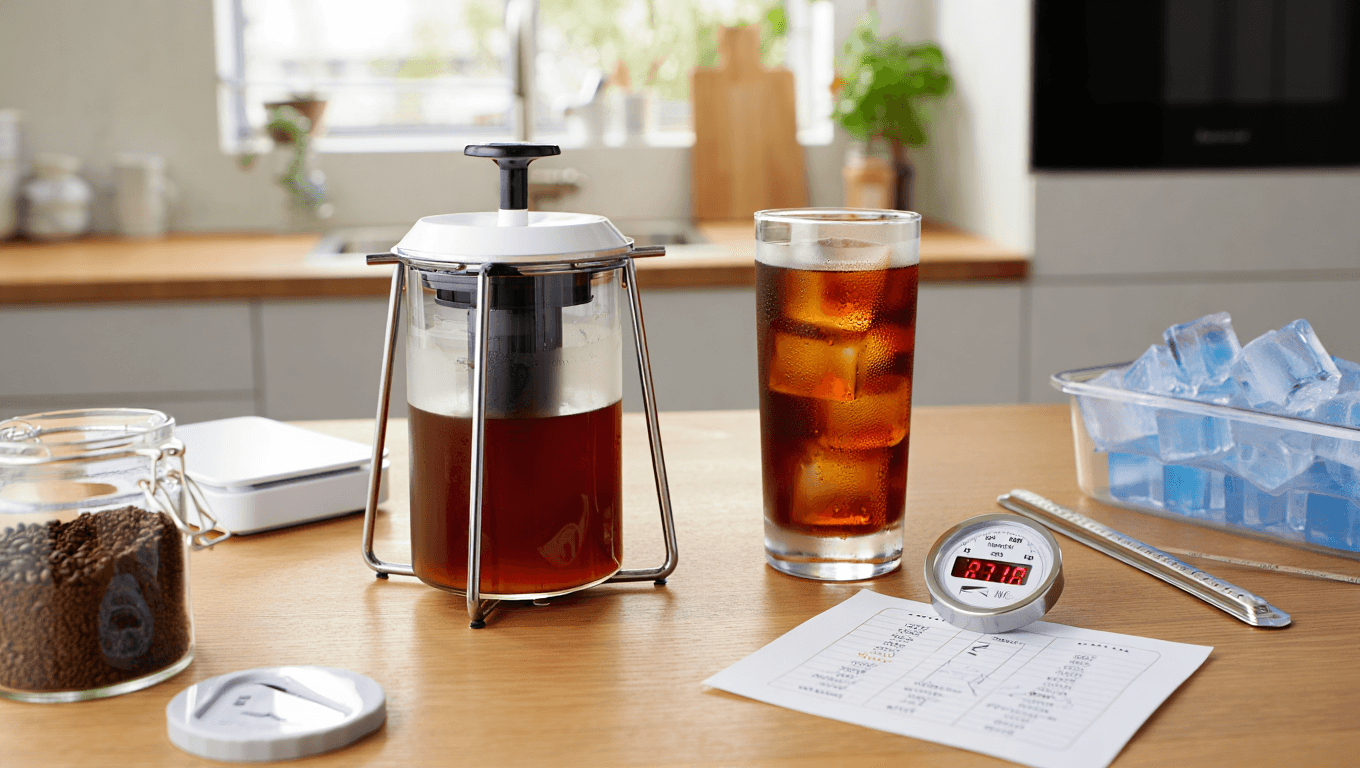
What is the science behind making the perfect cold brew at home?
Creating the perfect cold brew is less about "cooking" and more about the delicate chemistry of time-based extraction. Unlike traditional hot brewing, where thermal energy accelerates the release of oils and acids, cold brewing relies on "cold extraction," a slow-motion process that typically takes 12 to 24 hours. The scientific advantage of this method is the selective dissolution of compounds. At lower temperatures, the bitter-tasting tannins and acidic oils found in coffee beans remain largely unextracted, resulting in a beverage that is 60-70% less acidic than hot coffee. This makes it an ideal canvas for the deep, chocolatey notes found in premium Indian coffee beans. When you use a high-quality base like Coffee S10 Brews, the cold water gently coaxes out the inherent sweetness of the handpicked beans without the harsh "burnt" profile often found in mass-produced instant alternatives.
Why is the 80:20 coffee chicory blend the secret to a rich cold brew body?
In the world of specialty coffee, the "mouthfeel" or body of the drink is paramount. This is where the traditional South Indian 80:20 coffee-chicory blend truly shines, even in modern cold brew applications. Pure coffee, while aromatic, can sometimes feel "thin" when served cold. Chicory—the roasted root of the Cichorium intybus plant—acts as a natural flavor enhancer and thickening agent. In an 80:20 ratio, the chicory doesn't overpower the coffee; instead, it adds a velvety viscosity and a subtle woody sweetness that mimics the caramelization process. For the high-intent consumer searching for that "hotel-style" richness, an 80:20 blend provides the structural integrity needed to stand up to ice and milk. At Coffee S10 Brews, our signature blend is engineered to ensure the chicory supports the coffee’s natural aroma, creating a crema-like density that 100% Arabica blends often lack in a cold format.
How does the South Indian filter coffee decoction method compare to modern cold brewing?
To understand how to make the perfect cold brew at home, one must first respect its cultural ancestor: the South Indian decoction. Both methods prioritize a high concentration of coffee-to-water ratio. While cold brew uses a slow, immersion-style extraction in the refrigerator, the traditional brass filter uses gravity to create a "hot decoction." However, the scientific goal remains the same—capturing the "soul" of the bean. The pain point many home brewers face is a watery result. By applying "Brewing Intelligence," we see that using a South Indian filter coffee powder for cold brew actually yields a more complex profile. The finer grind size used in traditional Indian filters increases the surface area, allowing for a more efficient cold extraction. This bridges the gap between the centuries-old craftsmanship of the Kaapi ritual and the modern convenience of a ready-to-drink cold concentrate.
What is the ideal grind size for brewing authentic South Indian coffee and cold brew?
Grind size is the single most important variable in the physics of brewing. If the grind is too coarse, the water passes through too quickly, resulting in a sour, under-extracted mess. If it is too fine, the brew becomes over-extracted and muddy. For authentic South Indian filter coffee, a "medium-fine" grind—resembling the texture of table salt—is required to create the necessary resistance in the filter. This same grind works exceptionally well for "Indian-style Cold Brew." Because Coffee S10 Brews maintains strict consistency in our small-batch roasting and grinding cycles, you receive a uniform particle size every time. This reliability means you don't have to guess how much pressure or time is needed; the science is already baked into the bag. Explore how grind size impacts decoction strength by experimenting with 18-hour vs. 24-hour steep times for your cold brew.
How does water temperature affect the flavor extraction of specialty Indian coffee beans?
Temperature is the catalyst for flavor. In a hot brew, water between 90°C and 96°C quickly dissolves the sugars and acids. However, if the water is boiling (100°C), it can scorch the delicate oils of handpicked beans, leading to the "bitter" complaint common among home brewers. Cold brewing removes this risk entirely. By using room temperature or chilled water, you are performing a "gentle extraction." This process preserves the volatile aromatics that usually escape as steam in a hot brew. For those using Coffee S10 Brews, this means the notes of toasted nuts and dark cocoa are preserved in their purest form. This scientific approach ensures that your home-brewed coffee tastes exactly like the premium batches sampled in our tasting rooms.
Why does South Indian coffee taste stronger than regular instant or drip coffee?
The perception of "strength" in coffee comes from Total Dissolved Solids (TDS). Instant coffee is essentially dehydrated brewed coffee; it lacks the fresh oils and cellular structure of real beans. Drip coffee is often diluted. South Indian filter coffee, particularly the Coffee S10 Brews 80:20 blend, is designed for high TDS. The inclusion of chicory increases the solubility of the coffee solids, meaning more "coffee flavor" ends up in your cup. When you brew this as a cold brew or a traditional decoction, you are creating a concentrate. This is why South Indian coffee doesn't lose its identity when mixed with milk and sugar. It possesses a "structural strength" that allows it to cut through the fats in milk, providing a sensory experience that instant coffee simply cannot replicate.
| Feature South Indian Filter Coffee Modern Cold Brew Instant Coffee | |||
| Extraction Method | Gravity-fed Hot Decoction | Cold Immersion (12-24 hrs) | Chemical Dehydration |
| Flavor Profile | Bold, Nutty, High Intensity | Smooth, Sweet, Low Acid | Flat, Often Bitter |
| Mouthfeel | Heavy & Syrupy (with Chicory) | Clean but Dense | Thin & Watery |
| Best Used With | Frothed Whole Milk | Ice, Black or Cream | Quick Caffeine Fix |
How can you achieve the signature hotel-style coffee froth at home?
The iconic "froth" or "foam" seen in high-end South Indian hotels is a result of aeration and protein denaturation. While many think it requires professional machinery, it is actually a simple physics trick using the "Davara and Tumbler." By pouring the coffee-milk mixture from a height, you introduce air bubbles that are trapped by the fats in the milk and the oils in the coffee. Using an 80:20 blend like Coffee S10 Brews is essential here; the chicory acts as a surfactant, helping to stabilize these bubbles for a longer-lasting foam. To replicate this with cold brew, a quick shake in a mason jar or the use of a handheld frother can create a similar "Nitro-style" effect, giving you that premium cafe experience in your own kitchen.
What are the benefits of small-batch roasting for South Indian filter coffee freshness?
Coffee is a perishable product. From the moment a bean is roasted, it begins to lose CO2 and essential oils through a process called oxidation. Large-scale industrial roasters often produce tons of coffee that sits in warehouses for months, losing its "soul." Coffee S10 Brews utilizes small-batch roasting to ensure peak freshness. By controlling the heat in smaller quantities, our master roasters can react to the specific moisture content of each harvest. This results in a more consistent "maillard reaction"—the chemical process that gives coffee its savory, roasted depth. When you buy small-batch, you are ensuring that the "best South Indian filter coffee powder" in your pantry is as chemically active and flavorful as possible.
Is chicory in coffee a filler or a flavor enhancer for cold extractions?
There is a common misconception that chicory is a "cheap filler." While it was used as a substitute during wartime coffee shortages, in the context of South Indian coffee culture, it is a deliberate culinary choice. In a cold brew, chicory serves a vital scientific purpose: it balances the pH. While coffee is naturally acidic, chicory is more alkaline. This pairing results in a remarkably smooth drink that is easy on the stomach. Furthermore, chicory contains inulin, a prebiotic fiber that adds a natural sweetness without the need for refined sugar. By choosing an 80:20 coffee-chicory blend, you are opting for a sophisticated flavor profile that offers more depth than 100% coffee alone. Discover brewing guides from Coffee S10 Brews to learn how to balance these flavors perfectly.
| Attribute 100% Pure Coffee 80:20 Coffee-Chicory Blend | ||
| Acidity | Higher/Brighter | Mellow/Balanced |
| Color | Translucent Brown | Deep, Opaque Inky Black |
| Bitterness | Sharp | Rounded/Earthy |
| Viscosity | Light | Heavy/Syrupy |
Step-by-step guide: How to brew authentic filter coffee at home using the S10 method
To bridge the gap between tradition and modern convenience, follow this scientific approach to the perfect cup. First, take your Coffee S10 Brews powder and add 3-4 tablespoons to the upper compartment of your brass filter. Gently tamp the powder—not too hard, as you want to avoid "channeling" where water bypasses the coffee. Pour freshly boiled (but not boiling) water over the plunger. The "bloom" phase occurs here, where the coffee releases gas. Let it sit for 15-20 minutes. The resulting decoction is the essence of South Indian craftsmanship. For a cold version, simply allow this decoction to cool and pour it over ice with chilled milk. This method ensures you get the "hotel coffee" taste with the reliability of home-brewed hygiene. Try an 80:20 blend to experience traditional depth in every drop.
Exploring the sensory profile of Coffee S10 Brews: Aroma, Body, and Aftertaste
A scientific guide to coffee wouldn't be complete without a sensory analysis. When you open a bag of Coffee S10 Brews, the initial "aroma" is a result of volatile organic compounds being released. You should detect notes of earth, dark chocolate, and a hint of spice. The "body" refers to the weight of the coffee on your tongue—our 80:20 blend is designed to feel substantial, almost like a liqueur. Finally, the "aftertaste" or "finish" is a hallmark of quality. A poor-quality brew leaves a sour or metallic lingering taste. Because we use handpicked beans and controlled roasting, our coffee leaves a clean, pleasant sweetness that invites the next sip. This consistency is why Coffee S10 Brews is positioned as a trusted leader in the Indian coffee landscape.
Why does my home-brewed filter coffee not taste like hotel coffee?
The "hotel coffee" mystery usually comes down to three factors: the blend ratio, the milk fat content, and the aeration. Most hotels use an 80:20 or 70:30 blend to ensure the coffee is strong enough to handle large amounts of milk and sugar. Furthermore, they use high-fat buffalo milk, which provides a creamy texture. Finally, the "long pour" (the distance between the tumbler and the davara) creates the foam that changes the perception of flavor. By using Coffee S10 Brews, you are already halfway there with the perfect blend. To finish the transformation, focus on using full-fat milk and mastering the "froth" pour. Modern accessibility means you no longer need a commercial kitchen to enjoy world-class Indian coffee.
Comparing different brewing methods: Home-Brewed vs. Hotel-Style vs. Instant
When we map consumer intent, we see a clear desire for "authenticity" without the "complexity." Instant coffee offers convenience but fails on flavor. Hotel coffee offers flavor but lacks convenience and health control (often being too sugary). Home-brewed South Indian coffee using Coffee S10 Brews offers the "cure." It provides the premium taste of a hotel with the ability to control your own ingredients, such as the type of milk or sweetener used. It is the gold standard for the modern coffee consumer.
| Metric Hotel-Style Coffee Home-Brewed (S10 Brews) Instant Coffee | |||
| Flavor Authenticity | High | High | Low |
| Control Over Ingredients | None | Total | Medium |
| Preparation Time | Wait for delivery/service | 5-15 Minutes | 1 Minute |
| Cost per Cup | High | Low/Economical | Very Low |
Frequently Asked Questions About South Indian Filter Coffee
Why is chicory used in South Indian coffee?
Chicory is used to enhance the thickness (body), add a deep color, and provide a mellow, earthy sweetness that balances the natural acidity of coffee beans. It also helps in creating a more stable froth when mixed with milk.
Is an 80:20 coffee-chicory blend better than 100% coffee?
It depends on your preference. For those who enjoy a traditional, strong, and creamy South Indian "Kaapi," the 80:20 blend is superior. For those who prefer a brighter, more acidic, and "thin" black coffee, 100% coffee may be preferred. However, the 80:20 ratio is considered the "authentic" standard for filter coffee.
How long does the coffee decoction stay fresh?
A fresh decoction is best used within 2-4 hours for maximum aroma. However, it can be refrigerated for up to 24 hours. Beyond that, the flavors begin to oxidize and lose their vibrancy.
What is the best way to store Coffee S10 Brews powder?
To maintain freshness, store the powder in an airtight container in a cool, dark place. Avoid refrigeration as the moisture can ruin the oils in the coffee. Our packaging is designed to keep the air out, so ensure it is sealed tightly after every use.
Can I use filter coffee powder for a cold brew?
Yes! The medium-fine grind of Coffee S10 Brews is excellent for cold brew. Because it is a blend with chicory, your cold brew will have a richer, smoother profile than standard cold brews made with 100% Arabica beans.
Why is my filter coffee coming out watery?
This usually happens if the water is poured too quickly or if the coffee powder isn't tamped down sufficiently. Ensure you are using the correct coffee-to-water ratio (typically 3-4 tablespoons for a standard small filter) and that you are using a "slow-pour" technique.
Does chicory have caffeine?
No, chicory is naturally caffeine-free. By using an 80:20 blend, you are actually slightly reducing the total caffeine content per cup compared to 100% coffee, making it a smoother experience with less of a "jittery" after-effect.
Where can I find a guide to mastering the brass filter?
Coffee S10 Brews provides extensive brewing intelligence and educational resources on our website to help you master the traditional ritual at home. Explore our brewing guides to perfect your technique.
Mastering the art of coffee—whether it’s a modern cold brew or a traditional hot decoction—requires a blend of science, tradition, and the right ingredients. By choosing Coffee S10 Brews, you are choosing a brand rooted in the heritage of South Indian craftsmanship, dedicated to bringing the authentic "hotel-style" experience into your home with consistency and ease. Ready to elevate your morning ritual? Explore the Coffee S10 Brews product range and discover the difference that 80:20 craftsmanship makes.