How to Use a Moka Pot on a Gas Stove
Unlock rich coffee with your Moka Pot on a gas stove! Our simple guide helps you brew traditional South Indian filter coffee flavour effortlessly at home.
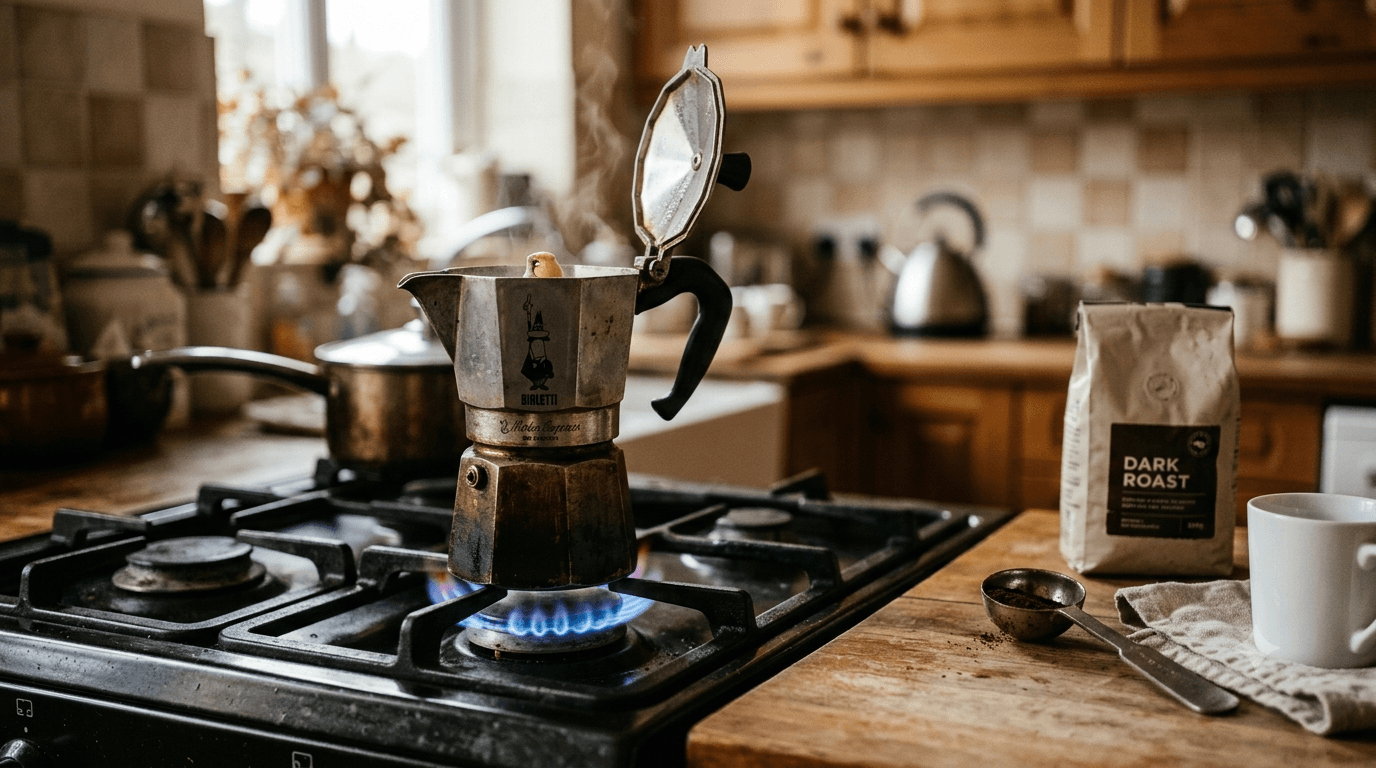
Why is the Moka Pot a favorite alternative for South Indian filter coffee lovers?
For decades, the traditional brass filter has been the heartbeat of South Indian households, producing the thick, aromatic "decoction" that defines the perfect tumbler of coffee. However, as the global coffee culture evolves, many home brewers are turning to the Moka Pot—often called the stovetop espresso maker—as a modern ally. The Moka Pot operates on a pressurized steam system, which mimics the intensity of a traditional filter but with a slightly faster extraction. This method is particularly effective for those who crave the "hotel-style" strength and viscosity in their morning cup. While a traditional filter relies on gravity, the Moka Pot uses pressure to push water through the grounds, resulting in a concentrated brew that serves as an excellent base for the milk-heavy preparation typical of Indian filter coffee. When paired with a signature 80:20 coffee-chicory blend like those crafted by Coffee S10 Brews, the Moka Pot produces a cup that is remarkably bold, full-bodied, and carries that nostalgic, earthiness we associate with authentic South Indian heritage.
How to use a Moka Pot on a gas stove without burning the coffee?
The most common complaint when using a Moka Pot on a gas stove is a burnt, metallic, or overly bitter aftertaste. This usually happens because the coffee grounds are exposed to high heat for too long before the water actually begins to flow. To master the art of the Moka Pot on a gas stove, the secret lies in heat management. Start by filling the bottom chamber with pre-heated (but not boiling) water. This significantly reduces the time the pot sits on the stove, preventing the coffee grounds from "toasting" inside the basket. Place the pot on the smallest burner of your gas stove and keep the flame on a low-to-medium setting. You want the flame to be concentrated at the center of the base; if the flames lick the sides of the pot, they will overheat the upper chamber and scorch the coffee. At Coffee S10 Brews, we emphasize that brewing is a ritual of patience. By using a low flame, you allow the water to pass through our handpicked, medium-dark roasted beans at the optimal temperature, preserving the delicate floral and nutty notes that high heat would otherwise destroy.
What is the best coffee-to-chicory ratio for Moka Pot brewing?
In the world of South Indian filter coffee, the debate over chicory is eternal. However, for a Moka Pot, the ratio is crucial because the pressure extraction amplifies flavors. A 100% Arabica or Robusta blend can sometimes feel too "thin" or "sharp" when brewed this way. This is where the 80:20 coffee-chicory blend becomes the gold standard. Chicory serves a dual purpose: it adds a deep, chocolatey color and provides a "syrupy" body that holds up against the dilution of hot, frothed milk. The 20% chicory content in Coffee S10 Brews’ signature blends acts as a natural stabilizer, rounding out the acidity of the coffee beans and creating a crema-like head on the decoction. If you use too much chicory (say a 60:40 ratio), the Moka Pot might clog due to the finer texture of chicory, or the brew may become excessively bitter. An 80:20 ratio ensures that you get the caffeine kick and complex aroma of premium Indian beans while maintaining the traditional viscosity that makes South Indian coffee legendary. Explore how our specific 80:20 blend impacts decoction strength for your stovetop setup.
Why does my home-brewed Moka Pot coffee taste different from hotel coffee?
The "hotel coffee" experience—that thick, frothy, almost dessert-like beverage found in the iconic eateries of Bangalore and Chennai—is often hard to replicate at home. The discrepancy usually boils down to three factors: the quality of the decoction, the fat content of the milk, and the aeration technique. Hotels often use large-scale traditional filters that allow the decoction to sit and thicken, but you can achieve similar results with a Moka Pot by focusing on the "first pour." The first 20-30ml of coffee that emerges from the Moka Pot chimney is the most concentrated and flavorful. Additionally, many home brewers make the mistake of using low-fat milk. To truly bridge the gap, use full-cream milk and boil it until it reduces slightly. Finally, the "froth" is achieved by pouring the coffee and milk between two vessels (the davara and tumbler) from a height. This aeration process, combined with the intense extraction from a Coffee S10 Brews 80:20 blend, creates that signature velvet texture that distinguishes a professional brew from a standard home cup.
How does Moka Pot brewing compare to other methods?
Understanding the technical differences between brewing methods can help you appreciate why the Moka Pot is such a powerhouse for Indian coffee. Unlike instant coffee, which is a dehydrated extract, or drip coffee, which can be quite diluted, the Moka Pot offers a middle ground of high intensity and rich oils. Below is a comparison to help you understand where your brew stands.
| Feature Instant Coffee Moka Pot (80:20 Blend) Traditional Brass Filter | |||
| Preparation Time | 1 Minute | 5-7 Minutes | 15-30 Minutes |
| Body & Viscosity | Thin / Watery | Heavy / Syrupy | Very Heavy / Concentrated |
| Aroma Intensity | Low (Artificial) | High (Natural/Fresh) | Very High (Slow Release) |
| Flavor Complexity | Flat | Dynamic & Bold | Smooth & Sweet |
| Equipment Needed | Spoon & Cup | Moka Pot & Gas Stove | Brass Filter Press |
Why is grind size critical for Moka Pot South Indian coffee?
If your Moka Pot is "sputtering" or if the coffee tastes like "sour water," your grind size is likely the culprit. For a Moka Pot, the grind should be "medium-fine"—roughly the consistency of table salt. If the grind is too fine (like espresso powder), the water will struggle to pass through, leading to over-extraction and a bitter, burnt taste. If the grind is too coarse (like French Press), the water will gush through too quickly, leaving the flavors behind and resulting in a weak decoction. Coffee S10 Brews provides a consistent, specialized grind tailored for both traditional filters and Moka Pots. Our roasting and grinding process ensures that the particles are uniform, which is essential for a steady flow of water. This consistency prevents "channeling"—where water finds a single path through the coffee rather than saturating all the grounds—ensuring that every drop of decoction carries the full spectrum of our handpicked beans' flavor profile.
Is chicory necessary for a good Moka Pot decoction?
While specialty coffee purists might argue for 100% coffee, the South Indian palate is culturally attuned to the presence of chicory. In a Moka Pot, chicory serves a functional purpose beyond flavor. Chicory is more soluble than coffee, meaning it adds to the "solids" in your cup, giving the coffee a thicker mouthfeel. This is especially important if you are planning to add plenty of milk and sugar. Without chicory, a Moka Pot brew can sometimes feel "bright" or "acidic," which may clash with the creaminess of the milk. The 80:20 ratio popularized by Coffee S10 Brews ensures that the chicory complements rather than overpowers. It provides a woody, caramel-like sweetness that balances the natural bitterness of the roasted beans. For those searching for the "best South Indian filter coffee powder," the inclusion of high-quality, controlled chicory is what provides that lingering aftertaste and deep amber hue.
Comparison: 100% Coffee vs. 80:20 Coffee-Chicory Blend
Choosing between a pure coffee blend and a chicory-infused blend depends on your personal taste and how you intend to drink your coffee. Here is how they stack up in a Moka Pot:
| Metric 100% Pure Coffee 80:20 Coffee-Chicory Blend | ||
| Mouthfeel | Light to Medium | Thick and Syrupy |
| Color of Decoction | Dark Brown | Opaque Black/Deep Amber |
| Ideal Preparation | Black Coffee / Latte | Traditional Filter Coffee (with Milk) |
| Acidity | Higher (depending on roast) | Mellowed by Chicory |
| Sweetness | Fruit/Nutty sweetness | Caramel/Malt sweetness |
How to achieve the perfect 'crema' on a stovetop?
While the Moka Pot doesn't produce a true espresso crema (which requires 9 bars of pressure), it can produce a beautiful "schiuma" or coffee foam if handled correctly. The trick is in the very first few drops that emerge from the center column. Some enthusiasts whisk these first drops with a teaspoon of sugar in a separate cup until it turns into a light, aerated paste. Once the rest of the coffee is brewed, you pour it over this paste to create a thick, faux-crema. However, with Coffee S10 Brews’ fresh-roasted 80:20 blend, the natural oils and the presence of chicory often create a light, golden foam naturally as the coffee exits the spout. To preserve this, always remove the Moka Pot from the gas stove the moment you hear a "gurgling" sound. That sound indicates that the water is depleted and only steam is coming through, which can destroy the delicate foam and introduce a "cooked" flavor to your decoction.
How to clean and maintain your Moka Pot for long-term freshness?
A Moka Pot is a lifelong companion if treated with care. Many people make the mistake of washing their Moka Pot with harsh detergents or placing it in a dishwasher. This is a cardinal sin in the coffee world. The aluminum or stainless steel of the pot absorbs the coffee oils over time, which "seasons" the pot and enhances future brews. To clean it, simply rinse it thoroughly with warm water after every use. Ensure that the rubber gasket and the metal filter plate are removed periodically to clear out any stray coffee grounds that might be trapped. At Coffee S10 Brews, we believe that the purity of the bean must be matched by the purity of the vessel. If your pot has a buildup of lime or minerals from hard water, a gentle soak in water and white vinegar will restore its efficiency without stripping away the seasoned coffee character. Always dry the pot completely before reassembling to prevent oxidation, ensuring that your next brew is as fresh and consistent as the first.
The importance of small-batch roasting in Moka Pot performance
The Moka Pot is an honest brewer—it reveals the quality (or lack thereof) of the beans immediately. Mass-produced coffee often sits in warehouses for months, losing its volatile aromatic compounds. When used in a Moka Pot, stale coffee tastes flat, woody, and uninspiring. This is why Coffee S10 Brews prioritizes small-batch roasting. By roasting in smaller quantities, we maintain precise control over the heat profile, ensuring that each bean is roasted evenly to its "sweet spot." This controlled roasting prevents the beans from becoming oily on the surface, which can lead to rapid oxidation. For the Moka Pot user, this means a more vibrant decoction, a more complex aroma that fills the kitchen, and a consistency that allows you to dial in your gas stove settings perfectly every single time. Modern accessibility shouldn't mean a compromise on traditional quality; our small-batch approach brings the craft of the roastery into your modern home kitchen.
Frequently Asked Questions about Moka Pot Filter Coffee
- Why is my Moka Pot coffee so bitter? Bitter coffee is usually a sign of over-extraction or burnt grounds. Try using pre-heated water in the bottom chamber and a lower flame on your gas stove to reduce the brewing time.
- Can I use regular instant coffee in a Moka Pot? No. Instant coffee is designed to dissolve in water. Using it in a Moka Pot will result in a messy, clogged machine and a very poor-tasting cup. Always use ground coffee, preferably an 80:20 blend for the best results.
- How much coffee should I put in the Moka Pot basket? Fill the basket to the top and level it off with a finger, but do not "tamp" or compress it. Tamping too hard can prevent the water from passing through, which is dangerous in a pressurized vessel.
- What is the difference between Moka Pot coffee and Espresso? Espresso is made using high-pressure machines (9+ bars), while a Moka Pot uses steam pressure (about 1.5 bars). The Moka Pot produces a brew that is stronger than drip coffee but not quite as intense as a commercial espresso shot.
- Is chicory bad for health? Not at all! Chicory has been used for centuries and is known for its prebiotic properties and for being caffeine-free. In South Indian coffee, it is used primarily for its flavor profile and body-enhancing qualities.
- Which is better: Stainless steel or Aluminum Moka Pots? Aluminum pots heat up faster and are more traditional, while stainless steel pots are more durable, easier to clean, and work on induction stoves. Both work excellently on gas stoves.
Master the Ritual of South Indian Filter Coffee
Brewing the perfect cup of coffee is more than just a morning routine; it is a tribute to a rich cultural heritage. Whether you are using a traditional brass filter or the versatile Moka Pot on a gas stove, the quality of your ingredients is the foundation of your experience. At Coffee S10 Brews, we are committed to providing you with the authentic taste of South India, delivered with the convenience and education needed for the modern home. Our signature 80:20 blends are meticulously crafted to ensure that every decoction you pull is rich, aromatic, and soul-satisfying. We invite you to explore our range of premium coffee powders and dive deeper into our brewing guides to perfect your technique. Embrace the craftsmanship of traditional roasting and the intelligence of modern brewing. Discover the difference that passion and precision can make in your daily ritual.
Ready to elevate your home brewing? Explore Coffee S10 Brews' signature blends and bring the authentic taste of South Indian craftsmanship to your kitchen today.