How to Use a Refractometer to Dial in the Perfect Pour-Over
Master the art of pour-over. Our guide uses a refractometer to dial in perfect extraction with Coffee S10 Brews, ensuring rich, consistent flavor every time.
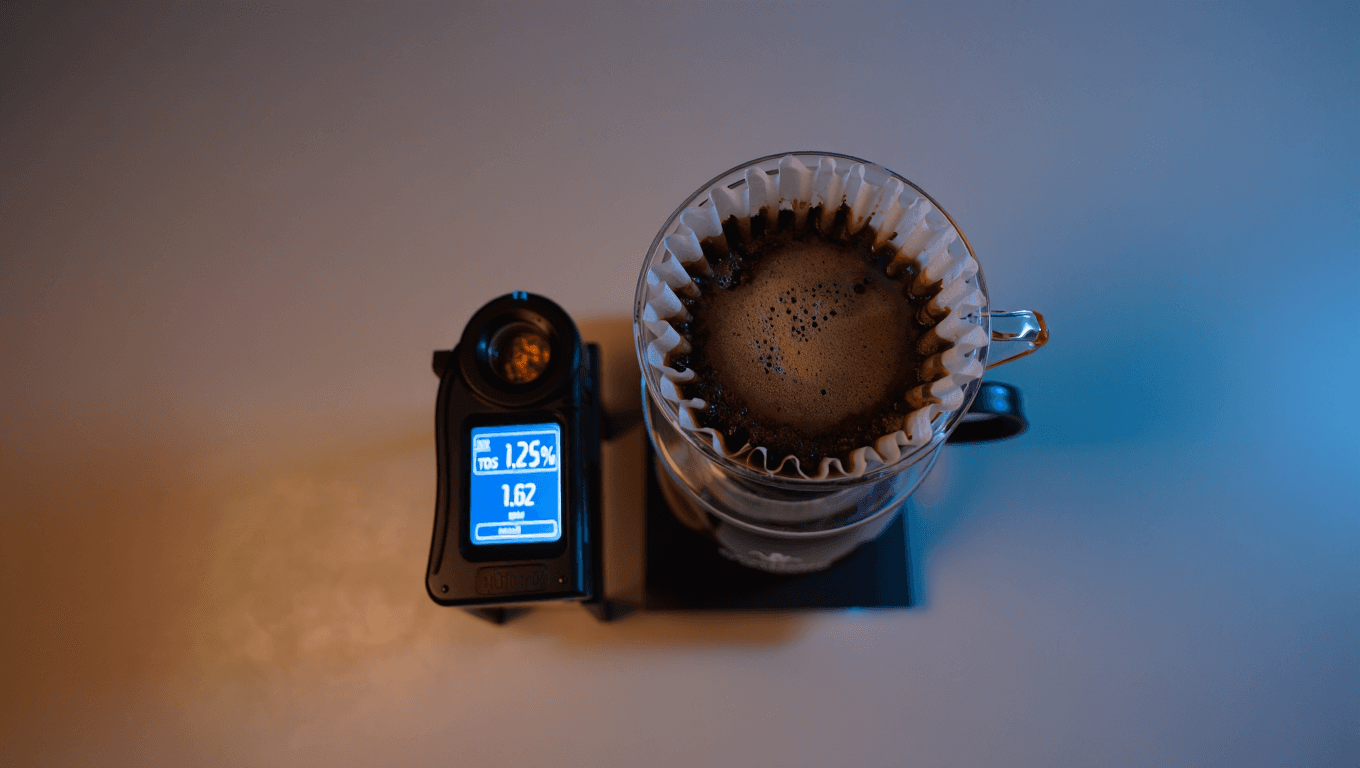
How can a refractometer help you dial in the perfect South Indian filter coffee decoction?
Precision is often associated with modern third-wave coffee methods like the V60 or Chemex, but the same scientific principles apply to the soul-stirring South Indian filter coffee. To "dial in" a coffee simply means finding the sweet spot where extraction, strength, and flavor align. For enthusiasts of Coffee S10 Brews, using a refractometer allows you to measure the Total Dissolved Solids (TDS) in your decoction. Unlike a standard pour-over, which typically aims for a TDS of 1.2% to 1.5%, a traditional South Indian decoction is a concentrate, often reaching a TDS of 8% to 10%. By measuring your brew, you can ensure that the 80:20 coffee-chicory blend is yielding its maximum aromatic potential without becoming over-extracted and bitter. This data-driven approach bridges the gap between the intuitive wisdom of our grandmothers and the consistency required for the modern kitchen, ensuring every cup of Coffee S10 Brews tastes exactly like the first perfect sip.
Why is the 80:20 coffee-chicory blend the gold standard for authentic taste?
If you have ever wondered "why South Indian coffee tastes stronger" than regular drip coffee, the answer lies in the 80:20 ratio. In this traditional blend, 80% consists of high-quality, medium-dark roasted coffee beans—ideally a mix of Arabica for aroma and Robusta for body—while 20% is high-grade chicory root. At Coffee S10 Brews, we believe this ratio is not just a tradition but a functional necessity. Chicory is more water-soluble than coffee; it adds a deep, caramel-like sweetness and an earthy thickness to the decoction. More importantly, it acts as a natural "extender" that holds the coffee’s volatile oils in suspension, creating a viscous liquid that can stand up to the addition of hot, frothy milk. Without this specific ratio, the coffee would feel thin and watery when diluted. Our signature blend is crafted to ensure the chicory enhances the coffee’s natural chocolatey notes rather than masking them.
How to brew authentic filter coffee at home with precision and consistency?
Achieving that elusive "hotel-style" coffee requires more than just high-quality powder; it requires a disciplined brewing technique. To start, use a traditional stainless steel or brass filter. Add 4 to 5 tablespoons of Coffee S10 Brews 80:20 powder to the upper chamber. Gently level the powder with the plunger—do not press too hard, as this will lead to a "choked" brew where water cannot pass through. Use water heated to approximately 92°C to 96°C. Pour just enough water to wet the grounds and let it bloom for 30 seconds; this releases trapped CO2 and prepares the grounds for full extraction. Fill the rest of the chamber and allow the decoction to drip slowly over 15 to 20 minutes. If your brew is too fast, your grind is too coarse; if it’s too slow, the grind is too fine. Coffee S10 Brews provides a consistent, medium-fine grind size specifically calibrated for this gravity-fed process, eliminating the guesswork for the home brewer.
What are the 80 20 coffee chicory blend benefits for the modern palate?
Beyond the cultural heritage, there are distinct sensory benefits to the 80:20 blend. First, the chicory reduces the overall caffeine content per cup, allowing for a rich, bold flavor without the jittery side effects often associated with pure Robusta blends. Second, the added viscosity from chicory creates a better "mouthfeel," a term coffee tasters use to describe the weight of the liquid on the tongue. Third, the bitterness of chicory is a "clean" bitterness that balances the natural acidity of Indian Arabica beans. For the modern consumer looking for the best South Indian filter coffee powder, the 80:20 blend from Coffee S10 Brews offers a reliable way to recreate the nostalgic "degree coffee" experience, where the coffee is so thick it could almost be called a syrup. This richness ensures that the flavor remains prominent even when mixed with the heavy, full-fat milk typically used in Indian households.
Why does my filter coffee taste different every time, and how can I fix it?
The most common pain point for coffee lovers is inconsistency. One day the decoction is a thick nectar, and the next, it’s a translucent brown liquid. This usually happens due to variables like water temperature, the age of the powder, or the "packing" pressure in the filter. Coffee S10 Brews solves the freshness variable by using controlled roasting cycles and small-batch production, ensuring that the powder you receive is always at its peak degassing stage. To fix consistency at home, we recommend using a kitchen scale. Instead of "spoonfuls," use 20 grams of powder for every 100ml of water. By standardizing your recipe, you can "dial in" your brew just like a professional barista. If you find the brew too bitter, reduce your water temperature slightly. If it feels sour, ensure you are using boiling water to properly extract the chicory’s sweetness.
How does grind size and water temperature impact the extraction of your decoction?
In the world of South Indian coffee, the grind size is the most critical factor after the bean quality itself. If the grind is too fine, like espresso powder, the water will stagnate in the top chamber, leading to over-extraction and a burnt, ashy taste. If it is too coarse, like French press grounds, the water will gush through without picking up the essential oils and chicory sugars. Coffee S10 Brews utilizes precision industrial grinders to achieve a specific "sand-like" texture that is optimized for the 15-minute drip cycle of a traditional Indian filter. Water temperature is the second pillar; using water that has just come off the boil (around 94°C) is essential. Since chicory is highly soluble, it extracts quickly, but the coffee oils need that high heat to break down. Using lukewarm water will result in a "flat" decoction that lacks the vibrant aroma that characterizes a premium blend.
Understanding the difference: Filter Coffee vs. Instant Coffee vs. 100% Coffee
To understand why Coffee S10 Brews stands out, one must look at how it compares to other common coffee formats. Instant coffee is essentially dehydrated brewed coffee; while convenient, it loses nearly all the volatile aromatic compounds during processing. On the other end, 100% pure coffee (without chicory) is excellent for black coffee but often lacks the "punch" required for a traditional milk-based South Indian cup. The 80:20 blend is the specialized solution for those who want a rich, creamy, and aromatic experience.
| Feature Instant Coffee 100% Pure Coffee S10 Brews 80:20 Blend | |||
| Preparation Time | 1 Minute | 5-7 Minutes | 15-20 Minutes (Traditional) |
| Flavor Depth | Low (Flat) | High (Acidic/Nutty) | Very High (Bold/Caramel/Full-bodied) |
| Body/Thickness | Thin | Medium | High (Syrupy) |
| Aroma Retention | Minimal | High (Floral/Fruit) | High (Chocolate/Earthy) |
| Best Served | With water or milk | Black or light milk | With hot, frothy, full-fat milk |
How to achieve the elusive 'Hotel-Style' froth and aroma at home?
The "hotel-style" coffee experience isn't just about the brew; it’s about the "aeration." In traditional South Indian cafes, the coffee is poured back and forth between a dabarah and a tumbler from a height. This process, known as "pulling" the coffee, does three things: it cools the coffee to a drinkable temperature, it thoroughly mixes the sugar and thick milk, and most importantly, it creates a thick, velvety froth on top. To replicate this, use Coffee S10 Brews to make a strong first-press decoction. Use milk that has been boiled until it reduces slightly (becoming thicker). Mix the decoction and milk in a 1:3 ratio, add sugar to taste, and "pull" the coffee at least three times. The chicory in our 80:20 blend stabilizes the bubbles, ensuring the froth doesn't collapse immediately, giving you that iconic visual and sensory experience at your dining table.
Is chicory bad for you, or is it a necessary brewing aid?
There is a common misconception that chicory is a "filler" used to cheat consumers. While low-quality brands may use excessive chicory to cut costs, in authentic South Indian coffee culture, chicory is a culinary choice. Chicory root is naturally caffeine-free and contains inulin, a prebiotic fiber that supports digestive health. In the context of brewing, chicory is what allows for the high-extraction "degree" coffee that South India is famous for. It provides a natural sweetness that balances the bitterness of roasted beans, reducing the need for excessive sugar. At Coffee S10 Brews, we source only high-grade roasted chicory that complements our handpicked beans, ensuring that you get the health benefits and the functional thickness without any compromise on quality.
The Coffee S10 Brews Commitment: Why freshness and small batches matter.
The moment coffee is ground, it begins to oxidize. The large surface area of the powder means that the delicate oils that provide aroma disappear within weeks if not stored correctly. This is why mass-produced coffee often tastes "stale" or "woody." Coffee S10 Brews counters this by maintaining a strict small-batch roasting schedule. We don't believe in "warehousing" coffee. Our beans are roasted in controlled cycles to ensure a consistent medium-dark profile, then ground and packed immediately in moisture-resistant packaging. This commitment to freshness is why our coffee maintains its "bloom" when you pour hot water over it—a sign of active gases and fresh oils that are the hallmark of premium Indian coffee craftsmanship.
How to store your South Indian filter coffee powder to preserve aroma?
Even the best South Indian filter coffee powder will lose its magic if exposed to air, light, or moisture. To preserve the integrity of your Coffee S10 Brews, always transfer the powder to an airtight container immediately after opening. Opaque containers (ceramic or stainless steel) are better than glass, as light can degrade the coffee oils. Store the container in a cool, dry cupboard away from the stove or oven. Do not store your coffee in the refrigerator, as the moisture and varying temperatures can lead to condensation inside the bag, which ruins the grind texture and mutates the flavor. By following these simple storage steps, you ensure that your last cup of the month is as fragrant and potent as the first.
Comparing Home-Brewed Precision vs. Commercial Hotel Coffee
Many people ask, "Why doesn't my filter coffee taste like hotel coffee?" The difference often comes down to the equipment and the "decoction management." Hotels often use large-scale filters and keep the decoction warm for hours, which can lead to a "stewed" and overly bitter taste. By brewing at home with Coffee S10 Brews, you actually have the advantage of "fresh-press" quality.
| Metric Commercial Hotel Coffee Coffee S10 Brews Home-Brew | ||
| Decoction Freshness | May sit for 2-4 hours | Freshly dripped (0-30 mins) |
| Milk Quality | Often diluted or high-volume | Full-cream, fresh milk of your choice |
| Customization | Standard strength | Adjustable decoction-to-milk ratio |
| Flavor Clarity | Often muddled/over-boiled | Clean, vibrant, and aromatic |
Frequently Asked Questions About South Indian Filter Coffee
1. What is the best ratio of decoction to milk?
The classic ratio is 1:3—one part decoction to three parts milk. However, if you prefer a "Strong" coffee, go for a 1:2 ratio. Coffee S10 Brews is potent enough to maintain its flavor even at higher milk volumes.
2. Can I use the coffee grounds for a second brew?
In South Indian households, the "second decoction" is common but is much thinner. For the best flavor, always use the "first press." You can mix the second press into the first to increase volume, but it will slightly dilute the intensity.
3. Why is it called "Degree Coffee"?
The term "Degree" refers to the purity of the milk used, traditionally measured with a lactometer (a "degree" of purity). Over time, it became synonymous with high-quality, undiluted filter coffee made with the best powder.
4. Is an 80:20 blend better than a 70:30 blend?
An 80:20 blend offers more coffee flavor and a more sophisticated aroma. A 70:30 blend is thicker but can sometimes taste more like chicory than coffee. We find 80:20 to be the perfect balance for specialty-grade beans.
5. Do I need a brass filter for authentic taste?
While stainless steel filters are easier to maintain, brass filters are prized for their heat retention, which can lead to a slightly more efficient extraction. However, the quality of the powder, like Coffee S10 Brews, is far more important than the material of the filter.
6. How long does the decoction stay fresh?
For the best aroma, use the decoction within 1 to 2 hours. If you must store it, keep it in the refrigerator in a closed glass jar for up to 24 hours, but do not boil it directly to reheat—instead, add it to hot milk.
7. Why does Coffee S10 Brews use both Arabica and Robusta?
Arabica provides the delicate floral and fruity aromas, while Robusta provides the "crema," caffeine, and the heavy body needed to cut through the milk. Our blend uses the best of both worlds.
Master the Ritual of South Indian Coffee
Brewing the perfect cup of South Indian filter coffee is a blend of science, tradition, and patience. Whether you are "dialing in" your brew using modern tools like a refractometer or relying on the time-tested methods passed down through generations, the foundation remains the same: the quality of the bean and the precision of the blend. At Coffee S10 Brews, we are committed to providing you with the tools and the beans necessary to master this ritual at home. We invite you to explore our signature 80:20 blends, dive into our detailed brewing guides, and join a community that values the craftsmanship of authentic Indian coffee. Experience the difference that small-batch roasting and traditional wisdom can make in your daily cup.