Premium Filter Coffee Ratio (Grams to ML)
Master the perfect filter coffee ratio (grams to ml) for authentic South Indian decoction. Learn the secrets to using premium filter coffee powder for a cafe-style brew at home.
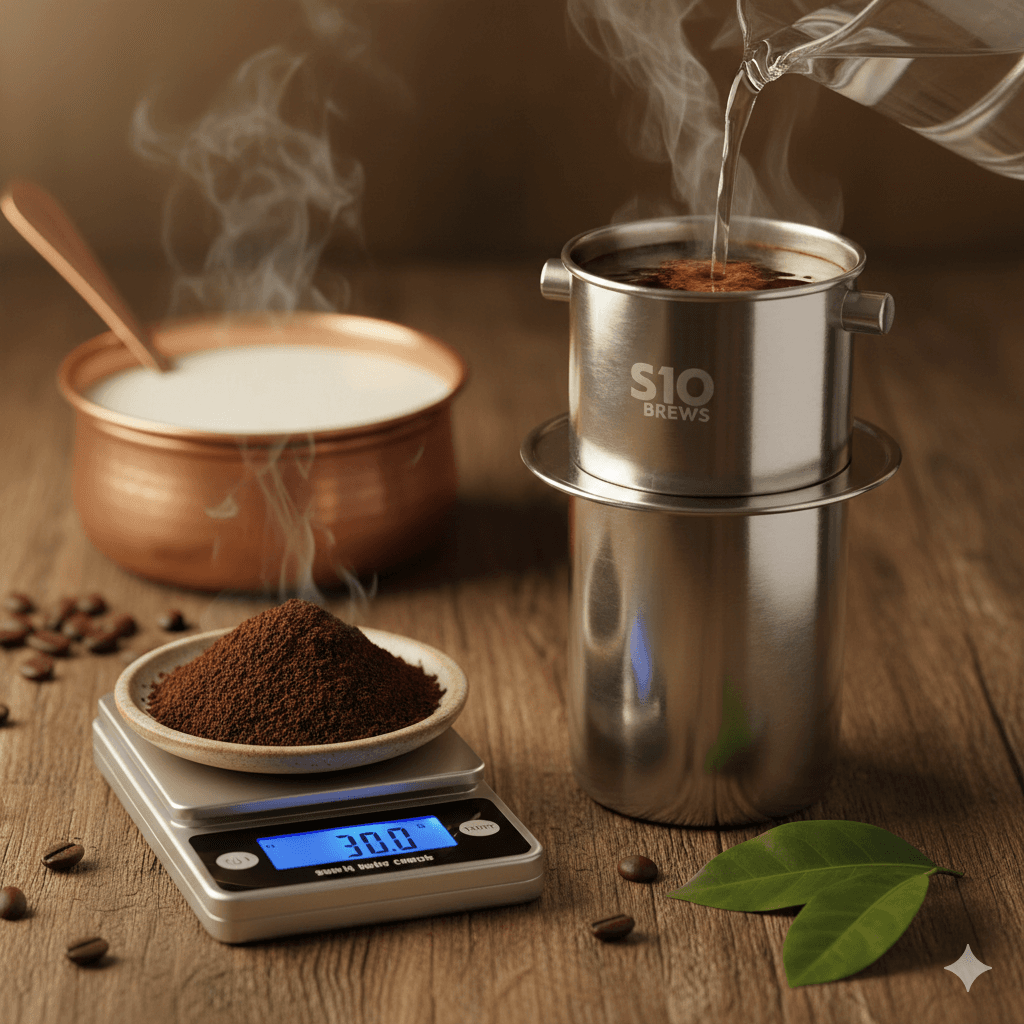
The Golden Ratio: Mastering the Filter Coffee Ratio (Grams to ML) for the Perfect Brew
There is a specific kind of heartbreak that only a coffee lover understands. It is that moment when you have sourced the finest, fresh coffee powder, heated your water to the perfect temperature, and waited patiently for the drip, only to take a sip and find it… thin. Or worse, aggressively bitter.
For many, brewing the perfect cup of South Indian filter coffee feels like a game of chance. But here is the secret: great coffee is not a result of luck; it is a result of math. Specifically, the relationship between your coffee powder and your water.
Whether you are a busy professional needing a morning spark or a coffee enthusiast looking for that authentic degree coffee taste, mastering the filter coffee ratio (grams to ml) is the single most important step in your brewing journey.
What is the Best Filter Coffee Ratio (Grams to ML)?
The ideal filter coffee ratio for a strong, traditional South Indian decoction is 1:2 or 1:3. This means using 1 gram of premium filter coffee powder for every 2 to 3 ml of water. For a standard stainless steel filter, use 30 grams of coffee powder to 60-90 ml of hot water to produce a thick, syrupy concentrate.
This ratio ensures that the water extracts the maximum flavor without over-extracting the bitter tannins, resulting in a bold, aromatic base that holds its own when mixed with frothed milk.
Why the Grams to ML Ratio Matters for Your Morning Cup
In the world of specialty coffee, we often talk about "extraction." When water meets coffee powder, it dissolves solids—oils, acids, and sugars. If you use too much water (a high ratio), you over-extract the beans, leading to a hollow, bitter taste. If you use too little water, you under-extract, leaving the best flavors trapped inside the grounds.
When you buy coffee powder online, you are investing in a flavor profile that has been carefully cultivated from estate-grown beans. Using the wrong ratio is essentially wasting the craftsmanship that went into that bag.
The Problem with "Spoons"
Most people measure their coffee in "heaping tablespoons." The issue? One tablespoon of a dark roasted, fine-grind traditional filter coffee powder weighs significantly less than a tablespoon of a medium-grind pure coffee powder. Volume is deceptive; weight is absolute. Using a simple kitchen scale to measure grams will transform your consistency overnight.
The Science of the Decoction: How to Calculate Your Ratio
To achieve that legendary "Degree Coffee" thickness, the decoction must be dense. Unlike a French Press or Drip Coffee (which typically use a 1:15 ratio), South Indian filter coffee requires a much tighter concentration.
1. The Strong Brew (1:2 Ratio)
Best for: Those who love a heavy, punchy flavor.
- Coffee Powder: 40 grams
- Water: 80 ml
- Result: A thick, viscous liquid that mimics the intensity of an espresso.
2. The Balanced Brew (1:3 Ratio)
Best for: Daily drinking and appreciating the notes of artisanal coffee powder.
- Coffee Powder: 30 grams
- Water: 90 ml
- Result: A smooth, aromatic decoction that blends beautifully with milk without overpowering it.
3. The Large Batch (For Guests)
- Coffee Powder: 100 grams
- Water: 250 ml
- Result: Enough decoction for 6–8 servings of authentic South Indian filter coffee.
Step-by-Step: Brewing with the Perfect Ratio
To get the most out of your premium South Indian coffee powder, follow this refined process:
- Prep the Filter: Place your stainless steel filter on a stable surface. Ensure the holes are clean and dry.
- The Coffee Bed: Add your measured grams of fresh coffee powder into the upper compartment. Lightly tap the sides to level the powder.
- The Press: Use the plunger (the umbrella-like tool) to press the powder down with gentle pressure. Do not compress it too hard, or the water won't pass through. Leave the plunger inside.
- The Water: Heat your water until it just begins to boil (about 94°C). Pour your measured ml of water over the plunger.
- The Wait: Cover the lid and let it sit for 15 to 20 minutes. The slow drip is what creates the "handcrafted coffee powder" magic.
Choosing the Right Powder: The Secret Ingredient
Even the best ratio cannot save mediocre beans. When looking for the best South Indian coffee powder for filter coffee, you need to consider the blend and the grind.
- Pure Coffee Powder vs. Chicory Blends: Pure coffee (100% Arabica or Robusta) offers a clean, fruity, or nutty profile. Traditional South Indian blends often include 10% to 20% chicory, which adds thickness, a woody aroma, and a darker color.
- Grind Size: For a traditional filter, you need a fine to medium-fine grind. If it is too fine (like flour), the filter will clog. If it is too coarse, the water will rush through, resulting in a weak brew.
- Sourcing: Opt for estate grown coffee powder. Small batch coffee powder, like those offered by S10 Brews, ensures that the beans haven't been sitting in a warehouse for months losing their volatile aromatics.
The "Second Decoction" Myth
A common mistake many make—and one rarely addressed by major brands—is the "second decoction." Many households pour more hot water over the grounds after the first drip is finished to get more "value."
From a professional sensory perspective, the second decoction is significantly lower in quality. It contains the bitter, astringent compounds that should stay in the grounds. If you want more coffee, it is always better to increase your initial measurements rather than trying to squeeze more out of spent grounds. For a premium experience, stick to the first press.
Why Quality Matters: The S10 Brews Difference
At S10 Brews, we believe that coffee is a ritual, not a commodity. While you can buy coffee powder online from many sources, the difference lies in the selection of the cherry and the precision of the roast. Our premium filter coffee powder is crafted in small batches to ensure that every gram you measure into your filter is packed with the vibrant energy of the Western Ghats.
We focus on the "S" in S10—Source, Selection, and Soul. By using estate-grown beans that are roasted to highlight their natural sweetness, we make sure that when you follow the 1:2 ratio, you aren't just getting "strong" coffee; you are getting a complex, layered beverage.
Frequently Asked Questions
Which coffee powder is best for filter coffee?
The best powder depends on your palate. If you prefer a traditional, thick taste, a blend with 80% coffee and 20% chicory is ideal. For those who prefer a modern, cleaner taste, a 100% pure coffee powder made from Arabica beans is the top choice.
How many grams of coffee powder for one cup of filter coffee?
For a single standard cup (approx. 150ml of finished beverage), you need about 15-20 grams of powder to create 30-40ml of strong decoction, which is then mixed with milk.
Can I use a regular coffee machine for South Indian filter coffee?
While you can use the powder, a drip machine or espresso maker won't yield the same results. The traditional stainless steel filter uses gravity and time to create a unique "slow-drip" concentration that define the authentic South Indian filter coffee powder experience.
Is chicory necessary for a good ratio?
No, chicory is not necessary, but it changes the "mouthfeel." If you are using a 1:2 ratio with pure coffee, it will be strong but thin. Chicory adds a syrupy texture that many associate with traditional degree coffee.
How do I store my fresh coffee powder?
To maintain the integrity of your artisanal coffee powder, store it in an airtight container in a cool, dark place. Avoid the refrigerator, as coffee absorbs odors and moisture.
What is "Degree Coffee"?
"Degree" refers to the purity or the "grade" of the milk used, but it has come to represent the gold standard of filter coffee—perfectly balanced, exceptionally creamy, and made with the finest Indian filter coffee powder.
Conclusion: Brew Like a Pro
Mastering the filter coffee ratio (grams to ml) is the bridge between a "decent" cup and a "life-changing" one. By weighing your premium filter coffee powder and measuring your water, you take control of the flavor.
Remember:
- Measure in grams, not spoons.
- Stick to a 1:2 or 1:3 ratio for the decoction.
- Use high-quality, fresh coffee powder from trusted sources like S10 Brews.
Next time you reach for your stainless steel filter, think of it as a laboratory for flavor. Experiment slightly—perhaps 28 grams one day, 32 the next—until you find your personal "golden ratio."
Ready to elevate your morning? Explore our collection of handcrafted, estate-grown blends at S10 Brews and taste the difference that precision and passion make.