Ripple Maker and Coffee Printers: Are They Worth It?
Curious about coffee printers and Ripple Makers? Coffee S10 Brews helps you decide if these trendy gadgets elevate your daily coffee ritual. Find out their true value!
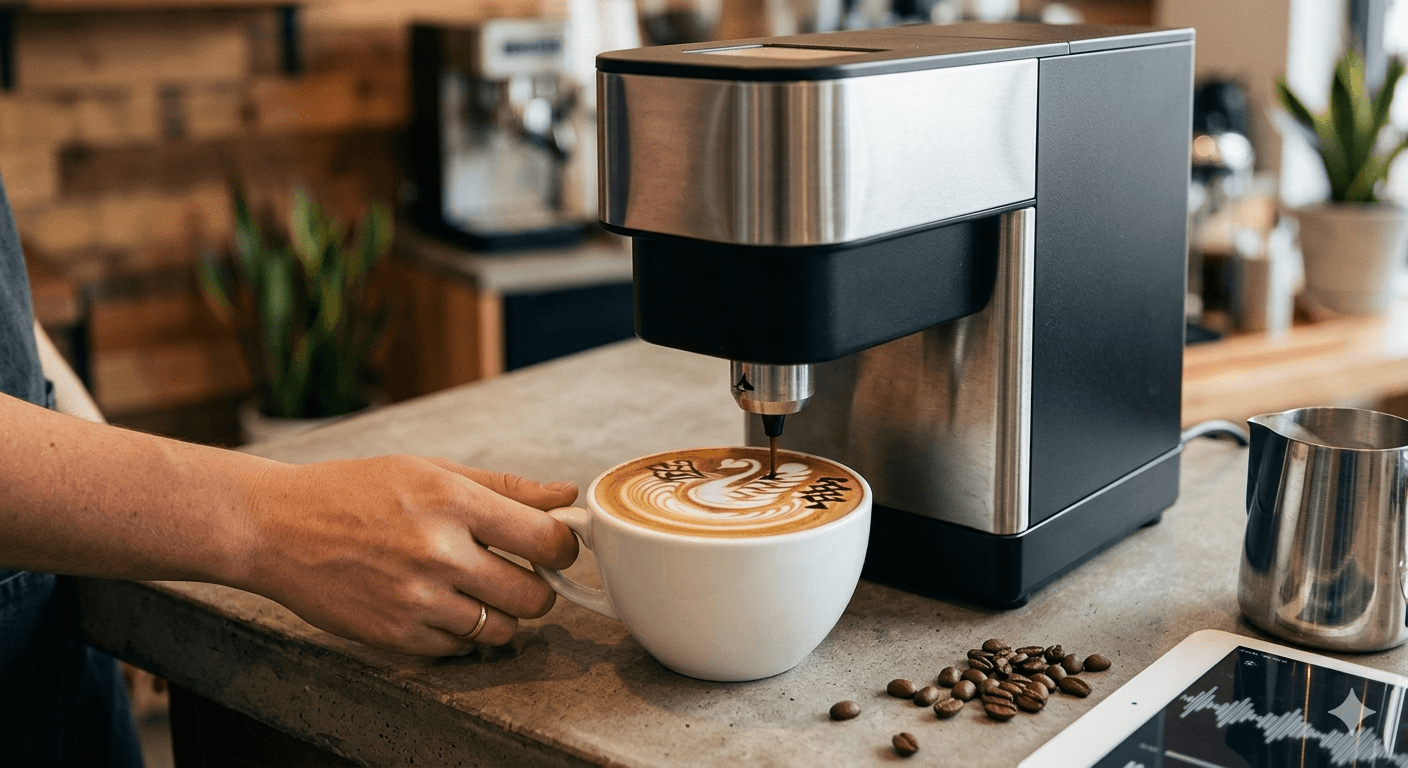
Is a Ripple Maker or Coffee Printer Worth the Investment for Authentic Coffee Lovers?
In the evolving landscape of global coffee culture, the "Ripple Maker" and various coffee printing technologies have emerged as the ultimate tools for visual engagement. These machines use inkjet technology to print intricate designs, personalized photos, or brand logos directly onto the milk froth of a latte or a cappuccino. For a modern cafe owner or a tech-savvy home barista, the allure is undeniable. However, for those rooted in the deep-seated traditions of South Indian filter coffee, a critical question arises: Does a printed image on your froth compensate for the soul of the brew? While a coffee printer adds a "wow" factor to the presentation, it cannot replicate the sensory depth of a meticulously prepared decoction. At Coffee S10 Brews, we believe that while technology can enhance the experience, the true value lies in the craftsmanship of the bean and the precision of the blend.
Why Does the Base Brew Matter More Than the Printed Design?
A Ripple Maker is only as good as the canvas it prints on. In the context of South Indian filter coffee, that canvas is the "foamy head" created by the vigorous pouring of coffee and milk between the tumbler and the davarah. If the coffee lacks body, the froth collapses, and the printed design vanishes within seconds. This is where the importance of the best South Indian filter coffee powder comes into play. To support high-quality latte art or digital prints, you need a brew with significant viscosity. Coffee S10 Brews focuses on providing a signature 80:20 coffee-chicory blend that creates a thick, resilient decoction. This natural thickness, derived from slow-roasted Arabica and Robusta beans paired with premium chicory, provides the structural integrity required for any modern aesthetic enhancement.
How Do Coffee Printers Affect the Authentic South Indian Coffee Experience?
Authentic South Indian coffee culture is built on the pillars of aroma, heat, and the "kick" of the first sip. When you introduce a coffee printer into the workflow, there is a mandatory delay between the frothing of the milk and the consumption of the drink. For a traditionalist, this delay is a compromise. The "degree coffee" experience relies on the coffee being served piping hot. While a Ripple Maker offers visual customization, it often requires the milk to be at a specific temperature and consistency that might deviate from the boiling-hot standards of a traditional South Indian kitchen. Coffee S10 Brews bridges this gap by ensuring that our 80 20 coffee chicory blend benefits the drinker through a superior sensory profile that remains consistent, whether you are enjoying a simple home brew or an aesthetically enhanced cafe cup.
Is Chicory Necessary for Creating the Perfect Canvas for Coffee Printing?
Many modern coffee drinkers ask, "Why is chicory used in South Indian coffee?" Beyond the traditional flavor profile, chicory plays a functional role in the physics of the brew. In the world of coffee printing, the density of the liquid matters. A 100% pure coffee decoction can sometimes be too thin to hold a stable froth. The addition of chicory—specifically in the 80:20 ratio perfected by Coffee S10 Brews—increases the thickness and the surface tension of the decoction. This results in a creamier froth that acts as a stable "paper" for the Ripple Maker's edible ink. Therefore, if you are looking to experiment with coffee printers, using a traditional blend is actually more effective than using a standard espresso roast, as it provides the dark, rich contrast needed for the design to pop.
Comparing Coffee Types: Which Is Better for Brewing and Aesthetics?
To understand whether a Ripple Maker is worth it, we must first look at the quality of the coffee being used. A printer cannot save a poor-quality instant coffee. Below is a comparison of how different coffee types fare in terms of both traditional taste and modern presentation potential.
| Feature Instant Coffee 100% Pure Filter Coffee Coffee S10 Brews (80:20 Blend) | |||
| Body & Viscosity | Thin and watery | Medium body | High viscosity, thick decoction |
| Froth Stability | Low; bubbles pop quickly | Moderate | High; dense, long-lasting foam |
| Aroma Profile | Artificial or flat | Bright and acidic | Deep, earthy, and chocolatey |
| Printing Compatibility | Poor; designs blur easily | Good; requires skill | Excellent; stable base for art |
| Authentic Taste | Minimal | High (Modern/Western) | Maximum (Traditional South Indian) |
Does the Investment in a Coffee Printer Outweigh Traditional Brewing Mastery?
A Ripple Maker can cost several thousand dollars, not including the recurring cost of edible ink pods. For a business, this is a marketing expense aimed at "Instagrammability." However, for a consumer searching for the how to brew authentic filter coffee at home experience, the investment is better directed toward high-quality equipment like a heavy-duty brass filter and premium beans. Coffee S10 Brews advocates for "Brewing Intelligence." We believe that the ritual of watching the decoction drip drop-by-drop and the art of the manual "fetha" (frothing) provides more satisfaction than a machine-printed image. While a printer is a fun novelty, the "worth" of your coffee is defined by the quality of the roast and the freshness of the grind.
The Role of Small-Batch Roasting in Modern Coffee Aesthetics
Consistency is the biggest challenge when using high-tech coffee tools. If your coffee beans are over-roasted or stale, the oils will break down the milk froth, making it impossible for a coffee printer to produce a clean image. Coffee S10 Brews solves this through our commitment to small-batch roasting. By controlling the heat and duration of each roast, we ensure that every packet of our coffee powder maintains its natural oils and structural integrity. This consistency is what allows a barista or a home enthusiast to achieve that "hotel-style coffee" look every single time. When the base is reliable, the need for digital gimmicks decreases, as the natural crema and color of the 80:20 blend are beautiful in their own right.
Why Does South Indian Coffee Taste Stronger and Look Better?
One of the most common "People Also Ask" queries is: "Why does South Indian coffee taste stronger than regular coffee?" The answer lies in the extraction method and the blend ratio. Traditional Indian filters use gravity to extract a concentrated decoction over 15 to 20 minutes. This slow process pulls out deep flavor notes that rapid espresso machines often miss. Furthermore, the 80:20 ratio used by Coffee S10 Brews ensures that the "strength" isn't just about caffeine—it's about the mouthfeel. This strength creates a visual darkness that provides a stunning contrast against white milk froth. If you are using a Ripple Maker, this natural dark contrast makes the printed designs look sharper and more professional without the need for artificial coloring.
Bridging the Gap: Traditional Craftsmanship Meets Modern Convenience
The modern coffee consumer wants the best of both worlds: the soul of a grandmother’s kitchen and the convenience of a third-wave coffee shop. Is a Ripple Maker worth it for this consumer? Perhaps as a luxury addition, but never as a replacement for quality. Coffee S10 Brews positions itself as the bridge between these two worlds. We provide the authentic South Indian craftsmanship required to produce a world-class decoction, but we package it with the clarity and accessibility required for a modern kitchen. Whether you are drinking from a traditional brass davarah or a designer ceramic mug with a printed photo on the foam, the foundation remains our handpicked, expertly blended beans.
How to Achieve Hotel-Style Coffee Froth at Home Without Expensive Machines
Many users wonder, "Why doesn't my filter coffee taste like hotel coffee?" The secret isn't a coffee printer or a Ripple Maker; it’s the "pour." To get that thick, stable foam that hotels are famous for, you need a high-protein milk and a high-viscosity decoction. By using Coffee S10 Brews' signature blend, you are already halfway there. The next step is the distance of the pour—increasing the height as you transfer the coffee between vessels aerates the milk, creating a natural micro-foam. This traditional technique is essentially a manual version of what high-end machines try to replicate. Exploring how grind size impacts decoction strength through our brewing guides can help you master this without spending lakhs on digital printers.
Final Verdict: Are Coffee Printers Worth the Hype for the Indian Market?
In a market like India, where coffee is an emotion and a morning ritual, a Ripple Maker is a "nice-to-have" rather than a "must-have." For commercial establishments looking to increase social media engagement, it is a viable tool. However, for the serious coffee drinker, the investment should always prioritize the bean. A coffee printer cannot fix a sour decoction or a stale roast. The real "worth" is found in the reliability of your coffee source. Coffee S10 Brews ensures that every cup you brew is a testament to the rich heritage of South Indian coffee culture, providing a sensory experience that no digital printer can ever fully capture.
Frequently Asked Questions About South Indian Filter Coffee and Modern Tech
1. Can I use a Ripple Maker with traditional South Indian filter coffee?
Yes, you can. In fact, because South Indian filter coffee (especially an 80:20 blend) produces a very dark and thick decoction, it provides an excellent contrast for the edible ink used in coffee printers. However, you must ensure your milk frothing technique is on point to create a stable surface.
2. Why is the 80:20 coffee-chicory blend recommended for the best flavor?
The 80:20 ratio is considered the "golden ratio" in South Indian traditions. The 80% coffee provides the caffeine and aroma, while the 20% chicory adds body, thickness, and a slight woody bitterness that balances the richness of the milk. This blend is what gives the coffee its signature "strength."
3. Does chicory make the coffee less healthy?
Not at all. Chicory is a natural root that has been used for centuries. It is caffeine-free and contains inulin, a prebiotic fiber that can aid digestion. In an 80:20 blend, it is used purely to enhance the texture and flavor profile of the brew.
4. How do I get "hotel-style" froth at home?
To get hotel-style froth, use a fresh decoction made from Coffee S10 Brews powder and hot, full-fat milk. The key is the "long pour"—pouring the mixture back and forth between two containers from a height to create a dense, bubbly foam.
5. Is a coffee printer worth it for a small home kitchen?
For most home users, a coffee printer is likely an unnecessary expense. The maintenance and cost of ink pods are high. You can achieve a beautiful and more authentic aesthetic by mastering the traditional manual frothing technique, which costs nothing but practice.
6. What makes Coffee S10 Brews different from supermarket brands?
Unlike mass-produced supermarket brands, Coffee S10 Brews focuses on small-batch roasting and handpicked beans. This ensures that the coffee is fresher, the grind is more consistent, and the 80:20 blend is perfectly balanced every time you order.
7. Does the grind size of filter coffee powder matter?
Absolutely. If the grind is too coarse, the water will flow through too quickly, resulting in a weak decoction. If it's too fine, it will clog the filter. Coffee S10 Brews uses a specific medium-fine grind optimized for traditional Indian metal filters to ensure maximum extraction.
Ready to elevate your coffee ritual? Try an 80:20 blend to experience traditional depth and see why craftsmanship beats technology every time. Discover brewing guides from Coffee S10 Brews and start your journey toward mastering the perfect cup of South Indian filter coffee at home. Explore our range of premium blends today and bring the authentic taste of the South to your kitchen.