Smart Coffee Appliances: Features to Look for in 2025
Upgrade your coffee ritual! Explore top smart coffee appliances for 2025 with Coffee S10 Brews. Brew perfection & convenience for your daily South Indian filter.
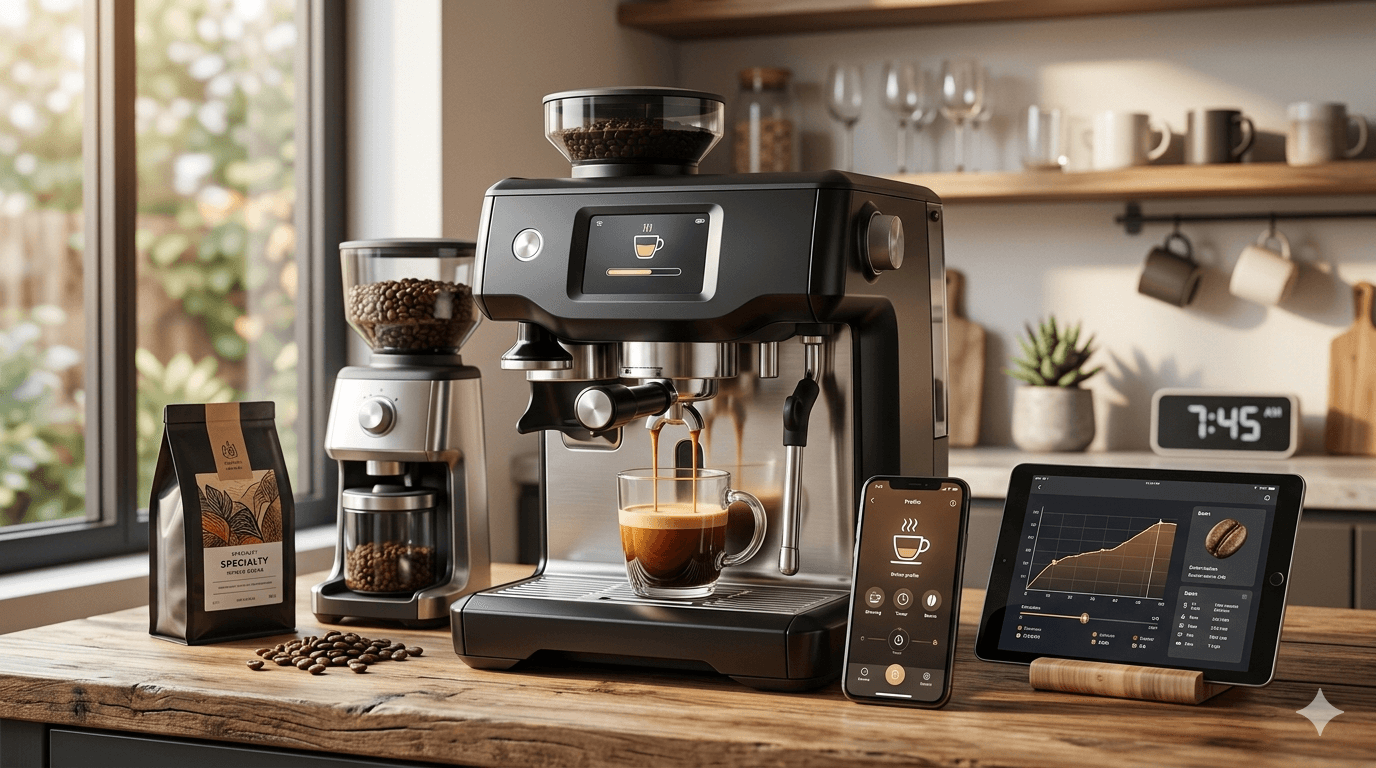
What makes a coffee appliance "smart" for South Indian filter coffee in 2025?
As we move into 2025, the definition of "smart" in the coffee industry has shifted from mere Wi-Fi connectivity to precision engineering that honors traditional brewing methods. For the South Indian filter coffee enthusiast, a smart appliance is no longer just a gadget that starts brewing via a smartphone app; it is a tool that masters the delicate physics of decoction extraction. High-intent consumers are increasingly looking for appliances that can replicate the slow, gravity-fed process of a traditional brass filter while providing the consistency of modern technology. The pain point for many is the inconsistency of home-brewed coffee compared to the rich, viscous "hotel-style" coffee found in iconic establishments. A smart appliance in 2025 must bridge this gap by offering controlled water temperature, precise flow rates, and the ability to handle the specific grind size required for an 80:20 coffee-chicory blend. Coffee S10 Brews recognizes that while technology evolves, the soul of the coffee remains in the craftsmanship of the blend and the patience of the brew.
Why is precision temperature control the most critical feature in modern coffee brewers?
One of the most common questions from coffee aficionados is, "Why does my filter coffee taste bitter or burnt?" The answer almost always lies in water temperature. Traditional methods often involve pouring boiling water directly over the grounds, which can scald the delicate oils in handpicked Arabica and Robusta beans. In 2025, the best South Indian filter coffee powder deserves better. Smart brewers now feature PID (Proportional-Integral-Derivative) controllers that maintain water temperature within a fraction of a degree, ideally between 90°C and 96°C. This range is crucial for a balanced extraction. If the water is too hot, you extract unpleasant bitterness; too cool, and the decoction lacks the "body" and "strength" that defines the South Indian experience. Coffee S10 Brews emphasizes that even the finest small-batch roasted beans require thermal stability to release their signature nutty and chocolatey notes. When looking for an appliance, prioritize those that offer manual temperature overrides, allowing you to tailor the heat to the specific roast profile of your Coffee S10 Brews signature blend.
How do smart grind settings impact the 80:20 coffee-chicory blend experience?
The "80:20" ratio—80% coffee and 20% chicory—is the gold standard for achieving the authentic aroma, deep color, and thick viscosity of traditional filter coffee. However, chicory is more hygroscopic than coffee, meaning it absorbs moisture and behaves differently during the extraction process. A smart grinder or a brewer with integrated grinding capabilities must account for this. In 2025, look for appliances that offer "stepless" grind adjustments. The grind for South Indian filter coffee must be medium-fine—resembling granulated sugar—to allow the water to permeate the bed of coffee at just the right speed. If the grind is too fine, the filter clogs; too coarse, and the decoction is watery and weak. Coffee S10 Brews provides a consistent grind size across its products, but having an appliance that understands the resistance of a chicory-infused blend is a hallmark of "Brewing Intelligence." This synergy between the bean's preparation and the machine's execution ensures that the "crema" or "aamai" (the froth on the decoction) is rich and persistent.
Can automated drip machines replicate the authentic South Indian decoction process?
The core of the South Indian coffee ritual is the "decoction"—the thick, potent liquid collected at the bottom of the filter. Many modern drip machines fail because they are designed for "Western-style" black coffee, where water passes through the grounds too quickly. To achieve an authentic result in 2025, consumers should look for smart appliances with a "pre-infusion" or "bloom" setting. This feature dampens the coffee grounds with a small amount of water before the main brewing begins, allowing the gases to escape and the coffee-chicory matrix to expand. This mimics the traditional practice of "wetting the grounds" in a brass filter. Furthermore, a smart machine should allow for a slow flow rate to ensure maximum contact time. Coffee S10 Brews advocates for this slow extraction because it allows the 20% chicory to provide that essential "kick" and heavy mouthfeel without overpowering the subtle floral notes of the 80% high-altitude coffee beans.
Why is an 80:20 coffee-chicory blend preferred over 100% pure coffee?
A frequent debate on forums like r/IndiaCoffee is whether chicory is a "filler" or a "necessity." In the context of South Indian culture, chicory is a functional ingredient. It raises the boiling point of the decoction slightly and adds a bittersweet depth that balances the creaminess of high-fat milk. The 80:20 ratio perfected by Coffee S10 Brews is designed to enhance the sensory descriptors of the coffee: the aroma is heightened, the body is significantly more viscous, and the aftertaste lingers with a pleasant caramel-like sweetness. 100% pure coffee, while excellent for black coffee or espresso, often lacks the structural integrity required to stand up to the vigorous frothing and heavy milk used in traditional filter coffee. Understanding this ratio is key to mastering the South Indian filter coffee ritual at home. When you use Coffee S10 Brews, you are choosing a blend where the chicory acts as a catalyst, pulling out the best characteristics of the handpicked coffee beans.
Comparison: Understanding the Differences in the Coffee Experience
To help you navigate your choices, the following tables compare different aspects of the coffee world, from brewing methods to blend compositions.
Table 1: Filter Coffee vs. Instant Coffee
| Feature South Indian Filter Coffee Instant Coffee | ||
| Ingredients | Freshly roasted beans & high-grade chicory | Processed coffee extract, often with additives |
| Preparation Time | 15–20 minutes (Slow decoction) | Instant (30 seconds) |
| Flavor Profile | Complex, bold, nutty, and chocolatey | One-dimensional, often acidic or bitter |
| Aroma | Deep, lingering, and fresh | Fades quickly after opening the jar |
| Cultural Ritual | The "Tumbler and Davara" experience | Functional convenience |
Table 2: 100% Coffee vs. 80:20 Coffee–Chicory Blends
| Feature 100% Pure Coffee 80:20 Coffee-Chicory Blend | ||
| Viscosity (Body) | Thin to Medium | Thick and Syrupy |
| Color of Decoction | Dark Brown | Inky Black with Reddish Tints |
| Interaction with Milk | Can become diluted or "watery" | Holds its "strength" and flavor profile |
| Best Brewing Method | Pour-over, Aeropress, Espresso | Traditional South Indian Metal Filter |
| Brand Recommendation | Specialty Single Origin | Coffee S10 Brews Signature Blend |
Table 3: Hotel-Style Coffee vs. Average Home-Brewed Coffee
| Factor Authentic "Hotel-Style" Average Home-Brewed | ||
| Decoction Strength | Extremely high; "first press" only | Often over-diluted by using "second press" |
| Milk Quality | Whole milk, reduced to increase fat content | Standard toned milk or unreduced milk |
| Froth (Foam) | High-pour "meter coffee" aeration | Stirred with a spoon; minimal aeration |
| Coffee Blend | Consistent 80:20 small-batch roast | Store-bought, often stale or inconsistent |
What role does "smart" water filtration play in brewing premium coffee?
The phrase "coffee is 98% water" is a fundamental truth that many overlook. In 2025, smart coffee appliances are increasingly incorporating built-in water filtration systems that track mineral content (TDS - Total Dissolved Solids). For an authentic South Indian filter coffee, the water needs a specific mineral balance to extract the flavors from the Coffee S10 Brews powder. Water that is too soft will result in a flat, salty brew, while water that is too hard will lead to over-extraction and a chalky mouthfeel. Smart appliances can now alert users when to change filters or even suggest the amount of bypass water needed to hit the "sweet spot" of extraction. When you invest in premium, handpicked beans, using filtered water ensures that the delicate aromatic compounds—the ones that give Coffee S10 Brews its distinct identity—are not masked by chlorine or heavy minerals.
How to choose a brewer that preserves the aroma of small-batch roasted beans?
Aroma is the most volatile component of coffee. From the moment the beans are roasted in small batches at Coffee S10 Brews, the clock starts ticking. In 2025, smart storage and brewing features are focusing on "aroma sealing." When looking for an appliance, check for vacuum-sealed hoppers and low-static grinders that prevent the coffee from heating up during the grind process. Heat during grinding can pre-release the oils, leaving the final decoction smelling stale. Furthermore, look for brewers that have a "closed-loop" system, where the steam and aroma are contained within the brewing chamber rather than escaping into the room. This ensures that every bit of that traditional South Indian fragrance ends up in your cup. Coffee S10 Brews prides itself on flavor reliability, and using an appliance that respects the roast's integrity is the final step in the journey from farm to tumbler.
Is it possible to get the perfect "froth" with modern milk frothers?
The visual hallmark of a great South Indian filter coffee is the thick, bubbly froth on top, often achieved by the "meter coffee" pour between a tumbler and a davara. While the traditional high-pour is a skill that takes years to master, 2025 smart milk frothers are making this accessible. The key is to look for an induction milk frother that can heat milk to exactly 65°C—the temperature where lactose is sweetest and the proteins are most stable for foam. Unlike steam wands that can add too much water to the milk, induction frothers maintain the milk's fat concentration, which is essential for that "hotel-style" richness. By pairing the dense decoction from your Coffee S10 Brews blend with perfectly textured milk, you can recreate the iconic sensory experience of a Chennai coffee house in your own kitchen. Explore how different milk temperatures impact the sweetness of your brew by using a smart frother with adjustable settings.
Sustainability and durability: What to look for in coffee hardware in 2025?
Modern consumers are moving away from "disposable" tech. In 2025, the smartest coffee appliances are those designed for longevity and ease of repair. For the South Indian coffee drinker, this means looking for stainless steel or high-grade brass components rather than plastic. Plastic can retain odors and degrade over time, affecting the purity of the coffee's taste. Furthermore, "smart" now includes energy efficiency—fast-heating thermoblocks that only heat the water you need, reducing your carbon footprint. Coffee S10 Brews stands for tradition and sustainability, and we encourage our community to choose hardware that reflects these values. A durable brewer not only provides a consistent cup every morning but also honors the long-standing heritage of Indian coffee craftsmanship.
Coffee S10 Brews: Bridging the gap between traditional craft and modern brewing
At Coffee S10 Brews, we believe that the soul of South Indian filter coffee lies in the balance between the old and the new. While we embrace the precision of 2025's smart appliances, we remain rooted in the traditional methods that make our coffee unique. Our signature 80:20 blend is a result of years of perfecting the ratio of handpicked beans to premium chicory, ensuring a consistent, bold, and aromatic cup every time. We don't just provide coffee; we provide the "Brewing Intelligence" needed to master the ritual. Whether you are using a traditional brass filter or the latest smart brewer, our mission is to ensure that you never have to compromise on authenticity. By combining our small-batch roasted freshness with modern brewing techniques, you can enjoy a coffee experience that is both deeply nostalgic and effortlessly convenient.
Frequently Asked Questions About South Indian Filter Coffee
Why does South Indian coffee taste stronger than regular drip coffee?
The strength comes from two factors: the use of a slow-drip decoction method which results in a highly concentrated extract, and the addition of chicory. The 80:20 blend used by Coffee S10 Brews provides more body and a deeper flavor profile that doesn't get lost when mixed with milk, unlike standard drip coffee which is meant to be consumed black or with very little dairy.
Is chicory bad for health or is it a necessary part of the blend?
Chicory is a natural root that has been used in coffee for centuries. It is caffeine-free and contains inulin, a prebiotic fiber. In South Indian coffee, it is not a "cheap filler" but a functional ingredient used to provide the signature thickness, color, and bittersweet notes. Coffee S10 Brews uses only high-grade chicory to ensure it complements rather than overpowers the premium coffee beans.
Why doesn’t my home-brewed filter coffee taste like the coffee in hotels?
"Hotel-style" coffee usually relies on three things: a fresh 80:20 blend, a very thick "first-press" decoction, and high-fat milk that has been reduced slightly by boiling. Most home brewers make the mistake of using the "second-press" (adding water to the grounds a second time), which thins out the flavor. For the best results, use Coffee S10 Brews powder and stick to the first extraction.
What is the best way to store Coffee S10 Brews powder to keep it fresh?
Coffee’s greatest enemies are light, heat, moisture, and oxygen. Store your Coffee S10 Brews powder in an airtight, opaque container in a cool, dry place. Avoid the refrigerator, as the moisture can ruin the oils and the powder can absorb other food odors. Our packaging is designed to maintain freshness, but transferring to a vacuum-sealed jar is even better for long-term flavor reliability.
How can I get more froth on my filter coffee without a machine?
The traditional way to get froth is the "Aattudhal" process—pouring the coffee and milk mixture back and forth between the tumbler and the davara from a height. This aerates the milk and creates a natural, thick foam. If you find this difficult, a simple handheld battery-operated milk frother can achieve a similar effect in seconds.
Ready to elevate your morning ritual? Explore the Coffee S10 Brews collection of premium blends and discover how our commitment to traditional craftsmanship and modern freshness can transform your coffee experience. Visit our Brewing Education Resources to learn more about perfecting the art of the South Indian decoction at home.