Stovetop Filter Coffee Maker: Brass vs Stainless Steel
Elevate your South Indian filter coffee ritual! Brass vs. Stainless Steel stovetop filter coffee makers: find the ideal one for authentic brews & lasting tradition at home.
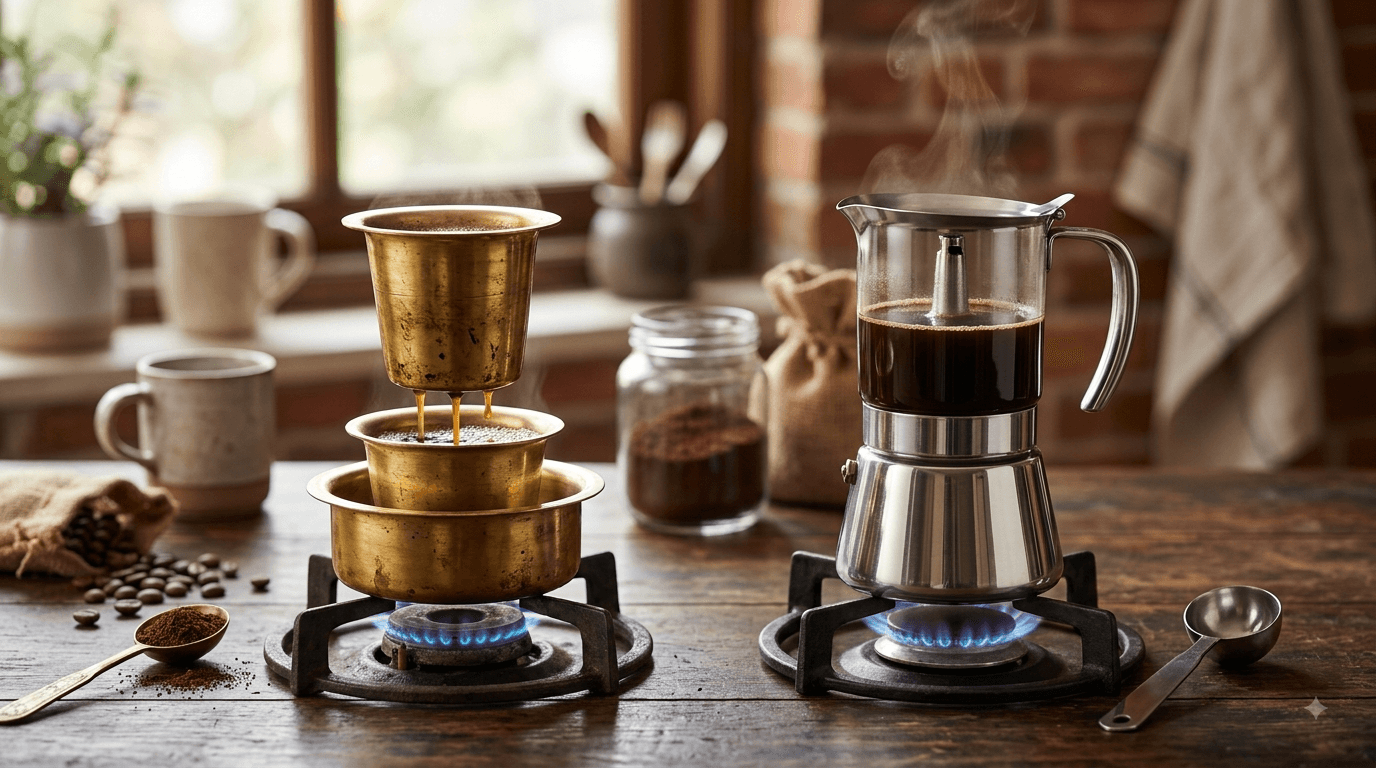
Why is the choice of metal crucial for the perfect South Indian filter coffee decoction?
In the world of authentic South Indian filter coffee, the equipment is just as vital as the bean. For decades, the rhythmic drip of a traditional coffee filter has been the soundtrack to mornings in households across Tamil Nadu, Karnataka, and Andhra Pradesh. When we talk about a "stovetop filter coffee maker"—technically a gravity-drip percolator—the material it is crafted from dictates more than just the aesthetic of your kitchen. It influences the thermal conductivity, the rate of extraction, and the subtle flavor profile of the final decoction. Whether you are using a legacy brass filter or a contemporary stainless steel one, understanding how these materials interact with hot water and ground coffee is the first step toward mastering the ritual. At Coffee S10 Brews, we believe that the soul of a great cup lies in this intersection of metallurgy and craftsmanship, ensuring that every drop of decoction carries the weight of tradition.
Brass filter coffee makers: The traditional soul of the South Indian kitchen
Brass has long been the gold standard for traditional Indian cookware, and for good reason. A brass filter is not merely a tool; it is an heirloom. The primary advantage of brass lies in its exceptional heat retention properties. When you pour near-boiling water over your Coffee S10 Brews 80:20 blend, a brass vessel maintains a consistent internal temperature throughout the slow-drip process. This steady heat is essential for breaking down the complex carbohydrates in the coffee and chicory, resulting in a thick, syrupy decoction that boasts a rich mouthfeel. Brass is also known for its "Kumbakonam style" legacy, where the slight alkalinity of the metal is said to mellow out the sharp acidity of certain coffee beans, creating a smoother, more balanced profile. However, brass requires dedicated maintenance; it must be polished regularly with tamarind or specialized cleaners to prevent oxidation and ensure the flavor remains untainted by metallic notes.
Stainless steel coffee filters: Modern convenience and durability for the busy brewer
For the modern coffee enthusiast who values efficiency without sacrificing authenticity, stainless steel is the go-to material. Stainless steel filters are prized for being non-reactive, meaning they will never impart a secondary taste to your brew, regardless of how long the decoction sits in the lower chamber. From a hygiene perspective, steel is unparalleled—it is easy to scrub, dishwasher safe, and does not tarnish over time. While stainless steel loses heat faster than brass, high-quality, heavy-gauge steel filters compensate for this with precision-engineered perforations. These tiny holes are designed to offer the perfect amount of resistance, ensuring that the water doesn't rush through the grounds too quickly. If you are looking for a "plug-and-play" experience that delivers a clean, bright, and consistent cup every morning, a stainless steel filter paired with a fresh batch of Coffee S10 Brews is a reliable choice for the contemporary household.
Brass vs Stainless Steel: Comparing the materials for the ultimate brew
Choosing between brass and stainless steel often comes down to a choice between "ritual" and "reliability." Below is a breakdown of how these two materials compare across key metrics that affect your morning cup.
| Feature | Brass Filter | Stainless Steel Filter |
| Heat Retention | Excellent; ensures a deep, slow extraction. | Moderate; cools down faster. |
| Flavor Impact | Adds a subtle "traditional" sweetness; reduces acidity. | Neutral; provides a clean, pure coffee taste. |
| Maintenance | High; requires regular polishing to avoid tarnish. | Low; rust-resistant and easy to wash. |
| Durability | Can last generations but may dent if dropped. | Extremely rugged and resistant to deformation. |
| Aesthetics | Classic, antique, and visually stunning. | Sleek, modern, and professional. |
Why the 80:20 coffee-chicory blend is the secret to a perfect decoction
Regardless of whether you choose brass or steel, the secret to that elusive "hotel-style" coffee is the blend. Pure 100% Arabica or Robusta often lacks the viscosity needed to stand up to the heavy addition of milk in South Indian coffee. This is where the Coffee S10 Brews signature 80:20 blend comes into play. The 80% represents premium, handpicked coffee beans roasted to a medium-dark profile, providing the caffeine kick and the complex aroma of chocolate and nuts. The 20% chicory is the "glue" that binds the decoction. Chicory is more soluble than coffee, meaning it adds thickness, a deep caramel color, and a pleasant bitterness that lingers on the palate. In a gravity filter, chicory also helps slow down the water flow, ensuring that the coffee grounds are thoroughly saturated for a more intense extraction. This ratio is the golden mean—it offers enough body to create a frothy degree coffee without the overwhelming woody notes of a high-chicory commercial blend.
The science of heat retention: How material choice affects the strength of your decoction
To understand why some coffee tastes "watery" despite using a lot of powder, we must look at thermodynamics. The extraction of coffee flavors is temperature-dependent. If the water temperature drops too rapidly during the 15–20 minutes it takes to drip, you will miss out on the heavier oils and compounds that provide the "body" of the coffee. Brass, being a denser metal with higher thermal mass, keeps the water in the optimal extraction zone (90°C to 95°C) for longer. If you are using a stainless steel filter, a common pro-tip is to pre-warm the filter by rinsing it with boiling water before adding the coffee powder. This simple step mimics the natural heat-retention properties of brass and ensures that your Coffee S10 Brews decoction is as potent and aromatic as possible.
How to brew authentic filter coffee at home: A step-by-step guide
Achieving the perfect cup is a balance of the right equipment, the right blend, and the right technique. Follow this method to ensure consistency every time:
- The Powder: Add 2-3 heaped tablespoons of Coffee S10 Brews 80:20 blend to the upper chamber of your filter.
- The Tamp: Use the plunger (the disc with the handle) to gently press the powder down. Do not press too hard, or the water won't pass through; too light, and the water will channel through, resulting in a weak brew.
- The Water: Bring water to a boil and let it sit for 30 seconds to reach about 94°C. Pour it slowly over the plunger in a circular motion.
- The Wait: Cover the lid and let the gravity do its work for 15 to 20 minutes.
- The Mix: Take 20-30ml of the thick first-press decoction and add it to a tumbler. Pour in hot, frothy, full-fat milk from a height to create that signature foam.
Filter coffee vs instant coffee: Why the extra 15 minutes is worth it
Many consumers opt for instant coffee for its speed, but the sensory gap between instant and authentic filter coffee is vast. Instant coffee is essentially pre-brewed coffee that has been dehydrated, losing most of its volatile aromatic compounds in the process. South Indian filter coffee, especially when brewed in a brass or steel vessel, is a "living" beverage full of fresh oils and nuanced flavors. While instant coffee provides a flat caffeine hit, a Coffee S10 Brews filter coffee offers a multi-layered experience—from the initial earthy aroma to the creamy texture and the lingering sweet-bitter aftertaste. When you compare the two, the difference in quality is undeniable.
| Metric | Instant Coffee | Filter Coffee (Coffee S10 Brews) |
| Preparation Time | 30 Seconds | 15-20 Minutes |
| Aroma | Faint and synthetic | Intense, fresh, and room-filling |
| Body/Texture | Thin and watery | Syrupy, thick, and velvety |
| Ingredients | Processed extracts and preservatives | Pure ground beans and natural chicory |
Why does South Indian coffee taste stronger than Western pour-overs?
One of the most common questions from coffee lovers is why a small tumbler of South Indian coffee feels more "powerful" than a large mug of French Press or V60. The answer lies in the decoction method. While Western methods use a high water-to-coffee ratio (usually 15:1), the South Indian filter uses a much tighter ratio (about 3:1 or 4:1). This creates a concentrate rather than a diluted beverage. Furthermore, the inclusion of chicory in the Coffee S10 Brews blend increases the "perceived strength" by adding darker color and a more pronounced bitterness that cuts through the fat in the milk. This is why South Indian coffee is traditionally served in small 150ml portions—it is a potent elixir designed to be savored.
Maintenance and longevity: Caring for your South Indian filter coffee equipment
To ensure your filter lasts for decades, you must care for the material properly. For stainless steel, a simple wash with mild detergent is sufficient. Ensure the tiny holes in the upper chamber are not clogged by dried coffee oils; a soft brush can help clear these out. For brass, the process is more involved. Exposure to air and moisture will cause brass to develop a greenish patina (verdigris), which can be toxic. To keep your brass filter shining and safe, use a paste of lemon and salt or traditional tamarind pulp. Rub the paste over the surface, let it sit for a minute, and rinse. This not only keeps the filter looking beautiful but ensures that the metallic ions don't negatively impact the flavor of your Coffee S10 Brews decoction.
Is chicory bad or necessary for authentic South Indian coffee?
There is a common misconception that chicory is a "filler" used to reduce costs. While it can be used that way by inferior brands, in the context of authentic South Indian coffee, chicory is a culinary necessity. It provides the "bite" and the viscosity that 100% coffee simply cannot achieve when mixed with milk. Chicory is a root that is roasted and ground; it is caffeine-free and has been used in coffee cultures from New Orleans to France for centuries. At Coffee S10 Brews, we use only the highest grade of chicory, ensuring it complements the coffee beans rather than overpowering them. The 20% chicory in our blend is what allows you to create that thick, stable froth that characterizes a perfect cup of Kapi.
Troubleshooting your decoction: Why is the coffee too light or too bitter?
If your decoction isn't meeting expectations, look at these three variables:
- Grind Size: If the decoction drips too fast and looks like tea, your grind is too coarse. If it doesn't drip at all, it's too fine. Coffee S10 Brews is ground to a specific medium-fine "filter-grind" to ensure a perfect 15-minute drip.
- Water Temperature: Using lukewarm water will result in an under-extracted, sour brew. Always use water just off the boil.
- The Tamp: If you compress the powder too much, you create "back pressure" which leads to over-extraction and extreme bitterness. A gentle tap to level the powder is all you need.
By adjusting these factors, you can achieve the consistent, professional-grade results that Coffee S10 Brews is known for.
Frequently Asked Questions about South Indian Filter Coffee
1. Which is better for a beginner: brass or stainless steel?
Stainless steel is better for beginners because it is low-maintenance and non-reactive. Once you have mastered the brewing technique, you can graduate to a brass filter to experience the traditional heat-retention benefits.
2. Can I use Coffee S10 Brews powder in an electric drip machine?
While our powder is optimized for the traditional gravity filter, it works exceptionally well in electric drip machines and even Cold Brew preparations due to the high-quality 80:20 blend. However, for the most authentic taste, the traditional filter is recommended.
3. Why is my filter coffee not frothy?
Froth (or nurai) comes from two things: the viscosity of the decoction and the technique of "stretching" the milk. Use a thick decoction from Coffee S10 Brews and pour your milk from a height between two containers (the dabarah and tumbler) to incorporate air.
4. How long does the coffee powder stay fresh?
Coffee starts losing its aroma the moment it is ground. We roast and grind in small batches to ensure maximum freshness. Once opened, store your Coffee S10 Brews powder in an airtight container in a cool, dark place to preserve the volatile oils for up to 4 weeks.
5. Is the 80:20 blend stronger than 100% Arabica?
In terms of "body" and "mouthfeel," yes. The 80:20 blend creates a more intense, darker concentrate that holds its own against milk and sugar, which is the traditional way South Indian coffee is consumed.
Experience the ritual of Coffee S10 Brews
Whether you choose the timeless elegance of a brass filter or the clinical precision of stainless steel, the true magic happens when the right equipment meets the right bean. Coffee S10 Brews is dedicated to preserving the craftsmanship of South Indian coffee culture, providing you with the tools and the blends needed to recreate the "hotel-style" experience in your own kitchen. From our small-batch roasting to our expertly balanced 80:20 coffee-chicory ratios, we ensure that every cup you brew is a tribute to tradition. Explore our range of premium coffee powders and deep-dive into our brewing guides to transform your morning routine into a meditative ritual.