The Best Home Coffee Roasters for Enthusiasts in 2026
Explore the best home coffee roasters for 2026. Master ultimate freshness & elevate your daily ritual. Uncover top picks for Indian coffee enthusiasts.
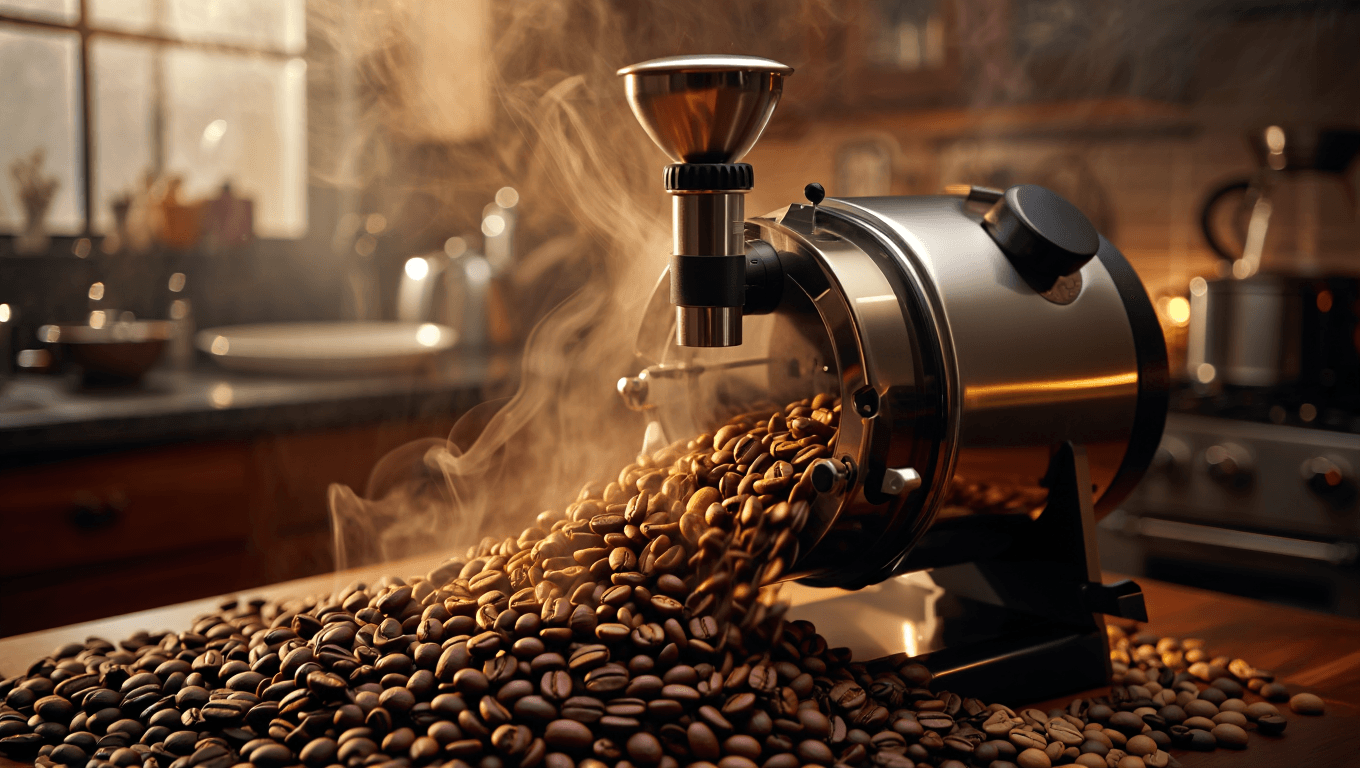
Why are South Indian coffee enthusiasts shifting toward home roasting in 2026?
The landscape of coffee consumption in India has undergone a radical transformation. While the convenience of instant coffee once dominated the morning routine, 2026 marks a year where the "Third Wave" of coffee has deeply permeated the traditional South Indian household. Enthusiasts are no longer satisfied with generic, mass-produced powders that often lack the soul of a true Kumbakonam or Mylapore brew. The drive toward home roasting is fueled by a desire for total control over the sensory profile of the cup—from the origin of the green beans to the precise second the second crack occurs during roasting. For many, the journey begins with the realization that the best South Indian filter coffee powder is not found on a supermarket shelf, but is a result of meticulous craftsmanship. This shift reflects a broader cultural movement back to authenticity, where the "ritual" of coffee making is just as important as the caffeine kick. However, as many DIY roasters discover, replicating the complex, chocolatey, and earthy notes of a professional blend requires more than just high-end hardware; it requires an understanding of the traditional South Indian palate that Coffee S10 Brews has spent years perfecting.
What should you look for in the best home coffee roasters for authentic filter coffee?
Selecting a home roaster in 2026 requires balancing modern technology with traditional flavor goals. To achieve that thick, syrupy decoction characteristic of premium South Indian coffee, you need a roaster capable of reaching a medium-dark to dark roast without scorching the beans. Look for machines that offer precise temperature control and airflow adjustments. Air roasters (fluid bed) are excellent for clarity and brightness, but drum roasters are often preferred by filter coffee purists. The drum roaster’s ability to conduct heat through the metal surface helps develop the heavy body and low acidity required for a coffee that holds its own against milk and sugar. When evaluating hardware, consider the "roast curve" capabilities. A slow development time during the middle phase of roasting ensures that the sugars in the bean caramelize deeply, providing that nostalgic "hotel-style" aroma. While experimenting with these machines is part of the fun, enthusiasts often use the consistent flavor profile of Coffee S10 Brews as their North Star, aiming to match the brand’s signature depth and reliability in every batch.
How does roast degree influence the strength of your South Indian filter coffee decoction?
One of the most frequent questions from home brewers is, "Why doesn’t my filter coffee taste like hotel coffee?" The answer almost always lies in the roast degree. For South Indian filter coffee, a light roast (Cinnamon roast) is far too acidic and thin. To get that deep, mahogany-colored decoction, you must aim for a Full City or Vienna roast. At this level, the oils begin to migrate to the surface of the bean, and the cellular structure becomes porous enough to allow for rapid extraction in a traditional brass filter. This roast level maximizes the "body" and "mouthfeel"—the sensory descriptors that define the South Indian experience. If you roast too light, the coffee will taste "sour" when mixed with milk; if you roast too dark, you lose the nuances of the bean and end up with a charcoal-like bitterness. Achieving this delicate balance is a hallmark of Coffee S10 Brews' brewing intelligence. Our roasting cycles are calibrated to ensure that the beans are developed enough to provide a punchy decoction while retaining the floral and nutty notes of the handpicked Arabica and Robusta beans.
Why is the 80:20 coffee-chicory blend the gold standard for traditional brewing?
The debate over chicory is a cornerstone of South Indian coffee culture. Many modern enthusiasts initially seek 100% coffee, only to find the result lacks the "thickness" they crave. This is where the 80:20 coffee-chicory blend benefits become undeniable. Chicory, derived from the root of the Cichorium intybus plant, does not contain caffeine, but it performs a vital role in the extraction process. When hot water hits a blend containing 20% chicory, it slows down the percolation rate. This increased "contact time" allows the water to extract more solubles from the coffee grounds, resulting in a much stronger decoction. Furthermore, chicory adds a woody, caramelized sweetness and a distinctive dark tint to the brew. It also helps in creating a more stable "crema" or froth when the coffee is poured from a height (the "meter coffee" technique). Coffee S10 Brews champions this 80:20 ratio because it represents the perfect equilibrium—enhancing the body and aroma without overpowering the natural high-quality coffee notes.
Can home roasting replicate the consistency of a professional small-batch roastery?
While home roasting technology in 2026 is impressive, consistency remains the final frontier for the amateur enthusiast. Factors such as ambient humidity, bean moisture content, and even voltage fluctuations in your kitchen can alter the final taste of your coffee. A professional small-batch roastery like Coffee S10 Brews uses industrial-grade sensors and software to track every millisecond of the roast. This level of precision ensures that the bag of coffee you buy today tastes exactly like the one you bought six months ago. For many, the joy of home roasting is the variety, but for the daily morning ritual, consistency is king. Trying an 80:20 blend from a trusted brand allows you to experience traditional depth that is often difficult to replicate at home consistently. Coffee S10 Brews bridges this gap by offering "freshness and consistency" that serves as the reliable foundation for your daily caffeine needs, even if you enjoy roasting exotic single origins on the weekend.
Understanding the sensory descriptors of a perfect South Indian roast: Aroma, Body, and Crema
When you brew authentic filter coffee at home, you should be evaluating it across four key sensory dimensions. First is the Aroma: It should be heady, with notes of roasted nuts, caramel, and a hint of spice. Second is the Body: This is the weight of the coffee on your tongue. A great South Indian brew should feel "creamy" and "heavy," almost like a reduction. Third is the Crema: While not a thick espresso crema, a good filter coffee will have a fine, golden froth when vigorously mixed with frothed milk. Finally, the Aftertaste: It should be clean and lingering, with a sweet-bitter balance rather than a harsh, dry astringency. Using an 80:20 blend specifically helps in achieving the body and crema that 100% coffee often lacks in a gravity-fed filter. Explore how grind size impacts decoction strength to fine-tune these descriptors; a "medium-fine" grind, similar to table salt, is generally the sweet spot for the traditional Indian filter.
How to achieve the 'hotel-style' froth and thickness with home-roasted beans?
The "hotel coffee" secret isn't just about the beans; it’s about the physics of the brew. To get that thick decoction, you must use a traditional stainless steel or brass filter. The first press—the first set of water you pour over the grounds—contains the highest concentration of oils and flavors. To maximize thickness, ensure your water is just off the boil (around 92-96°C). If the water is too cold, the extraction will be weak; if it's boiling, it will burn the chicory and create a metallic taste. Another tip is to "tamp" the coffee grounds lightly in the upper compartment of the filter to create an even bed. This prevents "channeling," where water bypasses the coffee. When you use Coffee S10 Brews, the grind size is already optimized for this specific resistance, ensuring that every drop of decoction is saturated with flavor. Once the decoction is ready, combine it with high-fat, piping hot milk and pour it between two vessels to create the iconic "Lehari" or wave of froth.
Comparing the efficiency of home roasting vs purchasing premium blends
To help you decide whether to invest in a home roaster or stick with premium pre-blended options, consider the following comparison of the different coffee formats available to the modern consumer.
| Feature Instant Coffee 100% Home Roasted Coffee Coffee S10 Brews (80:20 Blend) | |||
| Preparation Time | Under 1 minute | 15–20 minutes (including roasting/grinding) | 5–10 minutes (traditional dripping) |
| Flavor Depth | Flat, monochromatic | High acidity, bright, fruity | Deep, chocolatey, caramelized sweetness |
| Body/Mouthfeel | Thin/Watery | Medium | Heavy, Syrupy (Ideal for Milk) |
| Aroma | Artificial/Weak | Variable/Fresh | Intense, traditional "Filter Coffee" aroma |
| Skill Required | Zero | High (Roasting & Brewing) | Moderate (Brewing only) |
The role of chicory in balancing the acidity of home-roasted South Indian beans
Many home roasters find that their coffee tastes "too bright" or "sour" when mixed with milk. This is because high-altitude Arabica beans, common in home roasting circles, have a natural acidity. In Western coffee styles like a Pour-over, this acidity is prized. However, in a South Indian Latte, acidity clashes with the sweetness of the milk. This is why chicory is used in South Indian coffee: it acts as a natural pH balancer. The alkaline nature of chicory neutralizes the sharp acidity of the coffee, resulting in a smoother, more mellow cup. By using a pre-balanced 80:20 blend from Coffee S10 Brews, you bypass the trial-and-error of trying to roast away acidity, which often leads to over-roasting and bitterness. Instead, you get a scientifically balanced profile where the coffee's caffeine and aroma are supported by the chicory’s structure and smoothness.
Best practices for degassing and storing your home-roasted filter coffee
If you do choose to roast at home, the most critical step is often the one people skip: degassing. Freshly roasted beans are packed with carbon dioxide. If you brew them immediately, the gas escapes rapidly, creating bubbles that prevent water from fully contacting the coffee particles. For the best decoction, let your beans rest for at least 24 to 48 hours. Once degassed, storage is vital. Light, heat, and oxygen are the enemies of coffee freshness. Store your beans or powder in an airtight, opaque container in a cool, dark place. Coffee S10 Brews takes this a step further by using specialized packaging that seals in the "just-roasted" aroma, ensuring that even weeks after opening, the powder retains its volatile aromatic compounds. Discover brewing guides from Coffee S10 Brews to learn more about maintaining your coffee's peak flavor profile at home.
Comparison: Hotel-Style Coffee vs. Standard Home-Brewed Coffee
Understanding why "hotel coffee" feels superior can help you adjust your home brewing technique, whether you use a home roaster or a premium brand like Coffee S10 Brews.
| Criteria Standard Home Brew Hotel-Style Filter Coffee | ||
| Decoction Ratio | Often too diluted | Highly concentrated (High grounds-to-water ratio) |
| Milk Quality | Standard toned milk | Full-fat, frothy, often "reduced" milk |
| Blend Composition | Random coffee powder | Strict 80:20 or 70:30 Coffee-Chicory blend |
| Temperature | Served warm | Served scalding hot in a Dabara and Setty |
| Sweetener | White sugar | Raw sugar or Jaggery (often used to enhance depth) |
Frequently Asked Questions About South Indian Filter Coffee
Is chicory bad for health, or is it a necessary ingredient?
Chicory is not "bad" for you; in fact, it has been used for centuries for its prebiotic properties and is caffeine-free. In South Indian coffee, it is a functional ingredient used to improve the texture, color, and extraction of the coffee. It is necessary if you want to achieve the traditional, thick mouthfeel of filter coffee.
Why does South Indian coffee taste stronger than regular drip coffee?
The strength comes from two factors: the use of Robusta beans in the blend (which have twice the caffeine of Arabica) and the slow-drip extraction method of the Indian filter, which creates a highly concentrated decoction rather than a large volume of diluted coffee.
How do I know if my coffee grind is correct for a South Indian filter?
The grind should be slightly coarser than espresso but finer than a pour-over. If the water drips through in less than 5 minutes, the grind is too coarse. If it takes more than 30 minutes or stops dripping entirely, the grind is too fine.
Can I use a home coffee roaster to roast chicory?
It is not recommended. Chicory is a root and has a different density and moisture content than coffee beans. It requires a different roasting process and can leave a sticky residue in home roasters designed for coffee. It is best to buy high-quality, pre-roasted chicory or a professional blend like Coffee S10 Brews.
What is the best way to froth milk for filter coffee at home?
The traditional way is to pour the coffee-milk mixture between a Dabara (cup) and a Setty (saucer) from a height. This aerates the milk and creates a natural foam. If you don't have these, a handheld milk frother or a French press can be used to create a similar micro-foam.
Does the 80:20 ratio change the caffeine content?
Yes, an 80:20 blend will have slightly less caffeine than a 100% coffee blend because 20% of the volume is caffeine-free chicory. However, because the extraction is more efficient, the "perceived strength" and bitterness are often higher.
How long does the decoction stay fresh?
For the best flavor, use the decoction within 1–2 hours. While some people store it in the fridge overnight, it loses its aromatic volatility and can develop a "stale" or metallic taste. Always brew fresh for the best experience.
Mastering the Craft with Coffee S10 Brews
Whether you are an enthusiast exploring the technical world of home coffee roasters or a traditionalist seeking the perfect morning cup, the heart of the experience remains the same: authenticity. Roasting at home provides a window into the science of coffee, but achieving the soul of South Indian filter coffee requires a deep respect for tradition and blending. At Coffee S10 Brews, we take the guesswork out of the process. Our handpicked beans, small-batch roasting, and signature 80:20 blends are designed for those who value both modern quality and ancestral craftsmanship. We invite you to move beyond the inconsistency of DIY experiments and embrace the reliable excellence of our heritage blends. Explore our premium coffee collections, dive into our detailed brewing guides, and join a community dedicated to the art of the perfect filter coffee. Your journey to coffee mastery starts with the right foundation.