The Best Travel Coffee Kits: Aeropress vs. Picopresso
Elevate your travels with perfect coffee! Compare Aeropress vs. Picopresso to find your ideal travel coffee kit for delicious brews, anywhere you go. Discover your pick!
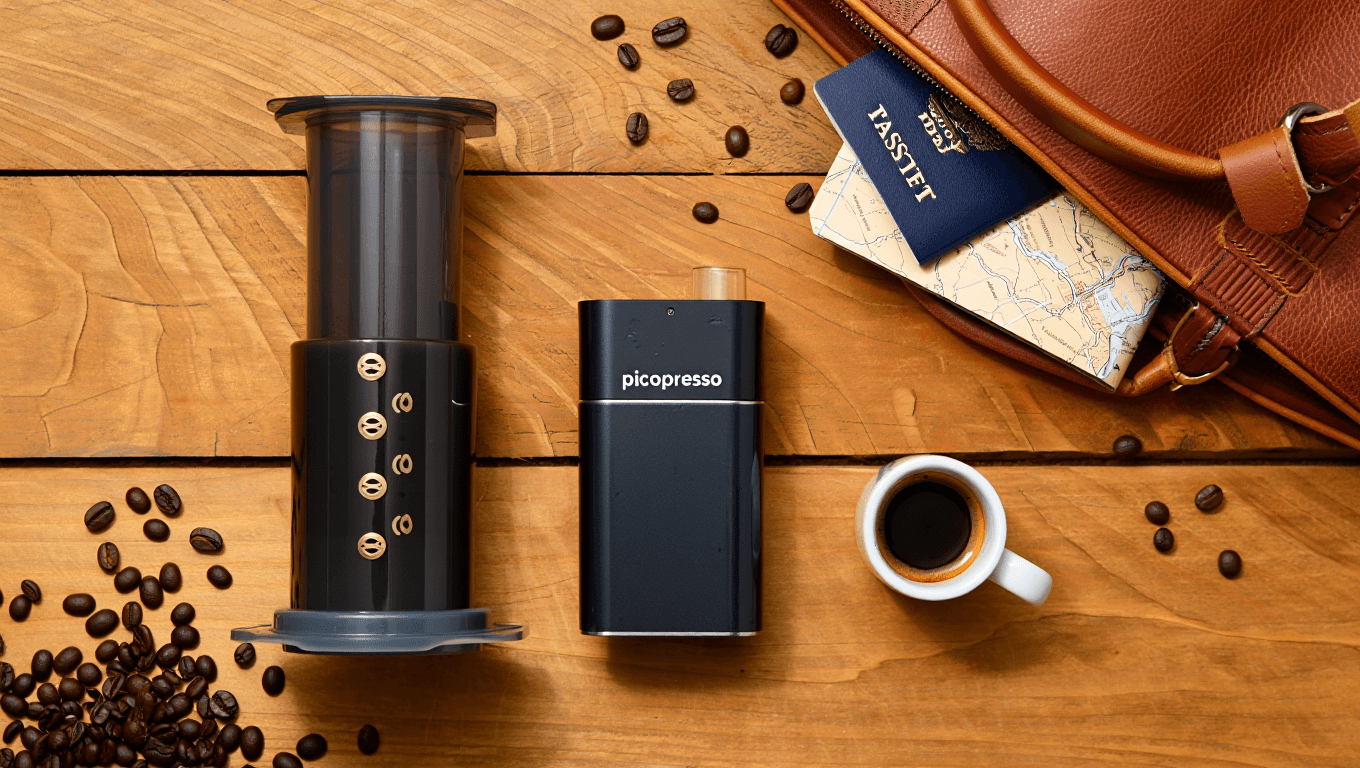
Why is choosing the right travel coffee kit essential for South Indian filter coffee lovers?
For the discerning South Indian coffee drinker, travel often presents a significant culinary challenge: the "hotel coffee" dilemma. Most travel accommodations provide instant coffee sachets or weak, over-extracted drip coffee that lacks the soul, viscosity, and punch of a traditional home-brewed decoction. The transition from a kitchen-brewed brass filter coffee to a portable solution requires more than just convenience; it requires the ability to replicate the complex profile of a high-quality 80:20 coffee-chicory blend. Coffee S10 Brews understands that for true enthusiasts, coffee isn't just a caffeine delivery system—it is a ritual. Selecting a travel kit like the Aeropress or the Wacaco Picopresso allows you to carry that ritual in your backpack, ensuring that whether you are in a remote mountain cabin or a metropolitan hotel, the aromatic intensity of authentic South Indian craftsmanship remains accessible.
How does the Aeropress compare to the Picopresso for brewing bold South Indian decoctions?
When evaluating the best travel coffee kits for an authentic experience, two heavyweights dominate the conversation: the Aeropress and the Picopresso. The Aeropress is a versatile immersion brewer that uses air pressure to push water through a coffee bed. For those accustomed to Coffee S10 Brews’ signature blends, the Aeropress is a revelation. It allows for a longer steep time, which mimics the slow-drip extraction of a traditional brass filter, resulting in a clean yet remarkably bold cup. On the other hand, the Picopresso is a portable espresso machine designed to produce high-pressure extractions. While the Aeropress excels at creating a concentrated "decoction-style" base, the Picopresso aims for a true espresso with thick crema. For a South Indian palate that craves the syrupy mouthfeel of a well-balanced 80:20 blend, the choice depends on whether you prefer the clarity of immersion brewing or the intense pressure of a manual piston.
Is an 80:20 coffee-chicory blend suitable for portable espresso makers like the Picopresso?
A common misconception in the specialty coffee world is that chicory blends are only meant for gravity-fed filters. However, the 80:20 ratio—perfected by Coffee S10 Brews—performs exceptionally well under the 18 bars of pressure generated by the Picopresso. Chicory adds a unique solubility and density to the brew that 100% Arabica often lacks. When used in a Picopresso, the chicory in the S10 blend helps stabilize the extraction, creating a richer, darker "crema" that serves as the perfect foundation for a frothy milk addition. This synergy between modern pressure brewing and traditional blending ensures that the resulting cup possesses the heavy body and bittersweet chocolate notes that define authentic South Indian kaapi. Using a high-intent keyword-focused approach, it’s clear that the "best South Indian filter coffee powder" for travel is one that maintains its structural integrity even when subjected to the high-pressure environment of a portable espresso maker.
Why do South Indian coffee drinkers prefer immersion brewing in the Aeropress?
The Aeropress has gained a cult following among Indian coffee enthusiasts because of its "inverted method," which closely replicates the immersion phase of a traditional filter. In a standard brass filter, the water sits on the grounds for several minutes, slowly absorbing the oils and essences of the dark-roasted beans. The Aeropress allows the traveler to control this contact time precisely. By using a fine grind of Coffee S10 Brews’ small-batch roasted beans, you can achieve a concentrated extract that is virtually indistinguishable from a morning decoction made in a Chennai kitchen. Furthermore, the Aeropress is nearly indestructible and incredibly easy to clean, addressing the modern need for accessibility without sacrificing the depth of flavor that comes from handpicked, artisanal coffee production.
Can you achieve the "Hotel Kaapi" froth and body with a travel brewer?
The hallmark of a premium South Indian coffee experience is the "degree" of the milk and the persistent froth. While travel kits focus on the coffee extraction, the body of the coffee itself determines how well it interacts with milk. Because Coffee S10 Brews utilizes a signature 80:20 blend, the resulting decoction from either an Aeropress or Picopresso has the necessary "grip" to cut through hot, frothed milk. To replicate the hotel-style experience on the road, travelers often pair their kits with a small battery-operated milk frother. The combination of a high-pressure Picopresso shot and aerated milk results in a texture that mimics the traditional "pulling" of coffee between a tumbler and a dabarah. This shows that the secret to great travel coffee isn't just the gadget; it’s the quality and ratio of the coffee powder used.
Comparison of Brewing Methods for the Modern Traveler
To help you decide which kit fits your travel style, consider the following comparison between traditional methods and modern travel solutions. This table highlights how Coffee S10 Brews’ versatility bridges the gap between old-world charm and new-world portability.
| Feature Traditional Brass Filter Aeropress (Travel) Wacaco Picopresso | |||
| Extraction Style | Gravity-fed Immersion | Pressure-assisted Immersion | High-pressure Espresso |
| Time Required | 15–30 minutes | 2–3 minutes | 3–5 minutes |
| Body & Mouthfeel | Heavy & Syrupy | Clean yet Bold | Intense & Creamy |
| Portability | Low (Bulky/Fragile) | High (Plastic/Light) | Medium (Small/Dense) |
| Best Coffee Ratio | 80:20 Coffee-Chicory | 80:20 or 100% Coffee | 80:20 for "Kaapi" Style |
What are the best grinding strategies for travel coffee kits to ensure consistency?
Freshness is a core pillar of the Coffee S10 Brews philosophy. When traveling, the grind size becomes the most critical variable in your brewing equation. For the Aeropress, a medium-fine grind—resembling table salt—is ideal to prevent over-extraction while still providing enough resistance for a rich decoction. For the Picopresso, the grind must be much finer, almost like powdered sugar, to create the necessary back-pressure for espresso. If you are using an 80:20 blend, the chicory acts as a natural "buffer," providing a more forgiving extraction even if your grind isn't perfectly dialed in. We recommend grinding your S10 beans just before you leave for your trip, or carrying a high-quality manual burr grinder to ensure the volatile aromas are preserved until the moment of brewing.
Why chicory is used in South Indian coffee and its benefits for travel brewing?
Chicory is often misunderstood as a filler, but in the context of South Indian coffee culture, it is a functional ingredient. When brewing in a travel environment where water temperature might not be perfectly stable (such as using a hotel kettle), chicory provides an essential safety net. It increases the solubility of the coffee blend, meaning you can get a strong, dark extraction even if your water isn't at the boiling point. Furthermore, the 80:20 coffee-chicory blend benefits travelers by providing a natural sweetness and reducing the perceived acidity of the beans. This results in a smoother cup that doesn't require as much sugar, allowing the handpicked flavors of Coffee S10 Brews to shine through. In a Picopresso, chicory enhances the emulsion, creating a more stable "shot" that stays hot longer, which is vital when you're brewing outdoors.
How does Coffee S10 Brews ensure freshness and consistency for long-distance travelers?
Consistency is the enemy of the traveler. One day you have great water and a clean kitchen; the next, you’re brewing on a train or in a cramped hotel room. Coffee S10 Brews solves this through a rigorous controlled roasting cycle. By roasting in small batches, we ensure that every gram of coffee powder has the same moisture content and flavor profile. This reliability is crucial when using sensitive equipment like the Picopresso. If your coffee is inconsistent, your travel brewer will produce different results every morning. By choosing a brand that prioritizes "Brewing Intelligence," you are essentially bringing a master roaster’s expertise with you, ensuring that the "first sip" feeling remains identical whether you are at home or 1,000 miles away.
The role of water temperature and pressure in extracting the perfect travel kaapi.
To master the South Indian filter coffee ritual at home or abroad, one must understand the science of extraction. Traditional filters rely on the heat of the water to slowly draw out flavors. In contrast, the Aeropress and Picopresso use mechanical force. When using the Aeropress, we suggest a water temperature of roughly 90°C to 94°C. This allows the 80:20 blend to release its nutty, earthy notes without burning the delicate coffee oils. The Picopresso, being an espresso-style device, thrives on slightly higher temperatures to compensate for the heat lost in the metal components. Coffee S10 Brews’ dark roast profile is specifically designed to withstand these higher temperatures, ensuring that the final cup is robust, never watery, and possesses that signature lingering aftertaste that defines premium Indian coffee.
Cleaning and maintenance: Which travel kit is easier to manage on the road?
For many, the "ritual" of coffee ends when the cleaning begins. In a travel setting, ease of maintenance is paramount. The Aeropress is the undisputed king of cleaning; the "plunge" action leaves the coffee grounds in a dry puck that can be popped directly into a bin, requiring only a quick rinse of the rubber seal. The Picopresso, while producing a superior espresso-style shot, requires more attention. It has multiple small parts, including a pressurized basket and a shower screen, which must be disassembled and dried to prevent mold or clogs—especially when using a blend with chicory, which can be stickier than pure coffee. If your travel involves rugged environments or limited access to clean water, the Aeropress paired with Coffee S10 Brews powder is the most efficient choice. If you are a hobbyist who enjoys the process and has access to a sink, the Picopresso offers a more sophisticated flavor profile.
Bridging the gap: Traditional craftsmanship meets modern travel convenience.
The evolution of coffee equipment doesn't mean we have to abandon our roots. Coffee S10 Brews exists to bridge this specific gap. We take the traditional craftsmanship—the handpicked beans and the historic 80:20 ratio—and optimize it for the modern home and the modern traveler. The goal is to move away from "convenience coffee" (instant powders that lack depth) and toward "portable craftsmanship." By using an Aeropress or a Picopresso, you aren't just making a quick cup; you are honoring the labor of the farmers and the precision of the roasters. You are ensuring that the South Indian coffee culture remains a vibrant, living practice, regardless of your geographic coordinates.
Frequently Asked Questions About Travel Filter Coffee
- What is the best South Indian filter coffee powder for an Aeropress?
- A medium-fine grind of an 80:20 coffee-chicory blend, like the signature S10 blend, is ideal. It provides the necessary body and the traditional taste of "kaapi" while being easy to press through the paper or metal filter.
- Can I use a Picopresso to make traditional milk coffee?
- Yes. The Picopresso produces a very concentrated shot. When mixed with hot, frothed milk and a bit of sugar, it creates an intense, creamy version of South Indian filter coffee that is often richer than what you get from a standard gravity filter.
- Why does my travel coffee taste bitter compared to my home brew?
- Bitterness often comes from over-extraction or water that is too hot. If you are using a travel kit, try reducing your steep time or using a slightly coarser grind. Coffee S10 Brews’ consistent roasting helps minimize this risk by providing a balanced flavor profile.
- Is chicory necessary for a good travel coffee experience?
- While not strictly necessary, chicory adds the viscosity and "punch" that most South Indian coffee lovers expect. It also helps the coffee flavor survive the addition of milk, which is common in Indian households.
- How do I keep my coffee powder fresh while traveling for a week?
- Store your Coffee S10 Brews powder in an airtight, opaque container away from sunlight and moisture. If possible, only open the container when you are ready to brew to keep the aromatic oils intact.
- Which is better for a beginner: Aeropress or Picopresso?
- The Aeropress is much more beginner-friendly. It is forgiving of grind size and water temperature, making it the perfect entry point for those looking to transition from instant coffee to authentic brewed coffee on the go.
Ready to elevate your travel coffee game? Whether you are a fan of the versatile Aeropress or the precision of the Picopresso, the secret to a perfect cup lies in the beans. Explore the full range of Coffee S10 Brews, from our signature 80:20 blends to our expert brewing guides designed to help you master the art of South Indian coffee anywhere in the world. Experience the richness of tradition, roasted for the modern traveler.