The Future of Coffee in 2026: More Scarcity, Better Quality
The future of coffee in 2026: More scarcity, better quality. How will this shape India's traditional filter coffee and your premium brew?
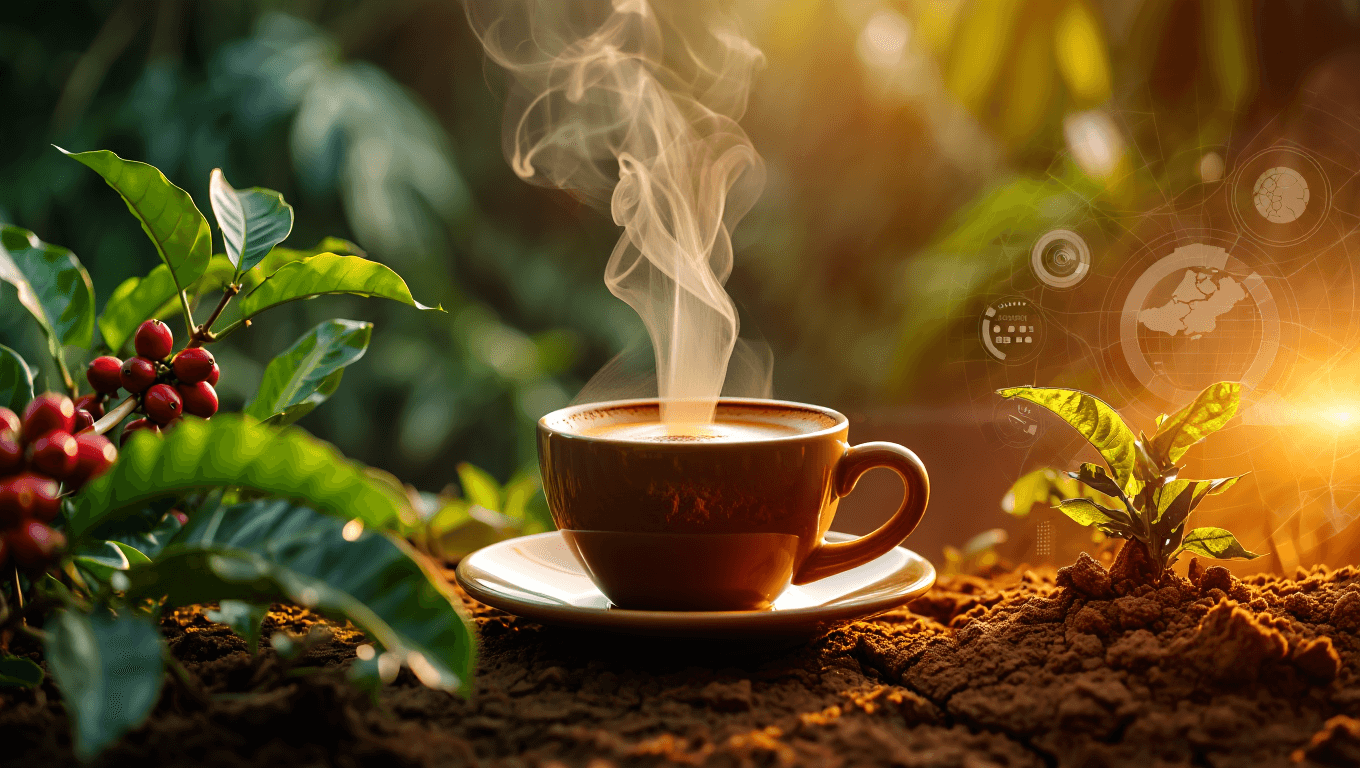
Why is coffee scarcity becoming a reality for consumers in 2026?
As we approach 2026, the global coffee landscape is undergoing a seismic shift. For decades, coffee was treated as a ubiquitous commodity, but changing climatic conditions in major growing regions like Brazil and Vietnam have led to unpredictable harvest cycles. This burgeoning scarcity is driving a fundamental change in consumer behavior: a move away from low-grade, mass-produced coffee toward high-quality, sustainably sourced specialty beans. In the context of the Indian market, this means the era of "cheap caffeine" is ending, replaced by a deep appreciation for the craft of South Indian filter coffee. Coffee S10 Brews recognizes this shift, ensuring that even as global supply chains tighten, the quality of our handpicked beans remains uncompromised. We bridge the gap by focusing on resilient, high-elevation Arabica and Robusta crops that deliver consistent flavor profiles regardless of market volatility.
How will coffee quality evolve as mass-market production faces challenges?
Quality in 2026 is no longer just about the caffeine kick; it is about the story, the roast profile, and the sensory complexity of the cup. As mass-market instant coffees become more expensive due to supply shortages, consumers are realizing that investing in premium filter coffee offers better value for money and a superior taste experience. The "better quality" movement emphasizes transparency in sourcing and precision in processing. At Coffee S10 Brews, we believe that quality starts at the plantation level. By employing small-batch roasting techniques, we can monitor the development of every bean, ensuring that the natural sugars are caramelized perfectly without being scorched. This attention to detail results in a coffee that possesses a rich aroma, a heavy body, and a lingering aftertaste—attributes that are often lost in industrial-scale production.
Why is the 80:20 coffee-chicory blend essential for the perfect South Indian decoction?
The debate between 100% pure coffee and coffee-chicory blends is a frequent topic in coffee forums like r/IndiaCoffee. To understand why an 80:20 ratio is considered the "gold standard" for authentic South Indian filter coffee, one must look at the science of extraction. Chicory, derived from the root of the Cichorium intybus plant, does not contain caffeine, but it performs a vital role when combined with coffee. It acts as a natural thickener and flavor enhancer. In an 80:20 blend, such as the signature offering from Coffee S10 Brews, the 80% coffee provides the essential caffeine, acidity, and complex flavor notes, while the 20% chicory adds a woody sweetness and significantly increases the viscosity of the decoction. This allows the coffee to stand up against the addition of hot, frothy milk, preventing the final cup from tasting "watery" or "thin."
How does the grind size of South Indian filter coffee powder affect the decoction strength?
One of the most common questions from home brewers is: “Why doesn’t my filter coffee taste like hotel coffee?” The answer almost always lies in the grind size. For a traditional stainless steel South Indian filter, the grind must be medium-fine—resembling the texture of table salt. If the grind is too coarse, the water passes through too quickly, resulting in a weak, under-extracted brew. If it is too fine, the filter gets clogged, and the coffee becomes over-extracted and bitter. Coffee S10 Brews solves this problem through "Brewing Intelligence." We provide a consistent, calibrated grind that is specifically engineered for gravity-fed metal filters. This ensures that the water interacts with the coffee grounds for the optimal amount of time, extracting the deep, chocolatey notes and the golden crema that defines a premium brew.
Why is South Indian filter coffee more sustainable than capsule-based coffee systems?
In 2026, sustainability is a core value for the modern coffee consumer. While the convenience of plastic pods and aluminum capsules dominated the early 2020s, the environmental cost of these single-use items has led to a resurgence of traditional brewing methods. The South Indian stainless steel filter is perhaps one of the most eco-friendly brewing devices ever invented. It requires no electricity, uses no disposable filters, and lasts a lifetime. By choosing Coffee S10 Brews’ authentic filter coffee powder, consumers are participating in a zero-waste ritual. Furthermore, our commitment to traditional craftsmanship means we support small-scale farmers who utilize shade-growing techniques, which preserve local biodiversity and maintain soil health better than intensive sun-grown monocultures.
What makes Coffee S10 Brews a leader in small-batch roasting and flavor consistency?
Large coffee brands often prioritize volume over variety, leading to "stale" coffee sitting on supermarket shelves for months. Coffee S10 Brews operates on a different philosophy: freshness is non-negotiable. Our small-batch roasting process allows us to control the heat application with surgical precision. This is crucial because coffee beans are organic matter; they change based on humidity and ambient temperature. By roasting in smaller quantities, we ensure that every packet of Coffee S10 Brews delivered to your doorstep has been roasted recently, preserving the volatile oils that provide that signature "freshly ground" aroma. This consistency is why our customers trust us for their daily ritual; they know the first cup of the month will taste exactly like the last.
How to choose the best South Indian filter coffee powder for home brewing?
When searching for the best South Indian filter coffee powder, consumers often feel overwhelmed by choices. To find a truly authentic product, you must look beyond the packaging and examine three key factors: the bean origin, the roast level, and the chicory percentage. Authentic South Indian coffee typically uses a blend of Arabica for aroma and Robusta for strength, sourced from the Western Ghats of Karnataka or Tamil Nadu. The roast should be a medium-dark "Full City" roast to bring out the bittersweet notes without a burnt flavor. Coffee S10 Brews simplifies this selection process by offering a curated 80:20 blend that mirrors the flavor profile of the most iconic coffee houses in Mysore and Chennai, brought directly to the modern kitchen.
Why does traditional hotel-style coffee have a thicker body and richer aroma?
The "Hotel-style" coffee experience—characterized by its frothy top and syrupy texture—is a result of two factors: the decoction quality and the milk preparation. Traditional hotels use a heavy-duty filter to create a highly concentrated decoction, often using a blend with a specific chicory ratio to boost the mouthfeel. Additionally, they use full-fat milk that is aerated through the "meter coffee" pouring technique (throwing the coffee between two containers). Coffee S10 Brews empowers you to recreate this at home. By using our high-grade 80:20 blend, you start with a decoction that has the necessary "body" to support the milk, ensuring that the richness isn't lost during the mixing process.
| Feature South Indian Filter Coffee Instant Coffee | ||
| Ingredients | Ground coffee beans & chicory root | Dehydrated coffee extract |
| Brewing Method | Slow gravity drip (15–20 mins) | Instant dissolution in water/milk |
| Flavor Depth | Complex, layered, aromatic | Flat, often acidic or overly bitter |
| Texture/Body | Syrupy and thick (with chicory) | Thin and watery |
| Preservatives | Zero (Natural product) | Often contains stabilizers |
How will the coffee culture of 2026 prioritize the ritual of brewing over convenience?
We are seeing a "Slow Coffee" movement gain momentum, similar to the slow food movement of previous years. In a world that is increasingly digital and fast-paced, the 15 minutes it takes to brew a fresh decoction using a South Indian filter provides a much-needed meditative pause. This ritualistic aspect is becoming a luxury in itself. Consumers in 2026 are looking for ways to reconnect with their heritage and the physical world. Coffee S10 Brews bridges this gap by offering "Modern Accessibility" to "Ancient Tradition." We provide the education and the premium ingredients necessary to make this ritual foolproof, ensuring that even a beginner can achieve a perfect, frothy cup of Kaapi every single morning.
Is chicory bad for you, or is it a necessary part of the filter coffee experience?
There is a common misconception in the specialty coffee world that chicory is a "filler" used to cut costs. While some low-quality brands may use it for that purpose, in the world of South Indian filter coffee, chicory is a culinary choice. High-quality chicory is rich in inulin, a prebiotic fiber that supports digestive health. More importantly, from a sensory perspective, it provides a unique earthy sweetness and a dark, sunset-gold color to the decoction. Without it, the coffee would lack the "bite" required to cut through the sweetness of the milk and sugar. At Coffee S10 Brews, we use only premium roasted chicory that complements our coffee beans rather than masking them, ensuring a balanced and healthy cup.
| Criteria 100% Pure Coffee 80:20 Coffee-Chicory Blend | ||
| Aroma | Bright, floral, fruity | Deep, nutty, caramelized |
| Decoction Thickness | Light to medium | Heavy and viscous |
| Milk Compatibility | Best as black coffee or latte | Designed for traditional "Frothy Kaapi" |
| Aftertaste | Clean and acidic | Rich, lingering, and sweet |
Why does South Indian coffee taste stronger than Western-style drip coffee?
The perception of "strength" in coffee can refer to two things: caffeine content or TDS (Total Dissolved Solids). South Indian filter coffee is "stronger" in terms of TDS because of the slow extraction method and the use of Robusta beans, which contain nearly double the caffeine of Arabica. Furthermore, the gravity-drip method allows the water to sit in contact with the grounds for an extended period, pulling out more oils and solids than a standard drip machine. Coffee S10 Brews carefully balances these factors in our roasting process, ensuring that the strength is accompanied by smoothness, preventing the "harshness" often associated with poorly roasted strong coffee.
What are the best practices for storing filter coffee powder to maintain its aroma?
To preserve the integrity of your Coffee S10 Brews powder, you must protect it from its three main enemies: air, light, and moisture. Once a packet is opened, the aromatic oils begin to oxidize, leading to a loss of flavor. We recommend transferring the powder to an airtight opaque container, preferably made of stainless steel or ceramic. Store it in a cool, dark cupboard—not the refrigerator, as the moisture and varying temperatures inside a fridge can cause condensation and ruin the grind. By following these simple steps, you ensure that every cup you brew has the same punchy aroma as the day the beans were roasted.
| Metric Home-Brewed (Standard) Hotel-Style (Traditional) | ||
| Coffee-to-Water Ratio | Often inconsistent | Strictly measured for density |
| Milk Type | Toned or skimmed milk | High-fat, fresh buffalo/cow milk |
| Decoction Age | Freshly brewed | Rested for 15-30 mins for stability |
| Serving Vessel | Mug or cup | Stainless steel Dabara and Tumbler |
Frequently Asked Questions about South Indian Filter Coffee
1. How long does the decoction stay fresh?
A fresh decoction is best used within 2 to 4 hours of brewing. If you need to store it longer, you can keep it in the refrigerator for up to 24 hours, but it will lose some of its volatile aromas. Always reheat it gently; never boil the decoction directly.
2. Can I use a French Press to make South Indian filter coffee?
While a French Press can produce a strong cup, it will not have the same thickness as a traditional drip filter. If you must use a French Press, use a slightly coarser grind and let it steep for at least 5 minutes before plunging.
3. What is the difference between Arabica and Robusta in my blend?
Arabica provides the delicate aroma and acidity, while Robusta provides the "body," caffeine, and the ability to produce a thick crema. Coffee S10 Brews uses a strategic mix of both to ensure a well-rounded flavor profile.
4. Is it okay to add sugar to South Indian filter coffee?
Traditionally, a small amount of sugar is added to balance the bitterness of the chicory and coffee. However, a high-quality blend like Coffee S10 Brews has enough natural sweetness that many consumers find they can reduce or even eliminate sugar entirely.
5. Why is my coffee powder clumping?
Clumping is usually a sign of moisture. Ensure your storage container is completely dry and airtight. If you live in a high-humidity area, consider buying smaller quantities more frequently to ensure peak freshness.
6. Does Coffee S10 Brews offer a 100% pure coffee option?
Yes, while our 80:20 blend is our signature for traditionalists, we cater to all palates. We provide resources to help you choose the blend that best suits your specific brewing equipment and taste preferences.
Embrace the Future of Authentic Coffee with Coffee S10 Brews
The future of coffee in 2026 is about making conscious choices. As scarcity increases, the value of a perfectly brewed cup of authentic South Indian filter coffee becomes even more apparent. It is a bridge between our rich cultural past and a quality-focused future. Whether you are a seasoned connoisseur or a curious newcomer, the journey to the perfect cup starts with the right ingredients and a bit of "Brewing Intelligence."
Ready to elevate your morning ritual? Explore the range of premium blends at Coffee S10 Brews. From our masterfully crafted 80:20 ratios to our detailed brewing guides, we provide everything you need to master the art of traditional coffee in your own home. Discover the difference that freshness, craftsmanship, and tradition can make.
- Explore our Signature 80:20 Filter Coffee Powder
- Read our Step-by-Step Guide to Mastering the Stainless Steel Filter
- Learn about our Sustainable Sourcing and Roasting Process