The Future of "Wild Arabica": Protecting the Genetic Diversity in Ethiopia
From Ethiopia to your cup: Discover why safeguarding Wild Arabica's genetic diversity is vital for the authentic taste in every premium coffee you brew.
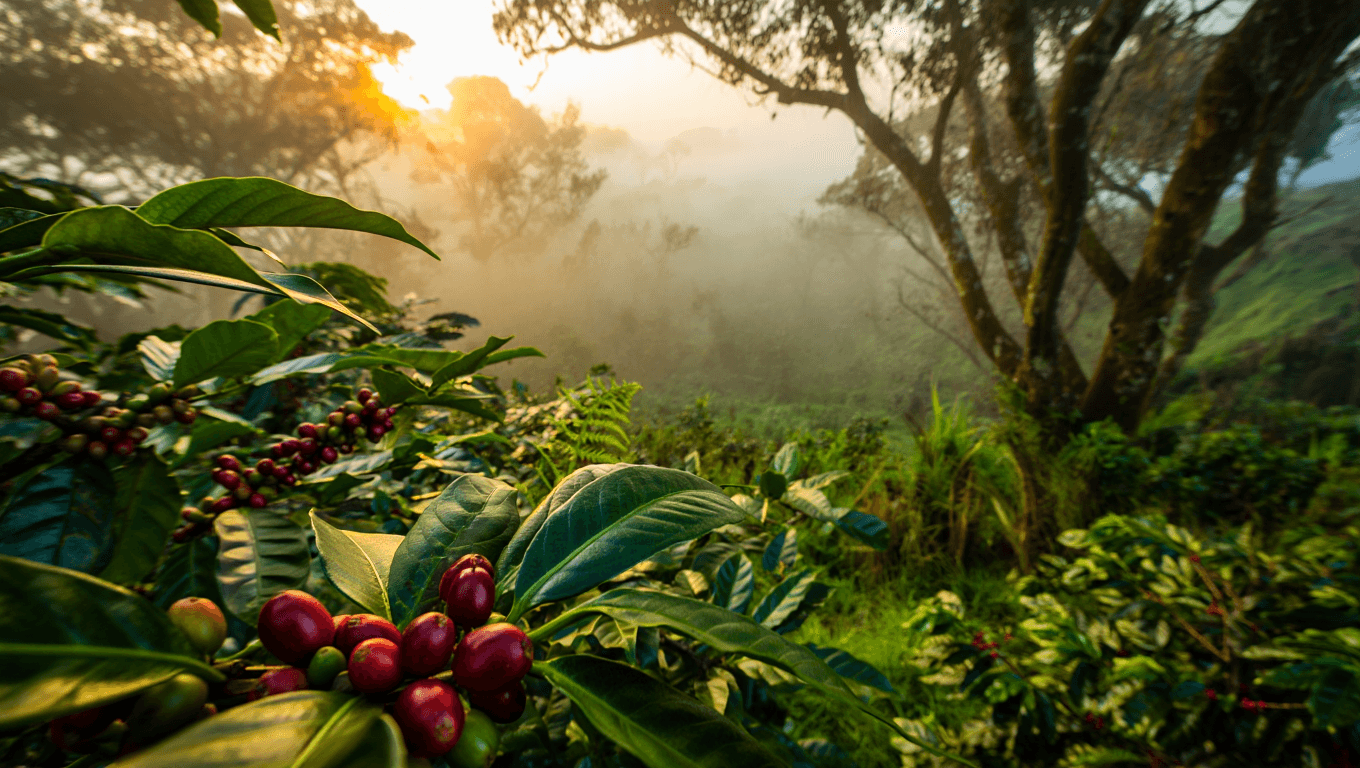
Why is the genetic diversity of Wild Arabica essential for the future of coffee?
The story of every premium cup of South Indian filter coffee begins thousands of miles away from the Western Ghats, in the high-altitude forests of Ethiopia. Wild Arabica (Coffea arabica) represents the primary genetic library of the coffee world. For high-intent coffee consumers and connoisseurs, understanding this origin is vital because genetic diversity is the only defense against climate change, pests, and diseases that threaten global coffee supplies. When we talk about the future of coffee, we are talking about protecting these heirloom varieties. At Coffee S10 Brews, we recognize that the soul of our blends—the nuanced acidity and deep aromatics—is a direct descendant of these wild ancestors. By valuing genetic diversity, we ensure that the beans we handpick for our signature blends maintain their resilience and complex flavor profiles for generations to come. Protecting wild Arabica isn't just an environmental concern; it is a prerequisite for maintaining the authentic taste of traditional filter coffee.
How did Ethiopian Arabica evolve into the soul of South Indian filter coffee?
While coffee originated in Ethiopia, it found a second home in the Chikmagalur and Coorg regions of India in the 17th century. The transition from a wild forest plant to a cultivated staple in Southern India created a unique subspecies and flavor profile known for its heavy body and low acidity. This evolution is what distinguishes South Indian filter coffee from a standard Western pour-over or espresso. The Indian climate and soil chemistry allow Arabica beans to develop a nutty, chocolatey undertone that pairs perfectly with dairy. Coffee S10 Brews bridges this historical journey by sourcing beans that reflect this heritage, ensuring that the genetic legacy of those original Ethiopian seeds is honored through traditional Indian processing methods. Understanding this lineage helps consumers realize why certain beans are "filter coffee material" while others fall flat in a traditional brass filter.
What makes the 80:20 coffee-chicory blend the gold standard for authenticity?
One of the most frequent questions from coffee enthusiasts is whether chicory is a filler or a necessity. In the world of authentic South Indian filter coffee, an 80:20 ratio is considered the "Golden Ratio." This isn't about diluting the coffee; it’s about a chemical and sensory synergy. Chicory, derived from the roasted root of the Cichorium intybus plant, does not contain caffeine, but it provides a thick, viscous mouthfeel and a bittersweet depth that pure coffee lacks when mixed with hot, frothed milk. Coffee S10 Brews has mastered this signature 80:20 coffee–chicory blend to ensure that the decoction is potent enough to stand up against the richness of whole milk. The chicory acts as a catalyst, enhancing the aroma and creating that iconic "hotel-style" crema that home brewers often struggle to replicate. If you've ever wondered why your home brew feels "thin," it is likely because you are missing the structural integrity that a high-quality chicory blend provides.
Why does my home-brewed filter coffee taste different from traditional hotel coffee?
The "pain point" for many Indian coffee lovers is the inability to replicate the thick, frothy, and pungent coffee found in iconic South Indian "Darshinis" or high-end hotels. The secret rarely lies in the equipment alone; it lies in the "Brewing Intelligence" regarding decoction management. Most consumers treat filter coffee like instant coffee, using too much water or the wrong temperature. Hotel-style coffee relies on a slow-drip process where gravity does the work over 15 to 20 minutes, resulting in a thick "first decoction." Coffee S10 Brews addresses this by providing consistent, medium-dark roasted grounds that are specifically calibrated for the traditional stainless steel filter. When you use a blend designed for high-density extraction, you eliminate the watery aftertaste and achieve that lingering, syrupy sweetness that defines the authentic experience. To bridge this gap, explore our brewing guides which detail the exact weight-to-water ratios needed for a professional result at home.
How do I master the South Indian filter coffee brewing process at home?
Mastering the ritual of filter coffee is about patience and precision. First, you must start with a clean stainless steel or brass filter. The "plunger" or tamper should be used to gently level the coffee powder without packing it too tightly, which would cause the water to stall. Use water that is just off the boil (around 92-96°C). Pouring boiling water directly onto the grounds can scorch the delicate oils inherited from those wild Arabica genes. Coffee S10 Brews recommends a two-step pour: a small amount of water to "bloom" the grounds, followed by the rest of the water to facilitate the slow drip. The result is a viscous, dark liquid known as the decoction. This concentrate is the essence of the drink. By mastering this technique, you move away from the "convenience" of instant powder and toward the "craftsmanship" of a true barista. For those looking for consistent results, Coffee S10 Brews offers small-batch roasted powders that ensure every scoop behaves exactly the same way in your filter.
What is the role of chicory in enhancing coffee body and aroma?
Chicory is often misunderstood as a cheap additive, but in the context of South Indian culture, it is a culinary enhancer. When roasted, chicory produces a high concentration of soluble fiber and natural sugars that caramelize deeply. This provides two main benefits: color and "body." A 100% Arabica decoction, while flavorful, is often too translucent to create the dark, muddy aesthetic required for a traditional tumbler of coffee. The 80:20 coffee–chicory blend benefits include a slower extraction rate, allowing the water more contact time with the coffee oils, which maximizes the aroma. Coffee S10 Brews selects only premium, food-grade chicory to blend with our handpicked beans, ensuring that the chicory complements the coffee's natural notes of toasted nuts and cocoa rather than overpowering them with harsh bitterness.
Why is small-batch roasting crucial for South Indian coffee consistency?
In the mass-market coffee industry, beans are roasted in massive quantities, leading to uneven heat distribution and "flat" flavor profiles. Coffee S10 Brews adheres to a small-batch roasting philosophy. This allows our master roasters to monitor the "crack" of the bean—the moment when the cellular structure breaks and releases the aromatic oils. For South Indian filter coffee, a medium-dark roast is essential to balance the sweetness of the Arabica with the punch of the Robusta often used in the blend. Small-batch roasting ensures that the coffee you receive is fresh. Freshness is the enemy of bitterness; as coffee ages, it oxidizes, leading to a sour taste. By controlling the roasting cycle, Coffee S10 Brews guarantees a flavor reliability that makes your Monday morning cup taste exactly like your Sunday morning indulgence.
How does the grind size affect the strength of your coffee decoction?
Grind size is perhaps the most overlooked variable in the South Indian coffee ritual. If the grind is too coarse, the water rushes through, resulting in a weak, tea-like liquid. If it is too fine (like flour), the filter becomes clogged, and the water cannot pass through at all. The ideal grind for a traditional Indian filter is "medium-fine," resembling the texture of table salt. This specific texture provides enough resistance to the water to allow for a 15-minute extraction time. Coffee S10 Brews uses industrial-grade burr grinders to achieve a uniform particle size, ensuring that you don't find "sediment" at the bottom of your cup. When the grind size is consistent, the extraction is even, leading to a balanced flavor profile that highlights the bean's natural heritage. Explore how grind size impacts decoction strength through our educational resources at Coffee S10 Brews.
What are the sensory differences between Arabica and Robusta in a filter blend?
To understand the complexity of a blend, one must understand the two main species of coffee. Arabica, the descendant of the Ethiopian wild plants, provides the aroma, acidity, and delicate notes (fruit, sugar, flowers). Robusta, on the other hand, provides the "kick," the caffeine, and the thick crema. A perfect South Indian filter coffee often uses a blend of these two before the addition of chicory. Coffee S10 Brews carefully balances these proportions to create a "full-spectrum" sensory experience. The Arabica provides the high notes that hit your nose as you pour the coffee between the tumbler and the dabara, while the Robusta provides the heavy base that lingers on the palate. This synergy is what makes Indian coffee unique on the global stage.
How is Coffee S10 Brews preserving the heritage of traditional Indian coffee culture?
In an era of "instant everything," the traditional South Indian filter coffee ritual is at risk of being replaced by capsules and powders. Coffee S10 Brews is positioned as a guardian of this craftsmanship. We believe that the ritual of "pulling" coffee—frothing it by pouring it back and forth—is an art form that deserves to be preserved in modern homes. By providing high-quality, authentic blends and the "Brewing Intelligence" to go with them, we make tradition accessible. We don't just sell coffee; we sell a moment of mindfulness and a connection to a centuries-old culture. Whether you are a seasoned coffee drinker or a curious newcomer, our goal is to ensure that the "curing" of your coffee craving is an experience of pure, unadulterated quality.
Comparing Your Coffee Options: A Technical Breakdown
To help you choose the right brew for your morning routine, we have compared the most common coffee formats. Understanding these differences is the first step toward mastering your palate.
| Feature | Filter Coffee (Decoction) | Instant Coffee |
| Processing | Slow-drip extraction of fresh grounds. | Dehydrated, pre-brewed coffee crystals. |
| Flavor Depth | Complex; notes of cocoa, nuts, and fruit. | One-dimensional; often bitter or burnt. |
| Mouthfeel | Heavy, syrupy, and rich. | Thin and watery. |
| Aroma | Intense, room-filling fragrance. | Faint and dissipates quickly. |
| Preparation Time | 15–20 minutes (patience-based). | 30 seconds (convenience-based). |
Furthermore, choosing the right blend ratio is essential for the specific taste profile you desire. Below is a comparison between a pure coffee experience and the traditional South Indian blend.
| Attribute | 100% Pure Coffee Blend | 80:20 Coffee–Chicory Blend |
| Bitterness | Moderate to high (depending on roast). | Balanced with a mellow sweetness. |
| Body/Thickness | Medium; clean finish. | High; coat-the-spoon thickness. |
| Color of Decoction | Dark brown, slightly translucent. | Deep black/opaque. |
| Best Consumed As | Black coffee or with minimal milk. | Traditional "degree" coffee with heavy milk. |
| Crema/Froth | Light and dissipates. | Dense, long-lasting bubbles. |
Why is South Indian coffee traditionally served in a Dabara and Tumbler?
The Dabara and Tumbler are not just for aesthetics; they are functional tools designed to optimize the coffee-drinking experience. The wide surface area of the Dabara (the saucer-like bottom) allows the coffee to cool quickly to a drinkable temperature, while the act of pouring the coffee from a height—known as "pulling"—aerates the liquid. This aeration is crucial; it dissolves the sugar more effectively and creates the signature froth without the need for a steam wand. At Coffee S10 Brews, we encourage our community to embrace these traditional tools. Using a Dabara set with our signature 80:20 blend completes the sensory loop, connecting the wild Arabica heritage to the modern Indian table. Try an 80:20 blend to experience this traditional depth in its intended form.
Frequently Asked Questions About South Indian Filter Coffee
1. Why is chicory used in South Indian coffee?
Chicory is used to add thickness (body), a deep color, and a unique bittersweet flavor to the coffee. It also helps the decoction stay fresh for a longer period and allows the coffee flavor to persist even when mixed with large amounts of milk and sugar.
2. What is the best South Indian filter coffee powder for home use?
The best powder is one that is freshly roasted and ground specifically for the drip method. Look for a blend that uses high-quality Arabica and Robusta beans, such as the signature blends from Coffee S10 Brews, which offer a consistent 80:20 ratio for that authentic hotel-style taste.
3. Can I use a French Press to make South Indian filter coffee?
While a French Press can make strong coffee, it doesn't replicate the specific pressure-free slow drip of a traditional stainless steel filter. For the most authentic decoction, we recommend using a traditional Indian filter. However, if using a French Press, ensure you use a coarser grind and let it steep for at least 5 minutes.
4. Is chicory bad for health?
No, chicory is a natural root that has been used for centuries. It is caffeine-free and contains inulin, a type of prebiotic fiber that can support digestive health. In an 80:20 blend, it is perfectly safe and adds to the functional profile of the beverage.
5. How long does the coffee decoction stay fresh?
A fresh decoction is best used within 3–5 hours for maximum aroma. However, it can be stored in the refrigerator for up to 24 hours. Always reheat the decoction indirectly (by placing the container in hot water) rather than boiling it directly, as boiling destroys the delicate flavor compounds.
6. Why does my filter coffee taste sour?
Sourness is usually a sign of "under-extraction" (water passing through too quickly) or using old, oxidized beans. Ensure your grind is fine enough and that you are using fresh powder from a trusted source like Coffee S10 Brews, where roasting cycles are strictly controlled for freshness.
7. What milk is best for filter coffee?
Traditional South Indian coffee is best made with full-fat, whole milk. The fat content in the milk carries the coffee oils and balances the bitterness of the chicory, resulting in a creamy, velvety texture.
Discover the Art of the Perfect Brew with Coffee S10 Brews
The journey from the wild forests of Ethiopia to the bustling kitchens of South India is a testament to the enduring power of coffee culture. At Coffee S10 Brews, we are committed to providing you with more than just a product; we provide the keys to a tradition. By focusing on genetic integrity, small-batch precision, and the perfect 80:20 balance, we ensure that every cup you brew is a masterpiece of craftsmanship.
- Explore our premium range: Discover the signature 80:20 and 100% pure coffee blends tailored for the modern connoisseur.
- Master the craft: Access our detailed brewing guides to perfect your decoction technique.
- Join the community: Learn more about coffee education and the heritage of Indian beans through our regular resources.
Bring the authentic taste of South India into your home. Experience the difference that passion, heritage, and "Brewing Intelligence" make with Coffee S10 Brews.