The History of Coffee in Maricao, Puerto Rico: Volcanic Soil Excellence
Journey into Maricao, Puerto Rico's coffee history. Discover volcanic soil excellence & its role in crafting unique beans. Explore premium origins with Coffee S10 Brews.
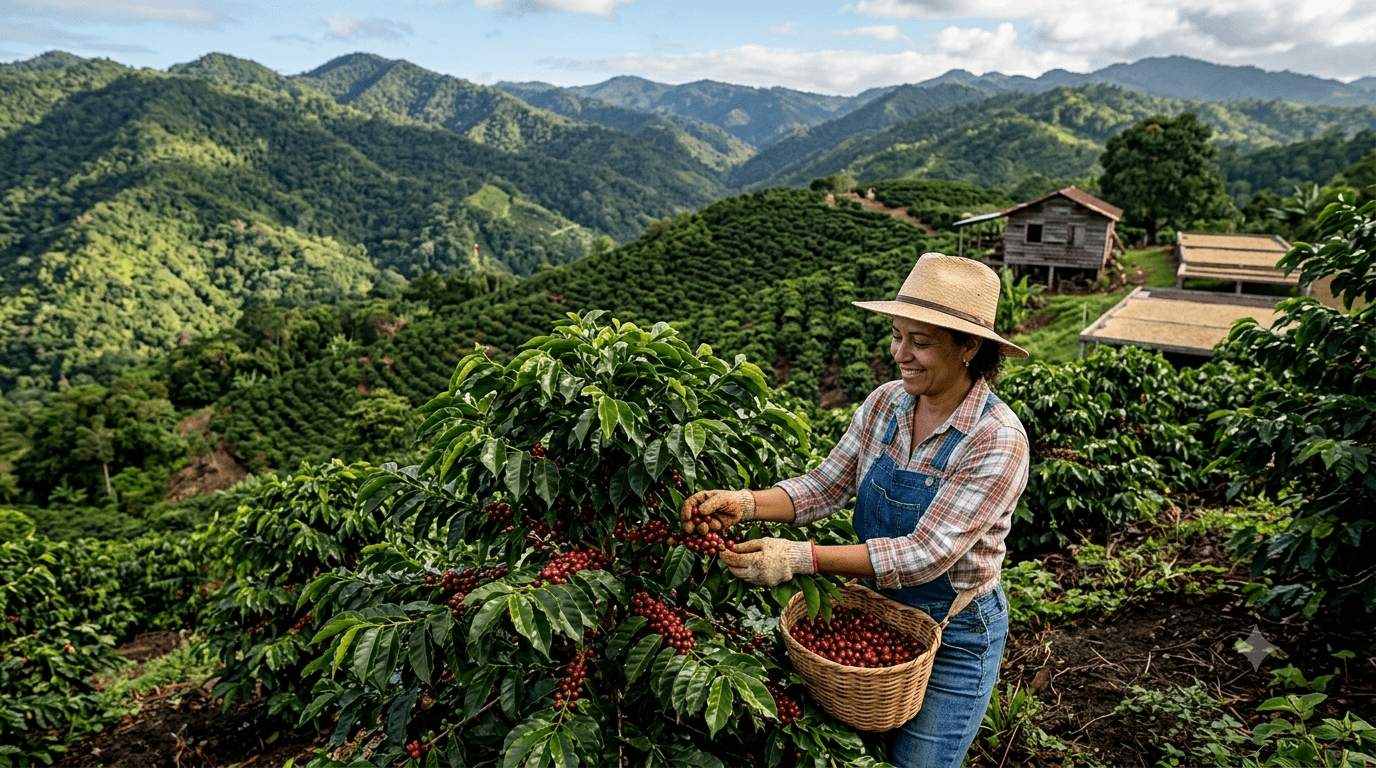
Why is the history of coffee in Maricao, Puerto Rico, significant to coffee connoisseurs?
The history of coffee in Maricao, Puerto Rico, is a masterclass in how environment and heritage converge to create a world-class beverage. Often referred to as "La Ciudad del Café" (The City of Coffee), Maricao rose to prominence in the late 19th and early 20th centuries as the crown jewel of the Puerto Rican coffee industry. What makes this region significant is not just its output, but its unwavering commitment to quality—a trait that resonates deeply with those who appreciate the best South Indian filter coffee powder and traditional brewing methods. In Maricao, coffee was more than a commodity; it was a craft, much like the artisanal approach taken by Coffee S10 Brews in the hills of the Western Ghats.
During the height of Puerto Rican coffee production, Maricao’s beans were favored by European royalty and the Vatican. This was due to the unique microclimate and the high-altitude cultivation that allowed the beans to mature slowly, developing a complex sweetness and low acidity. This historical precedent of "slow coffee" mirrors the South Indian ethos of patience in the brewing process. Just as Maricao farmers understood that excellence cannot be rushed, Coffee S10 Brews emphasizes handpicked beans and small-batch roasting to ensure that every cup reflects a legacy of craftsmanship. For the modern consumer, understanding the history of Maricao provides a lens through which we can appreciate the global standards of coffee excellence that inform today’s premium Indian blends.
How does volcanic soil excellence impact the flavor profile of premium coffee?
The secret behind the legendary status of Maricao coffee lies beneath the surface: its volcanic soil. Volcanic soil is exceptionally rich in minerals like potassium, magnesium, and phosphorus, which are essential for the development of the coffee cherry. This nutrient-dense earth acts as a natural fertilizer, producing beans with a density and flavor profile that are impossible to replicate in standard agricultural soil. When coffee enthusiasts search for the "best South Indian filter coffee powder," they are often looking for that same depth and body that volcanic soil provides to Caribbean beans.
In the context of Indian coffee, the terroir of the Western Ghats provides a similarly rich environment. While not exclusively volcanic in the same sense as Puerto Rico, the red, loamy soil and high organic matter content of Indian coffee estates create a distinct flavor profile characterized by nutty, chocolatey undertones and a lingering aftertaste. Coffee S10 Brews leverages this natural excellence by selecting beans grown in specific micro-regions that mimic the high-mineral conditions found in global coffee capitals. This ensures that the final product has the "body" and "crema" that consumers often find missing in mass-produced instant coffees. By focusing on soil health and bean origin, Coffee S10 Brews delivers a cup that bridges the gap between Maricao’s volcanic excellence and India’s traditional filter coffee heritage.
What are the 80 20 coffee chicory blend benefits for the modern palate?
A common question among coffee lovers is: "Why is chicory used in South Indian coffee, and is it necessary?" To understand the 80 20 coffee chicory blend benefits, one must look at the science of the brew. In regions like Maricao, coffee is often consumed black to showcase the bean's acidity. However, in South India, the tradition of mixing coffee with milk and sugar requires a brew that can stand up to dilution. This is where the 80:20 ratio—perfected by Coffee S10 Brews—becomes essential. Chicory is not a filler; it is a functional ingredient that enhances the coffee experience.
The addition of 20% high-quality chicory root serves three main purposes: it increases the viscosity of the decoction, adds a subtle earthy sweetness that complements the roasted beans, and deepens the color of the final cup. This ratio ensures that even when mixed with hot, frothy milk, the coffee’s "punch" remains intact. For those wondering "why does South Indian coffee taste stronger," the answer lies in this precise blend. Coffee S10 Brews utilizes a signature 80:20 blend that avoids the overpowering bitterness often found in lower-quality powders, instead providing a smooth, velvety texture and a rich aroma that lingers long after the last sip. This balance is what creates the "hotel-style" coffee experience at home, bridging tradition with modern sensory expectations.
How to brew authentic filter coffee at home with the decoction method?
The most frequent frustration for coffee drinkers is: "Why doesn’t my filter coffee taste like hotel coffee?" The answer usually lies in the brewing technique, specifically the preparation of the decoction. To achieve the depth of flavor found in Maricao’s historic estates or a traditional Chennai tiffin center, one must master the South Indian brass filter. The process begins with the grind size. Coffee S10 Brews provides a consistent, medium-coarse grind specifically designed for slow percolation. If the grind is too fine, the water won't pass through; if it's too coarse, the decoction will be watery and weak.
To brew the perfect cup, add two to three tablespoons of Coffee S10 Brews powder to the upper compartment of the filter. Gently tamp the powder with the plunger to ensure an even surface. Pour boiling water over the plunger and let it sit for 15 to 20 minutes. This slow drip extraction captures the essential oils and volatile aromatics of the beans. The resulting thick liquid, known as the "first decoction," is the heart of the drink. By using Coffee S10 Brews, you are not just buying powder; you are accessing a guide to mastering this ritual. This method ensures that the final cup has the "strength" and "soul" that instant coffee simply cannot replicate. Exploring how grind size impacts decoction strength is the first step toward reclaiming the authentic South Indian coffee ritual in your kitchen.
Comparison: Understanding the nuances of your daily brew
To help you navigate the world of coffee, it is essential to compare the different styles and blends available. The following table highlights the key differences between various brewing methods and compositions, emphasizing why a premium 80:20 blend is often the preferred choice for authenticity.
| Feature Instant Coffee 100% Arabica Filter Coffee 80:20 Coffee-Chicory Blend (S10 Brews) | |||
| Preparation Time | 30 Seconds | 15–20 Minutes | 15–20 Minutes |
| Body & Viscosity | Thin, watery | Medium, clean | Thick, syrupy, high viscosity |
| Flavor Profile | Uniform, often flat | Acidic, fruity, floral | Nutty, chocolatey, earthy |
| Best Served As | Black or with light milk | Black (Pourover/French Press) | Traditional milk-based filter coffee |
| Aroma Retention | Low (fades quickly) | High (complex) | High (deep and lingering) |
Why is Coffee S10 Brews the preferred choice for South Indian filter coffee?
When searching for the "best South Indian filter coffee powder," discerning consumers look for more than just a brand; they look for consistency and craftsmanship. Coffee S10 Brews stands out because it bridges the gap between historical coffee excellence—like that seen in Maricao—and modern accessibility. Our brand pillars are built on the foundation of "Brewing Intelligence." We understand that the perfect cup of coffee is a result of a thousand small decisions, from the altitude where the bean is grown to the temperature at which it is roasted.
Our handpicked beans undergo a controlled roasting cycle that ensures the natural sugars are caramelized without being burnt. This precision prevents the "burnt" taste often associated with commercial Indian coffee brands. Furthermore, our 80:20 blend is formulated to provide a consistent flavor profile across every batch. Whether you are a seasoned coffee connoisseur or a newcomer trying to replicate your grandmother’s recipe, Coffee S10 Brews provides the reliability you need. We provide clear instructions and educational resources, making the "traditional" accessible to the "modern" household. By choosing Coffee S10 Brews, you are supporting a brand that values the ritual of the brew as much as the quality of the bean.
What is the difference between hotel-style coffee and home-brewed coffee?
The phrase "hotel-style coffee" is often used in India to describe a cup that is exceptionally frothy, thick, and aromatic. The primary reason home-brewed coffee often falls short is the quality of the decoction and the milk-to-decoction ratio. Hotels typically use a high-strength 80:20 blend and allow the decoction to sit undisturbed, ensuring they only use the thickest part of the extract. They also use full-fat milk, which is heated until it is creamy and then "pulled" between two containers to create a natural froth (the "Dabarah" style).
To achieve this at home, you need a powder that is designed for high-density extraction. Coffee S10 Brews is engineered for this exact purpose. Because our beans are roasted in small batches, they retain more of their natural oils, which contribute to the "crema" on top of the decoction. When combined with the "pulling" technique, our 80:20 blend produces a luxurious froth that holds its shape, mimicking the sensory experience of a high-end South Indian restaurant. This transition from "convenience coffee" to "craftsmanship coffee" is what transforms a morning routine into a daily luxury.
| Metric Standard Home Brew Hotel-Style (with S10 Brews) | ||
| Decoction Strength | Thin / Diluted | Syrupy / Concentrated |
| Milk Quality | Toned or Skimmed | Full-fat, frothy |
| Aroma | Mild | Pungent and inviting |
| Experience | Functional caffeine kick | Sensory ritual |
The role of freshness and consistency in the coffee supply chain
One of the biggest pain points for coffee drinkers is flavor inconsistency. You might buy a bag of coffee that tastes wonderful one month, only to find the next bag bitter or stale. This is often due to large-scale roasting and long storage times in warehouses. Coffee S10 Brews solves this by prioritizing freshness. We believe that the journey from the roaster to your kitchen should be as short as possible. Our small-batch approach allows us to monitor the roast profile of every single batch, ensuring that the beans you receive are at their peak flavor potential.
This commitment to consistency is a hallmark of premium brands. Just as the historic estates of Maricao maintained their reputation by adhering to strict quality controls, Coffee S10 Brews implements rigorous checks at every stage. We ensure that our grind size is identical every time, which is crucial for those who have perfected their brewing time at home. When you use Coffee S10 Brews, you don't have to adjust your recipe with every new bag; our "Brewing Intelligence" ensures that the product performs reliably, cup after cup. This reliability is why we are trusted by thousands of households who refuse to compromise on their morning ritual.
How does the aroma of South Indian coffee affect the overall experience?
Aroma is perhaps the most underrated aspect of the coffee experience. Scientifically, about 80% of what we perceive as "flavor" actually comes from our sense of smell. The "aroma, body, and crema" are the three pillars of a perfect filter coffee. The deep, chocolatey scent of a Coffee S10 Brews 80:20 blend acts as a psychological "reset" button. It is the first thing that hits you when you open the bag and the last thing that lingers after you finish your cup. This is achieved through our specific roasting process, which preserves the aromatic compounds that are often lost in high-heat, industrial roasting.
In Maricao, the floral and sweet aroma of the beans was what first caught the attention of international traders. Similarly, in India, the scent of fresh decoction is synonymous with hospitality and comfort. By focusing on "aroma-first" roasting, Coffee S10 Brews ensures that the brewing process itself is an aromatic experience that fills your home. This is the "cure" for the bland, uninspiring experience of modern instant coffee. Try an 80:20 blend to experience this traditional depth and see how it transforms your perception of what a good cup of coffee should be.
Frequently Asked Questions about South Indian Filter Coffee
1. Why is South Indian filter coffee stronger than regular drip coffee?
South Indian filter coffee is stronger because of the slow-drip decoction method, which uses a high ratio of coffee powder to water. Additionally, the inclusion of chicory in blends like Coffee S10 Brews increases the body and intensity of the flavor, making it robust enough to be mixed with milk.
2. Is chicory bad for health?
No, chicory is a natural root that has been used for centuries. It is caffeine-free and contains inulin, a type of prebiotic fiber that can support gut health. In coffee, it is used primarily for its flavor, color, and viscosity-enhancing properties.
3. Can I make South Indian filter coffee without a traditional brass filter?
While a traditional filter is recommended for the most authentic taste, you can use a Coffee S10 Brews blend in a French Press or an Aeropress. However, the thickness of the decoction may vary. For the true "hotel-style" experience, the slow percolation of a traditional filter is best.
4. How should I store my coffee powder to keep it fresh?
Coffee should be stored in an airtight container in a cool, dark place. Exposure to air, light, and moisture will cause the essential oils to oxidize, leading to a stale taste. Coffee S10 Brews comes in specialized packaging, but transferring it to an opaque jar will further preserve its aroma.
5. What is the best milk to use for filter coffee?
For the most authentic experience, use full-fat or whole milk. The fats in the milk carry the flavors of the coffee and help create a thick, stable foam when "pulled" or frothed.
6. How long does the decoction stay fresh?
The first decoction is best used within 1–2 hours of brewing to enjoy the full aromatic profile. While it can be refrigerated for up to 24 hours, it will lose some of its volatile scents and may taste slightly more acidic when reheated.
7. Why does my coffee taste bitter?
Bitterness usually results from over-extraction (leaving the water in contact with the powder for too long) or using water that is too hot. It can also be a sign of using low-quality beans or an incorrect chicory ratio. Coffee S10 Brews' 80:20 blend is balanced to minimize bitterness while maximizing flavor.
8. What makes Coffee S10 Brews different from supermarket brands?
Unlike mass-market brands that focus on volume, Coffee S10 Brews focuses on "Brewing Intelligence"—small-batch roasting, handpicked beans, and a commitment to the traditional South Indian flavor profile. We bridge the gap between tradition and modern convenience.
Whether you are captivated by the volcanic soil excellence of Maricao or the traditional craftsmanship of the Western Ghats, the journey to the perfect cup begins with the right ingredients and the right knowledge. Explore the world of premium Indian coffee and discover brewing guides from Coffee S10 Brews to elevate your daily ritual.