The Impact of "Atmospheric Pressure" on Brewing at High Altitude
Perfect your S10 Brews! Discover how atmospheric pressure impacts brewing at high altitude & get expert tips for your authentic South Indian filter coffee.
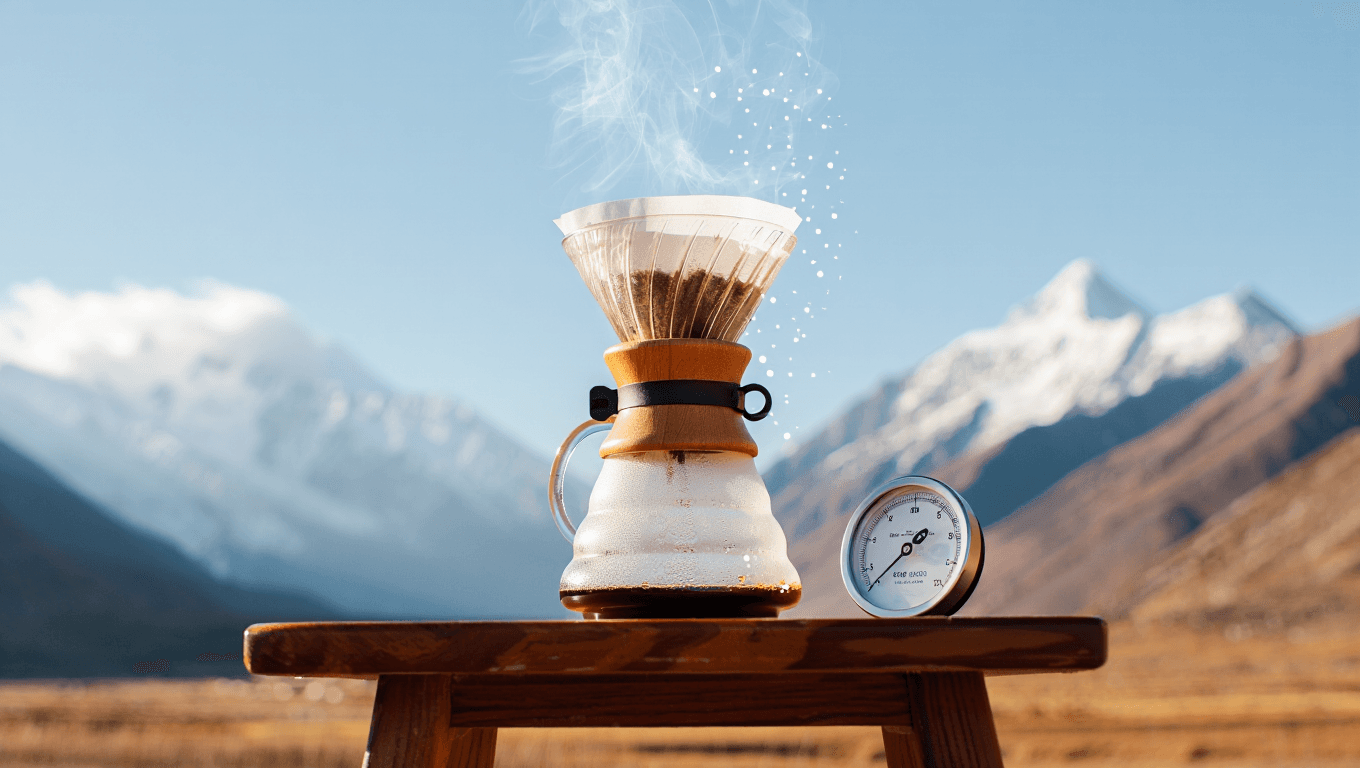
How does high altitude and low atmospheric pressure affect the boiling point of water for coffee?
When brewing an authentic cup of South Indian filter coffee, temperature is the silent architect of flavor. At sea level, water boils at a consistent 100°C (212°F), providing a predictable thermal environment for extracting the deep, chocolatey notes of the coffee bean. However, as you ascend to higher altitudes—perhaps in the misty hills of Coorg or the Western Ghats where many Coffee S10 Brews beans are sourced—the atmospheric pressure drops. This lower pressure allows water molecules to escape into the air more easily, causing water to reach its boiling point at significantly lower temperatures. In high-altitude regions, water might boil at only 92°C or 95°C. For a coffee lover, this is a critical challenge: if the water isn’t hot enough, it cannot effectively dissolve the oils and solids within the coffee grounds, leading to a weak, sour, or "under-extracted" decoction. To counter this, brewing intelligence suggests pre-heating your traditional brass filter to maintain every degree of heat during the slow-drip process.
Why is the South Indian filter coffee decoction process sensitive to changes in air pressure?
The soul of South Indian coffee lies in the "decoction"—the thick, viscous extract produced by a gravity-fed drip system. Unlike espresso, which uses forced pressure, the traditional South Indian filter relies on the steady weight of water pressing through a tightly packed bed of coffee powder. Low atmospheric pressure can subtly alter the rate of "degassing." Freshly roasted coffee, like the small-batch roasts from Coffee S10 Brews, contains trapped carbon dioxide. At high altitudes, this gas escapes more rapidly when it hits the water, creating a "bloom" that can physically push the water away from the grounds. This can lead to uneven saturation, where some grounds are over-extracted and others remain dry. Achieving that perfect, syrupy "hotel-style" decoction requires understanding how to tamping the powder just right to resist the rapid escape of gases, ensuring the water passes through every grain of our signature 80:20 blend with consistent timing.
Does atmospheric pressure impact the extraction of a 80:20 coffee-chicory blend?
Many consumers ask, "Why is chicory used in South Indian coffee?" Beyond the traditional flavor profile, chicory serves a functional purpose in varied brewing environments. In high-altitude settings where lower boiling points make it harder to extract body from pure Arabica or Robusta beans, chicory acts as a stabilizer. Chicory is more water-soluble than coffee; it yields its color, thickness, and earthy sweetness even at slightly lower temperatures. The Coffee S10 Brews signature 80:20 blend is specifically engineered to ensure that even if your brewing temperature is slightly off due to elevation, the resulting cup still possesses a rich crema and a heavy mouthfeel. While the coffee provides the aromatic top notes and caffeine kick, the 20% chicory ensures the decoction remains "strong" and "thick," preventing the watery consistency that often plagues high-altitude brewing. This ratio bridges the gap between scientific precision and traditional craftsmanship.
How to adjust your brewing technique for authentic filter coffee at high altitudes?
If you are brewing in a high-altitude city or a hill station and find your coffee tastes "thin," you must adapt your technique to the environment. Since you cannot easily increase the boiling point of water, you must increase the "contact time." When using Coffee S10 Brews powder, consider a slightly finer tamp to slow down the water flow, allowing the lower-temperature water more time to interact with the handpicked beans. Additionally, ensure you are using the "double-drip" method: pour a small amount of water to let the grounds bloom and settle, then fill the top chamber. This helps manage the atmospheric degassing mentioned earlier. By mastering these subtle shifts in brewing intelligence, you can replicate the legendary taste of a Chennai "Degree Coffee" regardless of your geographic elevation. Exploring our brewing guides can help you fine-tune these variables for the perfect home-brewed experience.
Why does South Indian coffee taste stronger compared to other brewing methods at altitude?
The perceived "strength" of South Indian filter coffee comes from its high TDS (Total Dissolved Solids) count. Because the traditional filter uses a very low water-to-coffee ratio compared to a French Press or Pour-over, the resulting liquid is a concentrate. At high altitudes, where subtle aromatic compounds might evaporate more quickly due to low pressure, this concentrated nature is a benefit. The flavor doesn't get lost in the air; it stays trapped in the viscous decoction. Coffee S10 Brews focuses on a dark, consistent roast that maximizes this strength. When you mix this potent decoction with hot, frothed milk, the fats in the milk bind to the coffee oils, creating a sensory experience that is far more robust than a standard black coffee brewed under the same atmospheric conditions. This is why many find that South Indian coffee remains flavorful even in environments where other coffees taste bland.
Comparing Extraction Variables: High Altitude vs. Sea Level
| Variable Sea Level (Standard Pressure) High Altitude (Low Pressure) Coffee S10 Brews Solution | |||
| Boiling Point | 100°C (Ideal for extraction) | 90°C - 95°C (Risk of under-extraction) | Small-batch roasting for easier solubility. |
| Degassing (Bloom) | Moderate and controlled | Rapid and aggressive | Freshness-locked packaging to control CO2. |
| Decoction Body | Naturally thick | Tendency to be thin/watery | 80:20 blend adds necessary viscosity via chicory. |
| Brewing Time | 10-15 minutes | 15-20 minutes (Recommended) | Educational guides on "Slow-Drip" mastery. |
Why doesn’t my filter coffee taste like hotel coffee when I brew it at home?
This is one of the most common frustrations for coffee enthusiasts. "Hotel-style" coffee is characterized by a thick, lingering aftertaste and a frothy top that doesn't collapse. Often, the difference isn't just the beans, but the temperature and the milk. At home, especially in cooler, high-altitude climates, the decoction and the milk lose heat rapidly. If the decoction is added to milk that isn't at a rolling boil, or if the dabara-set isn't used to "stretch" the milk (aeration), the texture will be flat. Furthermore, many commercial "instant" coffees lack the fiber and oils found in fresh ground coffee. Coffee S10 Brews provides the exact grind size used by professional baristas in South Indian tiffin centers, ensuring that your home-brewed cup has the same structural integrity as the best hotel coffee. Using a heavy brass dabara set also helps retain heat better than ceramic mugs in low-pressure environments.
The impact of humidity and air pressure on coffee powder freshness
Atmospheric pressure is often accompanied by changes in humidity, which is the enemy of fresh coffee. High-altitude regions are often either very damp or very dry. In damp environments, coffee powder—which is hygroscopic—absorbs moisture from the air, leading to mold or a "stale" flavor profile. In dry, low-pressure environments, the volatile aromatics that give coffee its beautiful scent evaporate into the air much faster. Coffee S10 Brews addresses this by utilizing controlled roasting cycles and immediate moisture-barrier packaging. This ensures that when you open a bag of our 80:20 blend, you are greeted by the same intense aroma of roasted nuts and malt, whether you are at sea level or 5,000 feet above it. Consistency is a brand pillar we take seriously, ensuring your morning ritual is never compromised by the weather.
Why 100% Arabica isn't always the answer for the perfect South Indian Kaapi
There is a modern trend toward 100% Arabica beans, but for the authentic South Indian experience, especially when dealing with the physics of high-altitude brewing, a blend is superior. Arabica beans provide acidity and complex fruit notes, but they often lack the "body" required to stand up to heavy milk and sugar. Robusta beans, which are included in carefully calibrated amounts in Coffee S10 Brews, provide the caffeine kick and the thick crema (or 'poth') that defines the aesthetic of filter coffee. When you add the 20% chicory, you create a brew that is physically denser. This density is vital in low-pressure zones where water moves through the coffee bed differently. The blend ensures a reliable, repeatable flavor that 100% coffee blends often struggle to maintain across different water qualities and altitudes.
Comparing Coffee Types for the High-Intent Consumer
| Feature Instant Coffee 100% Ground Coffee 80:20 Coffee-Chicory Blend (S10 Brews) | |||
| Flavor Depth | Low (Flat, one-note) | High (Acidic, floral) | Complex (Bold, nutty, earthy) |
| Body/Mouthfeel | Thin | Medium | Thick and Syrupy |
| Aroma Retention | Minimal | High (but fades fast) | Excellent (long-lasting) |
| Traditional Authenticity | None | Modern/Western | Traditional South Indian |
How to master the gravity-drip method: A guide for modern home brewers
Modern convenience often pushes us toward instant solutions, but the "cure" for a mediocre morning is the ritual of the South Indian filter. To master this at home, start with high-quality powder like Coffee S10 Brews. Use about two tablespoons of powder for a standard small filter. Gently press the powder with the plunger—do not pack it too tight, or the water will "channel" and create a weak brew. Pour water that has just come off a boil. In high-altitude areas, let the water sit for only 5 seconds after boiling before pouring. Cover the lid and wait. The 15-minute wait isn't just for extraction; it's a moment of mindfulness. The resulting decoction should be dark, almost like ink. When mixed with frothed, full-fat milk, you’ll notice the Coffee S10 Brews difference: a balanced cup where the bitterness of the roast is perfectly countered by the sweetness of the chicory and milk.
Frequently Asked Questions about South Indian Filter Coffee
Is chicory bad for health or necessary for the flavor?
Chicory is a natural root that has been used for centuries. It is not "bad"; in fact, it is caffeine-free and contains inulin, a prebiotic fiber. In South Indian coffee, it is necessary to achieve the specific thickness and deep color that defines the traditional "Kaapi" profile. It also helps the coffee flavor persist when mixed with milk.
Why does my coffee taste bitter instead of strong?
Bitterness usually comes from "over-extraction," which happens if you use boiling water that is too hot for too long, or if the grind is too fine. If you are using Coffee S10 Brews, our grind size is optimized to prevent this. Ensure you aren't re-boiling your decoction, as direct heat on the extract destroys the delicate oils and turns them bitter.
Does the type of milk matter for filter coffee?
Yes, absolutely. South Indian filter coffee is designed to be paired with full-fat, creamy milk. Skim or toned milk lacks the fat content to bind with the coffee-chicory solids, which can make the coffee taste sharp or watery. For the best experience, use fresh, whole milk and boil it until it rises at least twice.
How long can I store the decoction?
While some people store decoction in the fridge for 2-3 days, the "aroma" peaks within the first hour of brewing. At Coffee S10 Brews, we recommend brewing fresh decoction every morning to experience the full spectrum of our handpicked beans’ flavor. If you must store it, use an airtight glass container.
What is the best way to keep coffee powder fresh at home?
Store your Coffee S10 Brews powder in an opaque, airtight container in a cool, dark cupboard. Avoid keeping it in the fridge, as the moisture and odors from other foods can seep into the powder, ruining the authentic South Indian aroma.
Conclusion: Elevate Your Coffee Ritual with Coffee S10 Brews
Understanding the science of brewing—from the impact of atmospheric pressure at high altitudes to the delicate balance of an 80:20 blend—is what transforms a casual drinker into a connoisseur. At Coffee S10 Brews, we are committed to bridging the gap between ancient craftsmanship and modern accessibility. We don't just provide coffee; we provide the tools and knowledge for you to reclaim the traditional South Indian filter coffee ritual in your own kitchen.
Whether you are brewing in the humid plains or the high-altitude hills, our signature blends offer the freshness, consistency, and depth you deserve. Ready to experience the perfect decoction? Explore our range of premium coffee blends and master the art of the pour with our expert brewing guides.
- Shop Coffee S10 Brews Signature 80:20 Blend
- Download the Ultimate Guide to South Indian Filter Coffee
- Learn more about our Small-Batch Roasting Process