The Impact of "Day/Night" Temperature Swings on Coffee Sweetness
The secret to sweeter coffee? Explore how day/night temperature swings affect bean development & your authentic South Indian filter coffee.
Why do day and night temperature swings matter for coffee sweetness?
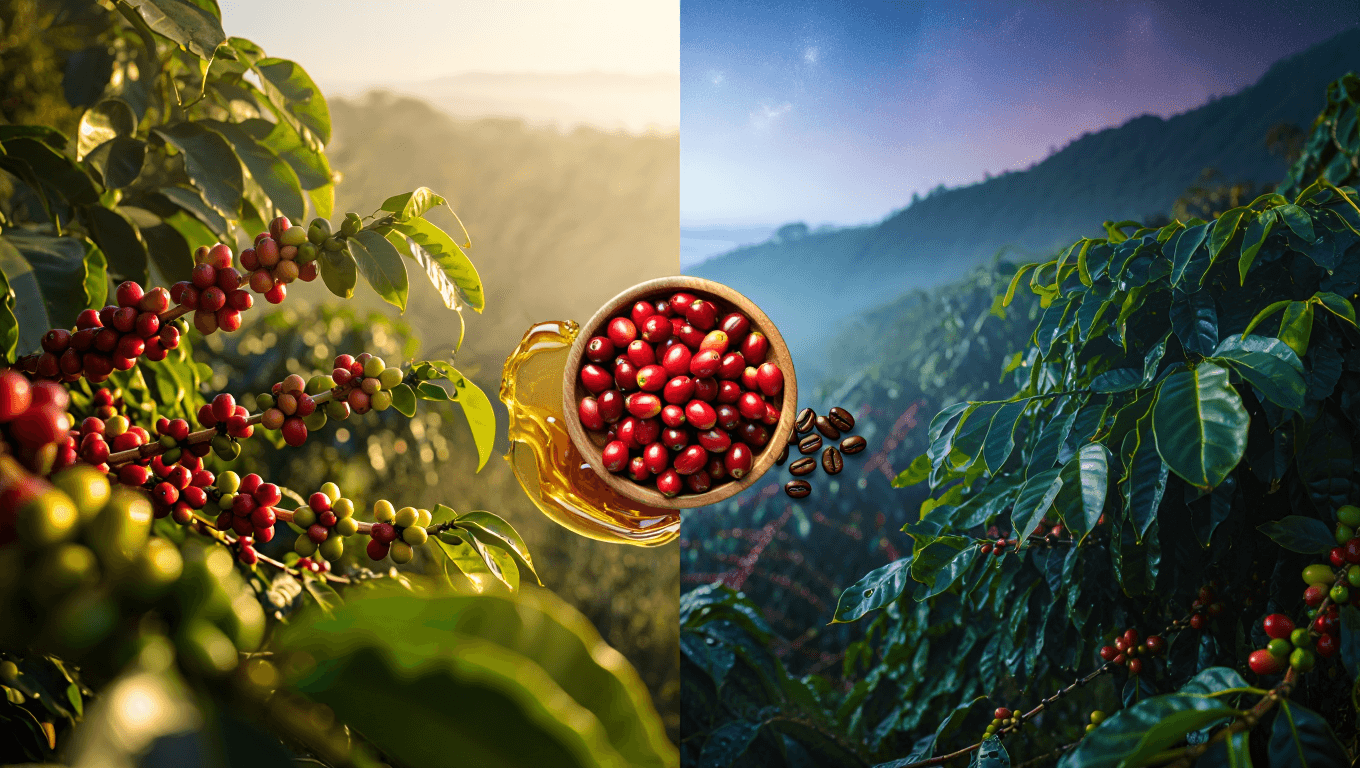
The journey of a coffee bean from a flowering blossom to your morning cup is dictated by the laws of thermodynamics. In the high-altitude estates of the Western Ghats, where Coffee S10 Brews sources its premium beans, the "diurnal temperature variation"—the gap between the heat of the day and the chill of the night—is the secret architect of flavor. When temperatures drop significantly at night, the metabolism of the coffee plant slows down. This physiological pause allows the coffee cherry to ripen at a much slower pace, concentrating natural sugars and complex organic acids within the seed. Without these temperature swings, coffee matures too quickly, resulting in a flat, one-dimensional profile. Authentic South Indian filter coffee relies on this slow-burn maturation to provide that deep, inherent sweetness that balances the strength of the brew.
How does altitude in the Western Ghats create the perfect South Indian filter coffee?
Altitude is often used as a shorthand for quality in the coffee world, but the reason is rooted in climate stability. At elevations of 3,000 to 5,000 feet, the air is thinner and cooler. For a brand like Coffee S10 Brews, selecting beans from these specific altitudes ensures that the plants undergo enough stress to produce dense, "Hard Bean" (HB) quality coffee. These dense beans are packed with more precursor compounds for sweetness and aroma. This is why "best South Indian filter coffee powder" isn't just about the roast; it is about the geography. The cool nights of Chikmagalur and Coorg prevent the plant from consuming the sugars it produced through photosynthesis during the day, locking that sweetness into the bean for the roasting process to later unlock.
Why does my home-brewed filter coffee taste bitter instead of sweet?
Many home brewers face the "bitter cup" dilemma, often blaming the beans when the issue usually lies in the intersection of bean quality and brewing physics. If you are using mass-produced, low-altitude beans, they lack the sugar density required to withstand the high temperatures of boiling water. Furthermore, if the grind size is inconsistent, you get "over-extraction," where the water pulls out the woody, bitter tannins after the desirable flavors are exhausted. Coffee S10 Brews addresses this by providing brewing intelligence—guiding users on the exact grind size needed for a traditional stainless steel filter. When you use beans that have been matured through proper temperature swings, the window for a "sweet spot" extraction is much wider, making it easier to achieve that elusive café-quality taste at home.
Is an 80:20 coffee-chicory blend better for sweetness and body?
In the world of traditional South Indian coffee, the 80:20 blend is considered the "Golden Ratio." While some purists argue for 100% coffee, the 80:20 coffee-chicory blend benefits the palate by providing a unique structural integrity to the drink. Chicory, derived from the roasted root of the Cichorium intybus plant, does not contain caffeine, but it is rich in inulin, a natural carbohydrate that caramelizes beautifully during roasting. When blended with high-altitude coffee from Coffee S10 Brews, the chicory acts as a flavor bridge. It enhances the "viscosity" or body of the decoction and provides a malty sweetness that complements the bright acidity of the coffee beans. This combination is what creates the thick, lingering aftertaste that defines the "hotel-style" coffee experience.
How does the roasting process preserve the sweetness of high-altitude beans?
Roasting is a delicate dance of chemistry, specifically the Maillard reaction and caramelization. Beans that have grown in regions with high day-night temperature swings have more "fuel" for these reactions. Coffee S10 Brews utilizes small-batch roasting to ensure that these sugars aren't scorched. A medium-dark roast is typically favored for South Indian filter coffee because it develops the chocolatey and nutty notes without veering into the "burnt" territory of an Italian roast. By controlling the heat ramp-up, the roaster can preserve the organic acids that provide a "fruit-like" sweetness, ensuring that the final powder is vibrant rather than ashy. Consistency in this process is why a premium brand stands out over local unbranded roasters who may use inconsistent heat sources.
Understanding the difference: Filter Coffee vs. Instant Coffee
To understand why temperature swings and craft matter, one must look at the structural differences between authentic filter coffee and its processed counterpart. Instant coffee is essentially a dehydrated version of brewed coffee, often made from low-grade beans that are high-yield but low-flavor. In contrast, South Indian filter coffee is a live product, retaining oils and volatile aromatics that are lost in the industrial spray-drying or freeze-drying of instant coffee.
| Feature South Indian Filter Coffee (S10 Brews) Instant Coffee | ||
| Bean Quality | High-altitude, slow-matured beans | Commercial grade, low-altitude Robusta |
| Flavor Profile | Complex, sweet, nutty, and chocolatey | Flat, acidic, and often bitter |
| Body/Mouthfeel | Thick, syrupy decoction | Thin and watery |
| Aroma | Rich, room-filling fragrance | Faint, fleeting aroma |
| Preparation | Slow-drip traditional extraction | Rapid dissolution in water |
Why is chicory used in South Indian coffee, and does it affect quality?
The use of chicory is often misunderstood as a cost-cutting measure, but its role in the South Indian coffee ritual is deeply functional. Because high-altitude coffee can be quite "bright" or "citrusy," the addition of chicory provides a grounding, earthy base. It increases the solubility of the powder, allowing the hot water to extract a thicker decoction. For those searching for "how to brew authentic filter coffee at home," the secret is often in this blend. Coffee S10 Brews uses a premium grade of chicory that is roasted to the same exacting standards as the coffee beans, ensuring that it adds to the sweetness rather than introducing a harsh bitterness. It is this synergy that allows the milk and sugar to bind perfectly with the coffee, creating the iconic "frothy" finish.
How to brew authentic filter coffee at home using temperature-sensitive beans
The brewing process is the final step in honoring the temperature swings that grew the bean. To extract the sweetness from a Coffee S10 Brews 80:20 blend, you must manage your water temperature. Using rolling boiling water (100°C) can actually scald the delicate sugars preserved in the bean. Instead, aim for roughly 92°C to 96°C. Lightly tamp the powder in your stainless steel filter—too hard and the water won't pass through; too light and it will "channel," resulting in a weak decoction. The slow drip, taking about 10 to 15 minutes, is essentially a low-pressure extraction that mimics the slow ripening of the cherry on the tree. This patience results in a decoction that is potent yet smooth.
Comparing 100% Coffee vs. 80:20 Coffee–Chicory Blends
Choosing the right blend depends on your preference for intensity and how you consume your coffee. Here is how they stack up when using premium-sourced beans:
| Attribute 100% Pure Coffee 80:20 Coffee-Chicory Blend | ||
| Bitterness | Higher (especially if over-extracted) | Balanced by chicory’s sweetness |
| Decoction Thickness | Moderate | High (Syrupy) |
| Milk Compatibility | Best for black coffee or light milk | Specifically designed for heavy milk/froth |
| Caffeine Content | Higher per gram | Slightly lower (20% less caffeine) |
| Aroma Intensity | Very high, floral/fruity | High, nutty/caramel-like |
Why does South Indian coffee taste stronger than Western drip coffee?
The "strength" of South Indian coffee comes from two factors: the grind size and the extraction ratio. While Western drip coffee uses a coarse grind and a high water-to-coffee ratio, South Indian filter coffee uses a fine grind and a very low water-to-coffee ratio. This creates a concentrate—the decoction. However, "strong" should not mean "harsh." Because Coffee S10 Brews uses beans that have benefited from day-night temperature swings, the strength is backed by a high concentration of dissolved solids. You get a "punch" of flavor without the dry, astringent feeling on the tongue that comes from poor-quality, fast-grown beans. It is the difference between a high-resolution photograph and a blurry one; both may be the same size, but one has far more "data" or flavor detail.
The role of freshness and consistency in the South Indian coffee ritual
Once coffee is roasted, its sugars and oils begin to oxidize. For a product that relies on the subtle sweetness of high-altitude farming, freshness is non-negotiable. Coffee S10 Brews maintains a strict roasting schedule, ensuring that the "rest period" (allowing CO2 to escape) happens in controlled environments before the coffee reaches the consumer. Consistency is the hallmark of a premium brand. While small, local shops might vary their roast from day to day based on the weather or the roaster's intuition, Coffee S10 Brews uses data-driven roasting profiles to ensure that the 80:20 ratio you love today tastes exactly the same six months from now. This reliability is why modern consumers are moving away from unbranded "loose" coffee toward established, craft-focused brands.
Comparing Hotel-Style Coffee vs. Average Home-Brewed Coffee
Ever wonder why you can't replicate that Saravana Bhavan or Vidyarthi Bhavan taste at home? It usually comes down to the quality of the decoction and the milk-to-coffee ratio.
| Factor Hotel-Style (Authentic) Typical Home Brew (Convenience) | ||
| Decoction Strength | First press only (very thick) | Multiple presses (diluted) |
| Milk Quality | Full-fat, boiled until reduced | Standard toned milk, quickly heated |
| Blend Ratio | Strict 80:20 or 70:30 blends | Often 100% coffee or instant powder |
| Temperature | Served piping hot in brass "Davarah" | Often lukewarm in ceramic mugs |
Bridging the gap: Traditional craftsmanship for the modern kitchen
The modern coffee consumer is often caught between the desire for traditional authenticity and the need for speed. Coffee S10 Brews bridges this gap by providing the "cure" to the "convenience coffee pain." By sourcing beans that have endured the harsh but rewarding temperature swings of the high mountains, and blending them with precision-roasted chicory, the brand provides a product that works within the constraints of a modern lifestyle. You don't need to be a master barista to extract a perfect cup; you just need a brand that has done the hard work of sourcing and roasting with "Brewing Intelligence." Whether you are a student looking for a morning kick or a connoisseur seeking the nostalgia of a South Indian childhood, the focus on bean biology remains the same.
Common FAQ about South Indian Filter Coffee
Is chicory bad for health?
No, chicory is a natural root that has been used for centuries. It is caffeine-free and contains inulin, a prebiotic fiber that can aid digestion. In an 80:20 blend, it is used purely for its flavor-enhancing and decoction-thickening properties.
Why is my decoction too watery?
This usually happens if the grind is too coarse or if you didn't use enough coffee powder. Ensure you are using a fine-to-medium grind and filling the top compartment of your filter at least halfway. Using a premium blend like Coffee S10 Brews ensures the right solubility for a thick result.
What is the best milk for South Indian filter coffee?
For the most authentic experience, use full-fat or whole milk. The fats in the milk bind with the coffee oils and the caramelized sugars of the chicory to create a creamy, velvety mouthfeel. Avoid over-boiling the milk, as it can develop a "cooked" flavor that masks the coffee's aroma.
Can I use a French Press to make South Indian filter coffee?
While a traditional stainless steel filter is best for the "slow-drip" method, you can use a French Press in a pinch. However, you must use a slightly coarser grind and a longer steep time. The result will be different in body but can still capture the flavor of a high-quality 80:20 blend.
How long does filter coffee powder stay fresh?
Coffee is a perishable product. Once opened, it should be stored in an airtight container in a cool, dark place. For the best flavor and sweetness, try to consume your Coffee S10 Brews pack within 3 to 4 weeks of opening.
Why does South Indian coffee use a "Davarah" and tumbler?
The brass or stainless steel Davarah set is not just for aesthetics. Pouring the coffee back and forth between the tumbler and the bowl (the "pulling" process) aerates the coffee, creating a beautiful froth and cooling it to the perfect drinking temperature without the need for stirring, which could dissipate the aroma.
Does altitude really change the taste that much?
Absolutely. Lower-altitude coffee tends to be "earthy" or "woody" and can often have a rubbery taste if it is poor-quality Robusta. High-altitude beans, thanks to those day-night temperature swings, have the acidity and sugar content required for a "clean" and "sweet" cup.
The secret of a truly remarkable cup of coffee isn't found in a factory, but in the specific climate of the mountains and the careful hands that roast the harvest. By understanding the impact of temperature swings on coffee sweetness, you can better appreciate the craftsmanship behind every bag of Coffee S10 Brews. Explore our signature 80:20 blends and master the art of the perfect decoction with our expert brewing guides.