The Impact of "Deforestation" on Future Coffee Supply
Deforestation impacts future coffee supply. Uncover the alarming truth about your daily brew & how to protect the tradition of authentic Indian filter coffee.
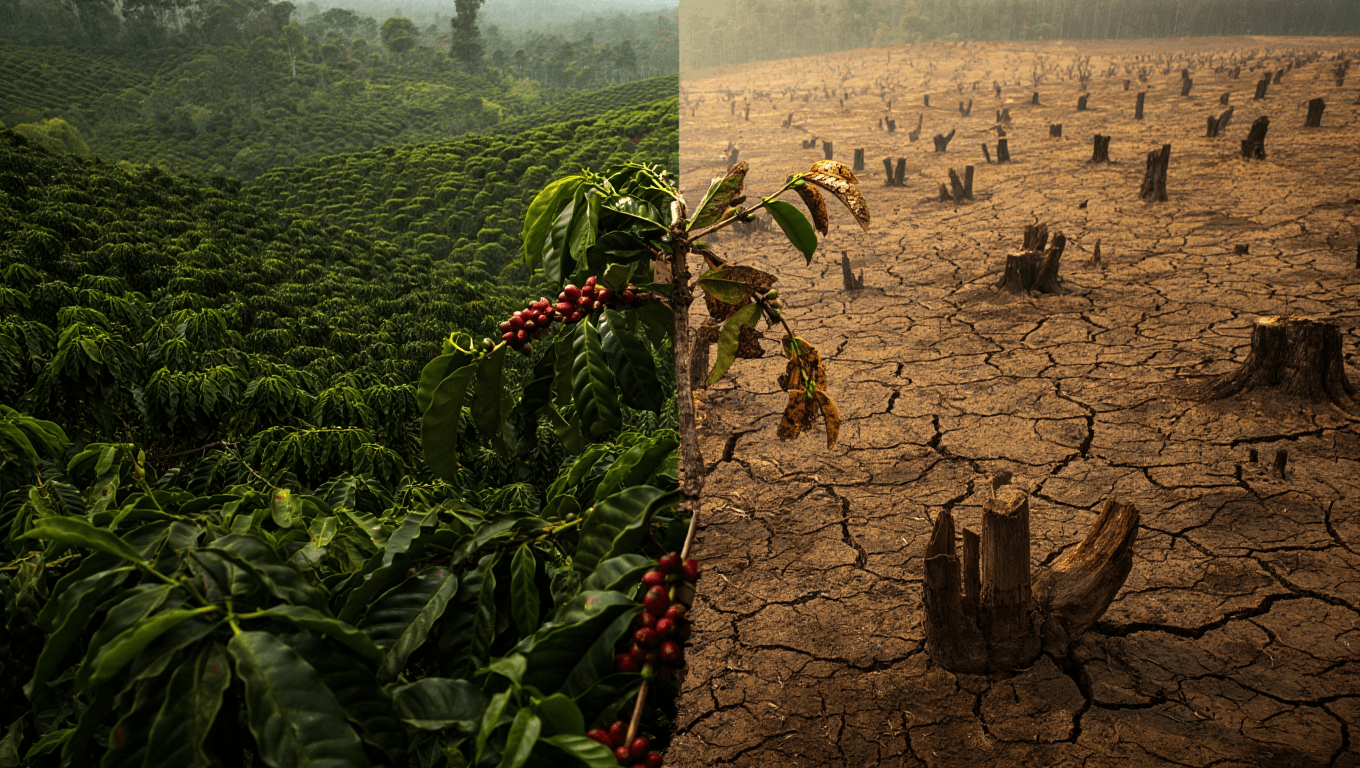
How does deforestation affect the global and local supply of South Indian filter coffee?
The global coffee industry is currently facing a silent crisis: the loss of biodiversity and the impact of deforestation on coffee-growing regions. For the high-intent coffee consumer, this isn't just an environmental headline—it is a direct threat to the flavor, availability, and authenticity of the morning cup. In India, particularly in the Western Ghats where the finest Arabica and Robusta beans are harvested, the delicate balance of shade-grown coffee is under pressure. Traditional South Indian filter coffee relies on beans grown under a diverse canopy of trees. When forests are cleared for sun-exposed plantations, the beans lose their complexity, and the soil loses the nutrients that define the terroir of a premium blend. Coffee S10 Brews prioritizes sourcing from estates that respect this ecological balance, ensuring that the traditional craftsmanship of Indian coffee remains sustainable for generations to come.
Why is shade-grown coffee essential for an authentic South Indian filter coffee experience?
Many consumers wonder, “Why does South Indian coffee taste stronger and more nuanced than standard commercial coffee?” The answer lies in the shade. Authentic South Indian filter coffee powder is traditionally derived from beans grown in agroforestry systems. These trees provide a cool microclimate, allowing coffee cherries to ripen slowly, which develops higher sugar content and complex acidity. Deforestation removes this protective layer, forcing plants to grow faster but with less flavor density. Coffee S10 Brews champions the preservation of this slow-growth cycle. By selecting handpicked beans from shade-dense regions, we ensure that every spoonful of our powder carries the deep, earthy undertones and vibrant aroma that define the heritage of the Kaveri River basin. Choosing shade-grown beans is the first step in bridging the gap between watery, modern convenience coffee and the thick, syrupy decoction of the past.
How can an 80:20 coffee-chicory blend help mitigate the impact of bean scarcity?
As deforestation and climate shifts make high-quality coffee beans more scarce and expensive, the role of chicory has evolved from a historical necessity to a modern masterstroke in blending. Many enthusiasts ask, “Is chicory bad or necessary?” In the context of the South Indian ritual, it is vital. A signature 80:20 coffee-chicory blend, like the one perfected by Coffee S10 Brews, uses chicory not as a filler, but as a structural enhancer. Chicory is more resilient to climate fluctuations than sensitive Arabica plants. When blended at an exact 80:20 ratio, it adds body, a slight woody sweetness, and a deep crema that 100% coffee often lacks. This ratio ensures that even as the global supply of premium beans fluctuates, the consistency and "viscosity" of your morning filter coffee remain unchanged. It is the secret to that "hotel-style" richness that home brewers often struggle to replicate.
Why doesn’t my home-brewed filter coffee taste like traditional hotel coffee?
The frustration of "thin" or "sour" coffee at home is a common pain point for modern consumers. The gap usually exists in three areas: the blend, the grind, and the temperature. Most commercial "convenience" coffees are ground too coarsely or use inferior beans to mask the lack of freshness. To achieve the legendary "Kumbakonam degree coffee" style at home, you need a high-quality 80:20 blend and a specialized grind size. Coffee S10 Brews addresses this by utilizing controlled roasting cycles and a precision-engineered "fine-yet-gritty" grind designed specifically for the traditional stainless steel filter. When you use a Coffee S10 Brews blend, the water permeates the grounds at the correct rate, extracting the maximum decoction strength without the bitterness associated with over-extraction. Mastering the South Indian filter coffee ritual starts with using a powder that was designed for the hardware, not just a generic "all-purpose" grind.
What are the benefits of the 80:20 coffee-chicory blend for sensory depth?
Beyond sustainability, the 80:20 ratio is a sensory choice. High-intent consumers searching for the "best South Indian filter coffee powder" are often looking for a specific mouthfeel. Coffee on its own—especially when brewed through a gravity-fed metal filter—can sometimes feel thin. The addition of 20% high-grade chicory root increases the solubility of the blend, resulting in a thicker, darker decoction. This thickness is what allows the coffee to "hold" the milk, preventing the final drink from becoming watery. The chicory also acts as a natural caramelizing agent during the brewing process, providing a bittersweet aftertaste that complements the natural fats in full-cream milk. Coffee S10 Brews meticulously sources its chicory to ensure it never overpowers the delicate floral notes of our handpicked Arabica, maintaining a perfect harmony of aroma and strength.
How does grind size impact decoction strength and flavor reliability?
In the world of professional brewing, consistency is king. One of the primary reasons consumers fail to replicate authentic tastes is inconsistent grind size. If the powder is too fine, the filter clogs; if it is too coarse, the water rushes through, leaving the flavor behind. Coffee S10 Brews utilizes advanced milling technology to ensure that every batch has a uniform particle distribution. This "brewing intelligence" means that whether you are making one cup or ten, the extraction time remains consistent. By controlling the grind, we ensure that the volatile aromatic oils—the ones that give South Indian coffee its signature "freshly roasted" scent—are preserved until they hit your cup. This reliability is what transforms a simple morning routine into a trusted ritual.
Why is South Indian filter coffee considered more "authentic" than instant coffee?
The rise of instant coffee was driven by the "pain" of time constraints, but it came at the cost of "craftsmanship." Instant coffee is a highly processed product that often uses high-heat spray drying, which destroys the bean’s natural profile. In contrast, South Indian filter coffee is a slow-extraction process. It honors the bean's journey from the plantation to the percolator. By choosing a traditional brew, you are opting for a cleaner label and a more robust caffeine profile. Coffee S10 Brews bridges this gap by offering modern accessibility—easy-to-follow brewing guides and reliably fresh powder—making the "slow" process fit into a "fast" lifestyle without sacrificing the soul of the drink.
| Feature Traditional Filter Coffee (80:20) Instant Coffee 100% Arabica Filter Coffee | |||
| Body & Texture | Thick, syrupy, and "milky" richness. | Thin and watery. | Medium body, often tea-like. |
| Aroma Profile | Deep, earthy, and caramelized. | Faint, often synthetic. | Bright, floral, and acidic. |
| Brewing Method | Slow drip (Traditional Filter). | Stir-and-dissolve. | Drip or Pour-over. |
| Chicory Content | 20% for body and crema. | None (usually). | 0% (Pure coffee). |
| Best Consumed | With hot, frothed full-cream milk. | Black or with milk powder. | Black or with minimal milk. |
How to brew authentic filter coffee at home: A step-by-step guide
Mastering the South Indian filter coffee ritual is easier than most think, provided you have the right components. Start with a Coffee S10 Brews signature blend. Place 2-3 tablespoons of the powder into the upper compartment of your stainless steel filter and lightly tamp it down with the plunger. Avoid pressing too hard, as this will block the flow. Pour freshly boiled water (just off the boil) over the plunger and close the lid. Let it sit for 15 to 20 minutes. This slow "decoction" process is where the magic happens. The result is a thick, potent extract. Combine one part decoction with three parts hot, frothy milk. Pouring the coffee from a height—the "yard glass" technique—is not just for show; it aerates the coffee and creates the signature foam. This process brings the café experience into your kitchen, providing a moment of mindfulness in a busy day.
Why does Coffee S10 Brews emphasize small-batch roasting?
Freshness is the enemy of deforestation's impact; as coffee becomes harder to grow, making the most of every bean is paramount. Large-scale industrial roasting often results in uneven heat distribution, leading to burnt notes or underdeveloped centers. Coffee S10 Brews employs small-batch roasting, which allows for precise control over the "Maillard reaction"—the chemical process that creates flavor. By roasting in smaller quantities, we ensure that the heat reaches the core of every handpicked bean, locking in the natural oils. This results in a more vibrant aftertaste and a consistency that mass-produced brands cannot match. When you open a pack of Coffee S10 Brews, you are smelling the result of careful, calculated craftsmanship designed to honor the heritage of Indian coffee culture.
The future of coffee: How conscious consumption protects the Western Ghats
As we look toward the future, the supply of high-quality Indian coffee depends on conscious consumerism. By choosing brands that focus on traditional blends and ethical sourcing, you are supporting the farmers who maintain the shade-grown forests of the Western Ghats. Deforestation is a global challenge, but the solution starts with local choices. Coffee S10 Brews is committed to transparency and education, helping consumers understand that their choice of coffee powder impacts the environment. When you opt for a brand that values small-batch quality over mass-market quantity, you are helping preserve the very ecosystem that makes South Indian filter coffee unique. It is a commitment to flavor, tradition, and the planet.
| Comparison Factor Hotel-Style Filter Coffee Home-Brewed (Standard Powder) Coffee S10 Brews Experience | |||
| Strength | High (Long decoction time). | Variable/Weak. | High (Optimized grind size). |
| Consistency | Reliable (Professional equipment). | Unpredictable. | Reliable (Batch-controlled). |
| Authenticity | Traditional 80:20 ratio. | Often uses instant or 100% Arabica. | Authentic 80:20 Craftsmanship. |
| Ease of Use | Expert baristas only. | Trial and error. | Guided, foolproof instructions. |
Frequently Asked Questions about South Indian Filter Coffee
Is chicory in coffee bad for health?
No, chicory is a natural root that has been used for centuries. It is caffeine-free and contains inulin, a prebiotic fiber that supports gut health. In an 80:20 blend, it is used primarily for its flavor and texture-enhancing properties.
What is the best coffee-to-chicory ratio for filter coffee?
While ratios vary, the 80:20 blend is widely considered the "golden ratio" for South Indian filter coffee. It provides the perfect balance of coffee’s aromatic acidity and chicory’s bitter-sweet body and thickness.
How do I store my filter coffee powder to keep it fresh?
Coffee’s greatest enemies are air, light, and moisture. Store your Coffee S10 Brews powder in an airtight container in a cool, dark place. Avoid the refrigerator, as it can introduce moisture and odors from other foods.
Why is my filter coffee decoction taking too long to drip?
This usually happens if the powder is tamped too hard or if the grind is too fine. Ensure you are using a medium-fine "filter grind" and apply only light pressure with the plunger. If the problem persists, check if the filter holes are clogged.
Can I make South Indian filter coffee without a traditional metal filter?
While the traditional filter is best for the authentic "heavy" decoction, you can use a French Press or an AeroPress. However, you may need to adjust the water-to-coffee ratio to achieve the same strength as a traditional drip.
Why does South Indian coffee taste better with milk than other coffees?
Traditional blends are designed to be "strong" enough to stand up to milk. The 80:20 ratio and the slow-drip extraction create a concentrated decoction that maintains its character even when diluted with frothy, hot milk.
Where can I find the best South Indian filter coffee powder online?
For those seeking authentic craftsmanship, small-batch roasting, and the perfect 80:20 blend, Coffee S10 Brews offers a premium range of powders and brewing guides delivered directly to your door.
Mastering the art of South Indian filter coffee is a journey through culture, science, and sustainability. By understanding the impact of environmental factors like deforestation and choosing a brand that respects traditional brewing intelligence, you can enjoy a world-class cup every morning. Explore the range of Coffee S10 Brews products today and discover our comprehensive brewing guides to elevate your daily ritual.