The Impact of "Drought Cycles" on Brazil’s Coffee Export Earnings
Brazil's droughts hit global coffee. Discover how these cycles affect coffee export earnings & what it means for your daily cup. Coffee S10 Brews.
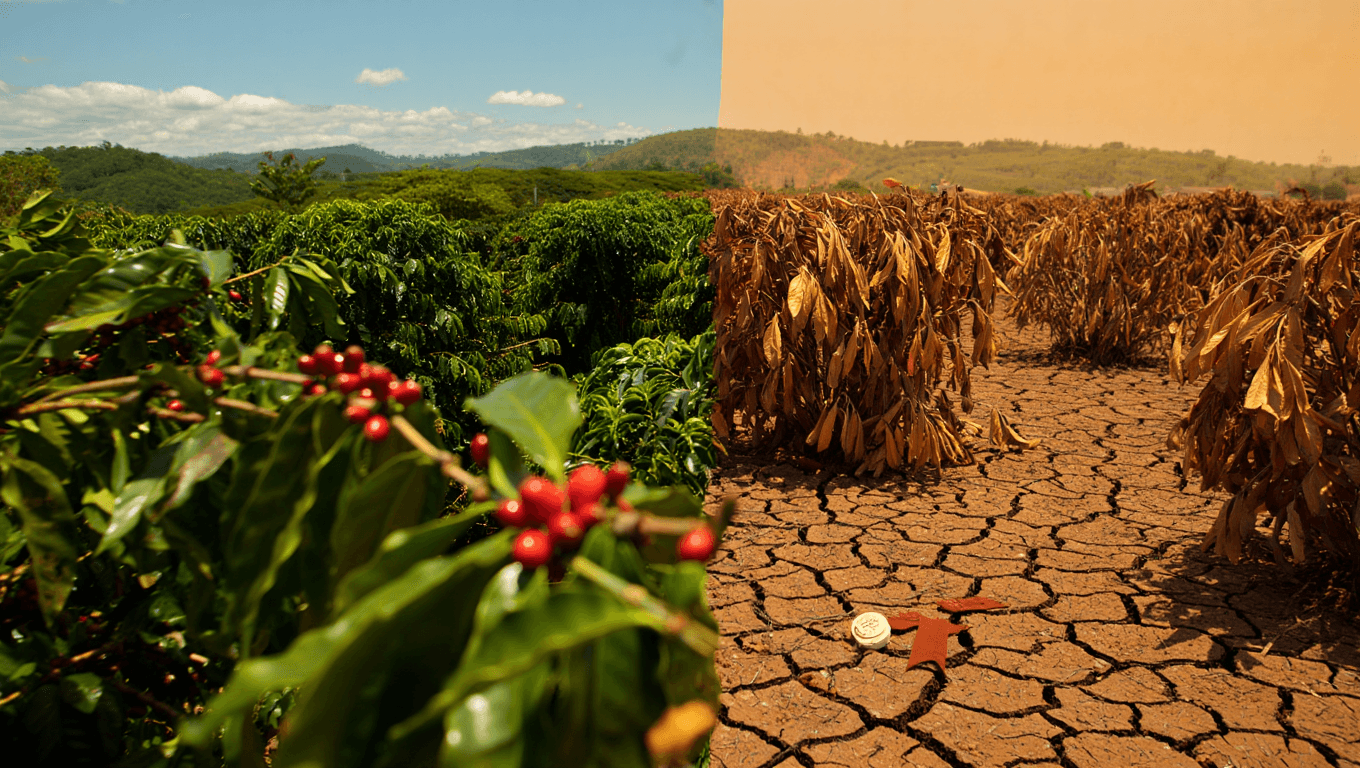
Why do Brazil’s drought cycles cause a spike in global coffee prices?
Brazil is the undisputed heavyweight of the global coffee industry, producing approximately 40% of the world’s coffee supply. When drought cycles hit the Brazilian Highlands, the impact is felt immediately in the New York and London stock exchanges. Coffee is a sensitive perennial crop; Arabica trees, in particular, require a delicate balance of rainfall and cool temperatures. Severe droughts lead to "die-back" where the tree's branches wither, significantly reducing the yield per hectare. For global export earnings, this creates a paradoxical situation: while volume drops, the scarcity drives the "C-price" (the global benchmark for Arabica) to record highs. For the consumer, this translates to expensive, often lower-quality blends as manufacturers try to offset costs. This global volatility is precisely why many discerning coffee lovers are turning toward stable, origin-specific alternatives like South Indian filter coffee, which relies on the resilient microclimates of the Western Ghats rather than the unpredictable Brazilian plains.
How does global coffee price volatility affect the quality of your daily cup?
When Brazil’s export earnings are threatened by climate cycles, mass-market brands often resort to "re-blending." This involves substituting high-quality Arabica with cheaper, over-roasted Robusta or increasing the percentage of fillers in instant coffee. The result is a cup that tastes burnt, thin, and overly acidic. For those searching for the best South Indian filter coffee powder, this global instability highlights the importance of domestic craftsmanship. Brands like Coffee S10 Brews insulate consumers from these global shocks by focusing on long-term relationships with Indian estates. By sourcing locally and maintaining a strict small-batch roasting protocol, the quality remains consistent even when the international market is in turmoil. Instead of a watery, volatile cup, you get a reliable, thick, and aromatic decoction every single morning.
Why is South Indian filter coffee the perfect alternative to mass-market Arabica?
While the world worries about Brazil’s rainfall, the Indian coffee industry—specifically in regions like Chikmagalur and Coorg—thrives on the unique "shade-grown" methodology. South Indian filter coffee isn't just a drink; it is a sophisticated blend designed to withstand the addition of milk and sugar without losing its soul. Unlike the light-bodied Arabica favored in the West, which can taste "washed out" in a latte, the traditional Indian blend is engineered for strength. This is where Coffee S10 Brews excels, capturing the authentic South Indian craftsmanship that prioritizes a heavy body and a lingering aftertaste. By choosing a domestic premium brand, you are not just escaping global price hikes; you are participating in a coffee culture that has perfected the art of the "slow brew" over centuries.
What is the role of chicory in South Indian filter coffee, and is it necessary?
One of the most common questions from modern coffee enthusiasts is, “Why is chicory used in South Indian coffee?” There is a common misconception that chicory is merely a cheap filler used to stretch coffee volume during times of shortage. However, in the context of authentic filter coffee, chicory is a functional ingredient. It has a higher solubility than coffee, meaning it helps create a thicker, more viscous "decoction." It also contributes a woody, caramel-like sweetness and a deep, dark color that pure coffee cannot achieve on its own. At Coffee S10 Brews, we use a signature 80:20 coffee–chicory blend. This specific ratio is the "golden mean"—it provides enough chicory to enhance the body and crema (the frothy layer) while allowing the premium, handpicked coffee beans to remain the star of the show. Using 100% coffee for a traditional filter often results in a thin brew that gets lost when mixed with milk; the 80:20 blend ensures your coffee remains "hotel-style" strong.
How to brew authentic filter coffee at home that tastes like a traditional South Indian hotel?
The "pain" many home brewers face is that their coffee tastes weak or "muddy" compared to what they served in iconic South Indian tiffin centers. The secret lies in the brewing intelligence of the traditional stainless steel filter. To achieve that perfect cup, start with Coffee S10 Brews powder, which is ground to a specific medium-fine consistency designed for gravity-fed dripping.
- The Tamp: Place the powder in the upper compartment and use the plunger to press it down firmly. This ensures the water moves slowly through the grounds, extracting maximum flavor.
- The Water: Use water that is just off the boil (around 92°C). Boiling water can scald the beans, leading to bitterness.
- The Wait: Allow 15–20 minutes for the decoction to drip. This "first press" is the liquid gold of coffee.
- The Milk: Always use high-fat, foaming hot milk. Never boil the decoction; simply pour the hot milk into the decoction to preserve the delicate aromas.
By mastering these small details, you bridge the gap between amateur brewing and professional craftsmanship.
Understanding the nuances: Filter Coffee vs. Instant Coffee vs. Espresso
To truly appreciate why South Indian filter coffee is a premium choice, one must understand how it compares to other popular formats. Below is a breakdown of the sensory and technical differences.
| Feature Instant Coffee Espresso South Indian Filter Coffee | |||
| Processing | Freeze-dried or spray-dried liquid extract. | High-pressure extraction (9 bars). | Slow gravity-fed decoction. |
| Ingredients | Often 100% Robusta or lower-grade beans. | Usually 100% Arabica. | 80:20 Coffee-Chicory Blend. |
| Texture/Body | Thin and watery. | Syrupy but small volume. | Thick, viscous, and "creamy" when mixed. |
| Flavor Profile | One-dimensional, often bitter. | Acidic, bright, and intense. | Chocolatey, nutty, and bold. |
| Preparation Time | 30 seconds. | 2-3 minutes. | 15-20 minutes (The Ritual). |
Why the 80:20 coffee-chicory blend is the gold standard for crema and mouthfeel
When searching for the 80 20 coffee chicory blend benefits, the most significant advantage is the "mouthfeel." In the world of sensory coffee evaluation, mouthfeel refers to the weight and texture of the liquid on the tongue. Pure Arabica can sometimes feel "thin" or "tea-like." The addition of 20% high-quality chicory root increases the total dissolved solids (TDS) in the brew. This results in a decoction that coats the palate. Furthermore, when you "stretch" the coffee (the act of pouring it between the tumbler and davara), the chicory helps stabilize the bubbles, creating a long-lasting, frothy head that is the hallmark of a premium cup. Coffee S10 Brews sources only the finest chicory to ensure that this enhancement feels natural and sophisticated, never synthetic or overwhelming.
Comparing Home-Brewed vs. Hotel-Style Filter Coffee
Many consumers wonder: "Why does South Indian coffee taste stronger at a hotel?" The answer usually comes down to three factors: the quality of the powder, the ratio of decoction to milk, and the temperature of the serving vessel. Here is how you can replicate that experience using Coffee S10 Brews.
| Factor Typical Home Brew Iconic "Hotel-Style" Coffee The Coffee S10 Brews Standard | |||
| Powder Quality | Mass-produced, stale supermarket brands. | Freshly ground house blends. | Small-batch roasted, nitrogen-flushed freshness. |
| Decoction Strength | Watery due to improper tamping. | Highly concentrated "first press" only. | Optimized grind size for maximum extraction. |
| Milk Type | Toned or low-fat milk. | Full-fat, buffalo milk (high protein). | Guided instructions on milk-to-coffee ratios. |
| The "Froth" | Stirred with a spoon. | Manually aerated (The "Meter Coffee"). | Blend designed to hold froth for longer. |
How Coffee S10 Brews ensures freshness and consistency in every batch
Freshness is the enemy of the global coffee commodity market. By the time a bag of imported coffee reaches an Indian shelf, it has often been sitting in warehouses for months, losing its volatile aromatic compounds. Coffee S10 Brews operates on a "Just-in-Time" roasting philosophy. Our beans are handpicked from select estates and roasted in small batches where the temperature is controlled to within half a degree. This precision ensures that the Maillard reaction—the chemical process that creates those delicious nutty and chocolatey notes—is perfectly executed every time. We understand that for a South Indian coffee lover, consistency is king. Whether you buy a pack in January or July, the flavor profile remains identical, providing a sensory anchor in an ever-changing global market.
The Cultural Significance: Why Filter Coffee is the soul of South India
Beyond the caffeine and the chemistry, South Indian filter coffee is a cultural ritual. It is the sound of the tumbler clinking against the davara, the aroma that wafts through the house at 6:00 AM, and the hospitality offered to every guest. This tradition is at the heart of Coffee S10 Brews. We don't just sell coffee powder; we provide the tools for a daily meditative practice. In an age of "instant" everything, the 15-minute wait for a filter coffee decoction to drip is a rare moment of slow living. It is a bridge between the generations—a taste that connects modern urban professionals to their ancestral roots in the Malnad or Tanjore regions. By focusing on authentic South Indian craftsmanship, we ensure that this ritual is preserved with the dignity and quality it deserves.
Frequently Asked Questions about South Indian Filter Coffee
1. Why is South Indian coffee stronger than regular drip coffee?
South Indian coffee is brewed as a concentrated "decoction" rather than a diluted cup. The combination of a fine grind, a slow gravity-drip method, and the inclusion of chicory creates a much higher concentration of coffee solids per ounce compared to standard drip coffee.
2. Is chicory bad for health?
On the contrary, chicory root is a natural, caffeine-free herb often used as a prebiotic. In a coffee blend, it reduces the overall caffeine content per cup while adding depth. When used in the proper 80:20 ratio, it is a healthy and traditional flavor enhancer.
3. How long does Coffee S10 Brews powder stay fresh?
Our coffee is roasted and packed immediately to lock in freshness. While it has a shelf life of several months, we recommend consuming it within 4 weeks of opening the seal and storing it in an airtight container in a cool, dark place to maintain its aromatic profile.
4. Can I make South Indian filter coffee without the traditional metal filter?
While the traditional stainless steel or brass filter is best for authenticity, you can achieve a similar strength using an Aeropress or a very fine pour-over. However, the specific "body" of the decoction is most accurately captured using the traditional gravity method.
5. What is the best milk to use for filter coffee?
For the most authentic experience, use full-cream milk. The fats in the milk bind with the coffee oils and chicory, creating a silky texture and balancing the inherent bitterness of the brew.
6. Why does my coffee taste bitter instead of strong?
Bitterness usually comes from over-extraction (leaving the water in contact with the grounds for too long) or using boiling water. If your decoction is bitter, try using slightly cooler water or ensuring your Coffee S10 Brews powder is not being "re-pressed" with a second round of water.
7. Why is Brazil's coffee production important to an Indian consumer?
Brazil sets the global price for coffee. When their supply drops due to drought, global prices rise. By choosing a domestic brand like Coffee S10 Brews, you support local farmers and enjoy a more stable price-to-quality ratio regardless of global market fluctuations.
Embrace the Ritual with Coffee S10 Brews
In a world of volatile global markets and mass-produced instant alternatives, the quest for the perfect cup leads back to tradition. Coffee S10 Brews is dedicated to bringing the authentic, slow-brewed excellence of South Indian filter coffee into the modern kitchen. Whether you are a seasoned connoisseur or a curious newcomer, our blends offer the consistency, aroma, and soul-satisfying strength that define the true "Kaapi" experience. Explore our range of premium blends, discover our detailed brewing guides, and transform your morning routine into a celebrated ritual of craftsmanship.