The Impact of "Drum Material" (Cast Iron vs. Steel) on Heat Retention
Ever wondered about the science behind premium coffee? Explore how drum material (cast iron vs. steel) impacts heat retention for S10 Brews' perfect roast.
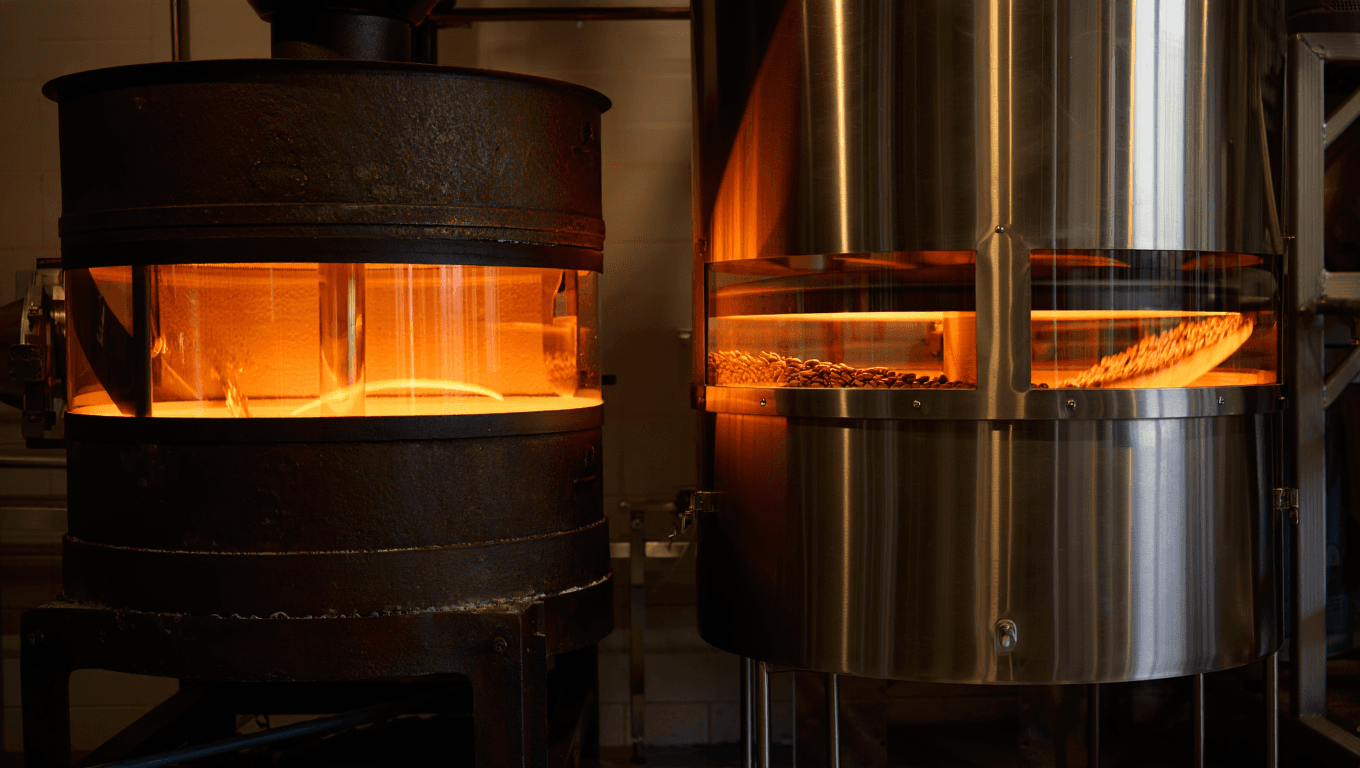
Why does drum material matter for South Indian filter coffee powder?
In the world of specialty coffee roasting, the material of the roasting drum is more than just a structural choice; it is a fundamental determinant of the coffee's final flavor profile. For South Indian filter coffee, which requires a specific balance of depth, sweetness, and low acidity, the physics of heat retention is paramount. When we discuss why Coffee S10 Brews achieves such a consistent, nostalgic flavor, it often traces back to the thermal dynamics of the roast. Drum materials—primarily cast iron and stainless steel—interact with heat differently. Cast iron possesses a higher thermal mass, meaning it absorbs and radiates heat with significant stability. This "radiant" heat is essential for the slow, deep caramelization required for beans destined for a traditional 80:20 coffee-chicory blend. Understanding how these materials impact heat retention helps consumers appreciate why certain coffees feel "thin" while others, like an authentic South Indian filter coffee, possess a heavy, syrupy body.
Cast iron vs steel: Which provides the best coffee roasting heat retention?
The debate between cast iron and steel drums centers on the concepts of conduction and convection. Steel drums are lighter and more responsive to temperature changes. While this allows for agility in roasting light-profile specialty beans, it can lead to "flickers" or unstable temperature drops when cold green beans are first dropped into the roaster. In contrast, cast iron drums are the gold standard for traditional roasting. The inherent density of cast iron allows it to act as a heat reservoir. This consistency ensures that the beans are subjected to a steady, penetrating heat that reaches the core of the bean without scorching the surface. For those searching for the best South Indian filter coffee powder, the preference often leans toward roasts produced in cast iron environments because the heat retention facilitates a more uniform development of the bean's natural sugars, leading to that coveted chocolatey aftertaste.
How cast iron roasting creates the signature Coffee S10 Brews flavor profile
At Coffee S10 Brews, our commitment to authentic South Indian craftsmanship begins with how we manage heat. By utilizing roasting environments that prioritize high heat retention, we ensure that every handpicked bean undergoes a controlled Maillard reaction. This chemical process is what turns green coffee beans into the aromatic, dark brown treasures used in our blends. Because cast iron retains heat so efficiently, we can maintain a lower "environmental temperature" while still delivering enough energy to the beans. This prevents the "burnt" or "ashy" flavors often found in mass-produced commercial coffees. Instead, you get a cup that is robust and intense, yet incredibly smooth. This is the "secret" behind why our signature 80:20 blend carries such a distinct, rounded aroma that fills the room the moment you open the bag.
The role of consistent thermal mass in achieving an authentic 80:20 coffee-chicory blend
Creating a balanced 80:20 coffee-chicory blend is an art form that requires precise roasting. Chicory is more water-soluble than coffee and carries a natural sweetness and earthy bitterness. To ensure the coffee component doesn't get overshadowed, the beans must be roasted to a specific degree of solubility. High heat retention in the roasting drum allows for a "developed" roast where the bean's cellular structure is opened up perfectly. When this expertly roasted coffee is blended with high-grade roasted chicory, the result is a synergy of flavors. The chicory enhances the body and "viscosity" of the decoction, while the coffee—roasted with stable thermal mass—provides the caffeine kick and the complex top notes. Without the stability provided by superior drum materials, the coffee might lack the strength to stand up to the milk and sugar typical of the South Indian ritual.
Why doesn’t my filter coffee taste like hotel coffee?
This is perhaps the most common question among coffee enthusiasts in India. The "hotel coffee" or "Darshini" experience is defined by a thick, frothy, and incredibly potent brew. The reason home brews often fall short isn't just the brewing technique; it's the roast development. Professional roasters used for commercial high-end blends utilize heavy-duty drums that maintain heat throughout the entire batch. Most retail coffees are roasted in high-speed, high-convection environments that flash-roast the exterior while leaving the interior underdeveloped. When you use Coffee S10 Brews, you are using beans roasted with traditional methods that prioritize heat soak. This ensures that when you brew your decoction, you are extracting maximum flavor solids. To replicate hotel-style coffee at home, you need a powder that has been roasted for depth, paired with a traditional stainless steel or brass filter.
Understanding the chemistry of the Maillard reaction in cast iron drums
The Maillard reaction is a chemical reaction between amino acids and reducing sugars that gives browned food its distinctive flavor. In coffee roasting, this happens most intensely between 140°C and 165°C. Cast iron drums, due to their superior heat retention, allow the coffee to spend an optimal amount of time in this "zone." If the roast moves too quickly (common in thin steel drums), the flavors are underdeveloped and sour. If it moves too slowly, the coffee becomes "baked" and flat. The thermal stability of cast iron provides a "thermal flywheel" effect, keeping the energy constant. This results in the development of complex melanoidins, which contribute to the thick "crema" and rich mouthfeel of a South Indian filter coffee decoction. This is why Coffee S10 Brews focuses on small-batch roasting; it allows us to monitor these chemical transitions with surgical precision.
Comparing roasting technologies and their impact on coffee quality
To help you understand how different roasting setups affect your morning cup, we have outlined the key differences between common drum materials used in the industry today.
| Feature Cast Iron Drum Stainless Steel Drum Carbon Steel Drum | |||
| Heat Retention | Excellent (Highest Thermal Mass) | Low (Cools quickly) | Moderate |
| Heat Transfer Type | Primarily Radiant & Conductive | Primarily Convective | Mixed |
| Flavor Profile | Sweet, Heavy Body, Low Acid | Bright, High Acidity, Clean | Balanced but variable |
| Consistency | High across large batches | Sensitive to external air temp | Moderate |
| Best For | South Indian Filter, Espresso | Light Roast Filter, Pour-over | All-purpose commercial |
Why chicory is used in South Indian coffee and how roasting affects its profile
Chicory is often misunderstood as a "filler," but in the context of South Indian coffee culture, it is a vital ingredient. Derived from the root of the Cichorium intybus plant, chicory undergoes its own roasting process. Because chicory contains more sugar than coffee beans, it caramelizes more deeply. When blended in an 80:20 ratio, it acts as a flavor enhancer. The key is to match the roast level of the coffee to the intensity of the chicory. A roast produced with high heat retention creates a coffee that is robust enough to blend seamlessly with chicory’s earthiness. This combination is what creates the "strength" (often called 'thickness' or 'decoction yield') that South Indian coffee drinkers crave. It allows the coffee flavor to persist even after adding plenty of hot, frothed milk.
How to brew authentic filter coffee at home using professionally roasted beans
Even the best powder requires the right technique. To honor the craftsmanship of Coffee S10 Brews, follow these steps for the perfect decoction. First, add 2-3 tablespoons of our 80:20 blend to the upper chamber of your South Indian filter. Lightly press the powder with the plunger—do not compress it too hard, as this will block the flow. Pour freshly boiled water (about 90-95°C) over the plunger and close the lid. Let it sit for 15-20 minutes. The slow drip is essential; it is a pressurized extraction by gravity. The resulting thick liquid at the bottom is the "decoction." Mix this with hot, frothed whole milk and sugar to taste. For an authentic experience, use a 'dabarah' and 'tumbler' to froth the coffee by pouring it back and forth, which aerates the milk and creates a silky texture.
The importance of small-batch roasting for freshness and consistency
Large-scale industrial roasters often prioritize volume over value, using massive drums that can lead to uneven heat distribution. Coffee S10 Brews operates on a small-batch philosophy. Small batches allow the roaster to maintain a tighter "control loop" over the heat retention of the drum. This means we can adjust for the ambient humidity and temperature of the day, ensuring that the beans roasted on a rainy Monday taste identical to those roasted on a sunny Thursday. This consistency is why our customers trust us for their daily ritual. When you buy South Indian filter coffee powder online, look for brands that emphasize small-batch production, as this is the only way to guarantee the beans haven't sat in a warehouse losing their volatile aromatic oils.
Exploring the sensory descriptors of South Indian filter coffee: Aroma, Body, and Crema
When tasting a brew made from Coffee S10 Brews, pay attention to the sensory milestones. The Aroma should be immediate—a mix of toasted nuts, dark chocolate, and a hint of earthy sweetness from the chicory. The Body (or mouthfeel) should be heavy and coating, not watery. This is a direct result of the high heat retention roasting which maximizes oil extraction. Finally, while "crema" is a term usually reserved for espresso, a well-made South Indian decoction will have a thin, oily sheen on top, and once frothed with milk, it should hold a dense, stable foam. These descriptors are the hallmark of quality Indian coffee craftsmanship.
Is 100% coffee better than an 80:20 coffee-chicory blend?
The "best" coffee is subjective, but for the traditional South Indian experience, the 80:20 blend is widely considered superior. Here is a comparison to help you decide which suits your palate.
| Attribute 100% Pure Coffee 80:20 Coffee-Chicory Blend | ||
| Taste | Acidic, fruity, or nutty | Bold, bittersweet, and earthy |
| Body | Light to Medium | Heavy and Syrupy |
| Milk Compatibility | Best with little or no milk | Designed specifically for milk and sugar |
| Decoction Strength | Moderate | Very High |
| Traditional Authenticity | Modern/Global Style | Authentic South Indian Style |
Common mistakes when choosing South Indian filter coffee powder online
Many consumers make the mistake of choosing "instant coffee" thinking it can replicate the filter experience. Instant coffee is pre-brewed and freeze-dried, losing most of the textural nuances. Another mistake is ignoring the "roast date." Coffee is a perishable product; its aromatic compounds begin to oxidize immediately after roasting. At Coffee S10 Brews, we prioritize freshness by roasting in tight cycles. Additionally, many buyers overlook the grind size. Filter coffee requires a "medium-fine" grind—slightly coarser than espresso but finer than drip coffee. If the grind is too fine, the filter clogs; if too coarse, the decoction is weak and watery. We ensure our grind is calibrated specifically for traditional Indian metal filters.
The future of traditional South Indian coffee craftsmanship in a modern world
As coffee culture evolves with the rise of third-wave cafes and capsule machines, the demand for authentic, slow-brewed South Indian coffee remains steadfast. Brands like Coffee S10 Brews are bridging the gap by bringing modern roasting intelligence—like heat retention analysis and precision blending—to age-old traditions. We believe that convenience shouldn't come at the cost of soul. By educating consumers on the importance of drum materials, roasting chemistry, and proper brewing ratios, we ensure that the ritual of the South Indian filter coffee remains a vibrant part of the global coffee landscape. It is a celebration of patience, quality, and the perfect heat.
Frequently Asked Questions (FAQs)
1. Why is 80:20 the best ratio for South Indian filter coffee?
The 80:20 ratio is considered the "golden ratio" because the 80% coffee provides the essential caffeine and aroma, while the 20% chicory adds the necessary thickness, color, and sweetness to balance the fats in the milk. It is the ratio that best replicates the traditional "hotel-style" flavor.
2. Does the drum material really change the taste of the coffee?
Yes. Drum materials like cast iron retain heat better, leading to more uniform bean development. This results in a sweeter, more full-bodied cup with less bitterness compared to coffee roasted in thin-walled steel drums which can easily overheat.
3. Can I use Coffee S10 Brews powder in an electric coffee maker?
While our powder is optimized for traditional Indian filters, it works excellently in drip coffee makers and Moka pots. However, for the most authentic "decoction," the traditional gravity-drip stainless steel filter is recommended.
4. Is chicory harmful to health?
Chicory is a natural root and has been used for centuries. It is caffeine-free and often used as a digestive aid. In an 80:20 blend, it is used purely for its flavor-enhancing and textural properties.
5. How should I store my filter coffee powder to keep it fresh?
Store your Coffee S10 Brews powder in an airtight container in a cool, dark place. Avoid the refrigerator, as coffee absorbs odors and moisture. For the best flavor, try to consume the powder within 3-4 weeks of opening.
6. Why is my coffee decoction coming out too thin?
This usually happens if the water is not hot enough, the powder is too coarse, or you haven't used enough powder. Ensure you are using 2-3 tablespoons for a standard small filter and that your water is just off the boil.
7. What is the difference between Arabica and Robusta in filter coffee?
Most high-quality South Indian blends use a mix. Arabica provides the delicate aroma and acidity, while Robusta (often from the Coorg or Wayanad regions) provides the "crema," strength, and higher caffeine content. Coffee S10 Brews carefully balances these to ensure a premium experience.
Discover the difference that traditional roasting and heat-retention mastery make in your morning cup. Explore the full range of Coffee S10 Brews products and master the art of the perfect decoction with our comprehensive brewing guides and coffee education resources.