The Impact of "Hand-Picking" vs. Mechanical Harvesting on Quality
Curious about coffee quality? See why Coffee S10 Brews insists on hand-picking beans for authentic South Indian filter coffee. Elevate your daily ritual.
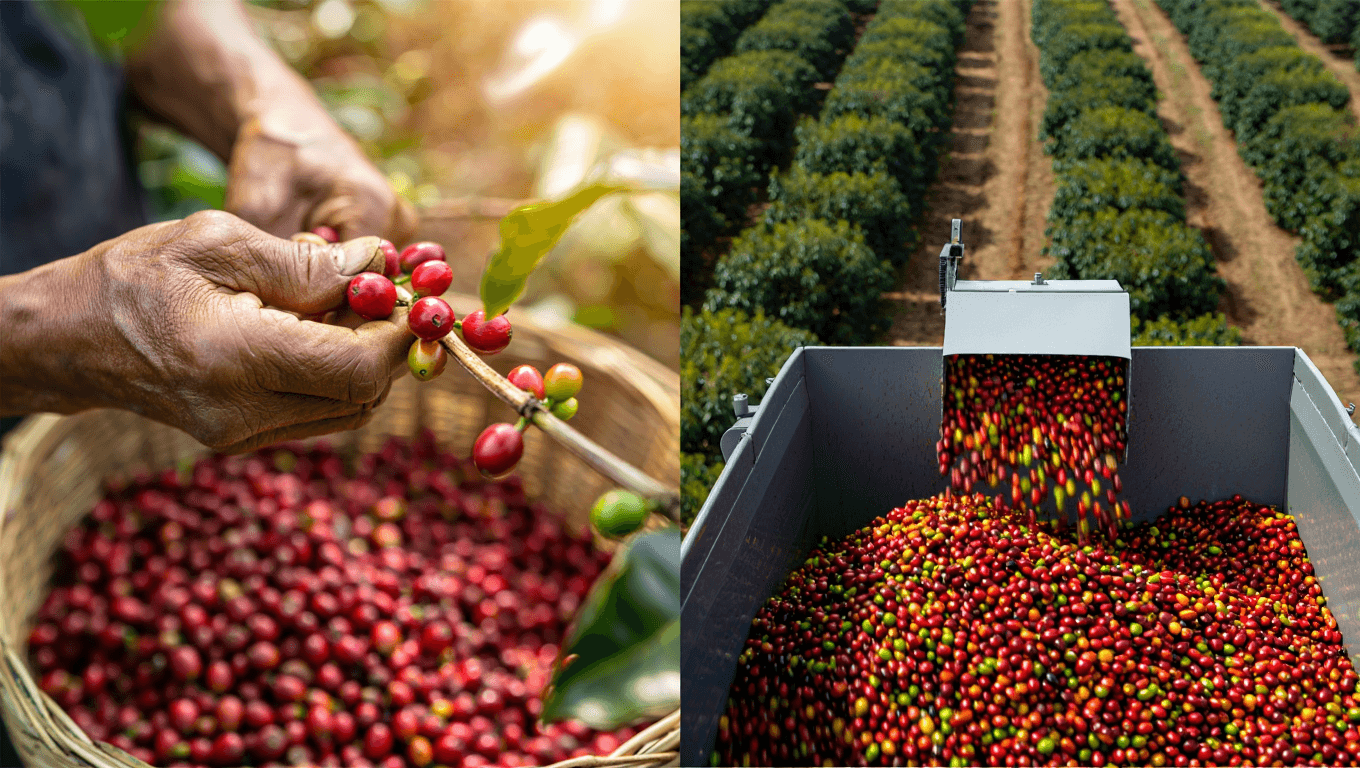
Why is hand-picking essential for the best South Indian filter coffee powder?
In the global coffee industry, the method of harvest is often the first major fork in the road toward quality. When searching for the best South Indian filter coffee powder, the distinction between hand-picking and mechanical harvesting is not just a matter of labor; it is the fundamental determinant of flavor profile, acidity, and body. Mechanical harvesting, often used in large-scale industrial plantations, involves "strip picking," where a machine shakes the coffee tree, causing all cherries to fall—regardless of their ripeness. This results in a mix of under-ripe green cherries (which introduce a sour, astringent taste) and over-ripe cherries (which can lead to fermented, vinegary notes).
Authentic South Indian filter coffee demands a level of precision that machines simply cannot replicate. Coffee S10 Brews prioritizes hand-picking because only a human eye can identify the "blood-red" cherry at its peak sugar content. By selectively harvesting only the ripe fruit, the natural sweetness of the bean is preserved. This meticulousness ensures that when the beans are eventually roasted and ground, they produce a decoction that is naturally rich, reducing the need for excessive sugar and masking the "burnt" taste often found in mass-produced, mechanically harvested brands. For the discerning consumer, the choice of hand-picked beans is the first step in moving away from the frustration of inconsistent, bitter morning cups toward a reliable, premium ritual.
Mechanical harvesting vs. hand-picking: How selection affects the 80:20 coffee-chicory blend
The traditional South Indian filter coffee experience is defined by the 80:20 coffee-chicory blend. However, the success of this ratio depends entirely on the quality of the 80% coffee component. If the coffee beans are mechanically harvested, the inclusion of defective beans forces the roaster to over-roast the batch to hide inconsistencies. This results in a "charred" flavor that clashes unpleasantly with chicory, leading to a muddy, overly bitter cup that lacks the characteristic "hotel coffee" brightness.
At Coffee S10 Brews, the hand-picked Arabica and Robusta beans provide a clean, high-quality canvas. When these premium beans are blended with high-grade chicory in an 80:20 ratio, the chicory acts as an enhancer rather than a mask. The hand-picked beans offer a nuanced acidity and chocolatey undertones, while the chicory adds thickness (body) and a lingering sweetness. This synergy is why many home brewers struggle to replicate the taste of professional coffee houses; without the base of selectively picked beans, the 80:20 blend loses its structural integrity. Understanding why chicory is used in South Indian coffee begins with realizing it is meant to complement the best beans, not hide the worst ones.
Why doesn’t my filter coffee taste like hotel coffee? The role of bean consistency
One of the most common "People Also Ask" queries is the secret behind the thick, aromatic "Degree Coffee" served in traditional South Indian hotels. The secret lies in the consistency of the grind and the uniformity of the roast, both of which are downstream effects of hand-picking. Mechanical harvesting introduces "floaters" and "lights"—beans that are hollow or underdeveloped. These beans roast faster than dense, ripe beans, leading to an uneven roast where some beans are scorched while others are underdone.
Coffee S10 Brews addresses this pain point through "Brewing Intelligence." By ensuring that every bean in the batch is harvested at the same maturity level, the roasting process becomes a science of precision. This uniformity allows for a consistent grind size, which is critical for the slow-drip filtration process used in Indian stainless steel filters. If the beans are inconsistent, the decoction will either be too thin (under-extraction) or excessively bitter (over-extraction). To achieve that velvet-like crema and heavy body at home, you must start with a powder sourced from hand-picked, small-batch roasted crops that prioritize quality over mechanical speed.
How to brew authentic filter coffee at home using premium hand-picked beans
Brewing the perfect cup is a ritual that bridges the gap between traditional craftsmanship and modern convenience. To experience the full potential of a hand-picked 80:20 blend like Coffee S10 Brews, the technique must be as refined as the harvest. Start by adding 2-3 tablespoons of the fresh powder to the upper chamber of your brass or stainless steel filter. Gently tamp the powder with the plunger—not too hard, or the water won't pass through, and not too light, or the water will bypass the grounds too quickly.
The "bloom" is where the hand-picked quality becomes evident. Pour a small amount of boiling water over the powder and wait 30 seconds. You will notice a distinct, nutty aroma rising—this is the release of gases from freshly roasted, high-quality beans. Fill the rest of the chamber and let it drip for 15-20 minutes. The resulting decoction should be thick, dark, and oily. When mixed with frothed, full-fat milk, the hand-picked beans provide the "strength" (the kick) without the harshness of industrial coffee. Explore how grind size impacts decoction strength by experimenting with Coffee S10 Brews’ specifically calibrated grinds designed for the traditional Indian filter.
Comparing Coffee Quality: Processing, Harvesting, and Flavor Impact
To better understand the value of traditional South Indian coffee craftsmanship, it is helpful to compare the different tiers of coffee available to the modern consumer. The following table illustrates why hand-picked, traditional blends outperform modern convenience-focused alternatives.
| Feature Instant Coffee Mechanically Harvested Coffee Coffee S10 Brews (Hand-Picked) | |||
| Harvesting Method | Mass Mechanical / Strip Picking | Mechanical Shaking | Selective Hand-Picking |
| Bean Maturity | Mixed (Ripe, Green, Over-ripe) | Variable | Uniformly Ripe (Blood-Red) |
| Flavor Profile | Flat, Chemical, High Bitterness | Inconsistent, Sour/Burnt notes | Rich, Chocolatey, Naturally Sweet |
| Aroma | Weak / Artificial | Moderate | Intense, Freshly Roasted Nutty Notes |
| Decoction Quality | N/A (Dissolves) | Thin, potentially acidic | Thick, Syrupy, High Crema Potential |
80 20 coffee chicory blend benefits: Why the ratio matters for crema and body
A frequent debate in the Indian coffee community, particularly on platforms like r/IndiaCoffee, centers on the "purity" of coffee versus the "tradition" of chicory. While 100% Arabica is excellent for black coffee, the South Indian milk-based coffee necessitates a different structural profile. The benefits of an 80:20 coffee-chicory blend are primarily sensory. Chicory contains inulin, which increases the viscosity of the decoction. This creates a "syrupy" mouthfeel that survives the addition of heavy milk.
Furthermore, the 80:20 ratio is the "Golden Ratio" for achieving the perfect froth (crema) on top of the tumbler. Because Coffee S10 Brews uses hand-picked beans, the coffee provides the necessary caffeine kick and complex aromatics, while the 20% chicory ensures the brew doesn't taste "watery" when diluted. It is a functional blend designed specifically for the Indian palate. If you find your coffee feels "thin" or lacks that lingering aftertaste, it is likely because you are using a blend where the coffee quality is too low to stand up to the chicory, or the ratio is poorly balanced. Discover brewing guides from Coffee S10 Brews to master the art of the perfect pour-over using this traditional ratio.
The Impact of Terroir and Hand-Picking on South Indian Coffee Culture
South Indian coffee culture is rooted in the misty hills of Chikmagalur and Coorg. The terroir—the combination of soil, altitude, and shade—gives the beans their unique low-acid, full-bodied character. However, terroir is meaningless if the harvesting process is sloppy. Hand-picking is a labor-intensive tradition that supports local communities and ensures that the delicate ecosystem of the Western Ghats is respected. Unlike heavy machinery that can damage the trees and the surrounding soil, hand-picking is a sustainable, surgical process.
This commitment to craftsmanship is what differentiates a "brand" from a "tradition." Coffee S10 Brews acts as a bridge, bringing this high-altitude, hand-picked excellence into the modern kitchen. By maintaining small-batch roasting cycles, the freshness is locked in, ensuring that the consumer receives the product exactly as it was intended: vibrant, aromatic, and deeply satisfying. Try an 80:20 blend to experience traditional depth that honors the legacy of Indian coffee growers.
Understanding the Difference: 100% Coffee vs. 80:20 Coffee–Chicory Blends
For those transition from instant coffee or international brands, understanding the difference between pure coffee and the traditional South Indian blend is vital for setting expectations for taste and texture.
| Comparison Factor 100% Pure Coffee 80:20 Coffee-Chicory Blend | ||
| Primary Use | Black Coffee, Espresso, AeroPress | Traditional South Indian Filter Coffee |
| Body/Thickness | Medium to Light | Heavy and Syrupy |
| Interaction with Milk | Can be overpowered by milk | Designed to cut through milk richness |
| Aftertaste | Clean, Fruity or Nutty | Sweet, Malty, Long-lasting |
| Color of Decoction | Dark Brown | Inky Black/Dark Maroon |
Why hand-picked beans are the cure for "Bitter Coffee Syndrome"
The biggest pain point for home brewers is the "overly bitter" cup. Many consumers assume they need more sugar to enjoy their coffee, but the bitterness usually stems from two sources: over-roasted mechanical beans or the inclusion of "black beans" (defective beans) in the powder. Hand-picking eliminates these defects at the source. When you brew Coffee S10 Brews, you are tasting the natural profile of the bean rather than the char of a corrective roast.
Traditional South Indian filter coffee is meant to be a balance of strength and smoothness. The hand-picking process ensures that the "strength" comes from the caffeine and natural oils of the Robusta/Arabica beans, while the "smoothness" comes from the lack of tannins found in unripe fruit. This makes the coffee gentler on the stomach and more flavorful on the tongue. By choosing a brand that emphasizes hand-picked craftsmanship, you are effectively choosing a "cleaner" coffee experience that respects the heritage of the Indian filter coffee ritual.
Frequently Asked Questions About South Indian Filter Coffee
Is chicory bad or necessary for my health in filter coffee?
Chicory is a natural root that has been used in coffee for centuries. In an 80:20 blend, it is entirely safe and actually provides prebiotic fiber (inulin). It is necessary if you want the traditional "hotel-style" thick texture and deep color that defines South Indian coffee.
Why does South Indian coffee taste stronger than regular drip coffee?
The strength comes from two factors: the use of high-quality Robusta beans (which have more caffeine) and the slow-drip filtration method, which creates a concentrated "decoction." When these beans are hand-picked, the strength is accompanied by flavor rather than just bitterness.
What is the best South Indian filter coffee powder for home use?
The best powder is one that is freshly roasted in small batches, uses hand-picked beans from the Western Ghats, and maintains a consistent 80:20 ratio. Coffee S10 Brews is specifically designed to provide this professional consistency for home brewers.
Does the grind size really matter for my stainless steel filter?
Yes. If the grind is too fine, the filter will clog. If it is too coarse, the water will run through without extracting the oils. A medium-fine grind, like the one used by Coffee S10 Brews, is calibrated for the 15-minute drip cycle of a traditional Indian filter.
How do I store my coffee powder to keep it fresh?
Coffee is sensitive to light, heat, and oxygen. Store your Coffee S10 Brews powder in an airtight container in a cool, dark place. Avoid the refrigerator, as moisture can ruin the delicate oils and the aroma of the hand-picked beans.
Why is hand-picked coffee more expensive than commercial brands?
Hand-picking requires skilled labor and multiple passes through the same plantation to only pick ripe cherries. This labor-intensive process ensures higher quality and better pay for farmers, compared to mechanical harvesting which is fast but destroys quality and damages trees.
Experience the difference that traditional craftsmanship makes in every sip. Whether you are a lifelong devotee of filter coffee or a curious newcomer, the journey to the perfect cup begins with the harvest. Explore the Coffee S10 Brews collection of hand-picked, small-batch roasted blends and elevate your morning ritual with the authentic taste of South India. Visit our brewing education resources to learn more about mastering the art of the decoction.