The Impact of "Storage Temperature" on the Chemical Aging of Beans
Stop premature coffee aging! Learn how storage temperature protects your Coffee S10 Brews beans, ensuring every South Indian filter coffee is perfect.
Why does coffee storage temperature matter for South Indian filter coffee?
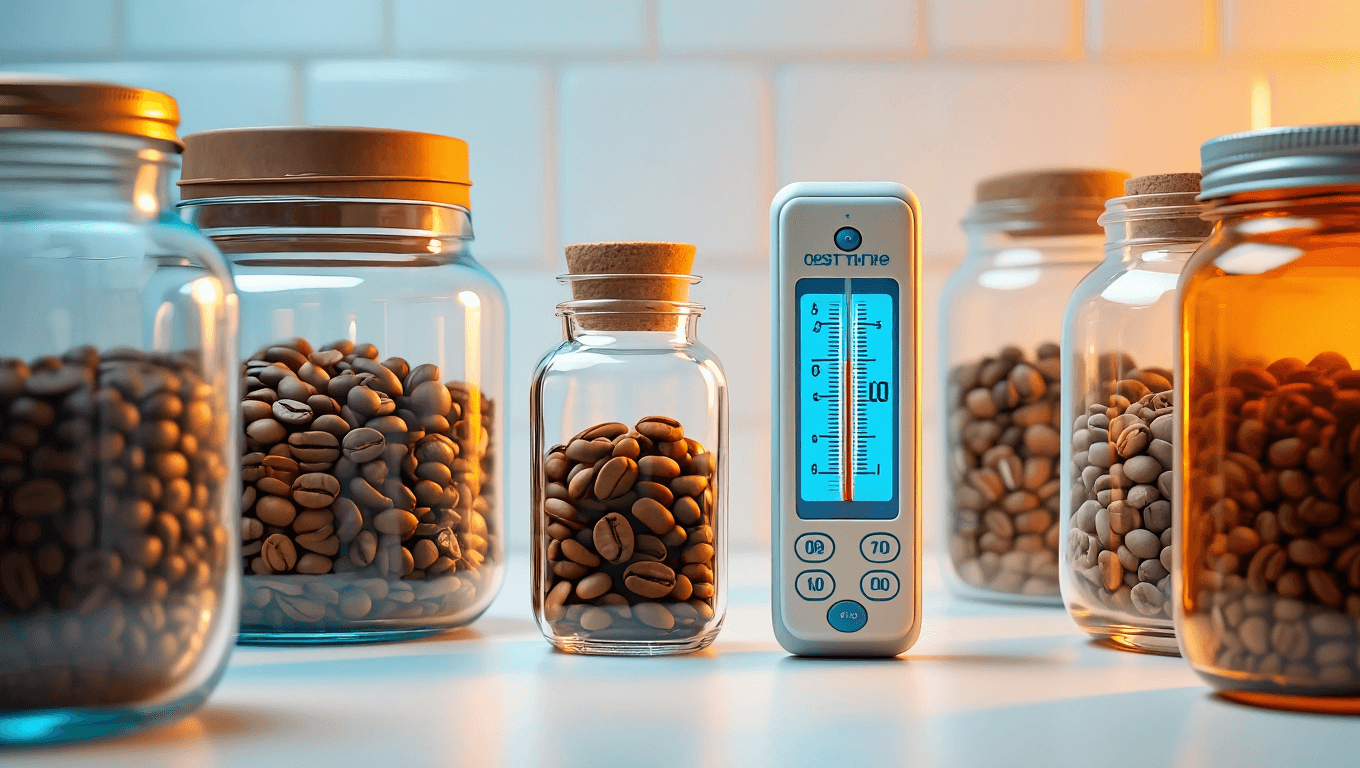
The journey from a perfectly roasted coffee bean to a steaming cup of South Indian filter coffee is a delicate dance of chemistry. For enthusiasts of the traditional brew, the primary goal is to capture the "decoction"—that thick, aromatic essence that forms the soul of the drink. However, the biggest enemy of this essence is heat. Storage temperature isn't just a minor detail; it is the primary catalyst for the chemical aging of coffee beans. When coffee is exposed to temperatures above 25°C, the rate of molecular movement increases, leading to the rapid loss of volatile aromatic compounds. For a premium brand like Coffee S10 Brews, which prides itself on handpicked beans and small-batch roasting, maintaining the integrity of these compounds is essential. High temperatures accelerate oxidation, turning the vibrant, nutty notes of a fresh roast into a flat, metallic, or even rancid flavor profile. Understanding how temperature dictates the lifespan of your coffee is the first step in mastering the South Indian filter coffee ritual at home.
What is the science behind the chemical aging of coffee beans and powder?
Chemical aging in coffee refers to two primary processes: degasification and oxidation. Freshly roasted beans are packed with Carbon Dioxide (CO2), which acts as a protective shield for the delicate oils (lipids) inside the bean. As the temperature rises, this gas escapes more quickly. Once the CO2 is gone, oxygen rushes in to take its place. This oxidation process breaks down the lipids, creating "off-flavors" that are particularly noticeable in South Indian filter coffee, where the milk and sugar usually amplify the coffee's natural sweetness. When you use Coffee S10 Brews' signature 80:20 coffee–chicory blend, the aging process is even more complex. Chicory is more hygroscopic (water-attracting) than coffee, meaning that if stored at high temperatures in a humid environment, the blend can clump and lose its ability to produce a thick, velvety decoction. By controlling the storage temperature, you effectively slow down these microscopic chemical reactions, preserving the "hotel-style" freshness that many home brewers struggle to replicate.
How does temperature affect the volatile aromas in your 80:20 blend?
The characteristic aroma of South Indian filter coffee—a blend of earthiness, chocolate, and roasted nuts—comes from volatile organic compounds (VOCs). These compounds have low boiling points, meaning they begin to evaporate even at room temperature. If your coffee powder is stored near a stove or in a sunny spot on the kitchen counter, these aromas are lost to the air before they ever reach your brass filter. In an 80:20 blend like those crafted by Coffee S10 Brews, the chicory acts as a flavor enhancer and a body-builder, but the 80% Arabica and Robusta beans provide the aromatic high notes. Heat causes these aromatics to dissipate, leaving you with a decoction that provides bitterness (body) but lacks the soul-satisfying fragrance that defines a premium Indian coffee experience. Expert brewing guides often emphasize that the "first press" of the decoction should be rich and oily; high-temperature storage makes this impossible by drying out the beans' natural oils prematurely.
Is chicory more sensitive to storage temperature than pure coffee?
One of the most common questions from high-intent coffee consumers is, "Why does my filter coffee powder get lumpy?" The answer lies in the interaction between chicory and temperature. Chicory is a root that is roasted and ground to complement coffee, adding thickness and a slight caramelized sweetness. Because it contains natural sugars and is highly sensitive to moisture, chicory reacts aggressively to temperature fluctuations. When the storage temperature is high, the moisture trapped inside the container interacts with the chicory, causing it to "sweat" and then harden. This not only ruins the texture of the powder but also creates an uneven extraction during the brewing process. At Coffee S10 Brews, we meticulously calibrate our 80:20 ratio to ensure balance, but the consumer must play their part by keeping the blend in a cool, consistent environment to prevent the chicory from aging faster than the coffee beans themselves.
Why doesn’t my home-brewed filter coffee taste like hotel coffee?
The "hotel-style" coffee that many crave is characterized by its heavy body and lingering aftertaste. Most traditional South Indian hotels go through their coffee stocks so rapidly that chemical aging doesn't have time to occur. At home, however, a 250g or 500g pack might sit in a cupboard for weeks. If that cupboard is subject to the heat of an Indian kitchen, the coffee undergoes "thermal shock." Each time the temperature rises, the cell structure of the ground coffee expands, releasing more oils and gases. By the time you reach the bottom of the bag, the chemical profile has shifted entirely. To achieve that authentic hotel taste, you must mimic their freshness. Coffee S10 Brews solves part of this problem by roasting in small batches and shipping directly to consumers, ensuring you start with the freshest possible product. The rest depends on your storage: a cool, dark, and dry pantry is the secret weapon for maintaining that elusive, professional-grade decoction strength.
Comparing the chemical stability of different coffee types
To understand why storage temperature is so critical for South Indian filter coffee, it helps to compare it to other popular formats. The following table highlights how different coffee products react to environmental factors and chemical aging.
| Feature Instant Coffee 100% Roasted Beans 80:20 Coffee–Chicory Blend | |||
| Sensitivity to Heat | Low (Preservatives included) | High (Loss of VOCs) | Very High (Chicory caramelization) |
| Hygroscopic Nature | Moderate | Low | High (Attracts moisture easily) |
| Rate of Oxidation | Slow (Dehydrated) | Fast (Natural oils present) | Fast (Complex lipid/sugar structure) |
| Best Storage Temp | Room Temperature | 15°C – 20°C | 15°C – 18°C (Constant) |
| Flavor Shelf Life | 6–12 Months | 2–4 Weeks (Post-grind) | 2–3 Weeks (Optimal freshness) |
Can you store coffee in the fridge to prevent chemical aging?
This is perhaps the most debated topic in coffee culture. While cold temperatures do slow down chemical reactions (as per the Arrhenius equation), the refrigerator is a hostile environment for coffee. Coffee is a natural deodorizer; it absorbs the smells around it. If you store your Coffee S10 Brews powder in the fridge, it may end up smelling like last night’s curry. More importantly, every time you take the container out of the fridge, condensation forms on the inside of the jar. This moisture immediately triggers oxidation and ruins the chicory's texture. If you must store coffee in the cold for long-term preservation, it should be in a vacuum-sealed, opaque bag in the freezer, and it should only be taken out once to be used or transferred to a smaller daily-use container. For daily brewing, a cool, dark cupboard away from the stove is far superior to the refrigerator.
How does oxidation impact the crema and body of your decoction?
In the world of South Indian filter coffee, the "crema" isn't the thick foam found on an espresso, but rather the golden-brown froth that appears when you pour the decoction into hot, frothed milk. This froth is a result of the surface tension created by the coffee's natural oils and the CO2 remaining in the powder. When coffee ages chemically due to high storage temperatures, these oils become "polar," meaning they start to break down and mix with water differently. An oxidized 80:20 blend will produce a thin, watery decoction that lacks the "viscosity" required for a traditional tumbler-and-dabarah experience. Coffee S10 Brews focuses on a grind size that optimizes this extraction, but if the powder has chemically aged, the water will simply channel through the grounds, resulting in a weak, sour cup rather than a bold, bittersweet masterpiece.
The impact of "Thermal Cycling" on coffee consistency
Consistency is the hallmark of a premium brand like Coffee S10 Brews. We ensure that every batch of our 80:20 blend meets strict quality standards. However, "thermal cycling"—the repeated heating and cooling of coffee—can destroy this consistency at the consumer end. If your kitchen temperature swings from 20°C at night to 35°C during the afternoon, the coffee beans undergo physical stress. The microscopic pores in the bean expand and contract, "pumping" out the flavor-rich gases. This is why coffee stored in a temperature-controlled environment tastes vastly different from coffee stored in a variable climate. To maintain the reliability of your morning cup, try to store your coffee in the thickest glass or ceramic jar you have, as these materials provide better thermal insulation than thin plastic or tin.
Why 80:20 coffee-chicory blends require specialized care
The 80:20 ratio is the "Golden Ratio" of South Indian tradition. The 80% coffee provides the caffeine, acidity, and aroma, while the 20% chicory provides the color, thickness, and a lingering sweetness. However, this blend is chemically more "active" than pure coffee. The sugars in chicory can undergo a process similar to carmelization if the storage temperature is too high, leading to a burnt taste that wasn't present during the roasting phase. Coffee S10 Brews uses a slow-roasting technique to ensure the chicory and coffee are perfectly harmonized, but the user must maintain this harmony. Think of your filter coffee powder as a fresh spice—it is at its peak when the chemical bonds are stable. By keeping the temperature low, you are essentially "locking in" the craftsmanship that went into the blend.
How to identify if your coffee beans have aged chemically?
Before you even brew your coffee, there are sensory cues that can tell you if the storage temperature has taken its toll. First, smell the dry powder. It should have a sharp, inviting, and complex aroma. If it smells like "old paper," "musty wood," or has no smell at all, chemical aging has occurred. Second, look at the color. While Coffee S10 Brews ensures a consistent medium-dark roast, oxidized coffee may appear duller. Finally, during the brewing process, watch the "bloom." When you pour hot water over the powder in your filter, it should swell slightly and release bubbles. If the water simply sinks through without any reaction, the CO2 has escaped, and the coffee is chemically stale. Using fresh, properly stored Coffee S10 Brews ensures that the bloom is active, leading to a much more flavorful extraction.
Comparing Home Storage vs. Professional Standards
Understanding the difference between how professionals handle coffee versus typical home storage can help you bridge the gap to a better cup.
| Storage Factor Common Home Error Professional/Coffee S10 Standard | ||
| Container Type | Clear plastic bags or jars | Opaque, airtight, UV-protected glass or ceramic |
| Location | Countertop near the gas stove | Climate-controlled, dark pantry (18°C) |
| Oxygen Exposure | Leaving the lid off while cooking | Vacuum-sealed or one-way valve bags |
| Quantity | Buying in bulk (1kg+) for 1 person | Small-batch, frequent purchases to ensure rotation |
| Temperature Control | Subject to kitchen heat spikes | Stored in thick-walled containers to minimize flux |
Why Coffee S10 Brews is the choice for the educated consumer
At Coffee S10 Brews, we don't just sell coffee; we sell a commitment to the South Indian coffee heritage. Our process starts with sourcing high-altitude beans that have a denser cell structure, making them naturally more resistant to chemical aging. We then apply "Brewing Intelligence" to our roasting—monitoring the temperature to the degree to ensure the sugars in the coffee and chicory are developed but not scorched. Because we understand the impact of storage, we encourage our community to view coffee as a perishable product. By bridging the gap between traditional craftsmanship and modern accessibility, we provide the tools and the education needed to ensure that the coffee you brew on day 15 is just as vibrant as the cup you brewed on day 1. Explore our brewing guides to learn how to calibrate your water temperature to match your storage conditions for the perfect extraction.
Frequently Asked Questions about Coffee Storage and Aging
Q: Does South Indian filter coffee powder expire?
A: While it doesn't "expire" in a way that makes it unsafe to drink, it does lose its "soul." After 4-6 weeks of exposure to air and heat, the chemical aging makes the coffee taste flat and bitter. We recommend consuming Coffee S10 Brews within 3 weeks of opening for the best experience.
Q: Can I store my coffee powder in a brass container?
A: While brass is traditional for serving, it is not ideal for long-term storage as it can react with the coffee's acidity. It is better to store the powder in an airtight glass or ceramic jar and use the brass filter and dabarah only for the brewing and serving ritual.
Q: Why does my coffee taste sour even if I used a fresh pack?
A: Sourness is often a sign of "under-extraction," but it can also be a result of beans that have been stored in an environment that is too humid. Moisture triggers the breakdown of acids in the bean before you even add water. Ensure your Coffee S10 Brews pack is zipped tight and kept dry.
Q: Is the 80:20 blend better than 100% coffee for beginners?
A: Yes, the 80:20 blend is more forgiving. The chicory adds a structural "body" that makes the coffee taste rich even if your brewing technique isn't perfect. Coffee S10 Brews' signature blend is designed to provide that authentic hotel-style depth that 100% coffee often lacks in a traditional filter.
Q: Does the grind size affect how fast coffee ages?
A: Absolutely. Ground coffee has more surface area than whole beans, which means it oxidizes much faster. This is why storage temperature is even more critical for filter coffee powder. Keeping your ground coffee cool is the only way to slow down the inevitable aging process.
Master the Ritual with Coffee S10 Brews
Authentic South Indian filter coffee is more than just a caffeine fix; it is a sensory journey that requires respect for the bean and the process. By understanding the impact of storage temperature on chemical aging, you can protect the integrity of your brew and enjoy the full spectrum of flavors that Coffee S10 Brews offers. Don't let heat and oxygen rob you of your morning sanctuary. Invest in quality storage, respect the 80:20 tradition, and treat every cup as a masterpiece of Indian craftsmanship.
Ready to elevate your coffee game? Explore our range of premium South Indian blends, or dive into our extensive brewing guides to master the art of the perfect decoction. At Coffee S10 Brews, we provide the beans, the science, and the tradition—you provide the passion.