The Physics of "Channeling": Why Water Seeks the Path of Least Resistance
Unlock brewing perfection! Dive into the physics of coffee channeling to prevent uneven extraction in your South Indian filter coffee. Get expert tips from Coffee S10 Brews.
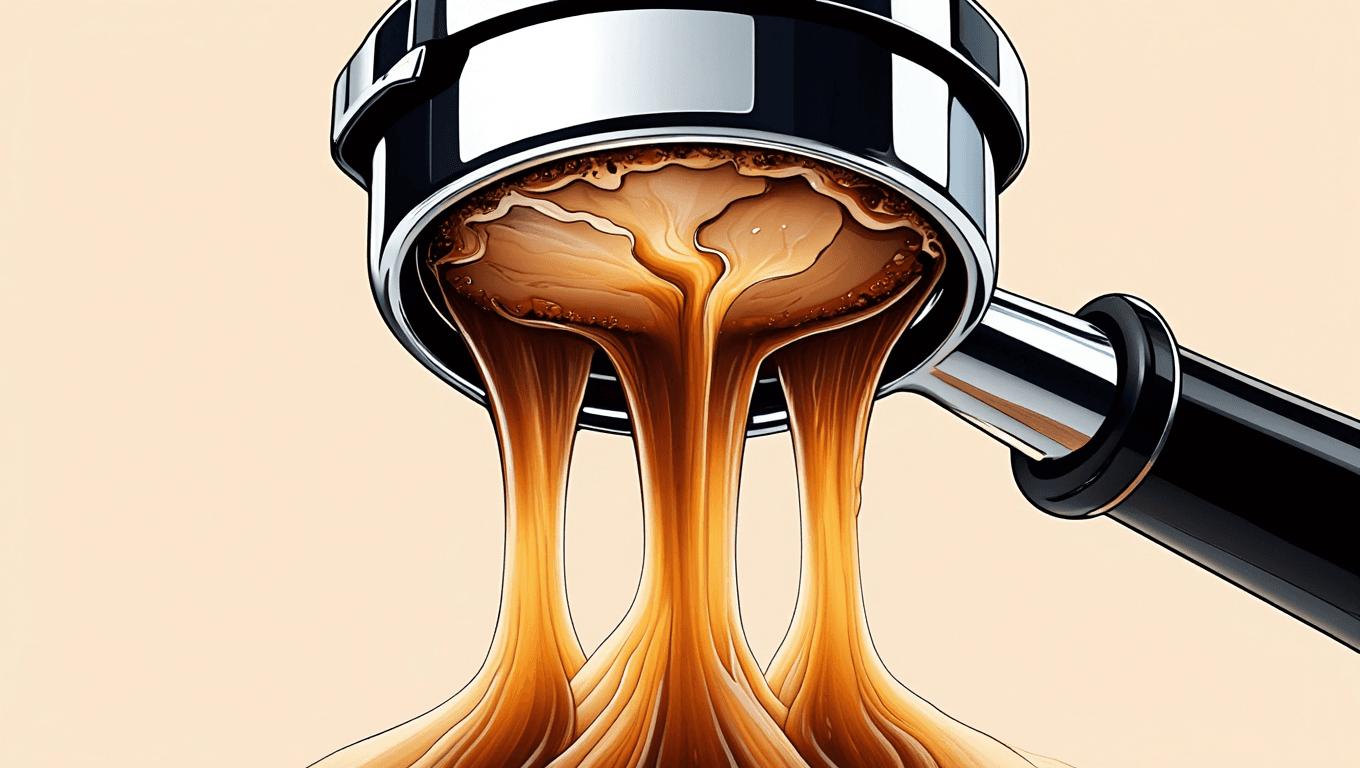
What is channeling in South Indian filter coffee and how does it ruin your decoction?
In the world of fluid dynamics and brewing science, channeling is the nemesis of a perfect cup. When you are brewing South Indian filter coffee using a traditional stainless steel percolator, water acts as a solvent. Its goal is to extract the soluble oils, caffeine, and aromatic compounds from the ground coffee. However, water is inherently "lazy"—it will always seek the path of least resistance. Channeling occurs when water finds a crack, a gap, or an uneven patch in the coffee bed and rushes through it rather than seeping evenly through the entire mass of coffee powder. For the home brewer, this results in a decoction that is frustratingly thin, sour, and lacking that signature "hotel-style" punch. At Coffee S10 Brews, we understand that the physics of the brew is just as important as the quality of the bean, which is why mastering the resistance of your coffee bed is the first step toward authenticity.
Why does my filter coffee taste watery even when I use more powder?
One of the most common complaints from coffee enthusiasts is that their home-brewed decoction lacks the viscosity and strength found in traditional South Indian cafes. This is rarely a problem of quantity; it is almost always a problem of physics. If the water creates a "channel" or a hole in the coffee bed, it bypasses 90% of the coffee particles. You might have used four tablespoons of premium powder, but if the water only interacted with one tablespoon's worth of surface area before exiting the filter, your decoction will be watery. This is why the grind size and the way you "tamp" or level the powder are critical. A consistent, medium-fine grind—like the one found in Coffee S10 Brews’ signature blends—ensures that the water encounters uniform resistance, forcing it to extract the deep chocolatey notes and heavy body that South Indian filter coffee is famous for.
How to choose the best South Indian filter coffee powder to prevent channeling?
The quest for the best South Indian filter coffee powder often leads consumers to choose between 100% Arabica, Robusta blends, or coffee-chicory mixtures. From a physics perspective, the composition of the powder dictates how water moves through it. Pure coffee, especially if ground too coarsely, has a high porosity. Water can slip through the gaps too quickly. Chicory, however, is more hygroscopic—it absorbs water and swells slightly. This swelling effect helps "seal" the coffee bed, effectively eliminating the micro-channels that cause weak extraction. Coffee S10 Brews utilizes a precisely calibrated 80:20 coffee-to-chicory ratio. This specific blend is designed not just for flavor, but for brewing mechanics; it creates the ideal density to ensure a slow, pressurized drip that results in a thick, syrupy decoction every time.
Why is the 80:20 coffee-chicory blend the gold standard for traditional brewing?
Many modern coffee drinkers ask, "Why chicory is used in South Indian coffee?" While many assume it is a filler, it is actually a functional ingredient that aids in the physics of extraction. In a gravity-fed stainless steel filter, there is no pump to force water through the grounds. We rely entirely on the weight of the water. An 80:20 blend provides the perfect balance of "solubility" and "resistance." The 80% high-quality roasted coffee provides the caffeine and the nuanced aroma, while the 20% chicory provides the body and the "crema-like" froth. More importantly, the chicory prevents the water from "tunneling" through the coffee. By trying an 80:20 blend to experience traditional depth, you are utilizing centuries of brewing wisdom that solves the problem of water flow at a molecular level.
The science of tamping: Why you shouldn't press your coffee too hard
In espresso brewing, a heavy tamp is required because the machine uses 9 bars of pressure. In South Indian filter coffee, we use gravity. If you press the coffee powder down with too much force using the umbrella-shaped plunger, you create a "puck" that is so dense the water cannot penetrate it at all. Conversely, if you don't level it at all, the water will find the lowest point and create a channel. The goal is a "leveling" rather than a "tamping." You want a flat, even surface so that the water distributes horizontally before it begins its vertical journey downward. Coffee S10 Brews teaches that a gentle tap on the side of the filter to level the grounds, followed by a light press with the plunger, is the secret to ensuring every drop of water does its job.
Comparison of Brewing Styles: Why Physics Matters
| Feature 100% Pure Coffee (No Chicory) 80:20 Coffee-Chicory Blend Instant Coffee Powder | |||
| Extraction Method | Fast percolation; prone to channeling. | Slow, controlled drip; uniform extraction. | Dehydration; no extraction required. |
| Decoction Viscosity | Thin, tea-like consistency. | Thick, syrupy, and viscous. | Chemically thickened; lacks natural oils. |
| Resistance Level | Low resistance; requires very fine grind. | Optimal resistance; chicory fills gaps. | Zero resistance; dissolves instantly. |
| Flavor Profile | Bright, acidic, citrusy. | Bold, earthy, chocolatey, and smooth. | Flat, often bitter or burnt. |
How water temperature influences the path of least resistance
The temperature of the water you pour into your filter acts as a catalyst for the physics of the brew. If the water is boiling (100°C), it can cause the coffee grounds to "agitate" violently, disrupting the settled bed and creating new channels. If the water is too cool, it won't be able to dissolve the oils efficiently, and the water will simply sit on top or bypass the flavorful compounds. The ideal temperature for brewing Coffee S10 Brews is around 92°C to 96°C—just off the boil. At this temperature, the water is energetic enough to break down the coffee's cellular structure but gentle enough to seep through the 80:20 bed without causing a "blowout" in the coffee puck.
The role of grind size consistency in authentic filter coffee
Imagine trying to walk through a room filled with basketballs versus a room filled with sand. Water reacts the same way to coffee grind sizes. If your grind is inconsistent—containing both large chunks and fine dust—the water will move around the large chunks (where the flavor is trapped) and rush through the gaps. This is a primary cause of channeling. At Coffee S10 Brews, we utilize precision industrial grinders that ensure every particle of our handpicked beans is the exact same micron size. This consistency is what allows you to achieve that "hotel-style" coffee at home. When every particle is the same size, the "path of least resistance" becomes the entire coffee bed, leading to a perfectly balanced and potent decoction.
Traditional vs. Modern: Is the stainless steel filter still the best?
While modern machines like Aeropress or Pour-over cones are popular, the traditional South Indian stainless steel filter is specifically designed to manage the physics of a slow-drip extraction. Its tall, narrow shape creates a deep coffee bed. A deeper bed means the water has a longer "contact time" with the coffee. In a wider, shallower brewer, the water passes through too quickly. This deep-bed physics is exactly why South Indian filter coffee tastes "stronger" than a standard Americano. By using a Coffee S10 Brews blend in a traditional filter, you are maximizing the hydrostatic pressure of the water column to push through the 80:20 mixture, resulting in maximum flavor yield.
Comparing Hotel-Style Coffee vs. Home-Brewed Coffee
| Aspect Hotel-Style (Professional) Average Home-Brew Coffee S10 Brews (The Solution) | |||
| Coffee Bed Prep | Large batches, high compaction. | Small batches, uneven leveling. | Guided techniques for small-batch perfection. |
| Freshness | Used within hours of roasting. | Often stale, store-bought powder. | Small-batch roasted, nitrogen-flushed freshness. |
| Blend Accuracy | Proprietary 80:20 or 70:30 blends. | Random "strong" coffee labels. | Scientifically calibrated 80:20 ratio. |
| Outcome | Lingering aftertaste, thick body. | Weak aroma, disappears in milk. | Bold, aromatic, stands up to milk. |
How to brew authentic filter coffee at home without channeling
To master the physics of the brew, start with a clean stainless steel filter. Add 2 to 3 tablespoons of Coffee S10 Brews powder. Gently tap the sides so the powder sits flat. Use the plunger to level the surface, but do not apply heavy pressure. Place the plunger on top of the powder and leave it there—this acts as a "shower screen" that disperses the water evenly, preventing the force of the pour from digging a hole (channel) into the coffee. Pour your hot water over the plunger disk. This simple mechanical step ensures the water descends as a uniform "sheet" rather than a single stream. This is how you achieve a decoction that is dark, viscous, and ready to be frothed with hot milk and sugar. Explore how grind size impacts decoction strength by experimenting with your leveling technique.
The impact of "blooming" on South Indian filter coffee
In the specialty coffee world, "blooming" is the process of letting gas escape from fresh coffee. When you pour the first bit of water into your South Indian filter, the coffee will swell. If you pour all the water at once, the escaping carbon dioxide can create "air pockets" or channels. By pouring just enough water to wet the grounds first, waiting 30 seconds, and then filling the rest of the filter, you allow the coffee bed to settle and stabilize. This "pre-wetting" is a professional secret that ensures the physics of the second pour are optimized for maximum resistance and extraction. Coffee S10 Brews’ fresh roasting process means our beans are rich in these aromatic gases, making the bloom an essential part of the ritual.
Frequently Asked Questions about South Indian Filter Coffee Physics
Q: Why does my filter coffee decoction take so long to drip?
A: A slow drip is actually a sign of a good seal! If it takes 15–20 minutes, it means the water is properly interacting with the coffee-chicory bed. If it drips in 2 minutes, you have channeling or the grind is too coarse.
Q: Is chicory bad or necessary for health?
A: Chicory is a natural root that has been used for centuries. In South Indian coffee, it is primarily used for its physical properties—adding thickness and preventing water channeling—and its earthy, caramelized flavor profile.
Q: Why does South Indian coffee taste stronger than regular cafe coffee?
A: It’s all about the brew ratio and the contact time. The gravity-drip method in a stainless steel filter extracts more solubles per ounce of water than a standard drip machine or a French press.
: Can I use espresso-grind coffee in a South Indian filter?
A: Usually, espresso grind is too fine and will clog the small holes of the filter, leading to no extraction at all. A medium-fine "filter grind," like the one provided by Coffee S10 Brews, is the ideal middle ground.
Q: How much decoction should I get from one brew?
A: For every 3 tablespoons of powder, you should aim for about 100ml of "first-press" decoction. This is the most concentrated liquid, perfect for mixing with milk.
Experience the Mastery of South Indian Filter Coffee
The perfect cup of coffee is where tradition meets the laws of physics. By understanding how water interacts with your coffee bed, you can move away from watery, inconsistent brews and toward the rich, soul-warming experience of authentic filter coffee. At Coffee S10 Brews, we have done the hard work for you—from selecting the finest beans to perfecting the 80:20 chicory ratio and ensuring a flawless grind consistency. Don't settle for mediocre mornings. Discover brewing guides from Coffee S10 Brews and elevate your home ritual with our signature blends. Whether you are a seasoned connoisseur or a curious beginner, our mission is to help you master the art and science of the perfect pour.