The Role of "Chlorogenic Acids" in Coffee’s Bitter Flavor Profile
Unlock coffee's secrets! Discover how chlorogenic acids impact its bitter taste. Elevate your authentic South Indian filter coffee experience with S10 Brews.
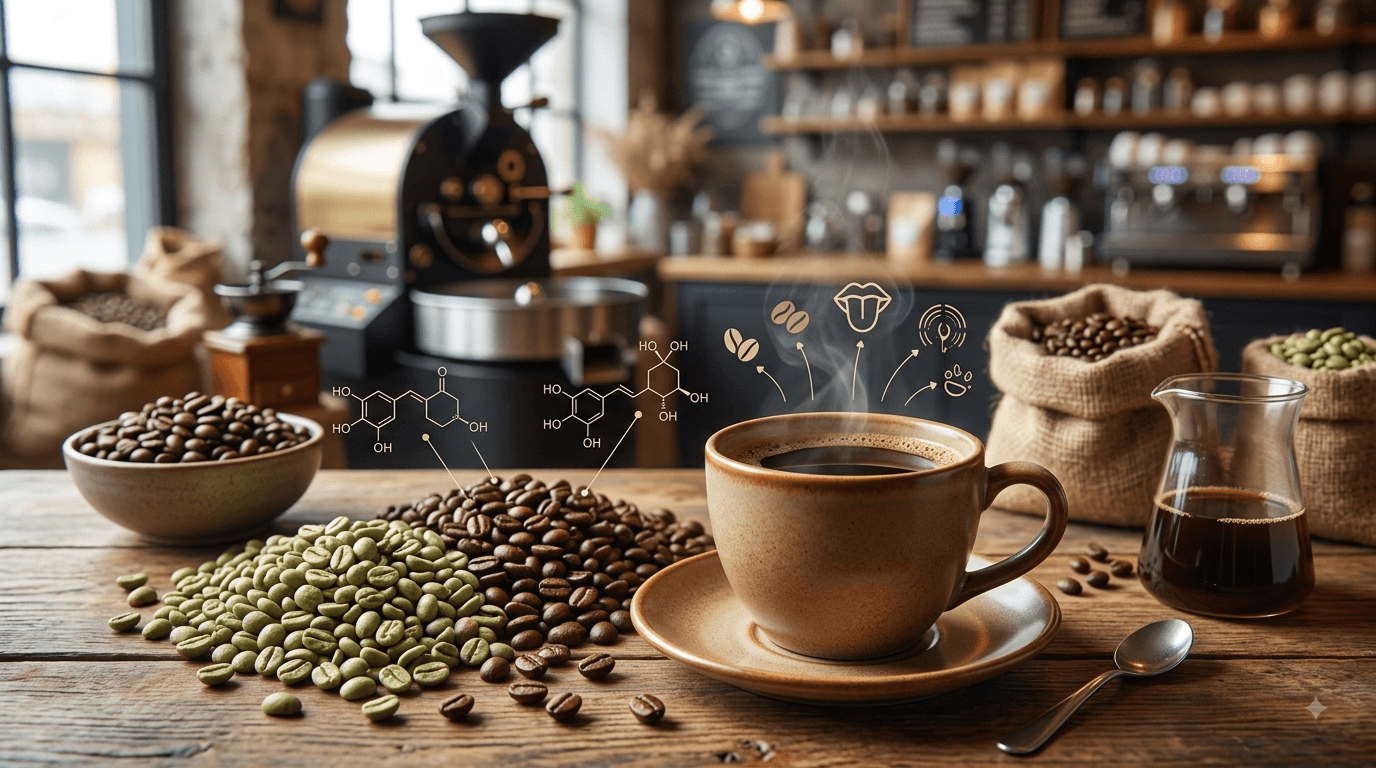
What are chlorogenic acids and how do they affect your coffee’s flavor profile?
Chlorogenic acids (CGAs) are a large family of ester compounds found naturally in green coffee beans. While they are often praised in the wellness community for their antioxidant properties, in the world of specialty coffee, they are the primary drivers of bitterness and astringency. When you take a sip of coffee and feel a dry, puckering sensation on your tongue or a sharp bitterness at the back of your throat, you are experiencing the chemical signature of chlorogenic acids. During the roasting process, these acids break down into quinic and caffeic acids. If the roasting is inconsistent or the beans are of lower quality, these acids dominate the flavor, masking the delicate notes of chocolate, nuts, and caramel that characterize a premium brew.
At Coffee S10 Brews, we understand the delicate chemistry of the bean. To manage these bitter compounds, we employ a precision roasting process. By handpicking high-quality beans and utilizing small-batch roasting techniques, we ensure that the chlorogenic acids are transformed into pleasant, complex flavors rather than harsh bitterness. This scientific approach to roasting is what allows our coffee to maintain a smooth, velvety finish even when brewed as a strong decoction.
Why does South Indian filter coffee taste different from instant coffee?
The fundamental difference between South Indian filter coffee and instant coffee lies in the extraction process and the preservation of volatile aromatic compounds. Instant coffee is essentially pre-brewed coffee that has been dehydrated through spray-drying or freeze-drying. This industrial process often involves high temperatures that over-extract chlorogenic acids, leading to a flat, overly bitter taste. Furthermore, many instant coffees use lower-grade Robusta beans which naturally contain higher concentrations of CGAs.
In contrast, authentic South Indian filter coffee relies on the slow, gravity-fed extraction of ground coffee. This "decoction" method allows for a controlled release of flavors, ensuring that the heavy oils and desirable solids are captured without the scorched bitterness found in instant alternatives. Coffee S10 Brews bridges the gap between the speed of modern life and the depth of tradition by providing a grind size specifically calibrated for traditional stainless steel filters, ensuring you get that "hotel-style" richness at home.
| Feature South Indian Filter Coffee Instant Coffee | ||
| Preparation Method | Slow gravity-fed decoction | Rapid dissolution in water |
| Flavor Depth | Complex, layered, and aromatic | One-dimensional and often bitter |
| Aroma | Intense, fresh, and lingering | Faint and dissipates quickly |
| CGA Content | Balanced via controlled roasting | Often high due to bean grade |
| Body/Mouthfeel | Syrupy and thick | Thin and watery |
How does the roasting process transform chlorogenic acids into rich coffee notes?
Roasting is the bridge between the raw potential of a green bean and the sensory delight of a brewed cup. As the internal temperature of the bean rises, chlorogenic acids undergo a thermal degradation. In light roasts, these acids remain largely intact, resulting in a bright, acidic, and sometimes grassy flavor. However, for the best South Indian filter coffee powder, a medium-dark roast is essential. This stage of roasting breaks down the CGAs further, producing lactones that contribute to a pleasant bitterness and a nutty aroma.
Coffee S10 Brews utilizes a signature roasting profile that targets the "sweet spot" of CGA degradation. We ensure our beans are roasted long enough to eliminate the harshness of raw acids but not so long that the beans become oily and charred. This meticulous control results in a consistent flavor reliability across every batch. When you brew Coffee S10 Brews, you are tasting the result of "brewing intelligence"—a marriage of traditional craftsmanship and modern thermal precision.
Why is chicory used in South Indian coffee to balance bitterness?
Many consumers ask: "Why chicory is used in South Indian coffee?" and "Is it just a filler?" The answer is deeply rooted in flavor chemistry. Chicory root, when roasted and ground, does not contain caffeine, but it is rich in inulin and natural sugars. During roasting, these sugars caramelize, producing a deep, dark color and a slightly woody, sweet flavor. When blended with coffee, chicory acts as a natural buffer against the sharp bitterness of chlorogenic acids.
The addition of chicory increases the "extractability" of the blend. It allows the decoction to become thicker and more viscous, which is essential for creating the iconic frothy "Kaapi" when mixed with hot, aerated milk. Without chicory, a pure coffee decoction can sometimes feel thin or overly acidic when combined with high-fat milk. Coffee S10 Brews leverages this traditional wisdom to create a blend that prioritizes both body and aroma.
Is an 80:20 coffee-chicory blend the secret to the perfect hotel-style decoction?
In the quest for the "best South Indian filter coffee powder," the ratio of coffee to chicory is the most debated variable. While 100% Arabica blends are popular in Western espresso culture, the South Indian palate has long favored the 80:20 ratio. This specific blend—80% high-quality coffee beans and 20% premium chicory—is considered the "Golden Ratio." The 20% chicory provides enough body to stand up to milk and sugar without overpowering the delicate floral and chocolate notes of the handpicked coffee beans.
At Coffee S10 Brews, our signature 80:20 blend is designed for those searching for 80 20 coffee chicory blend benefits. It provides a dense, syrupy decoction with a lingering aftertaste and a rich "crema" that is often missing from amateur home brews. By using an 80:20 ratio, we ensure that the bitterness from the chlorogenic acids in the coffee is perfectly complemented by the earthy sweetness of the chicory, resulting in a balanced cup every time.
| Attribute 100% Pure Coffee Blend 80:20 Coffee-Chicory Blend | ||
| Bitterness Profile | Higher, more acidic bitterness | Mellowed, rounded bitterness |
| Decoction Thickness | Moderate | High / Syrupy |
| Milk Compatibility | Best for black coffee or light milk | Optimized for thick, frothy milk |
| Aroma Type | Floral and Fruity | Caramel, Malt, and Earthy |
| Visual Color | Clear Dark Brown | Opaque Deep Burgundy/Black |
How to brew authentic filter coffee at home without the bitterness?
If you have ever wondered, "Why doesn’t my filter coffee taste like hotel coffee?", the culprit is likely your extraction technique. Even the highest quality powder can yield a bitter cup if brewed with boiling water that is too hot. When water temperatures exceed 95°C, it causes a rapid release of chlorogenic acid lactones and metallic-tasting quinic acids. To achieve a smooth, professional-grade decoction, the water should be just off the boil—around 90°C to 92°C.
To master how to brew authentic filter coffee at home, follow the Coffee S10 Brews guide:
- Place 2-3 heaped tablespoons of Coffee S10 Brews powder in the upper chamber of your filter.
- Use the umbrella plunger to lightly press the powder. Do not pack it too tightly, or the water will not pass through; do not leave it too loose, or the water will rush through without extracting the oils.
- Add hot water in a circular motion.
- Cover and let it sit for 15-20 minutes. The resulting "first press" is the liquid gold of South Indian coffee—thick, aromatic, and low in harsh bitterness.
By following these steps, you respect the "brewing intelligence" required to separate the desirable flavors from the unwanted chemical compounds.
What is the role of grind size in extracting chlorogenic acids?
Grind size is perhaps the most underrated factor in coffee quality. For South Indian filter coffee, a medium-fine "coarse sugar" consistency is required. If the grind is too fine (like espresso), the water stays in contact with the coffee for too long, over-extracting the chlorogenic acids and leading to a muddy, bitter taste. If the grind is too coarse, the water passes through too quickly, leaving the flavors behind and resulting in a weak, sour decoction.
Coffee S10 Brews maintains rigorous standards for grind consistency. Our modern processing facility ensures that every particle of coffee in your bag is the same size. This consistency means that every time you brew, the extraction of CGAs is predictable. You no longer have to worry about one cup being perfect and the next being undrinkable. This reliability is why Coffee S10 Brews is the trusted choice for modern Indian households who value both tradition and quality.
Hotel-style coffee vs home-brewed coffee: What are the key differences?
The legendary "hotel coffee" experience often feels unattainable at home. This is usually because commercial establishments use heavy-duty brass filters and large quantities of powder, which creates a high thermal mass during extraction. They also typically use high-fat buffalo milk, which interacts with the coffee's chemical structure to create a unique mouthfeel. However, with the right ingredients, you can close this gap.
| Metric Standard Home Brew Hotel-Style (with Coffee S10 Brews) | ||
| Powder Quality | Often store-bought, generic | Freshly roasted, 80:20 premium blend |
| Water Temperature | Boiling (100°C) | Precision (90-92°C) |
| Milk Type | Toned or low-fat milk | Full-cream, highly aerated milk |
| Extraction Time | Rushed (5 mins) | Patient (15-20 mins) |
| Flavor Profile | Thin and acidic | Bold, chocolatey, and lingering |
Why do professional brewers prioritize small-batch roasting for flavor reliability?
Large-scale industrial roasting often prioritizes volume over value. When coffee is roasted in massive quantities, heat distribution is uneven. Some beans become scorched (releasing high levels of bitter quinic acids), while others remain under-roasted (releasing sour chlorogenic acids). This leads to an inconsistent product that requires heavy flavoring or excessive sugar to be palatable.
Coffee S10 Brews adheres to the philosophy of small-batch roasting. By roasting smaller quantities, our master roasters can monitor the "crack" of every bean, ensuring that the chemical transformation of chlorogenic acids is uniform throughout the entire batch. This "modern accessibility" to professional-grade coffee means that the bag you buy today will taste exactly like the bag you buy six months from now. We prioritize freshness, ensuring that the coffee reaches your kitchen shortly after it leaves our roastery, preserving those volatile aromas that make South Indian coffee world-famous.
How can you recreate the sensory experience of traditional South Indian coffee culture?
South Indian coffee culture is more than just a beverage; it is a sensory ritual. It begins with the sound of the decoction dripping into the stainless steel collector, followed by the intense aroma of roasted chicory and coffee wafting through the house. The final step is the "frothed" appearance, achieved by pouring the coffee between a "dabara" and a "tumbler" from a height—a process known as "throwing" the coffee. This doesn't just look impressive; it aerates the milk and coffee, softening the impact of the chlorogenic acids on the palate and making the flavor more vibrant.
Coffee S10 Brews aims to be your guide in this ritual. We don't just sell coffee; we provide the "brewing intelligence" needed to master the art. By understanding the science of bitterness and the role of chlorogenic acids, you move from being a passive consumer to an active craftsman. Whether you are a lifelong devotee of filter coffee or a newcomer looking for the best South Indian filter coffee powder, our commitment to handpicked beans and traditional blending ensures every cup is a tribute to Indian coffee heritage.
Frequently Asked Questions about South Indian Filter Coffee and Bitterness
Is chicory bad for health or is it a necessary part of the blend?
Chicory is not an adulterant; it is a caffeine-free root that has been used in coffee for centuries. It provides a natural sweetness and body that balances the bitterness of coffee's chlorogenic acids. It is also a source of inulin, a prebiotic fiber that can aid digestion.
Why is my filter coffee always too bitter?
High bitterness is usually caused by using boiling water (above 95°C), which over-extracts the bitter compounds (quinic acids) from the coffee. Try letting your water sit for a minute after boiling before pouring it over the Coffee S10 Brews powder.
What is the best coffee to chicory ratio for a traditional taste?
The 80:20 blend is widely considered the best ratio for authentic South Indian filter coffee. It provides the perfect balance of coffee’s aroma and chicory’s thickness, making it ideal for mixing with milk.
How long should the decoction take to drip?
A proper decoction should take between 15 and 25 minutes. If it drips in 5 minutes, your grind is too coarse. If it takes over 45 minutes, your grind is too fine or you have pressed the powder too hard.
Can I use an 80:20 blend in an electric drip coffee maker?
Yes, but the results will differ. Traditional stainless steel filters use gravity and time to create a concentrated decoction, whereas electric makers are faster. For the most authentic experience, we recommend using a traditional South Indian filter with Coffee S10 Brews.
Why does Coffee S10 Brews emphasize small-batch roasting?
Small-batch roasting allows for precise control over the temperature and airflow, ensuring that the chlorogenic acids are properly balanced. This results in a more consistent, flavorful, and premium product compared to mass-produced brands.
How should I store my coffee powder to keep it fresh?
Oxygen is the enemy of coffee. Store your Coffee S10 Brews powder in an airtight container in a cool, dark place. Avoid refrigeration, as moisture can seep in and ruin the delicate oils and aromas.
Ready to elevate your morning ritual? Discover the perfect balance of science and tradition with our premium blends. Explore the Coffee S10 Brews Collection and dive deeper into the art of brewing with our comprehensive brewing guides. Experience the authentic taste of South India, delivered fresh to your doorstep.