The Role of "Lipids" in Espresso Crema and Mouthfeel
Discover the science behind coffee's richness! Learn how lipids create espresso crema & mouthfeel. Elevate your coffee appreciation with Coffee S10 Brews.
Why do lipids play a crucial role in coffee mouthfeel and crema?
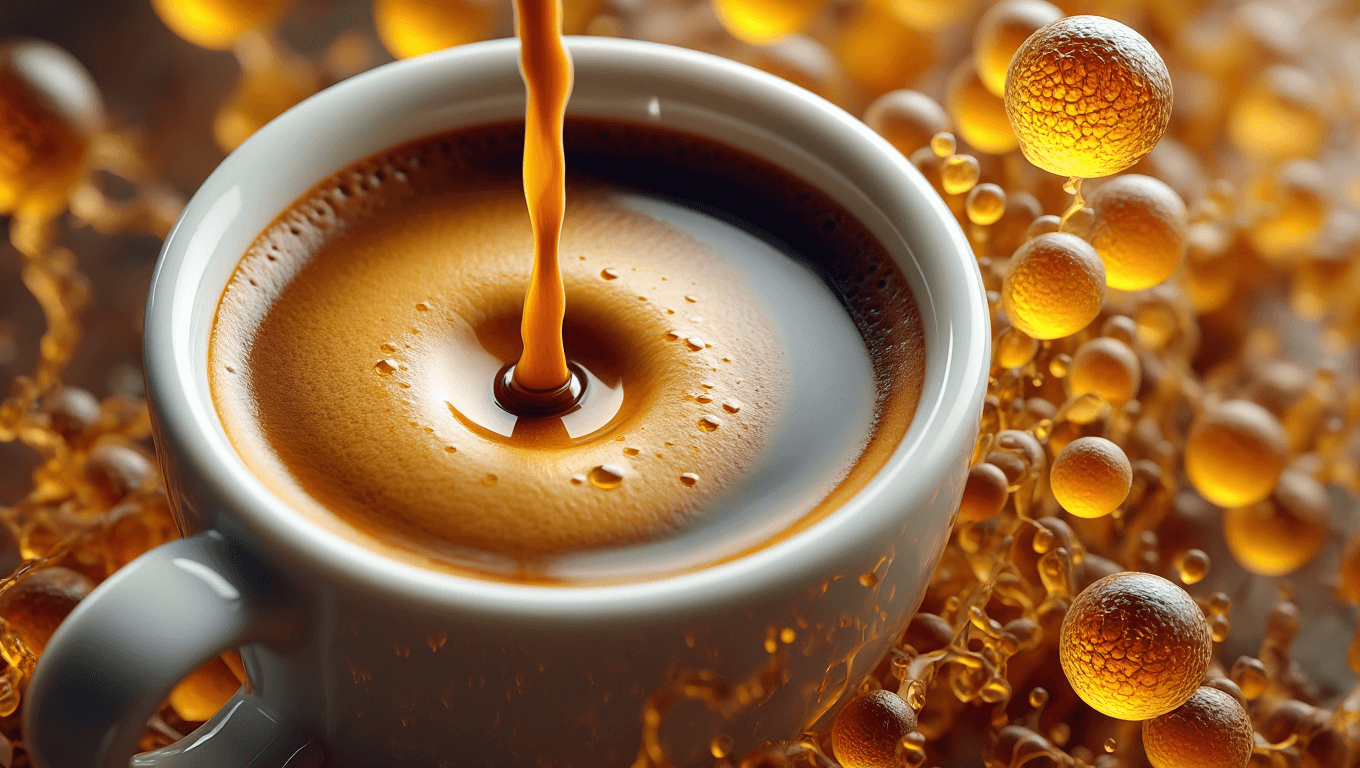
To understand why a cup of South Indian filter coffee feels velvety on the tongue while an instant coffee feels thin and watery, we must look at the chemistry of lipids. Lipids are the natural fats, oils, and waxes found within the coffee bean. During the roasting process, these lipids migrate from the center of the bean to the surface. When you brew coffee, especially through a slow-drip method like the South Indian filter, these oils are emulsified into the liquid. In espresso, these lipids are responsible for the stabilization of the crema—the golden-brown foam on top. In South Indian filter coffee, these same lipids contribute to the "body" or "viscosity" of the decoction. Coffee S10 Brews prioritizes a roasting profile that preserves these essential oils, ensuring that every drop of decoction carries the structural integrity needed for a heavy, satisfying mouthfeel.
How does South Indian filter coffee achieve an espresso-like body without high pressure?
Many coffee enthusiasts wonder how a gravity-fed brass filter can produce a drink that rivals the intensity of a machine-press espresso. The secret lies in the extraction of soluble solids and the suspension of lipids. While espresso uses nine bars of pressure to force oils into an emulsion, South Indian filter coffee uses time and a fine grind size. Because the water sits in contact with the coffee grounds for a longer duration (the "slow drip" process), it has more time to dissolve the coffee’s natural oils. Coffee S10 Brews utilizes a specific grind calibration that is finer than a French press but coarser than an espresso, optimized specifically for the traditional stainless steel or brass filter. This ensures that the lipids are not trapped in the grounds but are allowed to pass into the decoction, creating that signature "heavy" texture that consumers crave.
What is the science behind the 80:20 coffee-chicory blend for a thicker decoction?
The 80:20 ratio is often debated, but from a sensory and chemical perspective, it is the "golden ratio" for authentic South Indian filter coffee. Chicory root does not contain the same lipids as coffee beans; instead, it is rich in inulin, a type of soluble fiber. When combined with the high-lipid content of premium Arabica and Robusta beans used by Coffee S10 Brews, the chicory acts as a thickening agent. It increases the viscosity of the brew, making it "stick" to the palate longer. This interaction between coffee oils and chicory fiber is what creates the lingering aftertaste and the "syrupy" quality of a perfect decoction. Without this 20% chicory, the coffee can often feel too acidic or "thin" when mixed with milk. By mastering this blend, Coffee S10 Brews provides a solution for those searching for that elusive "hotel-style" richness at home.
Why does my home-brewed filter coffee lack the richness of a hotel-style coffee?
The most common complaint among home brewers is that their coffee tastes "watery" compared to what is served in traditional Darshinis or high-end South Indian restaurants. The culprit is usually a combination of poor lipid extraction and inconsistent grind size. Hotels often use large-scale filters that maintain heat better, allowing for more efficient oil dissolution. At home, if your water temperature is too low, the lipids remain "locked" in the bean’s cellular structure. Furthermore, using a 100% Arabica blend often lacks the lipid density required to stand up to the fats in milk. Coffee S10 Brews solves this by selecting high-quality beans with a robust lipid profile and providing brewing intelligence that guides you on the exact water-to-coffee ratio needed to mimic professional results.
Understanding the difference between espresso crema and the traditional South Indian froth
While both espresso and South Indian filter coffee are celebrated for their foam, the physics behind them differ slightly. Espresso crema is a CO2-saturated emulsion of oils and water. In contrast, the froth on a South Indian filter coffee—achieved through the "meter coffee" pouring technique—is a combination of air, milk proteins, and coffee lipids. The lipids in the Coffee S10 Brews decoction act as surfactants, reducing the surface tension of the milk and allowing for smaller, more stable bubbles. This results in a froth that doesn't dissipate quickly. If you have ever wondered why some coffee loses its foam instantly, it is likely due to a lack of sufficient oils in the coffee powder. A high-quality 80:20 blend provides the necessary chemical bridge to hold that foam together from the first sip to the last.
How does bean roasting impact the lipid content and flavor profile of Coffee S10 Brews?
Roasting is where the magic—and the science—happens. As coffee beans are heated, they undergo the Maillard reaction, developing complex flavors. However, if the roast is too light, the lipids are never coaxed to the surface. If the roast is too dark, the oils can become rancid or "smoky." Coffee S10 Brews employs a medium-dark roast profile specifically designed to optimize lipid availability. We use small-batch roasting to ensure that the heat is distributed evenly, preventing "scorched" beans which can lead to a bitter, thin mouthfeel. By carefully controlling the roasting cycle, we ensure that the natural fats are ready to be extracted the moment they hit hot water in your kitchen, providing a consistent, aromatic experience every time you open a fresh pack.
The impact of grind size on lipid extraction in a traditional brass filter
If you are searching for the "best South Indian filter coffee powder," you are essentially searching for the perfect grind size. If the grind is too coarse, the water passes through too quickly, leaving the heavy lipids behind. If the grind is too fine (like flour), the filter becomes "choked," leading to over-extraction and a bitter, muddy taste. Coffee S10 Brews uses industrial-grade burr grinders to achieve a specific "sand-like" consistency. This precision allows the water to saturate the grounds evenly, pulling out the lipids and aromatics over a 15-to-20-minute brewing window. This controlled extraction is what separates a premium brand from mass-market alternatives where the grind size often varies wildly from bag to bag.
Comparing Coffee Experiences: Textures, Blends, and Techniques
To better understand how different factors influence your morning cup, consider the following comparisons between common coffee types and the Coffee S10 Brews standard.
| Feature Instant Coffee Coffee S10 Brews (80:20 Filter) | ||
| Lipid Content | Negligible (Lost during processing) | High (Preserved through small-batch roasting) |
| Mouthfeel | Thin, watery | Velvety, syrupy, heavy-bodied |
| Aroma | Fades quickly | Lingering, complex, nutty/chocolatey |
| Preparation | Quick dissolution | Slow-drip artisanal extraction |
| Attribute 100% Coffee Blend 80:20 Coffee-Chicory Blend | ||
| Viscosity | Moderate | High (Enhanced by chicory inulin) |
| Bitterness | Bright acidity to sharp bitterness | Balanced, mellowed by chicory sweetness |
| Color of Decoction | Dark Brown | Deep, opaque Ink-Black |
| Milk Interaction | Can feel diluted | Cuts through milk for a bold flavor |
Why chicory is used in South Indian coffee: Beyond just "filler"
One of the biggest misconceptions in the coffee world is that chicory is merely a cheap additive used to lower costs. While some brands may use it that way, in the context of authentic South Indian filter coffee, chicory is a functional ingredient. Chemically, chicory helps to emulsify the coffee lipids, ensuring they don't simply float on top but are integrated into the liquid. It also provides a unique earthy sweetness that counteracts the natural bitterness of the beans. When you use a Coffee S10 Brews 80:20 blend, you aren't just getting coffee; you are getting a scientifically balanced formula designed to produce the thickest, most aromatic decoction possible. This is why our blend is the preferred choice for those who value traditional taste over modern shortcuts.
Best practices for brewing a rich, lipid-heavy decoction at home
To get the most out of your Coffee S10 Brews powder, follow these expert-vetted steps for the perfect "meter coffee" experience:
- Pre-heat the Filter: Rinse your brass or stainless steel filter with hot water before adding the powder. This prevents the lipids from "shocking" and sticking to the metal.
- The Press Matters: Add your Coffee S10 Brews powder (about 4-5 tablespoons for a standard filter) and use the plunger to press it down lightly. You want a flat surface, but don't pack it so tight that water can't pass.
- Boiling Water Technique: Use water that has just come off the boil (around 94°C). Pour it in a circular motion to ensure all grounds are saturated.
- The First Drip: The first "thick" decoction is the most lipid-rich. For the best mouthfeel, use only the first 15-20 minutes of drippings.
- The Froth: Use whole-fat milk and pour the coffee and milk between two containers from a height. This aerates the lipids and proteins, creating that iconic frothy head.
The role of freshness in maintaining coffee lipids and aromatics
Lipids are delicate. Once a coffee bean is roasted and ground, the oils are exposed to oxygen, leading to oxidation. Oxidized lipids result in a stale, "cardboard-like" taste. This is why Coffee S10 Brews emphasizes freshness and consistency. We don't believe in coffee that sits on a warehouse shelf for six months. By managing a tight supply chain and controlled roasting cycles, we ensure that the powder arriving at your doorstep still contains the volatile oils and intact lipids necessary for a premium brew. When you smell that intense aroma upon opening a fresh pack of Coffee S10 Brews, you are smelling the active lipids that will soon define the mouthfeel of your cup.
Is chicory bad or necessary for health and flavor?
There is often a debate about whether chicory belongs in "specialty" coffee. In the South Indian tradition, the answer is a resounding yes. Chicory is caffeine-free and contains prebiotic fibers that are gentle on the stomach. From a flavor perspective, it provides the "bass note" in the coffee's orchestra. Without it, the "treble" of the coffee's acidity can feel unbalanced. Coffee S10 Brews uses only high-grade chicory, ensuring it complements the coffee rather than overpowering it. This results in a cup that is not only rich in flavor but also consistent in its delivery of that "strong" coffee hit that many Indians rely on to start their day.
Frequently Asked Questions About South Indian Filter Coffee
1. Why does South Indian coffee taste stronger than regular drip coffee?
The strength comes from the higher concentration of soluble solids and lipids in the decoction, combined with the presence of chicory which enhances the perception of "body" and bitterness on the tongue.
2. Can I get a thick decoction with 100% Arabica beans?
It is difficult. Arabica is prized for its aroma and acidity but often lacks the lipid density and body of Robusta. An 80:20 blend like Coffee S10 Brews provides the best of both worlds: the aroma of Arabica and the body of Robusta/Chicory.
3. What is the best way to store my Coffee S10 Brews powder?
To prevent the lipids from oxidizing, store your powder in an airtight container in a cool, dark place. Avoid the refrigerator as moisture can damage the oils.
4. How much powder should I use for two people?
We recommend 4 to 5 heaped tablespoons of Coffee S10 Brews powder for about 150ml of boiling water to get a thick, potent decoction.
5. Does the type of milk affect the mouthfeel of filter coffee?
Absolutely. Lipids in coffee interact with the fats and proteins in milk. Using full-fat, fresh milk will always yield a creamier, more authentic result than skim or toned milk.
6. Why is my decoction taking too long to drip?
This usually happens if the powder is pressed too hard or if the grind is too fine. Coffee S10 Brews is ground specifically to avoid this, but remember to use a light touch when leveling the powder in your filter.
7. Is the froth on top of filter coffee the same as espresso crema?
Not exactly. Espresso crema is formed by pressure; filter coffee froth is formed by mechanical aeration (pouring). However, both rely on coffee lipids to stabilize the bubbles and create a creamy texture.
Experience the Craftsmanship of Coffee S10 Brews
In the world of modern convenience, the ritual of brewing an authentic South Indian filter coffee is a rare luxury. At Coffee S10 Brews, we believe that luxury should be accessible in every home. By focusing on the science of lipids, the precision of the 80:20 blend, and the integrity of traditional roasting, we offer more than just a beverage—we offer a gateway to coffee culture. Whether you are a seasoned connoisseur or a curious beginner, our products are designed to guide you through the perfect brewing ritual. Explore our range of premium blends and master the art of the perfect decoction today.
Ready to elevate your morning ritual? Explore Coffee S10 Brews signature blends and discover why our commitment to freshness and tradition makes us the preferred choice for authentic South Indian filter coffee. Dive into our brewing guides and coffee education resources to unlock the full potential of your daily cup.