The Role of "Micro-lots" in Supporting Small Family Farms
Discover how micro-lots uplift small Indian coffee farmers. Learn ethical sourcing & the journey of your authentic South Indian brew from farm to cup with Coffee S10 Brews.
What defines the authentic South Indian filter coffee experience?
For many, South Indian filter coffee is not just a beverage; it is a sensory ritual that signals the start of a day. Authenticity in this context refers to a specific synergy between high-quality Arabica and Robusta beans, the precise addition of chicory, and the traditional method of gravity-based percolation. Unlike the rapid extraction of an espresso or the dilution of instant coffee, authentic filter coffee relies on time. The result is a thick, viscous "decoction" that carries the soul of the plantations of Chikmagalur and Coorg.
At Coffee S10 Brews, we believe authenticity starts with the soil. Our beans are handpicked from heritage estates where coffee cultivation has been a way of life for generations. When you sip a cup of true filter coffee, you should experience a heavy body, a nutty aroma, and a lingering bittersweet finish. This experience is often missing in modern convenience-focused coffee, which sacrifices complexity for speed. Reclaiming this tradition requires an understanding of the "slow coffee" movement, where the patience of the brew mirrors the craftsmanship of the roast.
Why is an 80:20 coffee-chicory blend considered the perfect ratio?
One of the most debated topics among coffee enthusiasts is the use of chicory. To understand why Coffee S10 Brews champions a signature 80:20 coffee-chicory blend, one must look at the science of extraction. Chicory, derived from the root of the Cichorium intybus plant, does not contain caffeine, but it possesses unique soluble properties that enhance the coffee drinking experience. When roasted and ground, chicory adds a woody, caramel-like sweetness and, more importantly, it increases the thickness and "mouthfeel" of the decoction.
The 80:20 ratio is widely regarded as the "Goldilocks zone" for traditional South Indian coffee. The 80% coffee component—typically a blend of premium Arabica for aroma and Robusta for strength—provides the caffeine kick and complex flavor notes. The 20% chicory acts as a catalyst, darkening the brew and ensuring that when milk is added, the coffee flavor isn't "washed out." Without this balance, the coffee can feel thin. At Coffee S10 Brews, our 80:20 blend is meticulously calibrated to ensure that the chicory complements the coffee's natural acidity rather than overpowering its delicate floral and spicy undertones.
How to brew authentic filter coffee at home like a pro?
The secret to why your home brew might not taste like the coffee from a legendary Madurai or Chennai eatery often lies in the technique of extraction. To master the South Indian filter coffee ritual, you must use a traditional stainless steel or brass filter, consisting of two cylindrical chambers. The top chamber features a perforated bottom where the coffee powder is compressed, and the bottom chamber collects the slow-dripping decoction.
Start by adding 3 to 4 tablespoons of Coffee S10 Brews fresh ground powder into the upper chamber. Use the plunger to lightly press the powder down—not too hard, or the water won't pass through, and not too loose, or the decoction will be watery. Pour freshly boiled water (roughly 90-95°C) over the powder and let it sit for 15 to 20 minutes. This slow percolation allows the water to absorb the maximum oils and solids. The result is a potent, aromatic liquid that serves as the foundation for your cup. Explore how grind size impacts decoction strength by experimenting with our specially calibrated grinds designed for various household filters.
Comparing traditional filter coffee versus instant coffee alternatives
To understand the value of craftsmanship, it is essential to compare the traditional brewing process with modern shortcuts. While instant coffee offers speed, it often lacks the volatile aromatic compounds and oils that give fresh coffee its character.
| Feature Instant Coffee Coffee S10 Brews (Filter Coffee) | ||
| Processing | Factory-processed, spray-dried or freeze-dried. | Small-batch roasted, freshly ground beans. |
| Aroma | One-dimensional, often fades quickly. | Complex, with notes of chocolate, nuts, and earth. |
| Body/Texture | Thin and watery. | Syrupy, rich, and creamy (with 80:20 blend). |
| Ingredients | Often contains additives or low-grade beans. | Handpicked Arabica, Robusta, and premium chicory. |
| Experience | Functional and fast. | A mindful, sensory brewing ritual. |
Why does South Indian coffee taste stronger than regular drip coffee?
Strength in coffee is often misunderstood as just caffeine content, but in the world of South Indian filter coffee, strength refers to "TDS" (Total Dissolved Solids). Because the traditional filter uses a slow-drip gravity method without a paper filter, more of the coffee’s natural oils and fine particles pass into the decoction. This results in a much more concentrated liquid than what you would get from a standard French Press or Pour-over.
Furthermore, the inclusion of Robusta beans in the Coffee S10 Brews signature blends provides a higher caffeine hit and a thicker crema compared to 100% Arabica blends common in Western specialty coffee. When this concentrated decoction is mixed with high-fat, frothy milk, it creates a beverage that is bold enough to cut through the sweetness of the milk, providing a lingering aftertaste that "regular" drip coffee simply cannot achieve. Try our 80:20 blend to experience this traditional depth for yourself.
The role of micro-lots in supporting small family farms
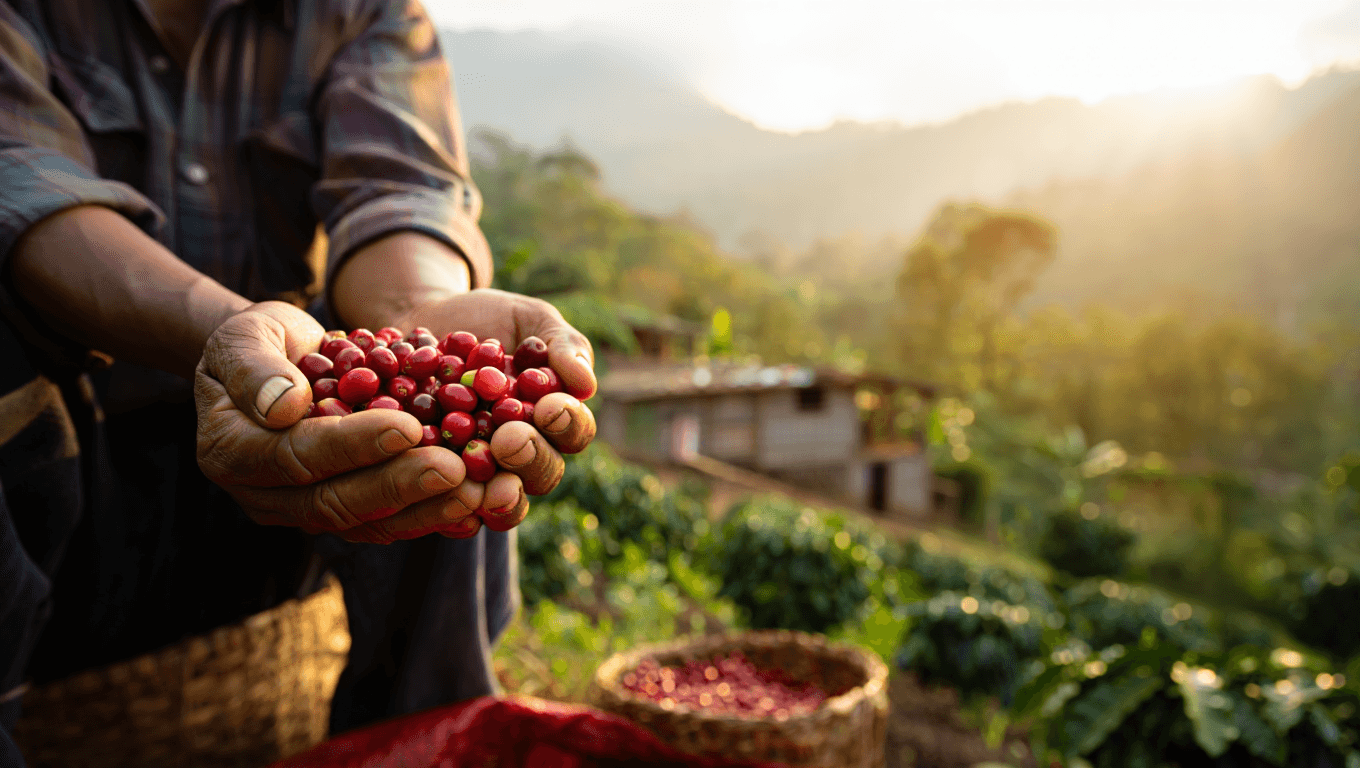
A significant part of the Coffee S10 Brews philosophy is the focus on micro-lots. A micro-lot refers to coffee harvested from a specific plot of land on a single farm, processed separately to preserve its unique flavor profile. Unlike "commodity coffee," which mixes beans from thousands of different farms, micro-lot coffee allows for complete traceability and quality control. By sourcing from these specific lots, we ensure that the unique terroir—the soil, altitude, and rainfall of that specific patch of land—is reflected in your cup.
Supporting micro-lots is also a commitment to social responsibility. Small family farms in the Western Ghats often lack the scale to compete with massive industrial plantations. By partnering with these farmers, Coffee S10 Brews provides them with a premium price for their superior harvest. This enables these families to invest back into sustainable farming practices, such as shade-growing and organic composting, which in turn leads to even better coffee harvests in the future. When you choose our coffee, you are directly supporting the preservation of traditional Indian coffee heritage.
Understanding the science of coffee roasting and grind size consistency
The transition from a green coffee bean to a fragrant roasted bean is a delicate chemical dance. At Coffee S10 Brews, we utilize controlled roasting cycles to ensure consistency. Roasting is where the "Maillard reaction" occurs, developing the sugars and proteins within the bean to create the chocolatey and nutty flavors associated with premium South Indian coffee. A roast that is too light will be too acidic for a traditional filter, while a roast that is too dark will taste burnt and ashy.
Consistency in grind size is equally critical. If the grind is too fine, the water will clog the filter; if it is too coarse, the water will flow through too quickly, resulting under-extraction. We employ industrial-grade burr grinders that ensure every particle of coffee in your bag is uniform. This precision ensures that whether you are brewing your first cup of the month or your last, the flavor profile remains reliable. Discover brewing guides from Coffee S10 Brews to learn more about matching your equipment to the perfect grind.
Why chicory is used in South Indian coffee: Necessity or tradition?
Historically, chicory was introduced to coffee during times of shortage, but in South India, it evolved into a culinary preference. Is chicory "bad"? Absolutely not. In fact, chicory offers several functional benefits. From a sensory perspective, it reduces the "edge" of high-caffeine Robusta, making the coffee smoother. Chemically, chicory contains inulin, a prebiotic fiber that can aid digestion, though in a cup of coffee, the amount is minimal.
The real reason chicory is a necessity in the "hotel-style" filter coffee experience is its interaction with milk. Authentic South Indian coffee is served with frothed, full-fat milk. Pure coffee decoction can sometimes be overwhelmed by the richness of the milk. The bitterness and density of chicory ensure that the "coffee kick" remains prominent even after the milk and sugar are added. At Coffee S10 Brews, we treat chicory as a premium ingredient, sourcing only the highest quality roots to ensure our 80:20 blend maintains its prestigious reputation.
Common mistakes: Why your home-brewed coffee lacks the "hotel" flavor
Many consumers ask, "Why doesn't my filter coffee taste like the one I had in a traditional Udupi restaurant?" Usually, the answer lies in one of three areas: the milk, the froth, or the decoction freshness. First, hotel coffee uses high-fat milk that is often boiled until it reduces slightly, increasing its sweetness and thickness. Using skimmed or low-fat milk at home will never yield the same creamy result.
Second is the "frothing" technique. The act of pouring the coffee between a dabara and a tumbler is not just for show; it aerates the coffee, creates a silky foam, and helps dissolve the sugar perfectly. Finally, many people make the mistake of using a "stale" decoction. A decoction should ideally be used within 2 to 4 hours of brewing. Reheating a cold decoction on a stovetop destroys the delicate aromatics. For the best results, always start with fresh Coffee S10 Brews powder and use your decoction while it is still vibrant.
Is South Indian filter coffee better for you than instant coffee?
While we avoid making exaggerated health claims, there is a clear distinction in the purity of the product. Coffee S10 Brews focuses on a "clean label" approach. Our coffee contains no artificial flavors, preservatives, or bulking agents. Instant coffee is highly processed and often contains higher levels of acrylamide due to the high-heat industrial drying processes. By contrast, filter coffee is a natural infusion of ground beans and water.
Furthermore, the ritual of brewing filter coffee encourages a "slow living" mindset, which can have psychological benefits in a fast-paced world. Taking five minutes to prepare a filter and watching the decoction drip is a form of morning meditation. When you consume a product that has been handled with care from the farm to the roast, you are engaging with a higher quality of nutrition and sensory satisfaction.
Sustainable sourcing: How Coffee S10 Brews bridges tradition and ethics
The future of South Indian coffee depends on how we treat the land today. We recognize that climate change poses a threat to traditional coffee-growing regions. Therefore, Coffee S10 Brews prioritizes sourcing from estates that practice "shade-grown" farming. This method involves growing coffee under a canopy of native trees, which preserves biodiversity, protects the soil from erosion, and allows the coffee cherries to ripen more slowly, enhancing their flavor.
Our commitment to ethics extends to the workers on these farms. By ensuring fair wages and consistent demand, we help maintain the craftsmanship required for handpicking only the ripest red cherries. This meticulous attention to detail is what sets a premium brand like Coffee S10 Brews apart from mass-market alternatives. We are not just selling coffee; we are stewarding a legacy that spans centuries.
Frequently Asked Questions about South Indian Filter Coffee
1. What is the best coffee-to-chicory ratio for beginners?
The 80:20 blend is the gold standard for those who want an authentic, bold taste. However, if you prefer a very strong, bitter, and thick coffee, some prefer a 70:30 ratio. For those who like a cleaner, more acidic cup, a 100% pure coffee blend is recommended. We suggest starting with our signature 80:20 blend for the classic experience.
2. Can I make South Indian filter coffee without a traditional filter?
While a traditional stainless steel filter is best, you can use a French Press as an alternative. However, the result will be less concentrated than a traditional decoction. To get close, use a very high coffee-to-water ratio and let it steep for at least 5 minutes before pressing.
3. How long does the coffee powder stay fresh?
At Coffee S10 Brews, we recommend consuming the powder within 4 weeks of opening for peak aroma. Always store it in an airtight container in a cool, dark place. Avoid refrigeration as coffee absorbs odors from other foods.
4. Is chicory safe to consume every day?
Yes, chicory is a natural root and has been used in coffee for over two centuries. It is caffeine-free and often used as a digestive aid. In the context of a coffee blend, it is perfectly safe for daily consumption.
5. Why is my decoction taking too long to drip?
This usually happens if the grind is too fine or if you have pressed the powder too firmly with the plunger. Try a slightly lighter press next time. If the water still doesn't pass, ensure the holes in your filter aren't blocked by old residues.
6. Does the type of milk matter?
Absolutely. Authentic filter coffee requires full-fat cow's milk. The fat in the milk carries the coffee flavors and creates the iconic froth. If using plant-based milks, oat milk is the best alternative due to its creamy texture.
7. What is the difference between Arabica and Robusta beans?
Arabica beans are known for their sweetness, acidity, and complex aromas (fruit, flowers). Robusta beans are known for their strength, bitterness, and high caffeine content. A blend of both, like those used in Coffee S10 Brews, provides the perfect balance of flavor and "kick."
Ready to elevate your morning ritual?
The journey to the perfect cup of coffee doesn't end here. Whether you are a seasoned connoisseur or a curious beginner, the right ingredients make all the difference. Experience the true taste of heritage with Coffee S10 Brews. Explore our range of signature 80:20 blends, learn more through our detailed brewing guides, and join a community dedicated to the art of Indian coffee craftsmanship.