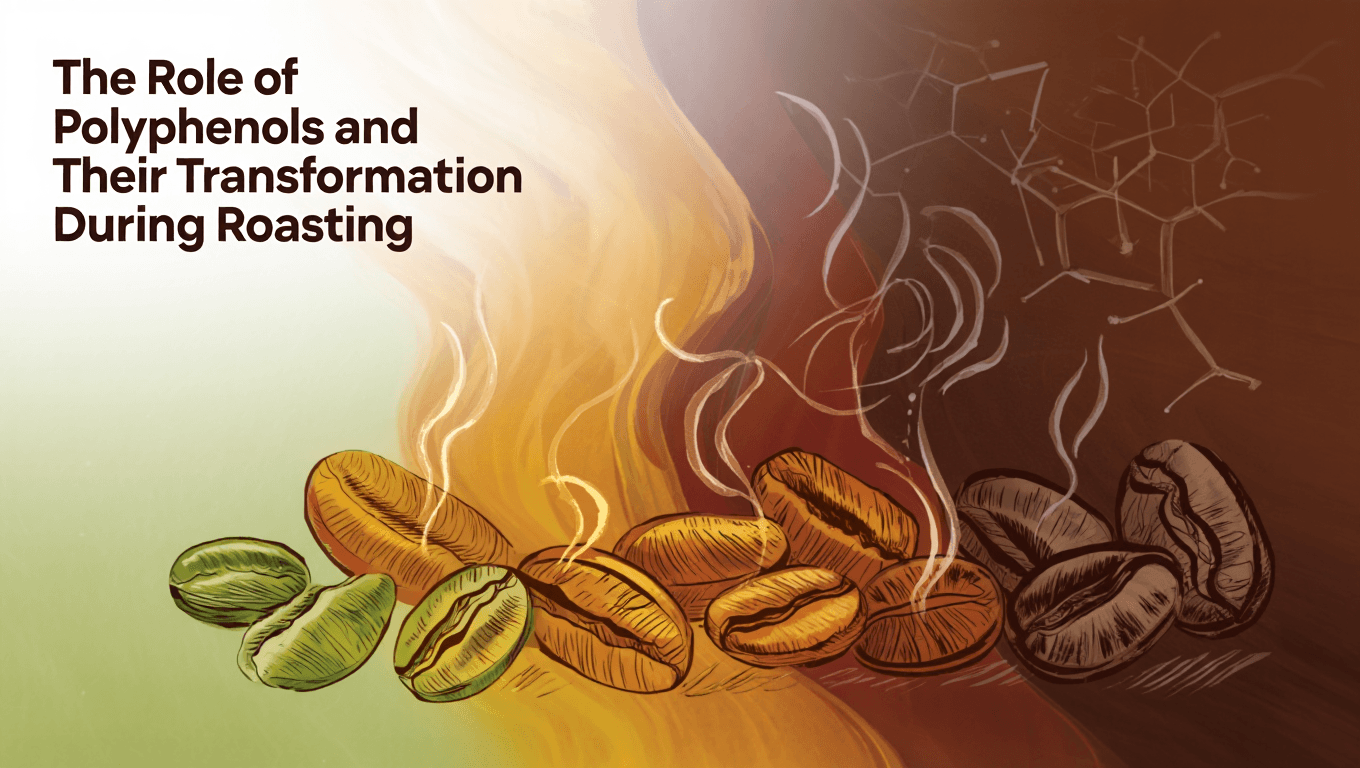
The Role of "Polyphenols" and Their Transformation During Roasting
Unlock coffee's health secrets! See how polyphenols transform during roasting, enhancing your S10 Brews' authentic South Indian filter coffee experience.
What makes South Indian filter coffee different from standard drip or instant coffee?
Authentic South Indian filter coffee is more than just a morning beverage; it is a sensory ritual that has defined households across the southern peninsula for generations. Unlike instant coffee, which is a processed extract, or standard Western drip coffee, which uses a faster filtration method, South Indian filter coffee relies on a slow-drip gravity process. This method utilizes a traditional stainless steel or brass filter to produce a thick, viscous "decoction." The soul of this brew lies in its texture—a heavy body, a lingering caramel-like sweetness, and a potent aroma that can fill an entire home. At Coffee S10 Brews, we believe that this difference begins at the farm level, where handpicked beans are selected specifically for their ability to withstand the slow extraction process without losing their nuanced flavor profiles.
Why is the 80:20 coffee-chicory blend considered the gold standard for authenticity?
One of the most frequent questions from coffee enthusiasts is why South Indian coffee often contains chicory. While some view chicory as a filler, true connoisseurs understand it as a functional ingredient that elevates the cup. An 80:20 ratio—comprising 80% premium roasted coffee beans and 20% high-quality chicory—is widely regarded as the perfect balance. The chicory does not just add a woody depth; it acts as a thickening agent, allowing the decoction to hold its structure when mixed with hot, frothed milk. This ratio, perfected by Coffee S10 Brews, ensures that the coffee retains its caffeinated kick while gaining a velvety mouthfeel and a rich, dark crema that 100% Arabica or Robusta blends often lack in a traditional filter setup.
How does the roasting process transform coffee polyphenols into rich, complex flavors?
Deep within the chemistry of a coffee bean lies a world of polyphenols, specifically chlorogenic acids, which are potent antioxidants. During the roasting process at Coffee S10 Brews, these polyphenols undergo a dramatic transformation. As the beans reach specific temperature milestones, these acids break down into quinic acid and chlorogenic acid lactones. In a light roast, these provide brightness and acidity. However, for the authentic South Indian profile, a medium-to-dark roast is essential. This stage of roasting converts polyphenols into compounds that provide the characteristic "bite" and lingering aftertaste that consumers crave. Understanding this science allows us to control the bitterness, ensuring that the health benefits of the antioxidants remain while the flavor evolves into notes of chocolate, nuts, and toasted caramel.
Why doesn’t my home-brewed filter coffee taste like the famous "hotel coffee"?
Many home brewers struggle to replicate the thick, frothy experience of "hotel-style" coffee found in iconic South Indian eateries. The "pain" usually stems from three factors: grind size, water temperature, and the quality of the blend. Most commercial powders are either ground too coarse, leading to a watery decoction, or too fine, clogging the filter. Coffee S10 Brews solves this by providing a consistent, medium-fine grind optimized specifically for traditional metal filters. Furthermore, "hotel coffee" relies on the "meter coffee" technique—pouring the mixture between a cup and a dabara from a height to aerate the milk and create a natural froth. By using our 80:20 signature blend, you achieve the necessary viscosity that allows this froth to stay stable, bringing the professional café experience into your kitchen.
How to brew authentic South Indian filter coffee at home: A step-by-step guide
Mastering the South Indian filter is an art of patience. Start by adding 2-3 tablespoons of Coffee S10 Brews powder to the upper chamber of your filter. Lightly press the powder with the plunger—do not pack it too tightly, or the water won't pass through. Pour freshly boiled water (ideally around 92-96°C) over the powder and let it sit for 15 to 20 minutes. The resulting first-press decoction is the "liquid gold" of coffee. For the perfect cup, use whole-fat milk, boiled until it rises. Combine the decoction and milk in a 1:3 ratio, adding sugar to taste. To experience the full range of aromas, perform the traditional "stretch" by pouring the coffee between two vessels. This cools the coffee to the perfect drinking temperature while intensifying the aromatic release of the roasted beans.
What are the main differences between coffee types?
To help you understand why choosing a specialized blend matters, we have compared the most common coffee formats below:
| Feature | Instant Coffee | 100% Pure Coffee (Drip) | Coffee S10 Brews (80:20) |
| Preparation Time | Under 1 minute | 3-5 minutes | 15-20 minutes (Slow Drip) |
| Body/Texture | Thin and watery | Medium/Light | Heavy, Syrupy, and Rich |
| Aroma Profile | Faint, often artificial | Bright and fruity/nutty | Deep, caramelized, and earthy |
| Best Consumed With | Water or cold milk | Black or minimal milk | Heavy frothed milk and sugar |
| Cultural Authenticity | Low (Convenience-led) | Moderate (Global standard) | High (Traditional South Indian) |
How does grind size and water quality impact your coffee decoction?
The physics of extraction are unforgiving. If your grind size is inconsistent, the water will find the path of least resistance—a phenomenon known as channeling—leaving much of the flavor trapped in the grounds. Coffee S10 Brews utilizes precision industrial grinders to ensure every particle is uniform, promoting an even extraction. Water quality is equally vital. Since coffee is 98% water, using hard water with high mineral content can mute the delicate notes of the beans and interfere with the polyphenol extraction. We recommend using filtered water heated just below the boiling point to ensure you extract the oils and flavors without scorching the delicate 80:20 blend.
Is chicory in South Indian coffee healthy or just a filler?
There is a common misconception that chicory is an "adulterant." In reality, chicory root is a natural source of inulin, a prebiotic fiber that supports gut health. When roasted, chicory develops a flavor profile that mimics coffee but lacks caffeine, helping to balance the high-intensity Robusta beans often used in South Indian blends. At Coffee S10 Brews, we source only high-grade chicory that complements our handpicked beans. This addition reduces the overall caffeine jitters while providing a smoother finish and aiding digestion, making your morning cup a holistic wellness ritual rather than just a caffeine hit.
Why is "Freshness" the most critical pillar of Coffee S10 Brews?
Coffee starts losing its aromatic compounds the moment it leaves the roaster. Oxygen is the enemy of flavor. Many mass-market brands sit on supermarket shelves for months, leading to a stale, flat taste. Coffee S10 Brews operates on a small-batch roasting philosophy. By controlling the roasting cycles and utilizing moisture-locked packaging, we ensure that the "bloom"—the release of carbon dioxide when hot water hits the grounds—is active when you brew at home. This freshness is what preserves the volatile oils responsible for that signature South Indian coffee aroma that lingers on the palate long after the last sip.
What is the role of the "Dabara and Tumbler" in the coffee experience?
The Dabara and Tumbler are not just decorative items; they are functional tools designed for the unique chemistry of South Indian filter coffee. The wide surface area of the Dabara (the saucer-like bottom) allows the drinker to cool the coffee quickly if it is too hot, while the Tumbler retains heat at the core. Furthermore, the act of pouring the coffee back and forth dissolves the sugar crystals thoroughly and creates a micro-foam from the milk fats. This mechanical aeration enhances the "crema" of the decoction, making every sip feel airy yet intense. Coffee S10 Brews encourages all users to adopt this traditional serving method to fully appreciate the craftsmanship behind our 80:20 blend.
Frequently Asked Questions about South Indian Filter Coffee
1. Why is my coffee decoction too thin?
This usually happens if the water was poured too quickly or if the powder was too coarse. Ensure you are using a medium-fine grind like Coffee S10 Brews and let the gravity drip process take its full 15-20 minutes. Avoid stirring the powder once the water is added.
2. Can I use a French Press to make South Indian filter coffee?
While you can use a French Press, the result will be different. A French Press is an immersion method, whereas the South Indian filter is a percolation method. For the authentic "syrupy" decoction, the traditional metal filter is highly recommended.
3. How long does the decoction stay fresh?
For the best flavor, use the decoction within 2-4 hours. You can store it in the refrigerator for up to 24 hours, but the aroma will diminish. Always use fresh Coffee S10 Brews powder for every brew cycle to ensure maximum potency.
4. Is the 80:20 blend stronger than 100% coffee?
In terms of "body" and "mouthfeel," yes. The 80:20 blend feels more substantial. In terms of pure caffeine content, it depends on the beans, but the addition of chicory makes the flavor profile much bolder and more resilient to being diluted by milk.
5. What kind of milk is best for filter coffee?
Traditional filter coffee tastes best with full-cream dairy milk. The fats in the milk bind with the coffee polyphenols and chicory compounds to create a creamy, balanced cup. If using plant-based milks, cashew or oat milk provides the best creamy consistency.
6. Where can I find brewing guides for different types of filters?
Coffee S10 Brews provides extensive educational resources and video guides to help you master various brewing techniques, from traditional brass filters to modern adaptations.
Experience the Craftsmanship of Coffee S10 Brews
The journey to the perfect cup of South Indian filter coffee is one of tradition, science, and the right ingredients. At Coffee S10 Brews, we have bridged the gap between heritage and modern convenience, ensuring that every bag of our signature 80:20 blend delivers the same consistency you would find in the best coffee houses of Chennai or Bangalore. Whether you are a seasoned connoisseur or a curious beginner, our mission is to provide you with the tools and the beans necessary to master this timeless ritual.
Ready to elevate your morning routine? Explore our range of premium blends, discover our detailed brewing guides, and immerse yourself in the rich world of South Indian coffee culture. Experience the difference that handpicked quality and small-batch roasting make in every drop of decoction.
- Explore Coffee S10 Brews Signature Blends
- Download Our Ultimate Brewing Guide
- Learn More About Our Roasting Philosophy