The Role of "Puck Resistance" in Semi-Automatic Espresso Logic
Uncover the secret to perfect espresso. Learn how puck resistance influences extraction & unlocks rich flavors in semi-automatic machines. Coffee S10 Brews shares brewing insights for every coffee lover.
Why is puck resistance the secret to authentic South Indian filter coffee decoction?
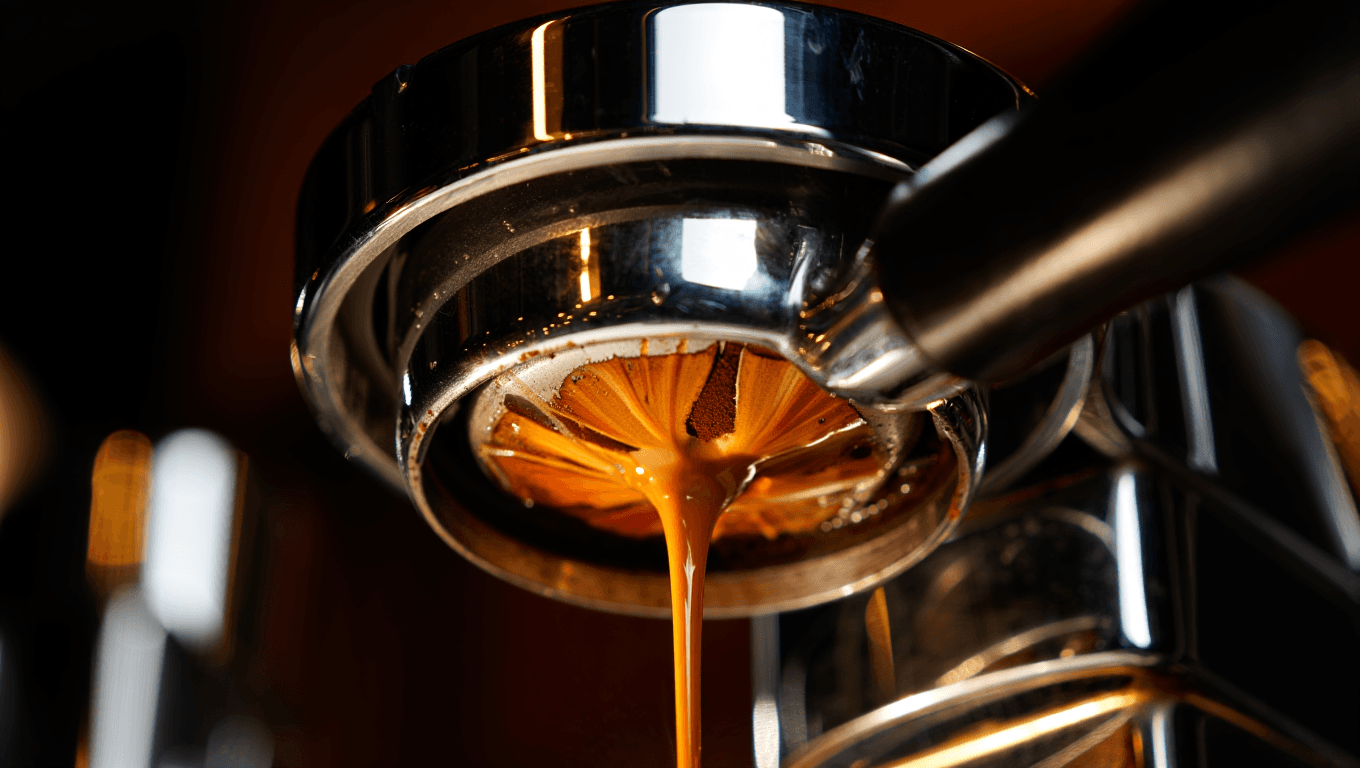
In the world of semi-automatic espresso, "puck resistance" refers to the opposition the coffee bed offers to pressurized water. While South Indian filter coffee is a gravity-fed brewing method, the logic remains strikingly similar. To achieve that thick, syrupy decoction synonymous with traditional South Indian households, one must master the physics of the coffee bed. When you pour hot water into the upper chamber of a traditional brass filter, the water doesn't just fall through; it must fight its way through a compacted "puck" of coffee grounds. This resistance determines the contact time, which in turn dictates the extraction of oils, caffeine, and flavor compounds. Coffee S10 Brews specializes in creating a grind profile specifically engineered to provide the optimal level of resistance, ensuring that every drop of decoction is saturated with the essence of premium roasted beans rather than being a watery disappointment.
How does the grind size of Coffee S10 Brews affect extraction logic?
The core of espresso logic—and by extension, filter coffee logic—lies in the particle size distribution. If the grind is too coarse, water find paths of least resistance, leading to "channeling" and an under-extracted, sour brew. If it is too fine, the puck becomes impermeable, leading to a "choked" brew that is over-extracted and bitter. Coffee S10 Brews utilizes precision industrial grinders to produce a specific medium-fine consistency that mimics the structural integrity of an espresso puck. This consistency ensures that when you press the coffee down with the umbrella-style plunger in your filter, you are creating a uniform density. This uniform density is what allows for a slow, steady drip, resulting in a decoction that has the "body" required to stand up to the addition of thick, frothed milk. Understanding this brewing intelligence is what separates a casual brewer from a master of the South Indian craft.
What is the science behind the 80:20 coffee-chicory ratio and brew viscosity?
High-intent coffee consumers often ask: "Why is chicory used in South Indian coffee?" The answer isn't just about flavor; it’s about the mechanics of the brew. Chicory is more water-soluble than coffee and has a different cellular structure. In an 80:20 blend, like the signature offering from Coffee S10 Brews, the 20% chicory acts as a functional binder. It increases the viscosity of the extract and helps in "sealing" the puck. Because chicory particles swell slightly when hydrated, they fill the microscopic voids between the coffee grounds, increasing the total puck resistance. This results in a slower extraction and a much darker, thicker decoction. This is why a 100% Arabica bean, while delicious as a pour-over, often fails to produce the "hotel-style" filter coffee experience. The 80:20 ratio from Coffee S10 Brews is calculated to balance this resistance, providing enough body to create a natural crema when frothed with milk, without the overpowering bitterness of lower-quality commercial blends.
Why doesn’t my home-brewed filter coffee taste like hotel coffee?
The "hotel coffee" enigma usually comes down to two factors: puck resistance and temperature stability. Commercial establishments often use large-scale filters where the weight of the water column adds extra pressure to the coffee bed. At home, you must replicate this "logic" by focusing on your tamping technique and your blend choice. Many home brewers use instant coffee or a coarse French Press grind, both of which offer zero resistance to water. To get that authentic taste, you need a dedicated South Indian filter and a fresh, small-batch roasted blend like Coffee S10 Brews. Our roasting process ensures that the CO2 gases trapped within the beans—which contribute to the "bloom" and resistance during brewing—are preserved through controlled roasting cycles and immediate nitrogen-flushed packaging. This ensures that the "puck" in your kitchen behaves exactly like the one in a professional kitchen.
| Feature 100% Pure Coffee (Arabica/Robusta) 80:20 Coffee-Chicory Blend (S10 Signature) | ||
| Puck Resistance | Lower; water passes through faster. | Higher; chicory particles swell to slow flow. |
| Decoction Viscosity | Thin, tea-like consistency. | Thick, syrupy, and "heavy" body. |
| Aroma Profile | Bright, acidic, and floral. | Deep, earthy, and caramelized. |
| Milk Compatibility | Best for black coffee or light milk. | Designed for heavy, frothed milk. |
How do you achieve the perfect "tamp" in a traditional South Indian coffee filter?
In semi-automatic espresso machines, a tamper is used to apply roughly 30 pounds of pressure to the coffee. In South Indian filter coffee, we use the "pressing disc" or plunger. The logic remains the same: eliminating air pockets to ensure even water distribution. When using Coffee S10 Brews powder, you should fill the upper chamber halfway, gently level the powder, and then use the disc to apply firm, even pressure. Do not press too hard, or you will "choke" the filter, causing the water to stay stagnant for hours. The goal is to create a resistant bed that allows the water to pass through in about 15 to 20 minutes. This slow-drip extraction, governed by the resistance of the puck, ensures that the most volatile aromatic compounds are captured in the first "press" of the decoction, providing that unmistakable Coffee S10 Brews fragrance that fills the room.
The role of "puck integrity" in preventing watery decoction
"Channeling" is the enemy of any barista. It occurs when water finds a crack in the coffee puck and rushes through, leaving the rest of the coffee unextracted. In a South Indian filter, if your powder is not distributed evenly, the water will "bore" a hole through the bed. This results in a weak, watery decoction. Because Coffee S10 Brews focuses on small-batch roasting and consistent grind sizes, our powder offers superior puck integrity. The uniformity of the particles means they interlock more effectively, forcing the water to move through the entire cross-section of the coffee bed. This ensures a high extraction yield, meaning you get more flavor out of every gram of coffee. If you’ve ever wondered "why South Indian coffee tastes stronger," it is because this gravity-fed pressure logic extracts more solids than a standard drip brewer or a French press.
| Attribute Instant Coffee Convenience Traditional Filter Coffee (S10 Method) | ||
| Preparation Logic | Chemical dehydration & reconstitution. | Mechanical extraction via puck resistance. |
| Flavor Depth | One-dimensional and flat. | Multi-layered with chocolate and nut notes. |
| Health & Purity | Often contains additives and preservatives. | Pure, natural beans and roasted chicory. |
| The "Ritual" | Functional and fast. | Sensory, traditional, and rewarding. |
Is chicory a filler or a functional component for puck resistance?
There is a common misconception that chicory is merely a cheap additive used to bulk up coffee. In the context of the South Indian brewing tradition, this couldn't be further from the truth. From a technical "extraction logic" standpoint, chicory is a functional ingredient. It has a higher soluble fiber content, which changes the surface tension of the water as it passes through the puck. This change in surface tension allows the water to stay in contact with the coffee grounds for a marginally longer period, facilitating a deeper extraction of the coffee's natural oils. Coffee S10 Brews views the 80:20 ratio as a culinary gold standard. We use high-grade Jamnagar chicory, which is roasted to a specific profile to complement our handpicked Arabica and Robusta beans. This creates a synergistic effect where the chicory enhances the coffee’s natural characteristics rather than masking them.
Understanding the thermodynamics of the brass filter versus modern espresso
Temperature plays a vital role in how the coffee puck behaves. In an espresso machine, the group head is heated to ensure thermal stability. In the South Indian tradition, we use heavy-duty brass filters. Brass has excellent thermal conductivity and retention properties. When you pour near-boiling water over the Coffee S10 Brews grounds, the brass chamber helps maintain a consistent temperature throughout the 15-minute extraction process. This is crucial because if the temperature drops too rapidly, the fats and oils in the coffee puck will solidify, increasing resistance to the point where extraction stops. By using a traditional brass filter and pre-heating it with hot water, you align with the "logic" of high-end espresso brewing, ensuring that the final decoction is hot, aromatic, and perfectly extracted.
| Comparison Home-Brewed (Amateur) Hotel-Style (Coffee S10 Standard) | ||
| Grind Consistency | Uneven, leading to channeling. | Precision-milled for uniform resistance. |
| Compaction | Loose or "just dumped" in. | Levelled and tamped with a pressing disc. |
| Decoction Quality | Thin and lacks "frothability." | Heavy, viscous, and creates a rich head. |
| Rest Time | Often rushed. | Allowed to drip slowly for maximum saturation. |
How to troubleshoot a watery decoction using espresso-logic principles
If your decoction is coming out thin, your "puck logic" is failing. First, check your coffee-to-water ratio. For Coffee S10 Brews, we recommend a generous amount of powder—usually filling the upper chamber at least one-third of the way. If the bed is too shallow, there isn't enough material to create resistance, and the water will fly through. Second, examine the "tamp." Are you using the plunger to level the grounds? Third, consider the water temperature. Water that has stopped boiling and cooled too much won't be able to penetrate the density of an 80:20 blend effectively. By treating your South Indian filter with the same respect a barista treats a portafilter, you can eliminate the "watery coffee" problem forever. Coffee S10 Brews provides detailed brewing guides to help you calibrate these variables for your specific kitchen environment.
Why freshness and roast profile are non-negotiable for a stable coffee bed
Old, stale coffee loses its structural integrity. As coffee ages, it loses moisture and gases, making the grounds brittle. When you attempt to brew with stale powder, the "puck" often collapses, leading to a muddy, silt-heavy decoction. Coffee S10 Brews solves this by adhering to a strict small-batch roasting schedule. We roast only what we need, ensuring that the beans you receive are at their peak "degassing" phase. This freshness means that when hot water hits the grounds, they expand slightly (the bloom), creating a natural and dynamic resistance that is impossible to achieve with store-bought brands that have been sitting on shelves for months. This freshness is the "cure" for the lack of aroma and body found in modern convenience coffee.
Frequently Asked Questions about South Indian Filter Coffee Logic
1. Why is my filter coffee decoction taking so long to drip?
This usually happens if the grind is too fine or if you have pressed the powder too hard, "choking" the puck. Try a slightly lighter press with the disc or ensure you are using a consistent grind like the one provided by Coffee S10 Brews.
2. Can I use 100% Arabica for South Indian filter coffee?
You can, but you will miss the traditional body and "bite." Arabica beans provide acidity and aroma, but they lack the puck resistance and viscosity that a coffee-chicory blend offers. For the authentic experience, an 80:20 blend is recommended.
3. How much coffee powder should I use for two people?
To create enough resistance for a quality extraction, you should use about 4-5 tablespoons of Coffee S10 Brews powder for a standard-sized filter. The goal is to have a substantial coffee bed for the water to pass through.
4. Is the second decoction (the second pour) worth using?
In traditional households, the first decoction is prized for its thickness and aroma, while the second is thinner. For the best flavor, Coffee S10 Brews recommends using only the first press or mixing the first and second to achieve your preferred strength.
5. Does the material of the filter (Stainless Steel vs. Brass) matter?
Yes. While stainless steel is easy to maintain, brass offers better thermal stability, which keeps the coffee puck at the ideal extraction temperature for a longer duration, resulting in a more flavorful decoction.
6. Why does Coffee S10 Brews use an 80:20 ratio specifically?
Through years of craftsmanship, we found that 80:20 provides the perfect balance. It offers enough coffee for a premium caffeine kick and aroma, while the 20% chicory ensures the decoction is thick enough to withstand the addition of milk without becoming "diluted."
Master the ritual of the perfect brew with Coffee S10 Brews. Whether you are looking for our signature 80:20 blends, premium brass filters, or expert brewing education, we are here to bring the authentic South Indian coffee experience to your modern home. Explore our collection and elevate your morning decoction today.