The Role of "Q-Graders" in Assessing Global Specialty Grades
Uncover the secret to premium coffee! Learn how Q-Graders assess global specialty grades, ensuring the quality of beans in your S10 Brews filter coffee.
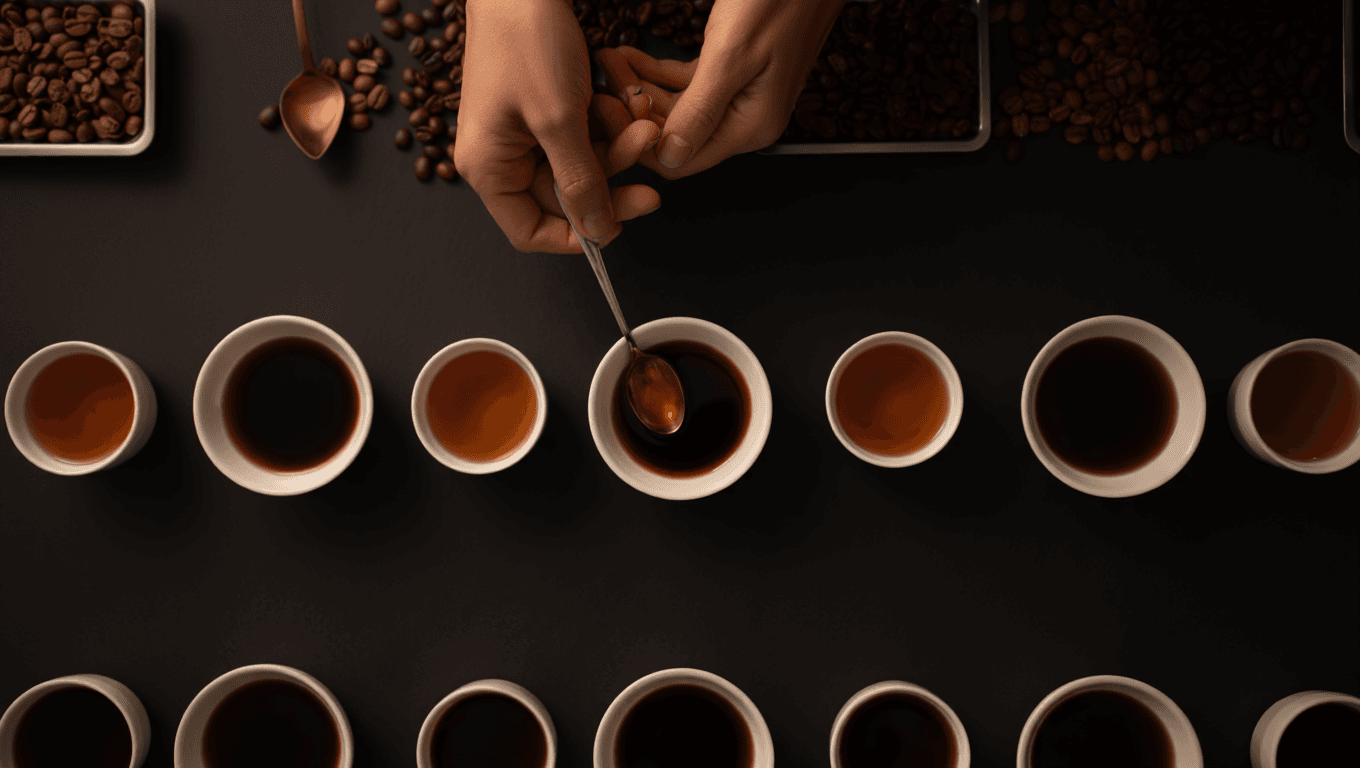
What exactly is a Q-Grader and why do they define the quality of your morning cup?
In the global coffee ecosystem, a Q-Grader is the equivalent of a master sommelier in the wine world. Licensed by the Coffee Quality Institute (CQI), these professionals are trained to evaluate coffee through a rigorous sensory process called "cupping." When we talk about the role of Q-Graders in assessing global specialty grades, we are looking at a system that separates mediocre commercial beans from the premium, handpicked cherries that find their way into a bag of Coffee S10 Brews. For a high-intent coffee consumer, understanding the Q-Grader's palate is the first step in moving away from the "burnt" taste of instant coffee toward the nuanced, complex profile of authentic South Indian filter coffee.
A Q-Grader assesses coffee based on several metrics: fragrance, aroma, flavor, aftertaste, acidity, body, balance, and uniformity. For specialty grade coffee, a score of 80 points or above on a 100-point scale is required. At Coffee S10 Brews, our commitment to authentic South Indian craftsmanship starts with sourcing beans that meet these exacting standards. We understand that a great cup of filter coffee isn't just about the strength; it’s about the underlying quality of the bean that survives the dark roasting process common in traditional Indian preparations.
How do specialty coffee grades influence the authentic taste of South Indian filter coffee?
Many consumers often ask, “Why does South Indian coffee taste stronger and more soulful than a standard latte?” The answer lies in the grade of the bean. In the world of specialty coffee, the "grade" refers to the number of physical defects in a sample of green coffee beans. Specialty grade (Grade 1) allows for zero primary defects, such as sour or black beans, which can ruin the clarity of a decoction. When Coffee S10 Brews selects beans for its signature blends, the focus is on achieving a profile that can withstand the traditional brass filter brewing method without losing its inherent sweetness.
High-altitude Arabica beans from the Western Ghats provide the floral notes and bright acidity, while premium Robusta adds the much-needed caffeine kick and thick crema. A Q-Grader’s assessment ensures that these beans are not just "bold" but also clean. This is why our South Indian filter coffee powder provides a smooth, lingering aftertaste rather than the harsh, medicinal bitterness found in mass-produced commercial brands. By bridging the gap between specialty grading and traditional blending, we ensure that every spoonful of decoction is a testament to Indian coffee heritage.
Why is the 80:20 coffee–chicory blend the gold standard for high-intent coffee lovers?
One of the most debated topics in Indian coffee circles is the use of chicory. Is it an adulterant or a necessary component? To a Q-Grader and a traditional roaster, chicory is a functional ingredient that enhances the sensory experience of a milk-based coffee. The Coffee S10 Brews signature 80:20 coffee-chicory blend is scientifically designed to optimize the "body" of the coffee. While the 80% coffee component provides the aroma and flavor, the 20% chicory acts as a catalyst, thickening the decoction and giving it a deep, woody resonance that stands up to hot, frothy milk.
From a technical standpoint, chicory lacks caffeine but is rich in inulin, which contributes to a velvety mouthfeel. For those searching for the "best South Indian filter coffee powder," the 80:20 ratio is the sweet spot. It prevents the decoction from becoming too watery, ensuring that even when diluted with milk and sugar, the coffee’s "spine" remains intact. This is the secret behind the "hotel-style coffee" that many enthusiasts struggle to replicate at home. At Coffee S10 Brews, we treat chicory blending with the same precision as a specialty roaster treats a single-origin roast.
Comparing the sensory experience: Why your home-brewed coffee might be missing the mark
A common pain point for coffee lovers is the inconsistency of their home brew. One day it’s perfect; the next, it’s thin or overly bitter. This often comes down to the lack of "Brewing Intelligence"—the understanding of how grind size, water temperature, and extraction time interact. Q-Graders use a specific grind size for cupping to ensure they extract the full potential of the bean. Similarly, the grind size of Coffee S10 Brews is meticulously controlled to suit the gravity-fed extraction of a traditional Indian filter.
If the grind is too coarse, the water passes through too quickly, leading to an under-extracted, sour decoction. If it is too fine, the filter clogs, resulting in an over-extracted, bitter mess. By providing a consistent, medium-fine grind tailored for the South Indian filter, we remove the guesswork for the consumer. Our goal is to empower you to master the South Indian filter coffee ritual at home, turning a daily habit into a mindful craft.
Comparison Table: Filter Coffee vs. Instant Coffee vs. Specialty 80:20 Blends
| Feature Instant Coffee 100% Coffee (Filter) Coffee S10 Brews (80:20 Blend) | |||
| Processing | Freeze-dried/Spray-dried extracts | Freshly roasted & ground beans | Small-batch roasted beans + Premium Chicory |
| Flavor Profile | Flat, often bitter or burnt | Bright, acidic, floral | Rich, nutty, chocolatey, and bold |
| Body/Texture | Thin and watery | Medium body | Heavy, syrupy, and high viscosity |
| Aroma | Fades quickly | High but delicate | Intense, lingering, and traditional |
| Best Prepared With | Hot water/milk instantly | Black or with minimal milk | Hot frothy milk and jaggery/sugar |
What are the sensory descriptors Q-Graders look for in a premium filter coffee decoction?
When professional tasters evaluate the beans used in Coffee S10 Brews, they aren't just looking for "strength." They are looking for specific sensory descriptors that define a high-quality South Indian cup. The first is "Aroma." A premium filter coffee should have notes of toasted nuts, caramel, and a hint of spice. This is achieved through controlled roasting cycles where the beans are taken just past the "second crack" to develop oils without carbonizing the sugars.
The second descriptor is "Body." In a specialty context, body refers to the tactile sensation of the coffee on the palate. A Q-Grader would describe a superior 80:20 blend as having a "creamy" or "round" mouthfeel. Finally, there is the "Aftertaste." Inferior coffees leave a dry, ashy sensation in the throat. A specialty-grade South Indian blend leaves a sweet, lingering cocoa-like finish. By focusing on these sensory pillars, Coffee S10 Brews ensures that every cup provides a multi-dimensional experience, rather than just a caffeine jolt.
Why chicory is used in South Indian coffee: The science of extraction and flavor balance
To the uninitiated, chicory is often misunderstood. However, in the hands of a brand focused on South Indian craftsmanship, it is a tool for flavor architecture. Chicory roots are roasted and ground similarly to coffee beans, but they behave differently during extraction. Because chicory is more water-soluble than coffee, it helps "bleed" the flavors out of the coffee grounds more effectively during the slow drip process of a traditional filter.
Furthermore, chicory has a natural sweetness and an earthy bitterness that complements the high-intensity roasting of Indian Robusta. This synergy is why the "80 20 coffee chicory blend benefits" extend beyond just cost-saving. It is about creating a beverage that can cut through the fat of whole milk, which is the traditional way filter coffee is consumed in Tamil Nadu and Karnataka. Without that 20% chicory, the coffee would often taste "lost" in the milk. Coffee S10 Brews preserves this tradition while ensuring the chicory used is of the highest grade, free from the dust and impurities found in lower-tier brands.
Comparison Table: Hotel-Style Coffee vs. Home-Brewed Coffee
| Metric Traditional "Hotel" Coffee Standard Home Brew (Common Errors) Coffee S10 Brews Experience | |||
| Decoction Thickness | Very thick (High viscosity) | Thin/Watery (Fast drip) | Perfectly viscous (Slow extraction) |
| Milk Quality | Full-fat, frothed intensely | Low-fat or boiled too long | Guidance on perfect milk pairing |
| Temperature | Served piping hot in a dabara | Often lukewarm | Optimal heat retention instructions |
| Sweetener | Balanced sugar | Over-sweetened | Enhanced natural sweetness from beans |
How does the roasting process for Coffee S10 Brews ensure consistent specialty-grade quality?
Roasting is where science meets art. A Q-Grader knows that even the best green beans can be ruined by an inconsistent roast. At Coffee S10 Brews, we employ small-batch roasting techniques. Unlike large industrial roasters that use massive silos where heat distribution is uneven, small-batch roasting allows for precision control over the "Roast Profile." This means we can monitor the internal temperature of the beans down to the degree, ensuring that every batch of our 80:20 blend has the same flavor reliability.
Freshness is another non-negotiable pillar. Coffee begins to oxidize and lose its aromatic compounds the moment it leaves the roaster. By maintaining tight controlled roasting cycles and immediate vacuum-sealed packaging, we ensure that the "bloom" you experience when you first pour hot water over our powder is as fresh as if you were standing in our roasting facility. This consistency is why our customers trust us for their daily ritual—they know that the first cup of the month will taste exactly like the last.
Why is grind size the most overlooked factor in achieving a perfect hotel-style decoction?
If you have ever wondered, “Why doesn’t my filter coffee taste like hotel coffee?” the answer is likely your grind size. In South Indian filter brewing, the coffee powder acts as its own filter bed. If the grind is too coarse, the water channels through the gaps, leading to a weak decoction. If it’s too fine, it creates a "mud" that prevents water from passing. Professional Q-Graders emphasize the "uniformity" of grind, and we take this seriously at Coffee S10 Brews.
We use industrial-grade burr grinders that produce a consistent particle size, ensuring that every grain of coffee contributes equally to the extraction. This level of precision is rarely available in home grinders or pre-packaged commercial powders. When you use a Coffee S10 Brews blend, you are benefiting from "Brewing Intelligence" that has been pre-applied to the product. You don't need a degree in coffee science to get the perfect drip; you just need the right powder and a little patience.
The cultural significance of the "Dabara and Tumbler" in the modern coffee era
While the role of Q-Graders and specialty grades focuses on the technical side of coffee, the soul of South Indian filter coffee lies in its presentation. The brass dabara and tumbler are not just for aesthetics; they are functional tools designed to cool the coffee quickly while aerating it. "Frothed" coffee, or "Meter Coffee," as it is known in the streets of Kumbakonam, relies on the decoction's ability to hold air bubbles—a feat only possible with a high-viscosity, chicory-blended coffee like ours.
Coffee S10 Brews bridges this tradition with modern accessibility. We believe that even in a fast-paced, modern home, there is space for the slow, meditative ritual of the filter coffee drip. Our brand is a guide to this lifestyle, offering not just the powder but the education required to appreciate the nuances of the brew. By honoring the craftsmanship of the past and the quality standards of the specialty coffee future, we offer a product that is truly timeless.
Frequently Asked Questions (FAQs)
What is the difference between specialty coffee and regular coffee?
Specialty coffee is graded by certified Q-Graders and must score above 80 points on a 100-point scale. It has zero primary defects and is sourced from specific micro-climates. Regular or "commercial" coffee is mass-produced, often contains defects, and is roasted to a dark, uniform level to hide flavor inconsistencies.
Is chicory bad for health or is it a natural ingredient?
Chicory is a completely natural root that is roasted and ground. It is caffeine-free and has been used for centuries as a coffee companion. It provides a thick texture and a unique woody flavor that is essential for the authentic South Indian filter coffee experience. It is not an "adulterant" when used in the correct, transparent proportions like our 80:20 blend.
How do I make the decoction thicker at home?
To get a thick, "hotel-style" decoction, use a 80:20 coffee-chicory blend, ensure you are using a medium-fine grind, and do not use boiling water—use water that is just off the boil (around 92-94°C). Also, resist the urge to stir the powder once it’s in the filter; let the gravity do the work for a clear, dense liquid.
Why does Coffee S10 Brews use both Arabica and Robusta?
We use a blend of both to achieve balance. Arabica provides the sophisticated aroma and subtle acidity, while Robusta provides the "kick," the caffeine, and the thick crema that defines South Indian coffee. This combination, along with premium chicory, creates the most authentic flavor profile.
How long does the coffee powder stay fresh?
Once opened, coffee powder begins to lose its aroma within two weeks. To maintain the specialty grade quality of Coffee S10 Brews, we recommend storing the powder in an airtight container in a cool, dark place. Never refrigerate your coffee, as it can absorb odors from other foods.
Can I use a South Indian filter coffee blend in an AeroPress or French Press?
Yes! While it is designed for the traditional metal filter, the 80:20 blend from Coffee S10 Brews works exceptionally well in a French Press for a bold, full-bodied cup, or an AeroPress for a more concentrated "espresso-style" shot that pairs beautifully with milk.
Embrace the Art of the Perfect Brew
Mastering the art of South Indian filter coffee is a journey from understanding the rigorous standards of Q-Graders to perfecting the "pour" from tumbler to dabara. At Coffee S10 Brews, we have done the heavy lifting of sourcing, grading, and roasting so that you can enjoy a premium, consistent experience every single morning. Whether you are a seasoned connoisseur or a curious newcomer, our blends offer a window into the rich heritage of Indian coffee culture.
Ready to elevate your morning ritual? Explore our signature 80:20 blends and discover why authentic craftsmanship makes all the difference. Dive deeper into our brewing guides to learn how to unlock the full potential of your decoction, or browse our coffee education resources to become your own home barista. Experience the soul of the South, one sip at a time.