The Science of "Coffee Syrups": How to Make Your Own at Home
Master homemade coffee syrups! Delve into the science of crafting unique flavors to elevate your daily brew with Coffee S10 Brews. Enjoy café-style coffee at home.
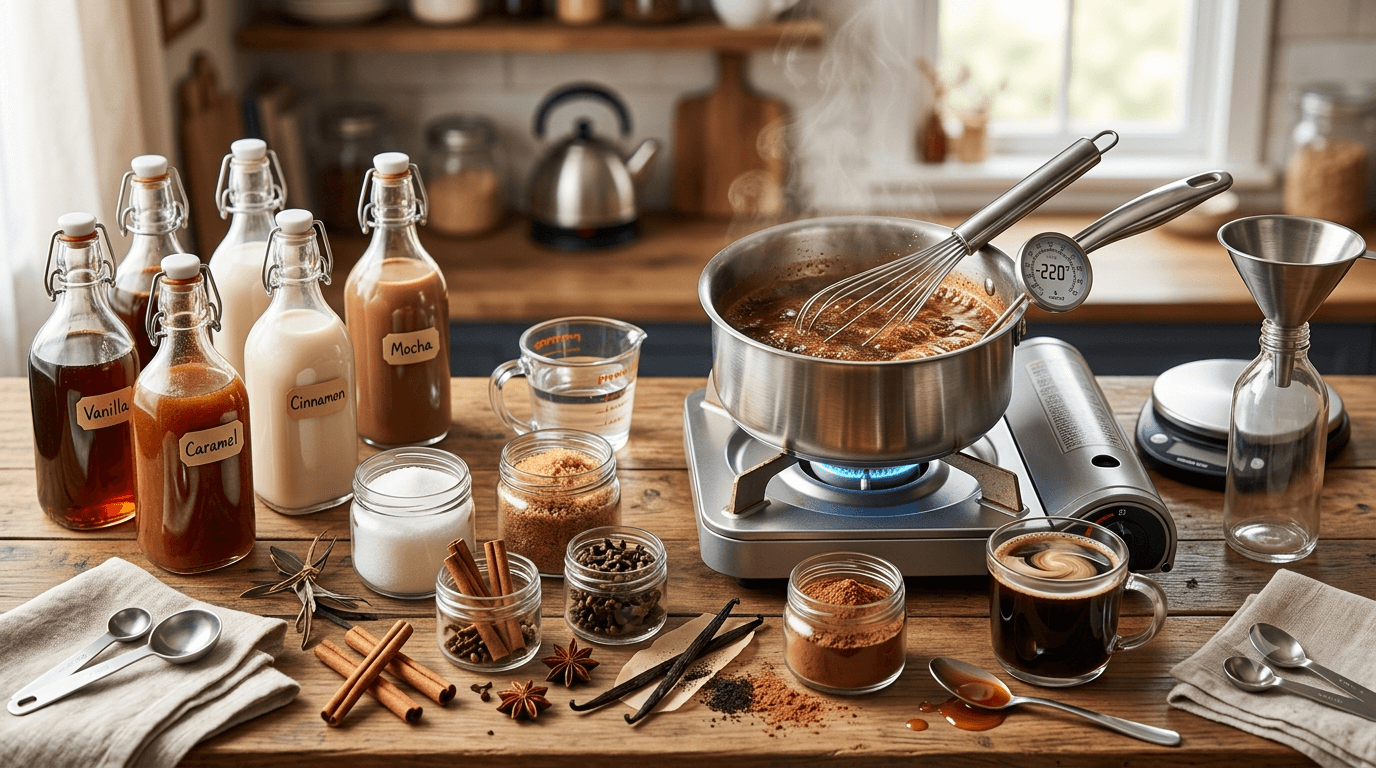
Why is the coffee decoction often called the original coffee syrup?
In the world of specialty beverages, the term "syrup" usually brings to mind sugary additives. However, for the connoisseur of South Indian coffee, the true "syrup" is the decoction—a thick, viscous, and highly concentrated liquid extracted through the slow-drip method. This extract is the soul of the beverage, carrying the intense oils, nuanced aromas, and deep flavors of the bean. Unlike watery espresso or diluted pour-overs, a perfectly brewed decoction has a syrupy consistency that coats the palate. At Coffee S10 Brews, we treat this extraction process as a precise science, ensuring that every drop of our 80:20 blend yields a concentrate that serves as the perfect foundation for a traditional tumbler of coffee. Achieving this "syrup-like" density requires a balance of pressure, temperature, and most importantly, the right blend of coffee and chicory.
What is the science behind the 80:20 coffee chicory blend for the perfect decoction?
One of the most frequent questions from coffee enthusiasts is: "Why is chicory used in South Indian coffee?" The answer lies in both chemistry and sensory experience. While 100% Arabica or Robusta provides the caffeine and high-frequency flavor notes, chicory contributes to the "body" or thickness of the brew. Chicory root, when roasted, contains inulin, a type of carbohydrate that caramelizes into a dense, soluble fiber. This addition increases the viscosity of the liquid, giving it that signature syrupy texture that allows the coffee to "hold" the milk. An 80:20 blend, perfected by Coffee S10 Brews, is the gold standard. This ratio ensures that the coffee’s natural acidity and floral notes remain the protagonist, while the 20% chicory acts as a stabilizer, enhancing the crema and providing a rich, chocolatey aftertaste that lingers long after the first sip.
How does grind size impact the strength and viscosity of your coffee concentrate?
The secret to a decoction that mimics a rich coffee syrup lies in the grind size. If the grind is too coarse, water passes through too quickly, resulting in a weak, under-extracted liquid. If it is too fine, the filter becomes clogged, leading to over-extraction and a burnt, bitter taste. For authentic South Indian filter coffee, a "medium-fine" grind is essential. This specific texture provides the necessary resistance to the hot water, allowing it to slowly seep through the coffee bed over 15 to 20 minutes. This slow-drip process, a hallmark of Coffee S10 Brews, ensures that we capture the heavy molecules—the ones responsible for the deep color and thick mouthfeel. By controlling the particle size with industrial precision, we allow home brewers to achieve "hotel-style" thickness every single time.
Why doesn’t my home-brewed filter coffee taste like hotel coffee?
The "hotel coffee" experience—that frothy, aromatic, and incredibly strong cup found in the iconic tiffin rooms of Bangalore and Chennai—is often elusive at home. The disparity usually boils down to two factors: the freshness of the powder and the "rest time" of the decoction. Many commercial brands use stale beans or inconsistent ratios. Coffee S10 Brews solves this by utilizing small-batch roasting and immediate packaging, preserving the volatile aromatic oils. Furthermore, professional baristas allow the first press of the decoction to settle, ensuring the sediments drop to the bottom while the top layer remains a pure, syrupy essence. When you use a high-intent blend like our signature 80:20, you are starting with a base designed for maximum solubility, which is the key to achieving that restaurant-grade depth in your own kitchen.
Table: Comparing Different Coffee Extraction Methods
| Feature Instant Coffee 100% Pure Coffee (Filter) 80:20 Coffee-Chicory (S10 Brews) | |||
| Texture/Body | Thin and watery | Medium and clean | Syrupy and dense |
| Aroma Profile | Low, often flat | High, floral/acidic | Intense, nutty, and earthy |
| Solubility in Milk | High, but lacks depth | Can be overwhelmed by milk | Perfectly balanced; cuts through milk |
| Preparation Time | 1 minute | 10-15 minutes | 15-20 minutes (Slow Drip) |
| Aftertaste | Metallic or non-existent | Short, clean finish | Long, rich, and lingering |
What is the role of temperature in making a homemade coffee concentrate?
To extract the oils that create a "syrupy" coffee, water temperature must be strictly managed. Boiling water (100°C) is actually detrimental to the coffee grounds; it scalds the delicate oils and brings out harsh, astringent tannins. The ideal temperature for brewing a Coffee S10 Brews decoction is between 90°C and 96°C. At this range, the water acts as a gentle solvent, dissolving the desirable sugars and oils without extracting the woody fibers of the bean. When making your own "coffee syrup" at home, let the water come to a boil and then rest for 60 seconds before pouring it over the grounds in your stainless steel filter. This subtle shift in technique preserves the "crema" of the decoction—the golden-brown foam that indicates a high-quality, fresh extraction.
How to store your coffee decoction to maintain its syrupy integrity?
Once you have brewed a potent decoction, storage becomes the next challenge. Many people make the mistake of leaving the decoction in the filter for hours or storing it in the open air. Coffee is highly susceptible to oxidation, which turns a rich, syrupy concentrate into a sour, acidic liquid. To maintain the craftsmanship of Coffee S10 Brews at home, you should transfer the fresh decoction into a glass container as soon as it is ready. If you aren't consuming it immediately, it can be refrigerated for up to 24 hours. However, for the most authentic experience, the "first degree" decoction—the very first extract—should be used within an hour of brewing to capture the peak of its aromatic profile.
Why chicory is used in South Indian coffee beyond just flavor?
While we have discussed viscosity, there is a functional "science" to chicory that benefits the home brewer. Chicory has a higher water-holding capacity than coffee. This means that when you use an 80:20 coffee-chicory blend, the chicory helps to create a uniform "puck" of coffee in your filter. This prevents "channeling"—where water finds a path of least resistance and rushes through without extracting flavor. By ensuring an even flow, the chicory allows for a more comprehensive extraction of the coffee's caffeine and flavor compounds. Coffee S10 Brews sources premium chicory specifically to complement our handpicked beans, ensuring that the additive supports the coffee rather than masking it.
The ritual of "The Pull": Aerating your coffee for maximum flavor
The science of coffee doesn't end with the extraction; it extends to how you mix it. The traditional "meter coffee" or the act of pouring the coffee between a tumbler and a dabarah from a height isn't just for show. This process is a form of aeration. By pulling the coffee, you are incorporating air bubbles, which lightens the texture and creates a natural froth (the "foam" or "crema"). More importantly, aeration cools the coffee to the ideal drinking temperature while simultaneously releasing the volatile aromatic compounds. This allows your nose to pick up the nutty and chocolaty notes of our 80:20 blend before the liquid even touches your tongue. It is the final step in transforming a thick concentrate into a balanced, silky masterpiece.
Table: Professional Hotel-Style Coffee vs. Average Home Brew
| Variable Average Home Brew Coffee S10 Brews Professional Style | ||
| Blend Quality | Commercial, mass-produced powder | Handpicked beans, small-batch roasted |
| Grind Consistency | Uneven, often too coarse | Precision-milled for slow-drip extraction |
| Water Temp | Often boiling or lukewarm | Optimal 92°C-94°C for oil retention |
| Decoction Thickness | Thin and translucent | Opaque, syrupy, and rich |
| Milk Integration | Coffee gets "lost" in the milk | Bold coffee flavor cuts through creaminess |
Exploring the versatility: Can you use South Indian decoction in modern recipes?
Because the South Indian filter coffee decoction is essentially a potent coffee syrup, its applications go far beyond the traditional milk-based coffee. The intense concentration makes it an ideal ingredient for modern coffee-based desserts and cold beverages. You can use a Coffee S10 Brews decoction as a base for an "Iced Filter Coffee," where the richness of the 80:20 blend prevents the drink from tasting watered down as the ice melts. It can also be drizzled over vanilla bean ice cream for an Indian-inspired Affogato or used in baking to provide a deep, earthy coffee flavor that instant powders cannot replicate. This versatility is what makes mastering the "science of the syrup" so rewarding for the modern consumer.
Frequently Asked Questions about South Indian Filter Coffee
1. Why is the 80:20 blend considered the best South Indian filter coffee powder?
The 80:20 ratio is the "sweet spot" of coffee blending. It provides 80% high-quality coffee for caffeine and aroma, while 20% chicory adds the necessary body, thickness, and color. This balance ensures the coffee is strong enough to stand up to hot milk without being overly bitter.
2. How long should I let the water drip in my coffee filter?
For a truly syrupy decoction, the drip process should take between 15 and 20 minutes. If it drips in under 5 minutes, your grind is too coarse. If it takes over 30 minutes, your grind is too fine or you have pressed the powder too hard.
3. Is chicory bad for health?
No, chicory is a natural root that has been used for centuries. It is caffeine-free and contains inulin, a prebiotic fiber. In a coffee blend, it is used primarily for its flavor and structural properties in the brewing process.
4. Can I use a French Press to make South Indian filter coffee?
While a traditional stainless steel filter is best for the "syrupy" decoction, you can use a French Press. However, you will need to use a much higher coffee-to-water ratio and let it steep for longer to mimic the concentration of a drip filter.
5. How do I get more froth in my filter coffee?
Froth is achieved through aeration. Use high-fat milk and "pull" the coffee between two containers multiple times. The chicory in the Coffee S10 Brews blend helps stabilize these bubbles, creating a longer-lasting foam.
6. Why does my decoction taste sour?
Sourness is usually a sign of under-extraction (water was too cold or grind was too coarse) or oxidation (the decoction has been sitting out for too long). Ensure you use hot, but not boiling, water and use your decoction while fresh.
7. How much coffee powder should I use for one cup?
For a single, strong cup, use 2-3 tablespoons of Coffee S10 Brews powder in a small filter. This will yield about 1/4 cup of thick decoction, which you can then dilute with 3/4 cup of hot, frothy milk.
Master the Ritual with Coffee S10 Brews
Authentic South Indian filter coffee is more than just a morning caffeine fix; it is a blend of tradition and chemistry. By understanding the science of the "coffee syrup" or decoction, you can elevate your daily ritual from a simple drink to a sensory experience. At Coffee S10 Brews, we are committed to providing you with the tools and the knowledge to master this craft at home. From our meticulously roasted 80:20 blends to our expert brewing guides, we bridge the gap between traditional craftsmanship and modern convenience. Explore our range of premium coffee powders and discover why consistency and freshness are the hallmarks of a truly great brew. Start your journey into the heart of Indian coffee culture today.