The Science of "Dosing Funnels": Preventing Coffee Waste and Mess
Perfect your brew! Discover how dosing funnels prevent coffee waste & mess, elevating your daily ritual for a seamless Coffee S10 Brews experience.
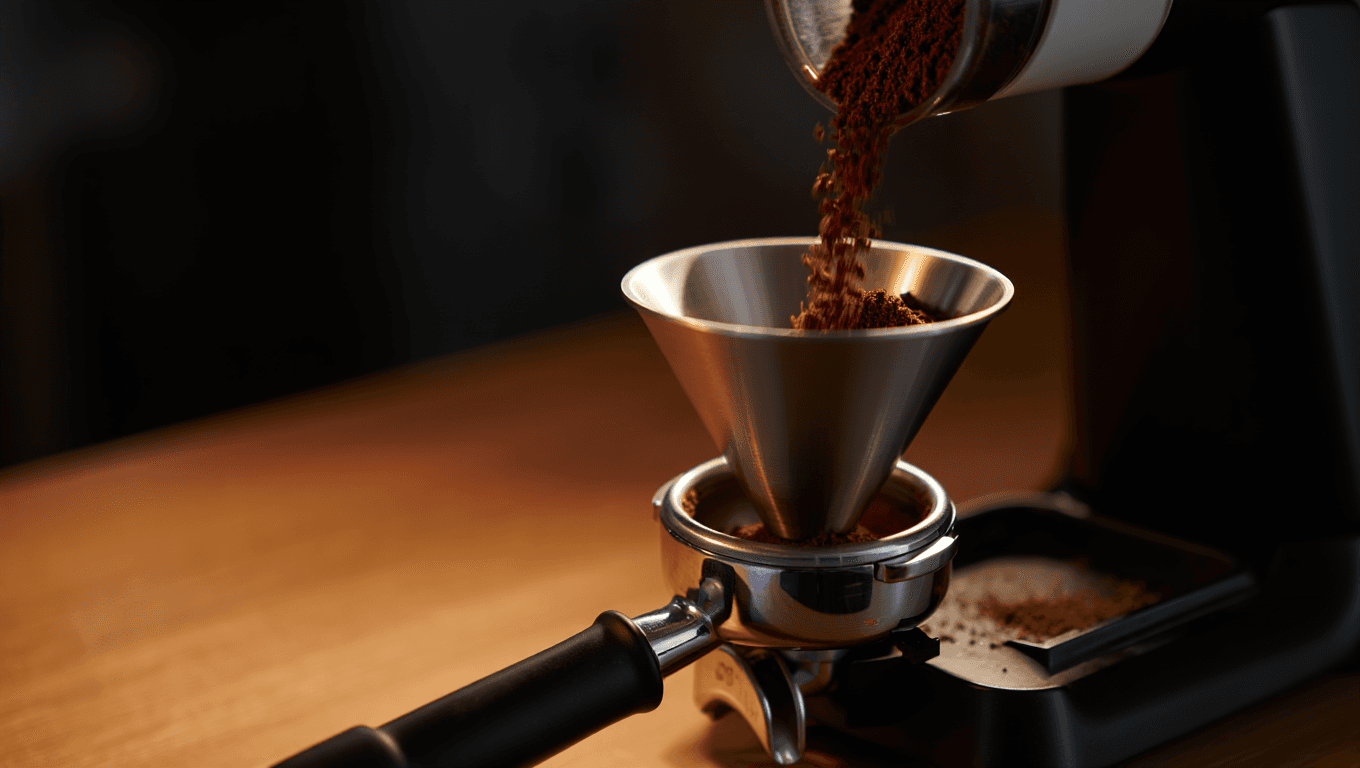
Why is precision dosing essential for brewing the perfect South Indian filter coffee decoction?
Precision in coffee brewing is often mistaken for a modern obsession fueled by third-wave espresso culture. However, for those who grew up with the rhythmic clinking of a stainless steel coffee filter in a South Indian household, precision has always been the silent partner of tradition. The "decoction"—that thick, syrupy essence extracted through slow gravity—is highly sensitive to the volume and density of the coffee grounds. If you overfill the top chamber of your filter, you risk a "choked" extraction where water cannot pass through. If you underfill it, the water rushes through too quickly, resulting in a weak, translucent liquid that lacks the soul of a true Kumbakonam-style brew. This is where the concept of a "dosing funnel" mindset comes into play. By ensuring every gram of your 80:20 coffee-chicory blend enters the filter without spillage or uneven mounding, you create a level bed for uniform saturation. At Coffee S10 Brews, we emphasize that the ritual begins before the water even touches the beans; it starts with the clean, focused delivery of the powder into the brewing vessel.
How does a dosing funnel prevent coffee waste and mess in a traditional South Indian kitchen?
Anyone who has prepared filter coffee at 6:00 AM knows the struggle of transferring fine-ground coffee from a bag or tin into the narrow top compartment of a traditional Indian filter. The static electricity in the air often causes the powder to cling to the rim or spill over onto the kitchen counter. This isn't just a cleaning nuisance; it is a waste of premium, handpicked beans. Using a dosing funnel—or adopting a dosing-funnel approach—ensures that the specific weight of the coffee needed for your decoction is perfectly centered. This prevents the "mounding" effect where coffee sits higher in the center, causing the tamper (the umbrella-like disc) to sit unevenly. When the disc is tilted, water follows the path of least resistance, leading to "channeling." Channeling is the enemy of flavor; it leaves some grounds bone-dry while over-extracting others. By utilizing precise dosing techniques, Coffee S10 Brews enthusiasts can ensure that every milligram of our signature 80:20 blend is utilized, resulting in a consistent, mess-free, and high-yield decoction every single morning.
Why is an 80:20 coffee-chicory blend the gold standard for South Indian filter coffee?
One of the most frequent questions we encounter is: "Why not 100% Arabica?" To understand the 80:20 ratio is to understand the chemistry of the South Indian palate. Coffee S10 Brews utilizes a meticulously balanced 80% high-quality coffee and 20% chicory blend because of how these two ingredients interact with hot water and milk. The 80% coffee provides the aromatic volatile oils, the caffeine kick, and the complex flavor notes of the Western Ghats. The 20% chicory acts as a catalyst; it increases the "solubility" of the blend. Chicory does not contain caffeine, but it is rich in inulin, which adds a thick, velvety body and a distinct woody sweetness to the decoction. This thickness is what allows the coffee to "hold its own" when mixed with hot, frothy milk. Without that 20% chicory, the coffee often feels thin or "watery" once the milk is added. Coffee S10 Brews has mastered this ratio through small-batch roasting, ensuring that the chicory enhances the coffee's natural profile rather than masking it with bitterness.
What is the difference between filter coffee and instant coffee?
To the uninitiated, coffee is just a caffeine delivery system. But for the connoisseur, the difference between instant powder and a slow-brewed decoction is monumental. Instant coffee is essentially pre-brewed coffee that has been dehydrated through spray-drying or freeze-drying. In this process, the delicate oils and aromas are often lost, replaced by a singular, flat bitterness. South Indian filter coffee, particularly the blends from Coffee S10 Brews, relies on the "Slow Extraction" method. This preserves the "crema" within the decoction and allows for a multi-layered sensory experience. Below is a comparison to highlight the structural differences:
| Feature Instant Coffee South Indian Filter Coffee (Coffee S10 Brews) | ||
| Processing | Mass-produced, dehydrated liquid extract. | Slow-roasted beans, ground fresh, gravity-extracted. |
| Flavor Profile | One-dimensional, often metallic or overly bitter. | Complex, nutty, chocolatey, with a velvety mouthfeel. |
| Aroma | Dissipates quickly after opening the jar. | Rich, lingering, and room-filling during brewing. |
| Body | Thin and watery. | Syrupy and dense (thanks to the 80:20 blend). |
| Ritual | Functional and fast. | An artisanal, meditative brewing experience. |
Why doesn’t my home-brewed filter coffee taste like "hotel-style" coffee?
The "Hotel Coffee" myth usually centers around three factors: the quality of the decoction, the temperature of the milk, and the "frothing" technique. Most high-end restaurants in South India use a specific density of decoction that home brewers often fail to replicate because they use too much water or a low-quality powder. To achieve that restaurant-grade flavor at home, you must start with the best South Indian filter coffee powder—one that hasn't been sitting on a supermarket shelf for six months. Coffee S10 Brews solves this by focusing on freshness and consistent grind size. Furthermore, "Hotel Coffee" is often "pulled" using a Davara and Tumbler to create a natural aeration (froth). This doesn't just look good; it cools the coffee to the ideal drinking temperature and opens up the aroma. When you use a precision-blended 80:20 powder, the decoction is naturally thicker, allowing you to achieve that iconic "frothy head" that stays stable until the last sip.
Is chicory bad for you, or is it a necessary component of the South Indian coffee ritual?
There is a common misconception that chicory is a "filler" used to cheapen coffee. While some brands may use excessive chicory to cut costs, in the context of authentic South Indian craftsmanship, it is a deliberate culinary choice. Chicory root, when roasted and ground, offers prebiotic benefits and is caffeine-free. Its primary role in a Coffee S10 Brews blend is to provide "viscosity." If you were to brew a 100% coffee blend in a traditional Indian filter, the decoction would be thin, making it difficult to achieve the deep caramel color we associate with a perfect "Filter Kaapi." The chicory binds with the coffee fats to create a heavier liquid. It is not about necessity out of scarcity, but necessity out of flavor chemistry. For the authentic experience, an 80:20 ratio is the sweet spot where you get the health benefits of chicory's antioxidants without sacrificing the premium caffeine profile of the beans.
| Feature 100% Pure Coffee 80:20 Coffee-Chicory Blend | ||
| Color of Decoction | Dark brown, transparent. | Deep black/ink-like, opaque. |
| Taste Profile | Acidic, fruity, or floral (depending on roast). | Malty, chocolatey, and earthy. |
| Milk Compatibility | Often gets "lost" in heavy milk. | Cuts through milk for a bold flavor. |
| Texture | Light and tea-like. | Thick, syrupy, and "heavy." |
How to brew authentic South Indian filter coffee at home: A step-by-step guide
Mastering the brew is an art form that Coffee S10 Brews aims to simplify for the modern home. First, ensure your stainless steel or brass filter is clean and dry. Add 4 to 5 heaped tablespoons of Coffee S10 Brews 80:20 powder to the top chamber. This is where the "dosing funnel" logic applies: ensure the powder is level. Gently place the plunger (the pressing disc) on top of the powder. Do not press too hard; you want to "set" the bed, not compress it into a brick. Boil fresh water and wait 30 seconds for it to drop slightly below boiling point (about 92°C to 96°C). Pour the water into the top chamber in a slow, circular motion. Cover with the lid and wait 15–20 minutes. The result will be a potent, aromatic decoction. Combine this with hot, full-fat milk—roughly 1 part decoction to 3 parts milk—and sweeten with jaggery or sugar to taste. The key to the Coffee S10 Brews experience is the patience of the drip; it is a slow-motion extraction that captures the essence of the bean.
What role does grind size play in preventing "choked" filters and ensuring consistency?
If the grind is too coarse, the water will pass through too quickly, and you’ll end up with "sour" water. If the grind is too fine (like flour), it will clog the tiny holes in the filter, and the water will never drip through—this is known as a "choked" filter. At Coffee S10 Brews, we utilize industrial-grade burr grinders that produce a specific "medium-fine" grit, tailored specifically for the gravity-drip method. This consistency ensures that whether you are brewing your first cup or your fiftieth, the resistance within the coffee bed remains the same. Consistency is the hallmark of a premium brand; it removes the guesswork for the consumer. When you buy a pack of our coffee, you aren't just buying beans; you are buying the engineering that ensures your morning ritual is never interrupted by a failed extraction.
How does Coffee S10 Brews bridge the gap between tradition and modern accessibility?
Tradition often feels inaccessible because it is perceived as time-consuming or difficult to master. Coffee S10 Brews aims to change that narrative. We believe that "slow coffee" shouldn't mean "difficult coffee." By providing clear educational resources, precisely measured blends, and high-quality roasting, we make it easy for a busy professional in a modern apartment to enjoy the same quality of coffee their grandparents brewed in a traditional courtyard. We have optimized our packaging to ensure the aroma stays locked in, and our roasting cycles are tightly controlled to prevent the "charred" taste often found in mass-market Indian coffee. We are not just selling a product; we are inviting you into a culture—a culture where the dosing of the coffee is as intentional as the drinking of it.
| Metric Average Home Brew Coffee S10 Brews Standards | ||
| Bean Selection | Commercial grade, mixed origin. | Specialty grade, single-region estates. |
| Roasting Batch Size | Massive industrial tons. | Small batches for even heat distribution. |
| Chicory Quality | Low-grade, high-bitterness. | Premium Jamnagar chicory, sweet and mellow. |
| Freshness | Months old on retail shelves. | Roasted-to-order philosophy for peak aroma. |
Frequently Asked Questions about South Indian Filter Coffee
1. Why is my filter coffee decoction too thin?
This usually happens if you use too much water or not enough coffee powder. Ensure you are using the correct ratio (about 3-4 tablespoons for a small filter) and that you are using a blend with chicory, like the Coffee S10 Brews 80:20, which naturally thickens the decoction.
2. Can I use an espresso machine to make South Indian filter coffee?
While you can use the powder, the pressure of an espresso machine extracts the coffee in 30 seconds, whereas the gravity-drip method takes 15 minutes. The flavor profile will be significantly different. For the authentic taste, the traditional gravity filter is irreplaceable.
3. How long does the decoction stay fresh?
A fresh decoction is best used within 1–2 hours. However, you can store it in the refrigerator for up to 24 hours. Note that the aroma will diminish over time, so we always recommend brewing fresh with Coffee S10 Brews powder for the best experience.
4. Is it necessary to boil the milk?
Yes. In the South Indian tradition, the milk should be brought to a boil and then frothed. Cold or lukewarm milk will not "cook" the decoction properly and will result in a flat-tasting cup of coffee.
5. What is the best way to store Coffee S10 Brews powder?
Transfer the powder to an airtight container (preferably glass or stainless steel) and store it in a cool, dark place. Avoid the refrigerator, as coffee absorbs odors and moisture, which can ruin the delicate profile of the beans.
6. Why does South Indian coffee taste stronger than a latte?
The strength comes from the "decoction" method, which is a highly concentrated form of coffee, combined with the 80:20 chicory ratio that enhances the perception of "body" and "bitterness" on the tongue.
7. How can I get more froth on my coffee?
Use the "pulling" technique. Pour the coffee-milk mixture back and forth between two vessels (the tumbler and davara) from a height. This aerates the milk and creates a thick, creamy foam.
Experience the perfect harmony of tradition and precision. Whether you are a seasoned connoisseur or a curious beginner, Coffee S10 Brews is here to elevate your morning ritual. Explore our signature 80:20 blends, dive into our comprehensive brewing guides, and discover why authentic South Indian filter coffee is more than just a drink—it’s a legacy in a cup.