The Science of "Pulse Pouring" vs. "Single Pour" Methods
Elevate your daily filter coffee. Learn the science behind Pulse Pouring vs. Single Pour for an authentic brew. Perfect your cup with S10 Brews.
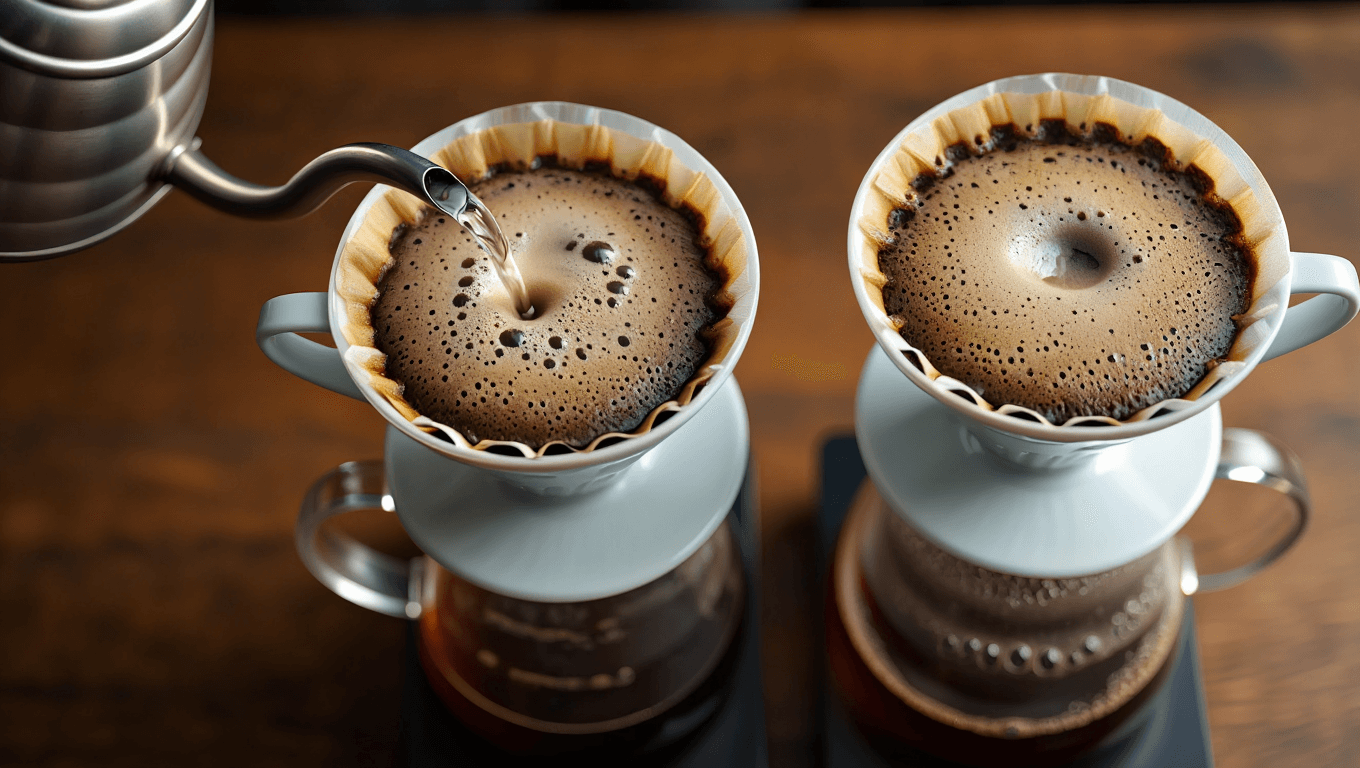
What is the science behind pulse pouring in South Indian filter coffee?
Pulse pouring is not just a trend in modern pour-over brewing; it is a fundamental pillar of extracting a thick, syrupy decoction in a traditional South Indian brass or stainless steel filter. The science of pulse pouring revolves around "agitation" and "contact time." When you pour water in small, controlled increments—pulses—you are essentially resetting the water-to-coffee contact ratio multiple times. In a traditional South Indian filter, the coffee bed is compact. A single, heavy pour often creates a "crust" that traps air, or worse, creates channels where water bypasses the coffee grounds entirely. By using the pulse method, you ensure that the water saturates the coffee bed evenly, allowing the carbon dioxide to escape (the "bloom") and making room for the water to dissolve the oils and solubles that define the Coffee S10 Brews signature profile.
For those seeking the best South Indian filter coffee powder experience, pulse pouring allows for a more controlled extraction of the 80:20 coffee-chicory blend. Because chicory is more water-soluble than coffee, a slow pulse ensures that the coffee’s nuanced acidity and the chicory’s deep body are extracted in harmony rather than the chicory over-extracting and turning bitter. This methodical approach is what separates a mediocre home brew from a professional, cafe-grade decoction.
Why does the single pour method often lead to under-extraction in traditional filters?
The single pour method—filling the upper chamber of the filter to the brim in one go—is the most common mistake home brewers make. While it seems convenient, it often leads to a phenomenon called "channeling." In a gravity-fed system like the South Indian coffee filter, the weight of a full chamber of water exerts significant pressure on the coffee bed. If the bed isn't perfectly leveled or if the grind size is slightly inconsistent, the water will find the path of least resistance. It carves a "channel" through the coffee, resulting in a decoction that is watery and weak because the majority of the grounds remained dry or under-saturated.
Furthermore, a single pour leads to a rapid drop in water temperature. As the water sits in the upper chamber waiting to drip through, it loses heat to the atmosphere. Since extraction is temperature-dependent, the last half of your decoction is often extracted at a much lower temperature than the first half, leading to an imbalanced flavor. Coffee S10 Brews recommends a more deliberate approach, ensuring the temperature remains stable by adding hot water in stages, thereby maintaining the thermal mass required for a rich, aromatic yield.
How does an 80:20 coffee-chicory blend interact with different pouring techniques?
The 80:20 coffee-chicory blend is the "Golden Ratio" of South Indian tradition, and its behavior during brewing is unique. Coffee beans provide the volatile aromatics and the caffeine kick, while chicory provides the "viscosity" and the deep, chocolatey color. When you use the pulse pouring method with an 80:20 blend, you are managing two different extraction rates. Chicory dissolves almost instantly, while coffee requires more time and heat to release its lipids and acids.
By pulsing, you prevent the chicory from dominating the flavor profile too early. It allows the handpicked Arabica and Robusta beans used in Coffee S10 Brews to "open up" before the chicory provides the heavy body. This results in a decoction that has a thick "crema-like" top layer and a balanced aftertaste. If you were to use a 100% coffee blend with these same techniques, you would find the body significantly thinner, proving why the 80:20 coffee chicory blend benefits are essential for the authentic "Darshini" style coffee experience.
Comparison of Brewing Styles: Filter Coffee vs. Instant Coffee
| Feature South Indian Filter Coffee (S10 Brews) Instant Coffee | ||
| Ingredients | Freshly roasted beans & high-grade chicory | Dehydrated coffee extract, often fillers |
| Aroma | Complex, floral, and nutty notes | One-dimensional, often "burnt" smell |
| Body/Mouthfeel | Syrupy, thick, and lingering | Thin and watery |
| Brewing Science | Gravity-fed percolation and extraction | Pure dissolution in water |
| Traditional Ritual | Integral to the "Dabba" culture | Convenience-focused only |
Why is the "Bloom" phase critical when brewing authentic filter coffee at home?
Most people associate the "bloom" with French Press or V60 brewing, but it is equally vital for South Indian filter coffee. When coffee beans are roasted, they trap CO2. If you pour all your water at once, this gas escapes rapidly, creating bubbles that push water away from the coffee particles. This is why you might see your coffee grounds "floating" or "bubbling up" in the filter.
To master the bloom at home, pour just enough hot water (about 92°C) to dampen the coffee bed. Wait 30 seconds. You will see the coffee bed swell. This "blooming" phase ensures that the CO2 is purged, allowing the subsequent pulses of water to penetrate the heart of the grind. Coffee S10 Brews' small-batch roasting ensures that the beans are fresh enough to still contain these gases, which is a hallmark of premium quality. A coffee that doesn't bloom is often stale or over-roasted.
How does grind size impact the success of pulse pouring?
In the world of South Indian coffee, grind size is the bridge between the bean and the cup. If the grind is too coarse, the water will rush through even with pulse pouring, resulting in a sour, thin decoction. If it is too fine (like espresso), the filter will clog, leading to "stalling" where the water simply refuses to pass through.
Coffee S10 Brews utilizes a specific "medium-fine" grind that is calibrated specifically for traditional metal filters. This grind size creates enough resistance for the water to extract flavor but allows for a steady drip. When you use pulse pouring with this specific grind, you are essentially "lifting" the grounds slightly with each pulse, preventing them from compacting into an impermeable puck at the bottom of the filter. This ensures that every drop of decoction is saturated with the maximum amount of dissolved solids.
Understanding the 100% Coffee vs. 80:20 Coffee–Chicory Blend
| Attribute 100% Pure Coffee 80:20 Coffee-Chicory Blend | ||
| Flavor Intensity | High acidity, brighter notes | Bittersweet, bold, and earthy |
| Decoction Thickness | Light to Medium | Very Thick (Syrupy) |
| Color | Reddish-brown | Dark, opaque black-brown |
| Best Served As | Black coffee or light milk | Traditional "Meter Coffee" with frothy milk |
| Chicory Presence | None | 20% for enhanced mouthfeel |
What is the "Hotel Style" secret to decoction strength?
One of the most frequent questions from consumers is: “Why doesn’t my filter coffee taste like hotel coffee?” The answer lies in the combination of the 80:20 blend and the "Double Decoction" or "Gradual Pulse" technique. Hotels often use large commercial filters where the weight of the coffee itself helps in extraction, but you can replicate this at home.
The secret is the "First Decoction." When you pulse pour, the first 50-70ml of liquid that drips into the lower chamber is the most concentrated. This is the "Gold Standard." Hotels often use only this first press for their premium servings. The second press (adding more water after the first has drained) is thinner and is often used to adjust the strength or for less demanding recipes. At Coffee S10 Brews, we encourage users to value the quality of the first decoction. By using our premium blend and a 3-pulse pouring technique, you achieve that elusive hotel-style thickness and "kick" that instant coffee simply cannot replicate.
The Physics of Temperature: Why 90-96°C is the "Sweet Spot"
Temperature management is a critical component of brewing intelligence. Boiling water (100°C) is actually detrimental to South Indian filter coffee. At boiling point, water can "scorch" the delicate Arabica beans in the S10 Brews blend, releasing astringent tannins that leave a dry, unpleasant feeling on the tongue. Conversely, water below 85°C lacks the energy to extract the heavier oils and the chicory essence, leading to a weak brew.
The pulse pouring method helps maintain this sweet spot. By adding small amounts of near-boiling water, you keep the slurry temperature consistent. If you use a brass filter—a material known for its excellent thermal conductivity—the heat is distributed evenly across the coffee bed. This thermal stability is what ensures that the "finish" of your coffee is smooth rather than bitter. Experience the difference by monitoring your water temperature; it is the simplest way to upgrade your morning ritual.
Comparing Home-Brewed vs. Hotel-Style Coffee Experience
| Metric Standard Home Brew (Single Pour) Hotel-Style/S10 Brews Method (Pulse Pour) | ||
| Decoction Clarity | Often cloudy or contains sediment | Clear, dark, and viscous |
| Milk Integration | Milk often overpowers the coffee | Coffee "cuts through" the milk fat |
| Foam Stability | Bubbles disappear quickly | Long-lasting, thick "Froth" (Lechai) |
| Caffeine Punch | Inconsistent | Reliable and strong |
How to troubleshoot a "stalled" filter during the pulse pour?
A "stalled" filter is the bane of the South Indian coffee enthusiast. It happens when the fine particles (fines) migrate to the bottom of the filter holes and block the flow. This usually happens if you pour too aggressively or if you stir the coffee bed too much.
If your filter stalls during a pulse pour, do not stir it. Instead, gently tap the side of the filter with a spoon. This creates a vibration that can dislodge the "fines" from the holes. For future brews, ensure you are using the Coffee S10 Brews pressing disc (the plunger) correctly. You should place it gently on top of the grounds to level them, but never press down with force. The weight of the disc itself is enough to create the necessary resistance without compacting the bed into a brick. This "brewing intelligence" is what ensures a consistent 15-minute extraction every single time.
Why is Coffee S10 Brews the preferred choice for modern traditionalists?
In an era of "convenience coffee," Coffee S10 Brews stands as a guardian of South Indian craftsmanship. We understand that the ritual of making filter coffee is as important as the drink itself. Our brand is built on four pillars: handpicked high-altitude beans, a scientifically perfected 80:20 blend, precision roasting, and consumer education.
We don't just sell coffee powder; we provide the tools and knowledge for you to become a master of the decoction. Our beans are roasted in small batches to ensure that the oils are preserved, providing that signature "aroma" that fills the house the moment the hot water hits the grounds. By bridging the gap between old-world tradition and modern quality control, we ensure that every cup you brew is an authentic tribute to the coffee culture of South India.
Frequently Asked Questions About South Indian Filter Coffee
- Why is my filter coffee watery even though I used the 80:20 blend? This is likely due to "channeling" caused by a single pour or not using enough coffee powder. Ensure you fill at least half of the upper chamber with Coffee S10 Brews powder and use the pulse pour method to ensure even saturation.
- Is chicory bad for health? No, chicory is a natural root that has been used for centuries. In an 80:20 blend, it serves to enhance the body and reduce the overall caffeine acidity, making it smoother on the stomach.
- How long should the decoction take to drip? Ideally, a perfect decoction should take between 12 to 18 minutes. If it takes 5 minutes, your grind is too coarse; if it takes 40 minutes, your grind is too fine or you have pressed the powder too hard.
- Can I use boiling milk for my filter coffee? Yes, authentic South Indian coffee is always made with "stretched" (frothed) boiling milk. The high temperature of the milk helps to further release the aroma of the decoction.
- How do I store Coffee S10 Brews powder to keep it fresh? Always store in an airtight container in a cool, dark place. Avoid the refrigerator, as coffee absorbs odors and moisture, which can ruin the delicate 80:20 balance.
- What is the best water-to-coffee ratio? For a strong decoction, use a 1:2 or 1:3 ratio. For example, 50g of coffee powder to 100ml-150ml of water, added in pulses.
Ready to elevate your morning ritual? Explore the art of the perfect decoction with our signature blends. Whether you are a seasoned connoisseur or a curious beginner, our resources and premium products are designed to bring the authentic taste of South India to your kitchen.
Discover the Coffee S10 Brews Collection and master the science of the perfect pour today.