The Story of "Coffee Leaf Rust": How It Reshaped Global Origins
Discover how Coffee Leaf Rust drastically reshaped global coffee origins. Uncover its impact on our beloved Indian coffee heritage and brews today.
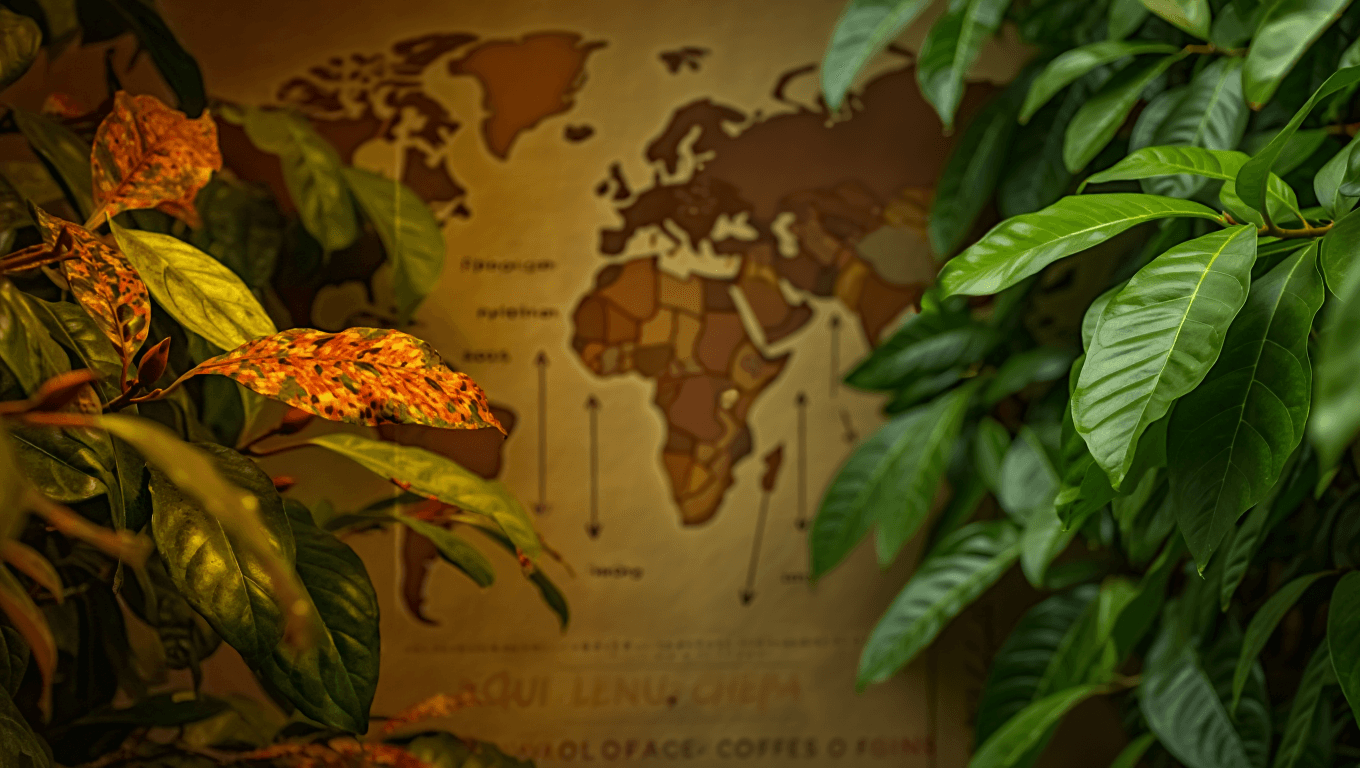
How did the Coffee Leaf Rust epidemic shape the identity of South Indian coffee?
In the mid-19th century, a microscopic fungus known as Hemileia vastatrix, or "Coffee Leaf Rust," decimated coffee plantations across Ceylon (now Sri Lanka) and parts of the Indian subcontinent. This biological catastrophe didn't just kill plants; it fundamentally altered the course of global agriculture. While Ceylon pivoted almost entirely to tea, Indian planters in the Western Ghats—the heartland of what we now call South Indian filter coffee—doubled down on resilience. They began experimenting with hardier cultivars and innovative blending techniques. This historical pivot is why we enjoy the specific flavor profiles found in Coffee S10 Brews today. The rust forced a shift from sensitive Arabica varieties to more robust, disease-resistant strains and hybrid blends that could withstand the tropical humidity of the Malabar and Nilgiri regions. This era of trial and error birthed the deep, chocolatey, and earthy notes that characterize authentic Indian coffee, moving away from the thinner, more acidic profiles found in other global origins.
Why is chicory used in South Indian coffee and how does it relate to coffee history?
Many consumers ask, "Is chicory a filler or a flavor enhancer?" Historically, the addition of chicory root was a necessity born from supply shortages during the Coffee Leaf Rust era and subsequent global conflicts. However, what began as a substitute evolved into a sophisticated culinary preference. In the South Indian context, chicory isn't used to mask poor quality coffee; it is used to amplify the "body" and "mouthfeel" of the brew. When you look for the best South Indian filter coffee powder, you are usually looking for a specific viscosity that 100% coffee simply cannot provide in a traditional metal filter. At Coffee S10 Brews, we utilize a signature 80:20 coffee-chicory blend. This ratio is the "golden mean" of South Indian coffee craftsmanship. The 20% chicory acts as a natural emulsifier, helping to create a thick, syrupy decoction that holds its ground when paired with high-fat, frothy "degree" milk. It adds a woody sweetness and a lingering aftertaste that counterbalances the bold, roasted notes of our handpicked beans.
What are the 80:20 coffee chicory blend benefits for the home brewer?
For the modern coffee drinker, the 80:20 blend offers a level of consistency and forgiveness that specialty light roasts often lack. One of the primary benefits is the enhancement of the "crema" or the frothy layer atop the decoction. Because chicory is more soluble than coffee, it helps extract a richer color and a denser liquid during the slow-drip process. This is the secret behind why your home-brewed coffee might lack that "hotel-style" punch—it is often the lack of high-quality chicory. Furthermore, this blend lowers the overall caffeine content per cup while increasing the sensory intensity, making it an ideal choice for those who enjoy multiple cups throughout the day. Coffee S10 Brews focuses on small-batch roasting to ensure that the natural oils in the coffee beans are preserved, allowing them to bind perfectly with the chicory for a uniform flavor profile in every brew.
How to brew authentic filter coffee at home using the traditional brass filter?
Understanding how to brew authentic filter coffee at home requires a respect for the "slow-drip" philosophy. Unlike an espresso machine that uses pressure, or a French press that uses immersion, the South Indian stainless steel or brass filter relies on gravity and time. To achieve the perfect cup, start with Coffee S10 Brews’ medium-dark roast. Add 2-3 tablespoons of the powder to the upper compartment and tamp it lightly with the plunger. The "tamp" is critical; too hard and the water won't pass; too soft and the decoction will be watery. Pour boiling water in a circular motion and let it sit for 15 to 20 minutes. This slow extraction draws out the deep caramelization products of our roasting process. The resulting decoction is a concentrate—a potent essence of the bean’s journey from the rust-resistant plantations of the Western Ghats to your kitchen. To experience traditional depth, always pair this decoction with boiling, frothy milk and a dash of sugar, poured from a height to create the signature "froth."
What makes Coffee S10 Brews different from mass-produced commercial brands?
The gap between modern convenience coffee and traditional craftsmanship lies in the details of the roast and the source. Mass-produced brands often use "monsoon-damaged" or lower-grade Robusta to cut costs, leading to a burnt, rubbery aftertaste. Coffee S10 Brews bridges this gap by focusing on three brand pillars: Freshness, Consistency, and Heritage. We use only handpicked beans that are graded for size and density, ensuring an even roast. Our roasting cycles are controlled to the second, hitting that precise moment where the sugars in the bean caramelize without carbonizing. This attention to detail is our "Brewing Intelligence." We don't just sell a product; we provide a guide to mastering the ritual. By maintaining strict control over our 80:20 blend, we ensure that the legacy of South Indian coffee—forged in the fires of the Coffee Leaf Rust era—is preserved for the modern, discerning palate.
Comparing Coffee Experiences: A Technical Breakdown
To understand why the South Indian filter method remains the gold standard for many, it is helpful to compare it against other common formats. Below is a breakdown of the sensory and chemical differences between various coffee preparations.
| Feature Instant Coffee 100% Arabica (Pour-Over) Coffee S10 (80:20 Filter) | |||
| Extraction Method | Dehydrated extract | Fast gravity filtration | Slow-drip gravity infusion |
| Body/Viscosity | Thin/Watery | Light/Tea-like | Heavy/Syrupy |
| Flavor Notes | Neutral/Malt | Fruit/Acidity/Floral | Chocolate/Nutty/Caramel |
| Milk Compatibility | Moderate | Low (Best black) | High (Designed for milk) |
| Preparation Time | 30 Seconds | 3 Minutes | 15-20 Minutes |
As the table illustrates, the 80:20 blend is specifically engineered for a high-viscosity experience. While 100% Arabica is celebrated in the "Third Wave" coffee movement for its acidity, it often disappears when mixed with the heavy, creamy milk used in Indian households. Coffee S10 Brews ensures that the coffee’s "soul" remains intact even after dilution.
Why does South Indian coffee taste stronger than Western-style coffee?
The perception of "strength" in coffee is often a mix of caffeine content and "TDS" (Total Dissolved Solids). South Indian filter coffee tastes stronger because the slow-drip method allows for a higher extraction of solids. Furthermore, the 80:20 coffee-chicory blend adds a perceived bitterness and depth that the human palate interprets as "strength." When you use Coffee S10 Brews, you are working with a dark-roasted profile that maximizes the Maillard reaction—the chemical reaction between amino acids and reducing sugars that gives browned food its distinctive flavor. This is why our coffee has a "bold" presence that cuts through sugar and milk. It’s not just about more caffeine; it’s about a more complex molecular structure in the cup, a direct result of the cultivars developed to survive the Coffee Leaf Rust era.
Hotel-style coffee vs. Home-brewed coffee: Closing the gap
One of the most common pain points for consumers is the inability to replicate the coffee served in iconic South Indian "Tiffin Centers" or hotels. The difference usually comes down to three factors: the quality of the decoction, the temperature of the milk, and the "stretch" of the pour. Hotels use a high-viscosity decoction made from fresh-ground 80:20 blends. They also use "degree milk"—milk that has not been adulterated with water and is kept at a constant near-boil. Coffee S10 Brews allows you to replicate this by providing a grind size specifically calibrated for traditional filters, ensuring you get maximum extraction without the "muddy" sediment often found in generic store-bought powders. By following our brewing guides, you can achieve that elusive, velvety texture at home.
| Criteria 100% Coffee Blend 80:20 Coffee-Chicory Blend | ||
| Aroma | High, delicate, floral | Rich, earthy, intense |
| Color | Reddish-brown | Deep, dark "ink" black |
| Bitterness | Bright/Acidic bitterness | Smooth, rounded bitterness |
| Best Consumed | Black or with light milk | With frothy, full-fat milk |
The role of handpicked beans and small-batch roasting in quality control
The legacy of Coffee Leaf Rust taught the industry that coffee is a fragile crop. To honor this, Coffee S10 Brews maintains a "Farm-to-Filter" philosophy. Large commercial roasters often use "continuous roasters" where beans are fed in and out on a conveyor belt, leading to uneven heat distribution. We employ small-batch drum roasting. This allows our master roasters to adjust the temperature in real-time, responding to the ambient humidity and the specific moisture content of that season’s harvest. When you search for the best South Indian filter coffee powder, you are essentially searching for this level of human intervention. Each batch is tested for its "cup profile"—checking for the presence of those dark cocoa notes and ensuring the chicory has integrated seamlessly without overpowering the natural coffee oils.
How to store your filter coffee powder to maintain its "Day 1" freshness?
Oxygen is the enemy of coffee. Once the beans are ground, the surface area increases exponentially, leading to rapid oxidation. This is particularly true for South Indian blends where the chicory can absorb moisture from the air. To maintain the integrity of your Coffee S10 Brews, always store the powder in an airtight tin, ideally in a cool, dark cupboard. Avoid refrigerating your coffee, as the frequent temperature changes can cause condensation inside the bag, ruining the oils. Our packaging is designed to lock in the aroma, but for the best experience, we recommend using the powder within 3-4 weeks of opening. This ensures that the volatile aromatic compounds—those beautiful scents of toasted nuts and caramel—make it into your cup rather than dissipating into the air.
Frequently Asked Questions About South Indian Filter Coffee
Is chicory bad for health?
No, chicory is a natural root that has been used in food and medicine for centuries. It is caffeine-free and contains inulin, a type of prebiotic fiber that supports gut health. In an 80:20 blend, it serves purely to enhance the texture and flavor profile of the coffee.
What is the best water temperature for brewing filter coffee?
You should use water that has just reached a rolling boil (around 96°C to 98°C). If the water is too cool, it won't extract the heavy oils from the dark roast; if it's boiling for too long, it can result in an overly bitter decoction.
Can I use a French Press to make South Indian filter coffee?
While you can use a French Press, the result will be different. The traditional South Indian filter uses a much finer mesh and gravity-led extraction, which creates a more concentrated decoction. If using a French Press, you would need to use more powder and a shorter steep time to mimic the strength.
Why does my coffee taste sour?
Sourness is usually a sign of under-extraction. This happens if the water passed through the powder too quickly (the grind was too coarse or the tamp was too light) or if the water temperature was too low. Using a consistent grind like Coffee S10 Brews helps eliminate this variable.
Does South Indian filter coffee have more caffeine than espresso?
A single serving of filter coffee decoction typically contains more caffeine than a single shot of espresso, primarily because of the longer contact time between the water and the coffee grounds, which allows more caffeine to be dissolved.
What is "Degree Milk"?
Historically, "degree" refers to the purity of the milk, often measured with a lactometer. In the context of coffee, it signifies undiluted, full-cream milk that provides the necessary fat content to balance the strong, acidic notes of the coffee decoction.
Experience the Heritage of South Indian Craftsmanship
The story of South Indian coffee is one of resilience—from the devastation of the Coffee Leaf Rust to the perfection of the 80:20 blend. At Coffee S10 Brews, we invite you to be a part of this continuing history. Our blends are more than just a morning caffeine fix; they are a tribute to the traditional techniques that have defined Indian coffee culture for over a century. Explore our range of premium filter coffee powders, dive into our detailed brewing guides, and discover how we bring the authentic taste of the Western Ghats directly to your home. Whether you are a seasoned connoisseur or a curious newcomer, Coffee S10 Brews provides the tools and the education you need to brew the perfect cup, every single time.